The Unwritten Rules of Travel: Playing Your Way into Local Hearts (Before Everyone Else Does)
I remember it like yesterday. Dust motes dancing in the afternoon sun, the rhythmic thwack of a woven ball, and the infectious laughter echoing through a small village square in northern Thailand. I was on a solo backpacking trip, determined to veer off the well-trodden path, and found myself captivated by a group of men and boys engaged in a game I’d never seen. It looked like volleyball, but played exclusively with feet, knees, and heads, the ball a blur of intricate passes.
Hesitantly, I approached, offering a shy smile and a "Sawadee krap." One of the players, a wiry man with a twinkle in his eye, gestured for me to join. My attempts were, to put it mildly, abysmal. I tripped, I flailed, the ball seemed to actively avoid my feet. But instead of ridicule, I was met with booming laughter, patient demonstrations, and encouraging pats on the back. For the next hour, language barriers melted away, replaced by shared smiles, the universal language of play, and the surprisingly satisfying thud of the rattan ball (when I actually managed to hit it).
That afternoon wasn't just about learning a game; it was about truly connecting. It was about seeing a slice of life unedited, uncurated for tourists. It was the moment I realized that some of the most profound travel experiences aren't found in ancient ruins or bustling markets, but in the simple, spontaneous joy of shared traditions. And many of those traditions are games – games that are still deeply ingrained in local communities, waiting for curious travelers to discover them before they become the next 'must-do' Instagram sensation.
So, ditch the selfie stick for a moment, and let’s talk about how you can unlock these incredible, authentic experiences. This isn't just a list of games; it’s your guide to becoming a temporary local, one joyful bounce, throw, or strategized move at a time.
1. Sepak Takraw (Southeast Asia): The Aerial Ballet of the Feet
Where to find it:
Primarily Thailand, Malaysia, Singapore, Philippines, Indonesia, Brunei, Laos, and Vietnam.
What it is:
Imagine volleyball, but instead of using your hands and arms, players use only their feet, knees, chest, and head to keep a woven rattan ball (or synthetic equivalent) in play over a net. It’s an incredibly athletic, acrobatic, and mesmerizing sport. Known as Sipa in the Philippines or simply Takraw in Thailand, it's a staple in parks and village squares.
My Anecdote:
That Thai village encounter was my first taste of Sepak Takraw, and it was humbling. I spent more time chasing the ball than actually touching it. But the sheer joy on the faces of the locals, their effortless grace, and their willingness to slow down and show me the basic "knee-kick" technique was infectious. One young boy, no older than ten, patiently demonstrated how to "spike" the ball with a bicycle kick, all while I struggled to simply juggle it. It felt less like a sport and more like a dance.
How to get involved:
* Look for: Public parks, village squares, schoolyards, and even dedicated courts (especially in bigger cities like Bangkok or Kuala Lumpur) in the late afternoon or early evening. You’ll hear the distinctive thwack of the ball.
* Approach: A friendly smile and a simple "Can I watch?" (or "Choom dai mai?" in Thai) is usually enough. If they seem welcoming, gesture towards the ball. Most locals are delighted to see foreigners take an interest.
* Cost: Free! Just bring your enthusiasm and maybe a bottle of water to share if you join a longer session.
* Instagram-worthy moment: Capture the incredible mid-air bicycle kicks, the intense focus on players' faces, and the vibrant local setting. Use a burst mode to catch the action!
2. Tejo (Colombia): Explosions, Beer, and Unforgettable Blasts
Where to find it:
Predominantly Colombia, particularly in smaller towns and dedicated canchas de tejo (tejo courts) across the country.
What it is:
This ancient indigenous game involves throwing heavy metal discs (tejos) across a court at a target ring (bocín) that contains small packets of gunpowder (mechas). The goal is to hit the mecha, causing it to explode with a satisfying bang. Points are awarded for hitting the bocín, getting closest, or, best of all, making it explode. Tejo is often played with friends, accompanied by plenty of cold beer.
My Anecdote:
My first Tejo experience in a dusty cancha on the outskirts of Bogotá was an absolute sensory overload. The air hummed with anticipation, punctuated by the metallic clang of tejos hitting clay and then, BAM! A small explosion would erupt, followed by cheers and laughter. I was terrible, my tejos landing nowhere near the target, but the local guys I was with kept handing me beers and cheering on my every (mis)attempt. The raw, unfiltered joy of the game, the camaraderie, and the surprising explosions made for one of the most uniquely Colombian evenings I've ever had. It felt like a secret society, and I was being initiated.
How to get involved:
* Look for: Ask locals for canchas de tejo. They are typically open-air, covered courts, sometimes a bit rustic. They often have a bar attached.
* Approach: Just walk in! Most canchas are very welcoming. Order a cerveza (beer) and watch a game. If you look interested, someone will likely invite you to play or teach you.
* Cost: Playing is usually free, but it's customary to buy drinks (beer is the standard). A round of beers for a group might be COP 30,000-50,000 (~$8-13 USD).
* Instagram-worthy moment: Film the slow-motion throw of a tejo followed by the gunpowder explosion! Capture the rustic charm of the cancha and the celebratory atmosphere.
3. Mancala (Africa/Middle East/Asia): The Ancient Strategy of Seeds and Pits
Where to find it:
Widespread across Africa (known as Oware, Kalaha, Bao), the Middle East, and parts of Asia. You’ll find variations everywhere from roadside stalls to bustling markets.
What it is:
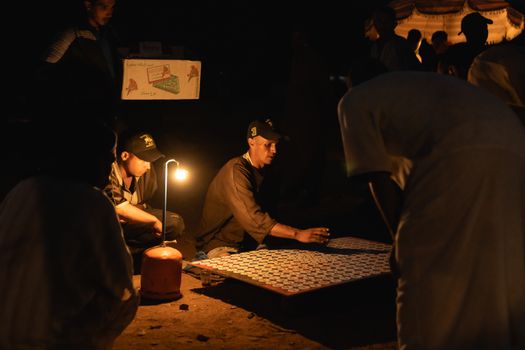
Mancala is a family of ancient board games played with seeds, beans, or stones and a board featuring a series of pits or holes. The objective is to capture more seeds than your opponent through strategic "sowing" and "capturing" movements. It's deceptively simple to learn but offers incredible strategic depth, often compared to chess.
My Anecdote:
In a small village in Ghana, I stumbled upon an elder meticulously arranging cowrie shells on a carved wooden board. Intrigued, I sat down. With patient gestures and a few words translated by a nearby child, he began to teach me Oware. My initial moves were haphazard, but as he guided me, I began to grasp the rhythm of the game, the foresight required. We played for what felt like hours, the only sounds the clinking of shells and the occasional soft chuckle from the elder as he outmaneuvered me. It was a beautiful, meditative experience, a true connection across generations and cultures, all through a game thousands of years old.
How to get involved:
* Look for: People playing in markets, village squares, community centers, outside homes, or even in cafes. The boards can range from simple holes dug in the dirt to intricately carved wooden masterpieces.
* Approach: Show genuine interest. A respectful "Hello" and a gesture towards the game is a good start. Many locals are proud of their traditional games and happy to share.
* Cost: Absolutely free! You might consider buying a small, handcrafted Mancala board from a local artisan as a souvenir (prices vary, but expect $10-30 USD depending on size and craftsmanship).
* Instagram-worthy moment: A close-up of the beautiful wooden board and the various seeds/stones, highlighting the intricate patterns. A shot of you learning from a local, capturing the intergenerational exchange.
4. Coconut Bowling (Fiji/Pacific Islands): Island Life, One Roll at a Time
Where to find it:
Many Pacific Island nations, including Fiji, Samoa, Tonga, and other smaller islands. Often played on beaches or grassy areas.
What it is:
While not a formalized "sport" in the same vein as Sepak Takraw, various forms of coconut bowling or games involving rolling coconuts are common, especially among children and in informal gatherings. The rules are often fluid, adapted to the terrain and the number of players. Sometimes it's simply rolling a coconut at a target, other times it involves knocking down other coconuts. It's a spontaneous, joyful activity that embodies the relaxed pace of island life.
My Anecdote:
On a remote Fijian island, after a day of snorkeling, I watched a group of kids on the beach using a weathered coconut as a ball, rolling it towards a makeshift goal of driftwood. Their laughter was infectious. I joined in, and soon a few adults came over, offering tips and challenging us to impromptu games. There were no strict rules, no winners or losers, just pure, unadulterated fun under the setting sun. The feeling of the sand between my toes, the salty air, and the genuine smiles made it an unforgettable memory. It’s a game where the simplicity is its genius.
How to get involved:
* Look for: Kids or adults playing on beaches, grassy areas near villages, or even resort staff organizing informal games.
* Approach: A warm "Bula!" (hello in Fijian) and a smile. If you see people playing, just ask if you can join. They'll likely hand you a coconut!
* Cost: Free! The "equipment" is literally falling off trees.
* Instagram-worthy moment: A picturesque shot of coconuts rolling on a pristine beach with turquoise water in the background. A candid photo of laughter and barefoot play.
5. Pétanque (France/Mediterranean Europe): The Art of the Perfect Boule
Where to find it:
Ubiquitous in France, especially in Provence, but also popular in other Mediterranean countries like Spain, Italy (where it’s called Bocce), and even parts of North Africa.
What it is:
Pétanque is a classic French game similar to bocce or lawn bowling. Players take turns throwing hollow metal balls (boules) as close as possible to a small wooden target ball (cochonnet or jack). It's a game of precision, strategy, and often, gentle banter, typically played in public squares (places), parks, or dedicated boulodromes. It’s often enjoyed with a glass of pastis or local wine.
My Anecdote:
In a sun-drenched village square in rural Provence, the clinking of metal balls and the murmur of conversation drew me in. Elderly men in berets, their faces etched with decades of sunshine, were engaged in a serious but friendly game of Pétanque. I stood watching, mesmerized by their technique. Eventually, an older gentleman, noticing my interest, offered me a boule and a quick lesson. He showed me the proper grip, the gentle lob, and the subtle art of "pointing" (placing your boule close) versus "shooting" (knocking an opponent's boule away). I spent a delightful afternoon, learning, laughing, and feeling utterly French, even if my throws were less than perfect. It taught me patience and the beauty of slow, deliberate play.
How to get involved:
* Look for: Any public square or park with a flat, gravelly area. You’ll often see groups gathered, especially in the late afternoon.
* Approach: A polite "Bonjour" and a respectful watch. If there's an opening or a friendly vibe, ask "Puis-je jouer?" (Can I play?). They might invite you to join a casual game or explain the rules.
* Cost: Free to play. You might want to buy a round of drinks if you join a group at a nearby café. A set of boules can be purchased for €30-100 if you want your own.
* Instagram-worthy moment: A close-up of the metal boules on the gravel, perhaps with a glass of pastis in the background. Capture the relaxed, social atmosphere of the players.
6. Carrom (India/South Asia): The Finger Billiards of the Subcontinent
Where to find it:
Extremely popular across India, Pakistan, Bangladesh, Sri Lanka, and Nepal. You'll find boards in homes, tea stalls, community centers, and even on street corners.
What it is:
Carrom is a tabletop game that’s often described as "finger billiards." Players use a striker disc to flick lighter carrom men (discs) into four corner pockets. The objective is to pocket all your carrom men, typically black and white, before your opponent, with a red "queen" disc adding a strategic layer. It requires precision, strategy, and a delicate touch.
My Anecdote:
During a particularly humid afternoon in Varanasi, seeking refuge from the heat, I ducked into a small chai stall. In the back, two men were engrossed in a game of Carrom, their fingers flicking with astonishing accuracy. The intense focus, the quiet concentration broken only by the click of the discs, was captivating. I ordered a chai and watched. Soon, one of the players, a young student, gestured for me to join. He patiently taught me the different shots, how to "break" the queen, and the subtle art of aiming. My initial attempts were clumsy, but with practice, I started to get the hang of it, feeling the satisfying thwack as my striker sent a carrom man into a pocket. It was a perfect way to escape the midday sun and connect with locals over a shared pastime.
How to get involved:
* Look for: Any public place where people gather – tea stalls, cafes, community centers, even parks. The distinctive square boards are easy to spot.
* Approach: A friendly "Namaste" and a polite request to watch. If they're open, they'll likely invite you to play.
* Cost: Free! Just offer to buy a round of chai for the group (typically INR 20-50 per cup, ~$0.25-0.60 USD).
* Instagram-worthy moment: A close-up of the colorful carrom men and striker on the polished board. Capture the focused expressions of players and the vibrant background of a local tea stall.
7. Gilli Danda (India/Pakistan): The Rustic Cricket Ancestor
Where to find it:
Primarily rural areas and small towns across India, Pakistan, Bangladesh, and Nepal. Less common in major cities.
What it is:
Gilli Danda is an ancient outdoor game played with two wooden sticks: a larger one (danda) and a smaller, spindle-shaped one (gilli). The player uses the danda to flick the gilli into the air, then hits it as far as possible, similar to baseball or cricket. Points are scored based on the distance the gilli travels. It's a game of skill, hand-eye coordination, and often, improvised rules depending on the local community.
My Anecdote:
Deep in the Rajasthan countryside, while exploring a village off the main tourist circuit, I came across a group of boys playing Gilli Danda in a dusty field. Their makeshift equipment – rough-hewn sticks and a small, pointed piece of wood – was charmingly rustic. One boy, no older than twelve, demonstrated an incredible flicking technique, sending the gilli soaring. He noticed me watching and, with a grin, handed me the danda. My first few attempts were laughable, the gilli barely leaving the ground. But with their enthusiastic coaching and cheers, I eventually managed a decent hit, feeling a surge of satisfaction. It was a raw, energetic experience, a glimpse into the simple joys of rural life that felt incredibly authentic.
How to get involved:
* Look for: Open fields, village commons, or large unpaved areas in rural settings. You’ll see kids and young men playing, often with handmade equipment.
* Approach: A respectful greeting and a gesture of interest. These informal games are very welcoming to curious onlookers.
* Cost: Free. It's a game of the people, for the people.
* Instagram-worthy moment: Capture the dynamic action of a player hitting the gilli against the backdrop of a rural landscape. Focus on the handcrafted wooden sticks and the energetic expressions.
Your Playbook for Authentic Connections: Practical Tips for Travelers
So, how do you go from being an observer to a participant? Here’s your actionable guide:
- Be Approachable & Smile: A genuine smile is your best universal translator. Look open, curious, and friendly. Avoid looking like you're just there to take photos.
- Observe First: Don't just barge in. Watch for a bit, understand the flow, and gauge the atmosphere. This shows respect.
- Learn Basic Phrases: A simple "Hello," "Thank you," and "Can I play?" in the local language goes a long way. Even if your pronunciation is terrible, the effort is appreciated.
- Gesture, Gesture, Gesture: When language fails, body language speaks volumes. Point to the game, make a questioning gesture, and nod enthusiastically.
- Embrace Awkwardness & Laugh at Yourself: You will be bad at these games initially. That's part of the fun! Your willingness to be vulnerable and laugh at your own clumsiness is endearing and breaks down barriers.
- Offer to Share: If you're joining a game where drinks are common (like Tejo or Pétanque), offer to buy a round. For other games, a shared bottle of water or a small snack can be a nice gesture.
- Be Respectful of Customs: Some games might have unspoken rules or traditions. Pay attention to how locals behave and follow suit. If you're unsure, watch and learn.
- Don't Overstay Your Welcome: Know when to gracefully exit. A heartfelt "Thank you" and a wave are usually sufficient.
- Keep it Casual: These are often informal games, not competitive tournaments. Focus on the experience and connection, not winning.
- Be Present, Not Just Documenting: While Instagram-worthy shots are great, don't let your phone detract from the actual experience. Take a few photos, then put it away and truly immerse yourself.
The Ultimate Travel Souvenir: A Story of Shared Joy
Stepping off the beaten path to seek out these traditional games isn't just about finding something "new" to do. It's about enriching your travel experience in ways a postcard or souvenir never could. It's about bridging cultural gaps, fostering genuine connections, and creating memories that are truly unique to your journey.
The next time you’re planning an adventure, remember: the real magic often lies in the unscripted moments, in the shared laughter, and in the simple, profound act of play. These games are living traditions, vibrant threads in the cultural fabric of a place. Seek them out, and you’ll discover a side of travel that’s authentic, unforgettable, and deeply human.
What traditional games have you stumbled upon in your travels? Or which of these are you most excited to try? Share your stories and tips in the comments below! Let's inspire each other to play our way around the world!
---