Forget the Guidebooks: Play Your Way to Authentic Connection with Trending Traditional Games
I remember standing on a bustling street corner in Varanasi, India, feeling a familiar twinge of disconnect. I’d seen the temples, navigated the ghats, and eaten incredible street food. Yet, something was missing. I wasn’t part of it, merely observing. Then, a rhythmic clack-clack-clack drew my attention to a small group huddled around a polished wooden board. Eyes narrowed in concentration, fingers flicking, laughter erupting. It was Carrom, a game I’d only vaguely heard of.
Hesitantly, I approached. A young man, noticing my curiosity, gestured with a friendly smile, "Come, come! You play?" My Hindi was rudimentary, his English not much better, but in that moment, language barriers dissolved. He patiently demonstrated the rules, corrected my clumsy shots, and cheered when I finally potted a piece. For the next hour, I wasn't a tourist; I was a participant, sharing a universal language of play and connection. It was exhilarating, authentic, and utterly unforgettable.
That experience taught me something profound: the most genuine travel memories often aren't found in a museum or a famous landmark, but in the shared moments of everyday life. And right now, there's a quiet revolution happening. Travelers are seeking deeper connections, and locals, in turn, are more eager than ever to share their traditions. Enter the world of traditional games – vibrant, engaging, and increasingly trending as a pathway to true cultural immersion.
Forget the sterile apps and digital distractions. These aren't just games; they're living history, community builders, and your passport to playing like a local. Ready to ditch the screen and dive into some real-world fun? Let's explore some of the most captivating traditional games locals are eager to teach you, and how you can join the action.
The Magic of Play: Why Traditional Games Matter Now More Than Ever
In an age dominated by digital interactions, the simple act of playing a physical game with strangers holds immense power. It strips away pretenses, breaks down cultural barriers, and fosters immediate, genuine connection. Imagine the joy of a shared victory, the good-natured banter of a friendly rivalry, or the patient teaching of a new skill – these are moments that stick with you, far more than another selfie in front of a monument.
Traditional games are also incredible cultural touchstones. They reflect a society’s history, values, and even its strategic thinking. Learning them isn't just entertainment; it's a living lesson in anthropology. Furthermore, participating supports local communities by valuing their heritage and encouraging interaction that goes beyond transactional tourism. It's a digital detox, a mental workout, and a masterclass in human connection, all rolled into one. Plus, let's be honest, watching locals play these games is often an Instagram goldmine – vibrant, dynamic, and full of authentic human emotion.
Ludo & Carrom: India's Boardroom Battles & Street Smarts
My encounter with Carrom in Varanasi wasn’t an isolated incident. Across India, and indeed much of South Asia, these two games are ubiquitous, forming the social fabric of homes, cafes, and street corners.
Ludo
, a simplified version of the ancient Indian game Pachisi, is a dice-based race game. It’s a riot of strategy and luck, often played with four players, each trying to get their tokens home first. It's easy to learn, making it perfect for breaking the ice. You'll often find families playing it on the floor, or groups of friends in a chai stall.
Carrom
, as I discovered, is a fascinating 'finger billiards' game. Players flick a 'striker' disc to pocket smaller 'carrom men' into corner pockets. It requires precision, geometry, and a surprisingly deft touch. Often, a crowd will gather to watch skilled players, offering advice or commentary.
Where to find them:
Look for groups gathered around wooden boards in tea stalls, local cafes, parks, or even outside small shops. In cities like Delhi, Mumbai, or Kolkata, you'll see Carrom boards everywhere. For Ludo, it's more common in homes, but some cafes might have boards.
How to learn: Simply express interest! A polite "Namaste, may I watch?" or "Kya aap mujhe sikhayenge? (Will you teach me?)" will often be met with enthusiasm. Most locals are incredibly proud of their games and happy to share. Don't be afraid to make mistakes; it's part of the fun.
Instagram-worthy moment: A close-up of hands flicking the striker, the vibrant colours of the Ludo board, or the intense concentration on a player's face, often framed by the bustling street life.
Sepak Takraw: Malaysia & Thailand's Aerial Acrobats
Imagine volleyball, but instead of hands, players use their feet, knees, chest, and head to propel a woven rattan ball over a high net. Welcome to Sepak Takraw, an electrifying sport popular across Southeast Asia, particularly in Malaysia, Thailand, and Indonesia. It's a mesmerizing display of athleticism, agility, and gravity-defying acrobatics.
I first witnessed Sepak Takraw on a beach in Langkawi, Malaysia. The players moved with incredible grace, executing bicycle kicks and mid-air somersaults to keep the ball in play. My jaw dropped. It looked impossible. Later, in a small park in Bangkok, I saw a more casual game, and encouraged by a local friend, I tried to join. My attempts were, to put it mildly, pathetic. The ball bounced off my shin, my head, anywhere but over the net. But the locals roared with laughter, then patiently showed me basic kicks. I never mastered it, but the shared effort and good humor forged an instant bond.
Where to find them:
Look for outdoor courts in public parks, community centers, beaches, or even makeshift setups in open fields. It's a common sight, especially in the late afternoon or evening when the heat subsides.
How to learn: Start by observing. If it's a casual game, you might be invited to join or try some basic kicks on the side. Don't expect to play a full game immediately; just handling the ball with your feet is a challenge! Locals are often impressed by the effort.
Instagram-worthy moment: Capture the dynamic, mid-air kicks of players, the intricate weave of the rattan ball, or a wide shot of the game against a tropical sunset.
Mancala (Oware/Congkak): Ancient Strategy, Global Variations
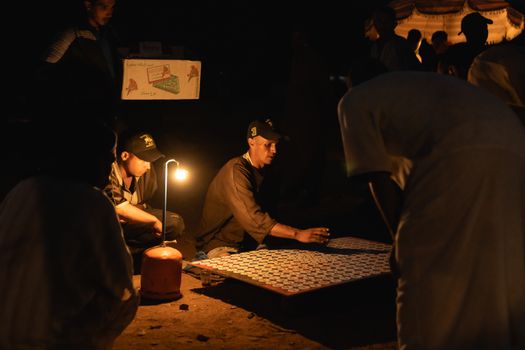
The Mancala family of games is perhaps the oldest board game in the world, with roots stretching back thousands of years to ancient Africa and the Middle East. These 'pit and pebble' games are played by two players, involving strategic counting, capturing, and sowing of seeds (or pebbles, beans, marbles) into rows of pits. Variations are found across the globe, known as Oware in Ghana, Congkak in Southeast Asia, and Bao in East Africa.
In a quiet village in Sumatra, Indonesia, I spent an afternoon learning Congkak from an elderly woman. Her board was a beautifully carved wooden masterpiece, smooth from generations of play. With infinite patience, she showed me how to 'sow' the cowrie shells, how to capture, and the subtle strategies involved. It was a meditative, almost spiritual experience, connecting me to centuries of tradition. The game wasn't just about winning; it was about the rhythm, the focus, and the shared time.
Where to find them:
Mancala games are often found in local markets, community centers, guesthouses, and homes. In parts of West Africa (like Ghana), you'll see Oware boards carved into wood or even the ground. In Malaysia, Indonesia, and the Philippines, Congkak boards are common.
How to learn: Ask a shopkeeper, a guesthouse owner, or simply observe a game and express interest. These games are often passed down orally, and locals love to share their knowledge.
Instagram-worthy moment: A close-up of hands gracefully moving shells on a beautifully carved wooden board, the intricate patterns of the pits, or a shot highlighting the serene concentration of the players in a rustic setting.
Bocce Ball & Pétanque: Europe's Laid-Back Lawn Games
Stepping into a sun-drenched piazza in Italy or a charming village square in France, you're likely to hear the satisfying clink of metal balls. These are the sounds of Bocce Ball (Italy) and Pétanque (France), two beloved 'boules' games that epitomize relaxed European leisure.
The objective is simple: throw your weighted balls (bocce balls are larger, pétanque boules smaller) closer to a smaller target ball (the pallino in Bocce, the cochonnet in Pétanque) than your opponent. It's a game of precision, strategy, and often, a good deal of friendly banter.
I fondly recall an afternoon in Provence, France. My partner and I were enjoying a picnic when we stumbled upon a group of elderly gentlemen playing Pétanque under a canopy of plane trees. They were sipping pastis, their faces etched with decades of laughter and sun. One of them, seeing us watching, waved us over. "Venez, mes amis! A glass of rosé, and try your hand!" We spent the next hour clumsily throwing boules, laughing at our misses, and soaking in the quintessential French atmosphere. It wasn't just a game; it was an experience, complete with the scent of lavender and the gentle hum of cicadas.
Where to find them:
Public parks, village squares, dedicated boules courts, and even vineyards across Italy and France. You'll often see older generations playing, but increasingly, younger people are embracing these timeless pastimes.
How to learn: Observe the game, note the rules (they are relatively straightforward), and politely ask if you can join a casual game. Often, locals are delighted to share their tradition, especially if you offer to buy a round of drinks afterward.
Instagram-worthy moment: The iconic image of boules scattered on a dusty court, hands holding the heavy metal balls, a backdrop of charming European architecture, or a candid shot of friends laughing over a glass of wine during a game.
Patintero: The Philippines' Tag-Team Tango
For a dose of high-energy fun and teamwork, look no further than Patintero, a traditional Filipino street game that’s like a dynamic, strategic game of tag. Played typically by two teams on a rectangular grid drawn on the ground, the objective is for one team (the "runners") to cross the entire grid without being tagged by the other team (the "guards"). The guards can only move along the lines of the grid, making it a thrilling chase of agility, speed, and coordinated blocking.
I encountered Patintero during a fiesta in a small town in Bohol, Philippines. A group of kids, flushed with excitement, were playing in the street, their shouts and giggles echoing. Intrigued, I stopped to watch. Before I knew it, a young girl grabbed my hand, pulling me into the "runners" team. I was hopelessly outmaneuvered, unable to dodge the quick, nimble guards, but the sheer joy and camaraderie of the kids were infectious. I left sweaty and defeated, but with a huge smile and a deep appreciation for their vibrant culture.
Where to find them:
Patintero is primarily a children's game, often played in neighborhood streets, schoolyards, and open spaces, especially during festivals or after school hours. You might also find it played by adults during community events.
How to learn: Watch local kids play. They are often incredibly welcoming and eager to teach foreigners. Don't be shy; join in! The rules are simple to grasp, though mastering the agility required is another story.
Instagram-worthy moment: Dynamic action shots of kids (and you!) mid-run or dodge, the lines of the Patintero grid on the ground, or a group shot of laughing players against a backdrop of local street art or colorful houses.
Your Playbook for Playing Like a Local: Practical Tips
Now that you're inspired to seek out these amazing experiences, here’s your actionable playbook for successfully connecting with locals through traditional games:
- Be Approachable and Respectful: A genuine smile and polite demeanor go a long way. Make eye contact. Remember you are a guest in their culture.
- Observe First: Before jumping in, take a few minutes to watch the game. Understand the basic rules, the flow, and the etiquette. This shows respect and helps you learn faster.
- Ask Politely (and Prepare for Language Barriers): A simple "May I watch?" or "Can you teach me?" (learn these phrases in the local language if possible) is usually enough. Don't worry if you don't speak the same language; games transcend words. Gestures, pointing, and patience will be your best allies.
- Embrace Imperfection: You won't be a master overnight. Locals don't expect you to be. The joy is in the participation, the effort, and the shared laughter at your (and their) mistakes. Don't take it too seriously.
- Offer a Small Gesture of Thanks: If you've joined a group, consider offering to buy a round of local drinks (chai, coffee, soft drinks) or sharing some snacks afterward. It’s a small token of appreciation that fosters goodwill.
- Prioritize Safety and Awareness: While these interactions are generally safe and positive, always be aware of your surroundings. Keep valuables secure and trust your instincts. If a situation feels off, politely excuse yourself.
- Share Your Own Games: Once you've learned theirs, offer to teach them a simple game from your own culture. This reciprocal exchange deepens the connection and makes the experience even more memorable.
- Capture the Moment (Respectfully): These are incredibly shareable, Instagram-worthy moments. However, always ask permission before taking photos or videos, especially of individuals. A quick gesture and a smile are usually sufficient.
Ready to Play? Your Next Adventure Awaits!
The world is a playground, rich with traditions waiting to be discovered. By stepping off the well-trodden tourist path and engaging with locals through their traditional games, you're not just creating memories; you're building bridges, fostering understanding, and experiencing cultures in their purest, most joyful form.
My Carrom game in Varanasi, the Sepak Takraw attempts in Bangkok, the Congkak lesson in Sumatra, the Pétanque afternoon in Provence, and the Patintero sprint in Bohol – these aren't just stories; they're the moments that define my travels. They are the moments I truly felt connected.
So, on your next adventure, keep an eye out. Listen for the laughter, the rhythmic clatter, the shouts of joy. Don't just watch; ask to join. Be open, be curious, and be ready to play. You might just find that the most authentic souvenirs aren't things you buy, but the shared experiences you carry in your heart.
What traditional game will you learn on your next trip? Share your plans and past experiences in the comments below! Let's inspire each other to play our way around the world!
---