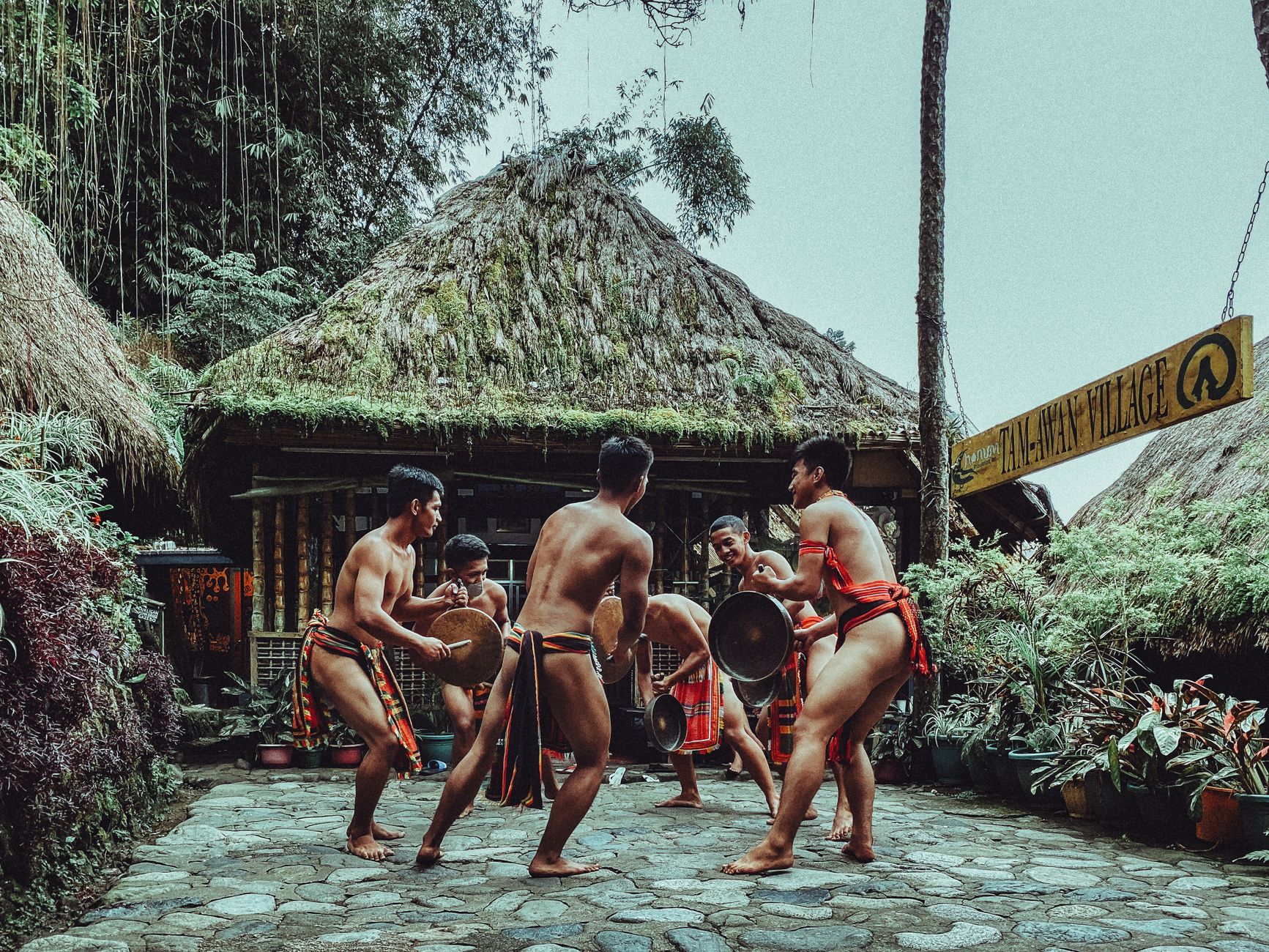
Beyond the Tourist Trail: Traditional Games That Changed My Life Forever
The scorching afternoon sun beat down on the dusty alleyway in Jodhpur, India. I was attempting, with questionable success, to flick a small wooden disc across a polished board, aiming for a tiny pocket. Around me, a group of local men, ranging from teenagers to grandfathers, chuckled good-naturedly at my clumsy efforts. One of them, a wizened elder with a twinkle in his eye, leaned over, adjusted my posture, and whispered a tip in broken English. I missed again, but this time, a roar of laughter erupted, not at me, but with me. In that moment, surrounded by strangers, sharing a simple game of Carrom, I felt a connection deeper than any monument or museum could ever offer. I wasn't just observing a culture; I was part of it.
That afternoon wasn't an isolated incident. Over years of wandering this incredible planet, I've discovered a secret superpower for unlocking authentic travel experiences: traditional games. Forget the curated tours and the Instagram-perfect spots. The real magic happens when you sit down, get your hands dirty, and let locals teach you the games that weave through the fabric of their daily lives. These aren't just ways to pass the time; they are living histories, social lubricants, and profound teachers. They changed my life, not just my travel itinerary, and I'm here to tell you how they can change yours too.
The Universal Language of Play: Why Games Break Down Barriers
Before I dive into specific games that have left an indelible mark on my soul, let's talk about why this approach is so transformative. As travelers, we often seek to understand a place, its people, and its customs. We read books, visit historical sites, and sample local cuisine. All valuable, of course. But games? Games offer something more immediate, more visceral.
- Instant Connection: You don't need a shared language to understand the joy of winning or the frustration of a missed shot. A smile, a gesture, a shared laugh – these are universal.
- Cultural Immersion, Not Observation: Instead of being a spectator, you become a participant. You learn about local customs, social hierarchies (who gets to brag, who buys the next round of tea), and even subtle communication cues.
- Authenticity Unlocked: Locals rarely play these games for tourists. They play them because it's part of their daily rhythm. When you join in, you're stepping into their real world, not a performance.
- Patience and Humility: You'll likely be terrible at first. This vulnerability is endearing and often melts away any initial suspicion or shyness from locals. It shows you're willing to learn and respect their traditions.
- Unforgettable Memories: Trust me, you'll remember the time you almost won a game of Bao against a Kenyan elder far more vividly than another selfie in front of a landmark.
Ready to trade your guidebook for a game board? Let's dive into some of the traditional games that have truly changed my perspective and connected me to humanity in the most beautiful ways.
1. Carrom (India & South Asia): The Art of the Finger Flick
My introduction to Carrom was, as mentioned, in the labyrinthine streets of Jodhpur. But it's not just an Indian phenomenon; Carrom boards are found in homes, cafes, and community centers across India, Pakistan, Bangladesh, Sri Lanka, and beyond. It’s a tabletop strike-and-pocket game, often described as "finger billiards."
The Experience:
My first attempts were laughable. My striker finger, usually adept at typing emails, was a clumsy tool for sending the heavier "striker" disc accurately across the smooth, powdered board. The goal is to pocket your nine assigned pieces (black or white) plus the red "queen" before your opponent. The stakes? Usually, bragging rights, a cup of chai, or sometimes just the sheer joy of competition.
I remember one particularly intense evening in a small tea stall in Varanasi. The air was thick with the scent of spices and diesel, and the chatter of Hindi. I was playing against a young student named Rohan and his grandfather. Rohan, probably 19, spoke decent English and patiently explained the nuances: the "cut" shot, the "back shot," the etiquette of asking for powder when the board got sticky. His grandfather, silent mostly, communicated through knowing glances and the occasional approving nod when I managed a decent shot.
The beauty of Carrom lies in its accessibility. Boards are everywhere, often set up in public spaces. Locals are usually delighted to see a curious foreigner and even more so if you show genuine interest.
How to Get Started:
* Where: Look for small cafes, tea stalls, community centers, or even just groups of people gathered around a board in city squares across India, Nepal, or Sri Lanka.
* Approach: A simple "Namaste" and a gesture towards the board, perhaps asking "Can I watch?" or "Can you teach me?" (using a translation app if needed) usually works wonders.
* Cost: Free to play if you join a local group. A cup of chai might be a polite gesture (around 20-50 INR, less than $1 USD).
* Tips: Don't be afraid to ask for tips on technique. Observe their finger placement and striking power. And remember to apply powder (talcum powder or specific Carrom powder) to the board for smooth play!
Playing Carrom taught me patience, precision, and the power of non-verbal communication. It also showed me that some of the most profound connections happen over the simplest of shared activities.
2. Da Cau / Jip (Vietnam & Southeast Asia): The Dance of the Shuttlecock
Imagine badminton, but without rackets, and with your feet. That's Da Cau (or Jip in some parts of Southeast Asia). This vibrant, acrobatic game involves keeping a feather shuttlecock (often weighted with rubber or plastic) in the air using only your feet, knees, chest, and head. It's mesmerizing to watch and incredibly fun (and challenging) to play.
The Experience:
I first encountered Da Cau in a park in Hanoi, Vietnam, early one morning. A group of elderly men and women, some still in their pajamas, were gracefully kicking the shuttlecock back and forth, creating a beautiful, rhythmic dance. I stood mesmerized, clutching my camera. One of the men, spotting my fascination, beckoned me over with a warm smile.
My first attempt was, predictably, a disaster. The shuttlecock flew wildly, my foot missed entirely, and I nearly tripped over myself. But they didn't laugh at me; they laughed with me, encouraging me with claps and shouts of "cố lên!" (go for it!). They showed me how to use the side of my foot, how to anticipate the shuttlecock's trajectory, how to keep my balance. It felt less like a game and more like learning a new form of movement, a fluid conversation between body and object.
Over the next few days, I sought out Da Cau players in parks across Vietnam and later in Thailand (where it's similar but often called Sepak Takraw, though that's more formalized and uses a rattan ball). Each time, the experience was a burst of energy, shared smiles, and physical exertion that left me feeling invigorated and deeply connected to the local rhythm of life.
How to Get Started:
* Where: Public parks, open squares, schoolyards, and sometimes even quiet street corners, especially in the mornings or evenings in Vietnam, Thailand, Malaysia, and Laos.
* Approach: Simply watch for a bit, then approach with a friendly smile and a gesture towards the shuttlecock. Most players are happy to share.
* Cost: Free. The shuttlecocks are cheap if you want to buy your own (around 20,000-50,000 VND, $1-2 USD) and practice.
* Tips: Start by trying to keep it in the air with just your foot. Don't worry about hitting it to others at first. Observe how they use their instep and the side of their foot. It's all about control and rhythm!
Da Cau taught me the beauty of physical expression, the joy of collective movement, and how to embrace being a clumsy beginner with grace.
3. Bao (Kenya & East Africa): The Ancient Strategy of the Mankala Master
Venturing into East Africa, I discovered Bao, a game that captivated me with its deep strategic layers and rich cultural history. Bao is a member of the Mancala family of games, played on a wooden board with two or four rows of scooped-out pits. The objective is to capture as many of your opponent's seeds (usually pebbles, beans, or actual seeds) as possible.
The Experience:
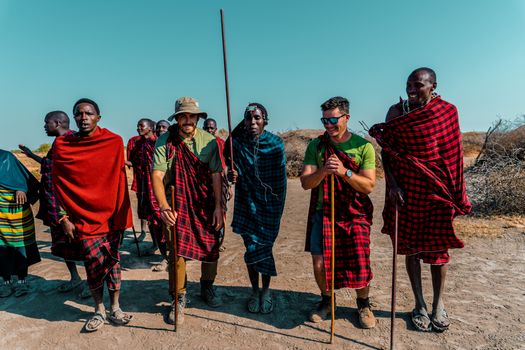
I first encountered Bao in a small village near Lake Naivasha in Kenya. My guide, a Maasai elder named Ole, introduced me to his community. After a delicious meal of ugali and sukuma wiki, the men gathered under a baobab tree, and out came a beautifully carved wooden board. Ole pointed to the pits, explaining the rules with a mix of Swahili and gestures.
Bao is complex. Unlike some other Mancala games, it has a "start game" phase and a "main game" phase, with intricate rules for capturing seeds and sowing them across the board. My brain, used to modern board games, felt like it was doing mental gymnastics. Ole and his friends played with an almost meditative intensity, their fingers moving with practiced ease, their eyes sharp with calculation.
I lost, of course. Repeatedly. But each loss was a lesson. They patiently showed me optimal moves, explained the flow of the game, and celebrated my rare, accidental good moves with hearty laughter. It wasn't just about winning; it was about the shared intellectual challenge, the quiet camaraderie, and the respect for a game passed down through generations. I spent hours over several days, slowly grasping the nuances, feeling my mind expand with each strategic decision.
How to Get Started:
* Where: Rural villages, community centers, and even some urban markets in Kenya, Tanzania, Zanzibar, and Malawi. Look for groups of men (it's traditionally a male-dominated game, though women play too) gathered around a board.
* Approach: A respectful greeting (e.g., "Jambo" in Swahili) and expressing interest in the game. Ask "Can you teach me?" ("Unanifundisha?" in Swahili).
* Cost: Free. Sometimes, you might find beautifully carved Bao boards for sale in tourist markets (expect to pay $20-50 USD depending on size and craftsmanship).
* Tips: Don't be intimidated by the complexity. Focus on understanding the basic sowing and capturing rules first. Watch experienced players closely. It’s a game of patience and long-term strategy.
Bao taught me the beauty of deep strategic thinking, the value of slow learning, and the profound connection that can be forged through shared intellectual challenge. It was a humbling yet incredibly enriching experience.
4. Bocce (Italy & Southern Europe): The Gentle Art of the Roll
From the strategic depths of Africa to the sun-drenched courtyards of Italy, Bocce offers a different kind of connection: relaxed, social, and often accompanied by good food and wine. Bocce is a ball game similar to lawn bowls or pétanque, where players throw or roll heavy balls (bocce balls) as close as possible to a smaller target ball (the pallino).
The Experience:
My first true Bocce immersion was in a small village in Tuscany, during a cycling trip through Italy. We'd stopped at a local trattoria for lunch, and in the shaded courtyard, several generations of a family were engaged in a lively game. Grandparents, parents, and grandchildren, all laughing, gesturing, and occasionally debating a close measurement.
I was invited to join by a jovial man named Marco, who spoke about as much English as I spoke Italian (which was minimal). But the rules of Bocce are simple enough to convey with gestures. You aim for the pallino. Get closer than your opponent, you score. Simple. The real game, however, is in the banter, the gentle teasing, the shared enjoyment of a leisurely afternoon.
Marco showed me how to roll the heavy ball, how to consider the slight slope of the terrain, and when to try and "kiss" the pallino for a perfect shot, or even "spoil" an opponent's good position. The game was less about winning and more about the rhythm of play, the clinking of glasses, the aroma of garlic and olive oil wafting from the kitchen, and the sheer joy of being together. It was a masterclass in dolce vita.
How to Get Started:
* Where: Parks, village squares, private courtyards, and dedicated bocce courts across Italy, France (pétanque is similar), and other Mediterranean countries. Look for groups playing, often in the late afternoon or early evening.
* Approach: A friendly "Ciao!" and a curious look at the game. Most Italians are incredibly welcoming and happy to share their traditions.
* Cost: Free to play. A glass of local wine or a coffee might be a nice gesture if you're at a bar/trattoria.
* Tips: Observe how players roll the ball – it's not always a hard throw. Sometimes a gentle roll with backspin is more effective. Learn a few basic Italian phrases like "Bravo!" or "Bella giocata!" (good shot).
Bocce taught me the beauty of slow living, the importance of intergenerational connection, and that sometimes, the best games are the ones where the company matters more than the score.
5. Lotería (Mexico & Latin America): Bingo with a Story
Lotería is not just a game in Mexico; it's a cultural institution. Often described as "Mexican Bingo," it uses a deck of 54 illustrated cards instead of numbers, and players mark off corresponding images on their boards. Each card has a name and often a short, humorous riddle or saying associated with it.
The Experience:
I stumbled upon Lotería during a Day of the Dead festival in Oaxaca, Mexico. A family had set up a makeshift table in the street, calling out cards with theatrical flair. The air was electric with laughter, the smell of marigolds, and the sounds of mariachi music.
The "cantor" (caller) wasn't just reading card names; he was performing. "El Borracho!" (The Drunkard!), he'd bellow, often followed by a comical anecdote or a quick joke. "La Sirena!" (The Mermaid!), prompting a collective sigh from the children. I joined a game, initially bewildered by the rapid-fire Spanish and the vibrant imagery. A young girl, maybe eight years old, sat beside me, patiently pointing to the images on my board as the caller announced them.
The game was a whirlwind of sensory input – the rustle of beans used as markers, the shouts of "¡Lotería!" when someone won, the playful groans of those who missed out. It was a crash course in Mexican culture, art, and humor, all wrapped up in a simple, engaging game. I bought my own Lotería deck shortly after and spent many evenings playing with newfound friends, slowly learning the names and the stories behind each iconic image.
How to Get Started:
* Where: Family gatherings, community centers, markets, and festivals across Mexico and parts of Latin America. Often played casually in homes.
* Approach: Look for groups playing, especially families. A friendly "Hola" and asking "Qué están jugando?" (What are you playing?) or "Me pueden enseñar?" (Can you teach me?) usually works.
* Cost: Free to play. Lotería decks are widely available in markets and souvenir shops for a few dollars (50-150 MXN, $3-8 USD).
* Tips: Don't worry if your Spanish isn't perfect. The images are key. Listen for the names, but also look at the cards the caller holds up. Try to learn the associated sayings – they're often very revealing about Mexican culture.
Lotería taught me the power of storytelling, the joy of collective humor, and how a simple game can be a vibrant celebration of identity and tradition.
Practical Tips for Becoming a Game-Playing Traveler
So, you're ready to ditch the selfie stick for a shuttlecock? Fantastic! Here are some actionable tips to help you connect through traditional games:
- Be Observant: Look for groups of people playing games in parks, squares, markets, or even quiet streets. Pay attention to the age groups and the general vibe.
- Approach with Respect and Humility: A warm smile, a friendly greeting in the local language (even if it's just "hello"), and a gesture towards the game is usually enough. Don't interrupt; wait for a natural break.
- Ask to Learn, Not Just Play: Frame your request as wanting to learn their game. "Can you teach me?" shows respect for their knowledge and culture. Avoid acting like you're an expert, even if you've played similar games.
- Embrace Being a Beginner: You will be bad at first. Laugh at yourself, make mistakes, and don't be afraid to ask for clarification. This vulnerability is often endearing.
- Learn Basic Phrases: "Thank you," "hello," "please," "good shot," "sorry" in the local language go a long way. A translation app can be a lifesaver for more complex questions.
- Offer to Buy a Round/Tea/Snack: If you're in a cafe or tea stall, offering to buy a round of drinks or snacks for the group is a wonderful gesture of appreciation.
- Be Mindful of Local Customs: In some cultures, certain games might be gender-specific or have specific etiquette. Observe and follow their lead.
- Carry Small Tokens (Optional): Sometimes, a small, inexpensive gift from your home country (like a postcard or a local coin) can be a lovely way to say thank you, especially in more rural areas.
- Don't Be Afraid of Silence: Sometimes, the connection isn't in constant chatter but in the shared focus on the game.
- Take Photos (Respectfully): Ask permission before snapping pictures, especially close-ups of people. A quick "photo?" with a gesture to your camera is usually understood. Offer to send them copies if you can!
Beyond the Scoreboard: The Lasting Impact
These weren't just games; they were portals. Portals to understanding, to connection, to a deeper appreciation of the human spirit. They taught me that joy is universal, that laughter transcends language barriers, and that some of the richest cultural exchanges happen far away from the polished tourist brochures.
Learning traditional games changed my travel style. I started seeking out these interactions, deliberately carving out time to wander off the main drag and observe daily life. It changed my perspective on what "travel" even means – moving from passive observation to active participation. It taught me patience, humility, and the immense satisfaction of genuine human connection.
These games, taught by strangers who quickly became friends, didn't just change my life on the road. They instilled in me a deeper sense of global community, a reminder that despite our differences, we all share a fundamental desire for connection, for play, and for sharing a moment of pure, unadulterated joy.
So, on your next adventure, put down your phone, step away from the crowded attractions, and look for the game being played in the corner of a park, the tea stall, or the village square. Take a deep breath, offer a smile, and ask to learn. I promise you, it will be one of the most enriching, authentic, and life-changing experiences you'll ever have.
What traditional games have you played on your travels? Share your stories in the comments below! Let's inspire each other to play our way around the world.
---