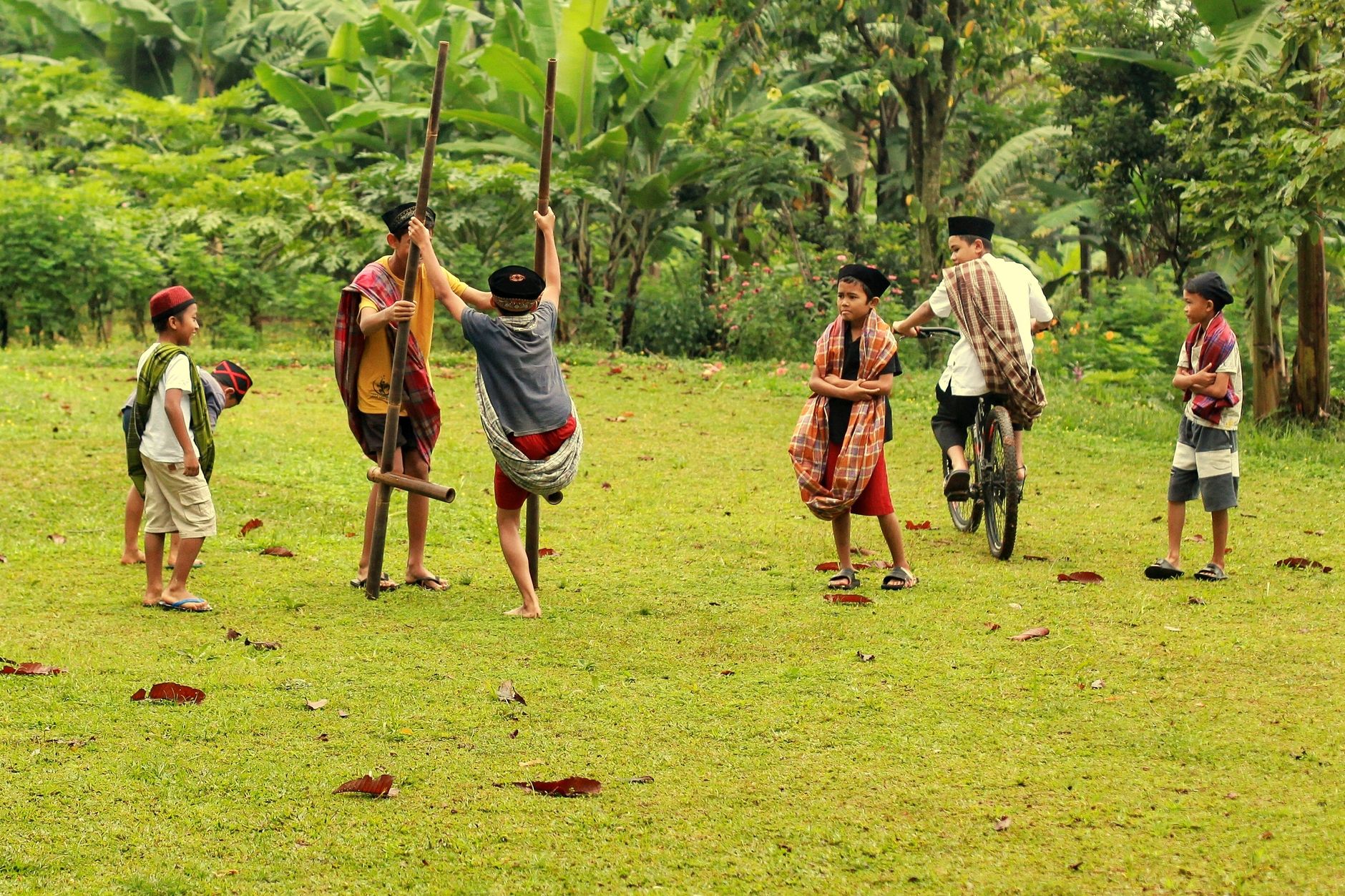
Have you ever landed in a new country, wandered through its bustling markets, marvelled at its ancient temples, and yet felt… a slight disconnect? Like you’re watching a beautiful movie from the outside, rather than being a part of it? I know that feeling well. For years, I chased landmarks, ticked off famous sights, and snapped countless photos, but something always felt missing.
Then, on a dusty afternoon in a small village outside Jaipur, India, everything changed. I was trying to navigate a conversation with a group of local kids, their Hindi a delightful blur to my ears, when one of them picked up two crudely carved pieces of wood. With a mischievous grin, he gestured for me to join them. What followed was a chaotic, hilarious, and utterly liberating game of Gilli Danda – a rustic, rural version of bat and ball. Language barriers crumbled under shared laughter, clumsy attempts, and triumphant cheers. In those moments, I wasn't just a tourist; I was a participant, a friend, a part of their world.
That day sparked a revelation: the deepest, most authentic travel experiences often don't come from guided tours or Michelin-starred meals. They come from the simple, universal act of play. Traditional games are living embodiments of culture, history, and community spirit. They’re icebreakers, storytellers, and instant friendship-makers. And the best part? Locals are often thrilled to teach you.
So, ditch the guidebooks for a moment, step outside your comfort zone, and prepare to embark on an adventure that will connect you to the heart and soul of a destination. These aren't just games to pass the time; they're experiences you absolutely need to have before you die.
1. The Ballad of the Rattan Ball: Sepak Takraw (Southeast Asia)
Imagine volleyball, but instead of using your hands, you use only your feet, knees, chest, and head. Now imagine it played with a lightweight, hand-woven rattan ball, and you’re getting close to Sepak Takraw. This incredibly dynamic sport, often called "kick volleyball," is a cornerstone of culture in countries like Thailand, Malaysia, and Indonesia.
My first encounter with Sepak Takraw was on a beach in Krabi, Thailand. A group of young men were effortlessly juggling the ball, executing gravity-defying bicycle kicks and acrobatic serves that made my jaw drop. I stood transfixed, feeling like I was watching an ancient martial art mixed with extreme sports. One of them, noticing my awe-struck gaze, flashed a wide smile and simply pointed at the ball, then at me. "Try?" he asked, his English limited but his invitation clear.
Hesitantly, I joined. The ball, so light and innocent-looking, felt like a slippery eel when I tried to kick it. My attempts were pathetic – the ball would fly off in random directions, or I'd miss it entirely, tripping over my own feet. But the locals didn’t laugh at me; they laughed with me. They patiently demonstrated the basic foot-volley, the knee-jerk, even a rudimentary header. They cheered my smallest successes and offered encouraging pats on the back. By the end of an hour, I was still terrible, but I had managed a few consecutive kicks, my legs burning, my face beaming.
Why you need to experience it:
Sepak Takraw is a masterclass in agility, precision, and teamwork. It’s a vibrant display of cultural athleticism and a fantastic way to break a sweat while breaking down barriers. You’ll gain immense respect for the players and a profound appreciation for the human body's capabilities. Plus, it’s incredibly fun to watch and even more fun to attempt!
How locals will teach you:
They'll often invite you with a simple gesture or a friendly "Come, try!" They’ll demonstrate basic moves slowly and patiently, often laughing good-naturedly at your initial clumsiness.
Practical Tips:
* Observe first: Watch how the pros handle the ball.
* Start simple: Focus on keeping the ball in the air with simple foot or knee taps. Don't aim for the fancy kicks right away.
* Don't be afraid to look silly: Everyone starts somewhere, and your effort is what counts.
* Where to find it: Look for groups playing in parks, on beaches (especially at sunset), or in open community spaces. In places like Bangkok, Kuala Lumpur, or even smaller towns like Langkawi, you'll often find informal games happening in the late afternoon.
* Instagram-worthy moment: Capture the incredible acrobatics of the players, or a hilarious shot of your own valiant (but clumsy) efforts!
2. The Ancient Strategy of Seeds: Oware (Ghana/West Africa)
Stepping onto the dusty, sun-baked streets of Ghana, I was immediately struck by the rhythm of life – the vibrant fabrics, the infectious music, and the constant hum of conversation. But it was in a small, shaded courtyard in Kumasi that I discovered a different kind of rhythm: the strategic clack of seeds on a wooden board during a game of Oware.
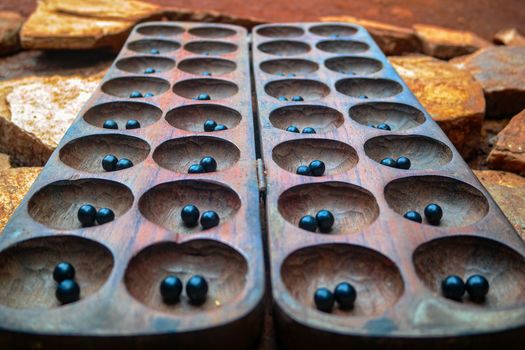
Oware is a traditional African board game, a variant of the Mancala family, played with seeds or pebbles in a series of carved holes. It’s a game of profound strategy, foresight, and mathematical intuition. I watched an elder, his face a map of wisdom, playing with a young man, their movements deliberate, their eyes darting across the board with intense concentration. The elder, sensing my curiosity, gestured for me to sit.
He patiently explained the rules through a translator: "Each player owns six holes. You pick up all the seeds from one of your holes and 'sow' them, one by one, into subsequent holes. The goal is to capture more than half of the opponent's seeds." Simple in concept, but complex in execution. My first few games were a disaster. I'd empty a hole, sow my seeds, and invariably set up my opponent for a massive capture. The elder, however, never gloated. He’d offer quiet advice, sometimes just a gentle tap on a different hole, guiding my hand. It wasn't about winning for him; it was about teaching, about passing on a legacy.
Why you need to experience it:
Oware is more than just a game; it's a window into the intellectual heritage of West Africa. It teaches patience, strategic thinking, and respect for elders. Playing it connects you to a lineage of thought that stretches back centuries, offering a truly unique cultural immersion.
How locals will teach you:
Often, an elder or experienced player will take the time to explain the rules with great patience, perhaps even sharing proverbs or stories related to the game's wisdom.
Practical Tips:
* Observe before you play: Watch a few rounds to grasp the flow and basic strategies.
* Don't be afraid to ask questions: Locals appreciate your genuine interest.
* Embrace the slowness: Oware is not a fast-paced game. Take your time, think your moves through.
* Where to find it: Look for people playing in markets, village squares, guesthouses, or even roadside stalls in countries like Ghana, Côte d'Ivoire, and Benin. Boards are often beautifully carved and make excellent souvenirs (expect to pay around 20-50 GHS for a basic wooden board in Ghana).
* Instagram-worthy moment: A close-up of the beautiful wooden board and the intense, thoughtful expressions of the players.
3. The Gentle Art of the Boule: Pétanque (France)
From the strategic intensity of Oware, we shift gears to the laid-back charm of Pétanque. This quintessential French pastime, similar to Italian Bocce, involves throwing hollow metal balls (boules) as close as possible to a small wooden target ball (cochonnet or "piglet"). It's less about raw athleticism and more about precision, strategy, and good company.
My first Pétanque experience was in a sun-drenched park in Lyon, France. The air was thick with the scent of freshly baked bread and the clinking of boules. Elderly gentlemen, berets perched jauntily on their heads, played with an effortless grace, often with a glass of pastis or rosé within arm's reach. My friend and I, feeling a bit out of place, were simply observing when a kindly-looking man with a magnificent mustache beckoned us over.
"Venez, mes amis!" he boomed, gesturing to an open spot on the gravel court. He handed us each a heavy boule, demonstrated the proper grip – palm down, wrist loose – and showed us how to "point" (throw for precision) and "shoot" (throw to knock an opponent's boule away). There was no pressure, only encouragement. We laughed as our boules bounced wildly or fell short, and they applauded our rare successes. We spent a blissful afternoon, the conversation flowing easily between broken French and enthusiastic gestures, punctuated by the satisfying clink of metal on metal.
Why you need to experience it:
Pétanque embodies the French art of joie de vivre – the joy of living. It’s a wonderfully social game, perfect for slow travel, fostering camaraderie and allowing you to soak in the local atmosphere. It's a reminder that sometimes the best experiences are the simplest.
How locals will teach you:
Locals are often very welcoming. Simply observe, smile, and express interest. They’ll likely invite you to join, show you the basics, and appreciate your willingness to engage.
Practical Tips:
* Focus on precision, not power: The goal is to get close to the cochonnet.
* Enjoy the social aspect: It’s as much about the conversation and company as it is about the game itself.
* Don't worry about gear: Most groups will have extra boules they're happy to lend.
* Where to find it: Parks, village squares, and dedicated boules clubs (boulodromes) across France, especially in the south. You’ll also find variations in Italy (Bocce) and Spain. Look for groups playing on gravel or dirt pitches, often in the late afternoon.
* Instagram-worthy moment: A shot of the boules scattered around the cochonnet, with players in the background, perhaps with a glass of wine or a picturesque French townscape.
4. The Rural Rhythms of Bat and Stick: Gilli Danda (India)
Remember that game I mentioned from Rajasthan? That was Gilli Danda, and it’s an absolute riot. This ancient sport, popular across India and parts of South Asia, is the grandfather of cricket and baseball. It's played with two wooden sticks: a large one (the danda) and a smaller, spindle-shaped one (the gilli). The goal is to use the danda to flick the gilli into the air and then hit it as far as possible, akin to a rustic home run.
My experience with Gilli Danda, as I mentioned, was purely accidental and utterly delightful. Driving through a dusty village in Rajasthan, we spotted a group of kids, aged 8 to 16, playing in an open field. Their laughter and shouts were infectious. My driver, a local, encouraged me to stop. I watched for a bit, trying to figure out the rules, when the boy with the danda handed it to me.
My first attempt to flick the gilli from the ground was a pathetic scrape. The kids erupted in giggles, then patiently showed me how to tap the gilli's end to make it pop up, then swing the danda with force. My second attempt was better, sending the gilli a few feet. My third, a lucky shot, sent it soaring! The whole group cheered as I ran, trying to follow the gilli's trajectory. It was hot, dusty, and wonderfully chaotic. I spoke very little Hindi, and they spoke even less English, but the language of play was universal.
Why you need to experience it:
Gilli Danda is raw, unfiltered fun. It connects you to the grassroots culture of India, to the simple joys of childhood, and to the enduring spirit of community. It’s a great way to experience the pure, unadulterated joy of play with locals.
How locals will teach you:
Often, it's an impromptu invitation from a group of kids. They'll be enthusiastic, hands-on, and incredibly patient with your (likely) clumsy first attempts.
Practical Tips:
* Watch the flick: The key is to get the gilli airborne with a subtle tap before swinging the danda.
* Be ready to run: Scoring involves measuring distances, so be prepared for some energetic dashes.
* Embrace the chaos: It's often an informal game, so just go with the flow and enjoy the energy.
* Where to find it: Most commonly seen in rural areas, open fields, and village common grounds across India, Pakistan, Bangladesh, and Nepal. It's less common in major cities but can still be found in local neighborhoods.
* Instagram-worthy moment: Action shots of the gilli flying, kids cheering, and the vibrant backdrop of rural life.
5. The Elegant Dance of Pebbles: Congkak (Malaysia/Indonesia)
Back to the strategic board games, but with an elegant twist. Congkak (or Sungka in the Philippines, a variant of Mancala) is a captivating game played on a beautifully carved wooden board, often shaped like a boat, with two rows of seven smaller holes and two larger "store" holes at each end. The pieces are typically cowrie shells, pebbles, or tamarind seeds.
I first learned Congkak during a homestay experience in Penang, Malaysia. My host family, a multi-generational household, would gather in the evenings, the rhythmic clatter of shells filling the air. The grandmother, a woman with kind eyes and a mischievous smile, saw me observing and gently patted the seat beside her.
She demonstrated the "sowing" process: pick up all the shells from one of your holes and distribute them one by one into subsequent holes, including your own "store" hole, but not your opponent's. The goal is to collect as many shells as possible in your store. The strategic depth quickly became apparent – a good move could capture a whole row of your opponent's shells. She taught me to think several moves ahead, to anticipate my opponent's captures, and to protect my own valuable holes. Each game was a quiet dance of wits, a peaceful yet intense competition that transcended language.
Why you need to experience it:
Congkak is a beautiful blend of strategy and cultural artistry. It offers a calm, contemplative way to connect with locals, often in a more intimate setting like a home. It’s a testament to the enduring human fascination with patterns, logic, and friendly competition.
How locals will teach you:
Often taught by elders or family members in a relaxed, intimate setting. They'll patiently guide you through the rules and help you develop basic strategies.
Practical Tips:
* Understand the "capture" rule: This is key to winning. If your last seed lands in an empty hole on your side, and the opposite hole on your opponent's side has seeds, you capture all those seeds.
* Plan ahead: Look for opportunities to capture or create "safe" holes.
* Enjoy the rhythm: The sound of the seeds being distributed is part of the charm.
* Where to find it: Common in homestays, cultural centers, local cafes, and family gatherings across Malaysia, Indonesia, Singapore, and the Philippines. Beautifully crafted boards are often sold in artisan markets (expect to pay 50-200 MYR depending on size and craftsmanship).
* Instagram-worthy moment: A close-up of the intricately carved wooden board with colorful shells, hands engaged in play, and perhaps a glimpse of the cozy, inviting setting.
6. The Chilean Challenge: Rayuela (Chile)
Finally, let's head to South America for a uniquely Chilean experience: Rayuela. This game, often played during fiestas patrias (national holidays) or family gatherings, is a simple yet addictive target sport. The objective is to throw a metal disc (or a coin, or even a stone) as close as possible to a chalk line drawn on a dirt court. Points are awarded based on how close your disc lands, with the ultimate goal being to land directly on the line itself – a "quemada."
I stumbled upon Rayuela at a lively outdoor festival in the Colchagua Valley, Chile, famous for its wine. The air was filled with music, the smell of asado (barbecue), and the excited shouts of people playing this intriguing game. Men and women, young and old, were taking turns, their faces a mix of concentration and anticipation.
A friendly group, noticing my interest, waved me over. They handed me a heavy metal disc, surprisingly weighty, and pointed to the line about 10 meters away. "¡A la línea!" one man encouraged, meaning "To the line!" My first throw was pitifully short, kicking up a puff of dust far from the target. The group chuckled good-naturedly. They showed me how to hold the disc, the subtle flick of the wrist, and the importance of a smooth release. With each attempt, I got a little closer, and with each closer throw, the cheers from my new friends grew louder. The simple act of throwing a disc became a shared celebration, a moment of pure, unadulterated joy.
Why you need to experience it:
Rayuela is a fantastic way to engage with Chilean culture in a fun, active, and social setting. It’s easy to learn, instantly gratifying, and provides a wonderful opportunity to experience the warmth and hospitality of the Chilean people.
How locals will teach you:
They’ll likely invite you to join their game, explain the simple rules, and offer tips on throwing technique. Expect lots of encouragement and friendly banter.
Practical Tips:
* Focus on accuracy: It's all about getting as close to the line as possible.
* Don't overthink it: A relaxed, natural throw is often more effective than a forced one.
* Embrace the festive atmosphere: Rayuela is often played during celebrations, so soak in the joy.
* Where to find it: Most commonly played in rural areas, during fiestas and family gatherings, and in dedicated canchas de rayuela (Rayuela courts) across Chile. You might also find variations in other South American countries.
* Instagram-worthy moment: A dynamic shot of a disc in mid-air, a player's focused expression, or a celebratory group shot with the Chilean landscape in the background.
---
Play Your Way to Unforgettable Memories
These six games are just a tiny glimpse into the rich tapestry of traditional play that exists across our incredible planet. Each offers a unique opportunity to step beyond the tourist facade and truly immerse yourself in a culture, to connect with people on a fundamental human level, and to create memories that no souvenir could ever match.
The beauty of these experiences isn't just in mastering the rules or winning a game (which, let's be honest, you probably won't do on your first try!). It's in the shared laughter, the patient teaching, the universal language of a smile, and the feeling of belonging, however fleeting, in a place far from home. These are the moments that truly enrich your life, broaden your perspective, and remind you of the incredible kindness and diversity of humanity.
So, on your next adventure, don't just see the world – play in it. Seek out these traditional games, open yourself to the invitation of a local, and get ready for some of the most authentic, heartwarming, and unforgettable experiences of your life. Which game will you seek out first? Share your experiences in the comments below! Bookmark this, pack your bags, and get ready to play your way to the heart of local culture.
---