The Day I Trashed My Badaling Ticket
I stepped off the local S2 train into the crisp dawn air at Badaling Station and was instantly engulfed by a sea of megaphones, neon tour hats, and hawkers yelling prices for plastic souvenirs. It didn't feel like standing on one of humanity's greatest architectural wonders; it felt like waiting in line for a roller coaster in mid-summer.
I turned around, bought a bottle of warm green tea from a roadside stall, handed my return train pass to a confused stranger, and called Master Zhang—a local driver whose number I’d scribbled on a napkin at a Beijing tea house two nights prior.
"You want the 野长城 (Wild Wall)?" Zhang grunted over the phone, the smell of his burning Chunghwa cigarette almost wafting through the receiver. "Meet me at the northern gas station in Huairou. Bring sturdy boots. No cable cars where we’re going."
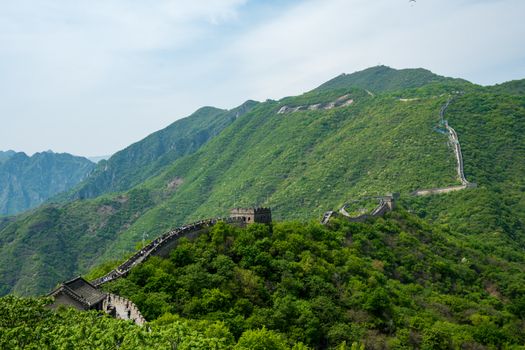
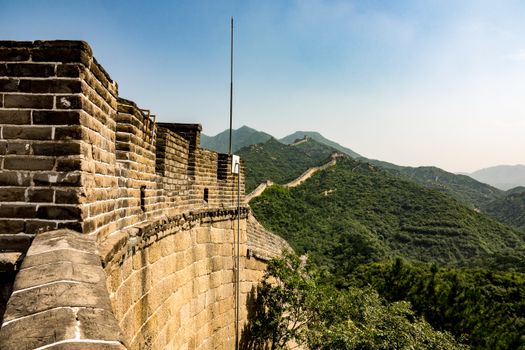
Three hours later, I was gripping calcified Ming-dynasty mortar with my fingertips, scrambling up a vertical staircase carved directly into jagged granite. The air tasted of pine needles, crushed granite dust, and woodsmoke blowing up from the valley. There were no selfie sticks. No guardrails. Just miles of weather-beaten dragon spine curving into the blue horizon.
If you want the version of China featured in travel brochures, go to Mutianyu. But if you want to experience the haunting, raw magnitude of an empire’s shield, here are six Great Wall sections tourists never visit that top travel experts, archaeologists, and seasoned expedition directors actively recommend.
---
1. Chenjiapu: The Hidden Brick Kiln Pass
Located on the boundary between Yanqing and Hebei Province, Chenjiapu (陈家堡) remains largely absent from English travel forums. While neighboring Badaling sees tens of thousands of visitors daily, Chenjiapu receives fewer than two dozen hikers on a busy weekend.
```
+-----------------------------------------------------------------------+
| ARCHITECTURAL NOTE: Unlike the fieldstone construction of early |
| Ming sections, Chenjiapu features specialized kiln-baked clay bricks |
| stamped with the names of the Ming military units that fired them. |
+-----------------------------------------------------------------------+
```
The Experience
Walking Chenjiapu feels like stepping into an active archaeological dig. The wall here transitions from restored gray stone into raw, crumbling rammed earth and dark red brickwork overbalanced on steep ridgelines. Bushy wild mulberry shrubs grow directly out of the stone parapets, yielding sweet, dusty berries in early summer.
The terrain alternates between preserved double-deck watchtowers and "collapsed spines" where the outer wall has sloughed off into the ravine, leaving narrow 18-inch ledges.
Expert Pro-Tip
* The Secret Entrance: Do not attempt to access the ridge via the main village square. Walk past the village head's courtyard, turn right down the gravel track behind the decommissioned brick kiln, and look for a blue metal orchard gate. The trail behind this gate leads straight up through a chestnut grove to Watchtower #3.
* Best Time: 6:30 AM in early October, when low-lying mountain fog fills the valley floor, leaving only the brick towers poking through like islands in an ocean of clouds.
---
2. Jiankou: The Vertical Adrenaline Rush
Ask any expert expedition leader in Beijing to name the most dramatic section of the wall, and Jiankou (箭扣) will be their immediate answer. Translated as "Arrow Nock" due to the sharp V-shape of the mountain pass, Jiankou was constructed out of white dolomite stone during the peak of the Ming Dynasty under General Qi Jiguang.
```
[Zhengbeilou Watchtower]
/\
/ \ <- Sky Stairs (70° Incline)
/ \
[Eagle Flies Facing Up] \
/\ \
/ \ [The Arrow Nock Pass]
```
The Architecture & Trail
Jiankou is famously un-restored and dramatically steep. Highlights include:
* The Eagle Flies Facing Up (鹰飞倒仰): A section so sheer that local legend says even an eagle must turn upside down to fly over it.
* The Sky Stairs: A near-vertical staircase where steps have eroded into narrow, slick inclines averaging 70-degree angles.
* Zhengbeilou (正北楼): The highest watchtower in the area, offering a panoramic view of the wall twisting toward Mutianyu in the distance.
The Local Flavor
After trekking down from Jiankou toward the village of Xizhazi, stop at one of the rustic courtyard nongjiale (farmhouses). Order the house specialty: Rainbow Trout (虹鳟鱼) caught live from cold mountain streams, split open, and roasted over wood charcoal slathered in cumin, coarse salt, and crushed Sichuan peppercorns. Pair it with wild mountain leeks stir-fried with farm-fresh eggs.
Expert Pro-Tip
* Safety Warning: Avoid Jiankou during or immediately after rain. The dolomite limestone turns dangerously slippery, and rockfalls are a real hazard.
* Gear Requirement: Wear high-ankle boots with aggressive lug soles. Leave trekking poles behind if you don't have a way to stow them on your pack—you will need both hands free to scramble.
---
3. Gubeikou & Panlongshan: The Unbroken Battlefield
While other sections fell into ruin solely due to weather, Gubeikou (古北口) and its sister ridge Panlongshan (盘龙山 - Coiling Dragon Mountain) bear the scars of modern war. This key strategic pass saw heavy fighting during the 1933 Battle of Rehe between the National Revolutionary Army and the Imperial Japanese Army.
```
+----------------------------------------------------------------------+
| BATTLEFIELD EVIDENCE |
| Look closely at the southern facade of the 24-Eye Tower (二十四眼楼).|
| The exterior bricks are pockmarked with heavy machine-gun and shell |
| impacts from the 1933 defense of the pass. |
+----------------------------------------------------------------------+
```
Why Experts Love It
Gubeikou offers one of the longest continuous wild wall hikes near Beijing that doesn't require technical rock climbing skills. It feels like an outdoor museum of military engineering, featuring:
* Round Watchtowers: A rarity along the Great Wall, designed to deflect catapult boulders and modern artillery.
* Double Layer Walls: Fortifications built parallel to one another to trap invading forces in narrow kill-zones.
Expert Pro-Tip
* Navigation: The full trek from Gubeikou to Jinshanling is blocked by a military zone halfway through. When you reach the high military antenna tower, follow the red ribbons tied to tree branches down into the valley, trek through the cornfields along the village path, and rejoin the wall past the military perimeter at Jinshanling.
---
4. Shixiaguan (Remnant Badaling): The Ghost Wall
Just five miles south of the sprawling parking lots and cable cars of commercial Badaling lies Shixiaguan (石峡关), also known as the Badaling Remnant Wall. Constructed in the early Ming Dynasty to defend the pass leading directly to the Imperial Capital, it was left largely unrestored after being breached by rebel forces led by Li Zicheng in 1644.
```
BADALING COMMERCIAL ZONE
[Crowds / Cable Cars / Shops]
|
5 Miles South
|
SHIXIAGUAN (REMNANT WALL)
[Silent / Original Earth & Stone / Zero Vendors]
```
The Atmosphere
Unlike the polished granite walkways of main Badaling, Shixiaguan remains raw, quiet, and melancholic. The ramparts here were built using stone cores faced with thick slaked-lime and glutinous rice mortar—a signature Ming recipe that allowed the structures to flex during earthquakes.
You will spend hours here hearing nothing except the call of mountain pheasants and the crackle of dry brush beneath your feet.
Expert Pro-Tip
* Logistics: Rent a car or hire a driver from Yanqing District. Ask the driver to drop you off at Shixiaguan Village (石峡村). Stop at the village cultural center to taste local Shixiaguan Stone-Baked Cakes made with wild stone-milled flour and local walnuts.
---
5. Huanghuacheng Lakeside: The Submerged Secret Trails
Huanghuacheng (黄花城)
is famous for being the "Water Great Wall," where three sections of the wall dip dramatically into the waters of the Haiming Lake reservoir. While tour buses drop day-trippers off at the front dam gate to ride pedal boats, local experts take a hidden back-country trail that skirts the outer ridge of the reservoir.
```
/^\ Wild Wall Ridge
/ \
[Hidden Gate] \______
Behind Dam \
\~~~~~~~~~~ Reservoir Water Line
\________ (Submerged Wall Base)
```
The Hidden Route
Instead of paying the commercial park entrance fee, take the paved road heading east toward Xishuiyucun (西水峪村). Near the secondary dam spillway, a small dirt track branches off behind a orange-tiled farm residence. This trail climbs sharply up through yellow wildflower meadows (which give Huanghuacheng its name, "Yellow Flower Citadel") and delivers you straight onto an un-restored wall section overlooking the submerged towers.
Architectural Highlight
Examine the masonry work along the high ridge above the water. The stone blocks here are unusually massive, carved from solid granite, with carved drainage spouts (Chihu or dragon-headed gargoyles) still fully intact along the outer battlements.
Expert Pro-Tip
* Timing: Visit in mid-spring (late April to early May) when the yellow wildflowers bloom across the terraced valleys, contrasting sharply with the gray stone and emerald-green water.
---
6. Xiangshuiwan & Dayaozi: The Valley of Echoes
Located deep within Huairou District near the border of Miyun, Xiangshuiwan (响水湾) and Dayaozi (大尧子) represent the ultimate "off-the-grid" Great Wall experience. These sections are so isolated that local shepherd herds are often the only traffic you’ll encounter for hours.
```
+----------------------------------------------------------------------+
| WILDERNESS FACT |
| Xiangshuiwan translates to "Roaring Water Bay," named after the |
| underground mountain rivers that rush beneath the granite foundations |
| of the wall during the summer monsoon season. |
+----------------------------------------------------------------------+
```
The Hike
The hike here follows a ridge line that has largely been reclaimed by birch forests and wild scrub oak. Watchtowers stand as hollow, skylighted stone shells. In autumn, the canopy turns brilliant scarlet and gold, creating a breathtaking frame for the weathered stone.
This is not a casual stroll. Hikers must navigate places where the wall has completely collapsed, forcing a detour onto steep goat paths that wind through dense mountain thickets before returning to the stone ramparts.
Expert Pro-Tip
* Pack Light, Pack Smart: There are no vendors, shops, or running water sources anywhere along this section. Pack a minimum of 3 liters of water per person, along with high-calorie snacks and a basic first-aid kit containing trail-grip tape and antiseptic wipes.
---
Logistics & Planning Guide
Quick Facts & Field Logistics
| Section | Estimated Driver Cost (RMB/USD) | Hiking Difficulty | Distance from Central Beijing | Key Highlights |
| :--- | :--- | :--- | :--- | :--- |
| Chenjiapu | ¥600 - ¥800 ($85 - $110) | Moderate | 2.0 Hours | Stamped Ming Bricks, Zero Crowds |
| Jiankou | ¥700 - ¥900 ($100 - $125) | Strenuous / Technical | 2.5 Hours | Dramatic Scenery, Vertical Scrambles |
| Gubeikou | ¥800 - ¥1000 ($115 - $140) | Moderate | 2.5 Hours | WWII Bullet Scars, Long Continuous Wall |
| Shixiaguan| ¥600 - ¥750 ($85 - $105) | Easy - Moderate | 1.5 Hours | Original Mortar, Peaceful Atmosphere |
| Huanghuacheng| ¥500 - ¥700 ($70 - $100) | Moderate | 1.5 Hours | Lakeside Views, Wildflower Fields |
| Xiangshuiwan| ¥800 - ¥1100 ($115 - $155)| Strenuous | 3.0 Hours | Pure Wilderness, Unspoiled Ruins |
---
How to Hire a Reliable Driver
Reaching these non-touristy sections via public transport can be frustrating and time-consuming, often requiring three different bus transfers that end miles short of the trailheads. The most efficient approach is hiring a private driver for the entire day.
```
+----------------------------------------------------------------------+
| DRIVER BOOKING CHECKLIST |
| |
| [ ] Specify "包车" (Bāochē - Private Day Rental). |
| [ ] Confirm the rate includes gas, tolls, and driver parking fees. |
| [ ] Share exact Baidu Maps / Amap drop-off pins in advance. |
| [ ] Set a fixed pick-up location and time for the return leg. |
| [ ] Pay 30% upfront, 70% upon return to Beijing hotel. |
+----------------------------------------------------------------------+
```
- Use WeChat or Didi: Use the Didi app's "Daily Hire" (包车) function, or ask your hotel concierge to connect you with an independent local driver.
- Language Barrier: Download Baidu Translate or Pleco. Most driver communication happens via WeChat text using instant translation features.
- Pin Your Locations: Install Amap (高德地图) or Baidu Maps on your phone. Google Maps is often inaccurate or offset by several hundred meters in mainland China due to GPS coordinate shifting (GCJ-02 system).
---
Critical Etiquette for Wild Wall Travelers
- Leave No Trace: Wild Great Wall sections do not have maintenance crews or trash bins. Pack out everything you pack in, including organic waste like banana peels, which decompose slowly in arid mountain climates.
- Do Not Move Bricks: Fallen bricks are historical artifacts held in place by delicate balances of gravity and soil. Moving them accelerates structural collapse.
- Respect Village Access: Some sections cross private farmland or local orchards. If a villager asks for a small access fee (typically 10 to 20 RMB / $1.50 - $3.00), pay it cheerfully with cash or WeChat Pay—it supports the local community maintaining these paths.
---