The Hook: A Morning in the Moss
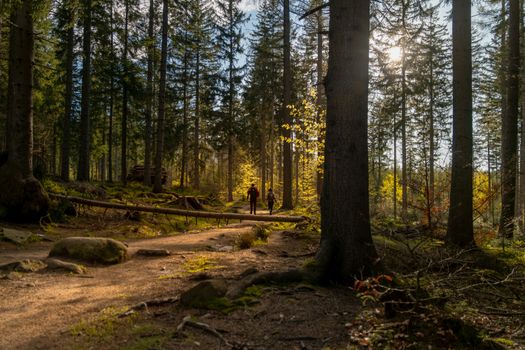
I stepped off the regional train at the mist-shrouded station of Titisee in Germany’s Black Forest, and the smell hit me instantly: a rich, intoxicating perfume of damp earth, decaying pine needles, and cold, clean rain. It was 6:30 AM. While the rest of the world was sleeping off their schnitzels, I was laced into my gore-tex boots, clutching a hand-woven willow basket and an Opinel folding knife.
I wasn't here for the cuckoo clocks. I was here for the gold.
Within twenty minutes of hiking up a steep, unnamed logging track, I spotted it: a splash of brilliant, egg-yolk yellow pushing through a carpet of emerald feather-moss. A wild Chanterelle (Cantharellus cibarius). Kneeling on the damp earth, I used the boar-bristle brush on the end of my knife to sweep away the hemlock needles before making a clean cut at the base of the stem. As I dropped the mushroom into my basket, the faint, apricot-like aroma of the fresh fungus drifted up to meet me.
This isn't just hiking; it’s a high-stakes treasure hunt. Across the globe, travelers are bypassing typical spring destinations to immerse themselves in the quiet, damp, and incredibly rewarding world of myco-tourism. If you want to join the ranks of the modern forest foragers, these are the legendary woodlands trending right now.
---
1. The Schwarzwald (Black Forest), Germany: Hunting the King Bolete
The Black Forest isn't just the setting for Grimms' fairy tales; it is the spiritual home of European mushroom foraging. The combination of acidic soil, dense canopy cover of Norway spruce (Picea abies), and high spring rainfall creates a playground for mycorrhizal fungi.
```
▲▲▲ High Canopy (Spruce & Beech)
┌──────────────────────────────┐
│ Zone A: Mossy Slopes │ ──► Target: Pfifferlinge (Chanterelles)
├──────────────────────────────┤
│ Zone B: Decaying Logs │ ──► Target: Steinpilze (Porcini)
└──────────────────────────────┘
▼▼▼ Forest Floor (Acidic Soil)
```
The Target Species
In late spring, keep your eyes peeled for early flushes of Pfifferlinge (chanterelles) and the highly prized Steinpilze (King Bolete or Porcini).
The Insider Route
Skip the tourist-heavy trails around Lake Titisee. Instead, take the local bus to the tiny village of Hinterzarten. Head south toward the Bisten Forest.
- Pro-Tip: Focus your search on the transition zones—where the dark spruce forest gives way to stands of old-growth European beech (Fagus sylvatica). Boletes love these subterranean root connections.
- The Hidden Entrance: Walk past the historic Lafette wood-turner's cottage, cross the wooden footbridge over the Zartenbach stream, and ascend the unmarked, mossy trail to the left. This steep ravine remains humid even during dry spells, making it a hotspot for early-season flushes.
---
2. Willamette National Forest, Oregon, USA: Chasing the Fire Morels
In the Pacific Northwest, mushroom foraging is less of a hobby and more of a religion. The jewel in the crown of spring foraging here is the elusive Morel (Morchella), particularly the "burn morels" that carpet the forest floors in the wake of forest fires from the previous summer.
```
[Forest Fire (Summer)] ──► [Winter Snowpack] ──► [Spring Soil Warmth (50°F)] ──► [Morel Flush]
```
The Target Species
Black Morels (Morchella elata) and the highly sought-after Spring White Truffle (Tuber gibbosum), which grows in association with young Douglas-fir trees.
The Insider Route
Focus your efforts on the areas surrounding the McKenzie River corridor. The burn scars from recent wildfires are public land, but you must acquire a free personal-use harvest permit from the Ranger Station in McKenzie Bridge.
- Pro-Tip: Morels are temperature-sensitive. Invest in a soil thermometer. When the soil temperature at a depth of four inches hits a consistent 50°F (10°C), the morels will begin to pop. Look around the base of dead grand firs and western larch.
- The Hidden Entrance: Park at the Blue River Reservoir boat launch. Hike exactly 1.5 miles north along the decommissioned logging spur road 1506. Scan the gravelly banks where the sun hits the soil first.
---
3. The Irati Forest (Selva de Irati), Spain: The Basque Fungal Kingdom
Spanning the northern border of Spain and southwestern France, the Irati Forest is the second-largest beech-fir forest in Europe. The Basque people are legendary mycophagists (mushroom eaters), and their local markets in San Sebastián are filled with wild treasures harvested from these damp valleys.
```
[Basque Pyrenees] ──► [Irati River Valley] ──► [Oak & Beech Leaf Litter] ──► [Ziza Hori / Perretxiko]
```
The Target Species
The undisputed king of the Basque spring is the Perretxiko or St. George’s mushroom (Calocybe gambosa). It has a distinct, fresh-milled flour aroma and a firm, meaty texture.
The Insider Route
Enter the forest through the Spanish side via the picturesque stone village of Ochagavía.
- Pro-Tip: The Basque forest rangers (guardas forestales) are incredibly strict. You must purchase a daily harvesting permit (€5) at the Ochagavía information center. This limit is strictly capped at 2 kilograms per person to prevent over-harvesting.
- The Hidden Entrance: Take the narrow paved road toward the Ermita de Virgen de Muskilda. Halfway up the mountain, there is a sharp hairpin turn with a small gravel pull-off. Follow the animal tracks into the oak groves; the Perretxiko grow in "fairy rings" hidden beneath the thorny gorse bushes here.
---
4. Yakushima Forest, Japan: Ancient Cedars and Wood Ears
Yakushima, a subtropical island south of Kyushu, is a moss-covered wonderland that inspired the iconic landscapes of Studio Ghibli’s Princess Mononoke. The island's ancient cedar forests (Yaku-sugi) receive torrential rainfall, creating a permanent greenhouse environment where bizarre and beautiful fungi thrive year-round.
```
[Subtropical Rain] ──► [Ancient Cedar Bark] ──► [95% Humidity] ──► [Kikurage & Shiitake]
```
The Target Species
Kikurage (Wood Ear mushroom, Auricularia auricula-judae) and wild Shiitake (Lentinula edodes) growing on decaying deciduous wood.
The Insider Route
While the high-altitude cedar forests are protected national parks where harvesting is strictly forbidden, the lower-elevation, coastal broadleaf forests are fair game for guided foraging.
- Pro-Tip: Hire a local guide from the Yakushima Environmental Culture Village Center. The island's microclimates are volatile, and sudden downpours can turn dry streambeds into raging torrents in minutes.
- The Hidden Entrance: Explore the damp valleys along the Anbo River. The decaying logs of the Castanopsis (chinquapin) trees along the riverbanks are prime real estate for thick, gelatinous wood ears, which are incredible when sliced raw into cold noodle dishes.
---
5. The New Forest, Hampshire, England: Foraging the King's Woods
Established as a royal forest by William the Conqueror in 1079, the New Forest is an ancient pasture-woodland where wild ponies still roam freely among giant, twisted oaks and ancient beech trees.
```
[Ancient Oak Stands] ──► [Gravelly Loam Soil] ──► [Spring Rain & Sunlight] ──► [Chicken of the Woods]
```
The Target Species
Chicken of the Woods (Laetiporus sulphureus)—which tastes shockingly like succulent lemon-herb chicken—and the early-season Birch Bolete (Leccinum scabrum).
The Insider Route
Base yourself in the historic village of Lyndhurst, the administrative heart of the forest.
- Pro-Tip: The New Forest has strict conservation bylaws. Commercial foraging is illegal, and personal foragers are requested to follow the "no-picking" code in SSSIs (Sites of Special Scientific Interest). Always stick to the 1-in-10 rule: only harvest a mushroom if there are at least ten others of its kind nearby.
- The Hidden Entrance: Head to the Knightwood Oak parking area. Instead of visiting the famous ancient oak tree with the crowds, head south across the road into the mixed birch and pine enclosures of Bolderwood. Look up: Chicken of the Woods grows in tiered, bright orange shelves on the trunks of old oak trees, often twenty feet off the ground.
---
The Master Forager’s Gear Guide
Do not head into the woods with a plastic grocery bag and a kitchen knife. True foragers respect the forest and use specialized tools that promote fungal regeneration.
- The Basket: A hand-woven willow basket is non-negotiable. Plastic bags trap moisture, turning your delicate mushrooms into a mushy, rotting mess. More importantly, the open weave of a willow basket allows spores to fall back onto the forest floor as you walk, seeding next year’s harvest.
- The Knife: The Opinel No. 08 Mushroom Knife is the industry standard. It features a curved Sandvik stainless steel blade to cut stems cleanly without ripping up the delicate underground mycelium, and a genuine boar-bristle brush on the handle to clean off soil in the field.
- The Tech: Download Gaia GPS or OnX Backcountry before you lose cell service. Pin your vehicle's location the moment you step off the trail. It is incredibly easy to lose your bearings when your eyes are glued to the forest floor.
---
Logistics & Budget: Planning Your Spring Foraging Pilgrimage
Planning a foraging trip requires careful timing and budgeting. Below is a breakdown of what to expect for each of these trending destinations.
| Destination | Best Foraging Window | Est. Daily Budget ($) | How to Get There | Permitting Info |
| :--- | :--- | :--- | :--- | :--- |
| Black Forest, Germany | Late May – June | $120 - $180 | Train from Frankfurt to Freiburg, then local S-Bahn to Titisee. | Free for personal use up to 1kg per day. |
| Willamette Forest, USA | April – June | $90 - $150 | Fly into Eugene (EUG), rent a 4WD vehicle, drive Highway 126 East. | Free personal-use permit required from Ranger Station. |
| Irati Forest, Spain | May – June | $110 - $160 | Fly to Bilbao, rent a car, drive 2.5 hours east to Ochagavía. | €5 daily permit purchased at Ochagavía Tourist Office. |
| Yakushima, Japan | Year-Round (Spring is peak) | $200 - $300 | Flight from Kagoshima to Yakushima, or the Toppy hydrofoil ferry. | Guided tours recommended ($150+); park rules apply. |
| New Forest, England | May – June | $140 - $210 | Train from London Waterloo to Brockenhurst (approx. 1.5 hours). | Strictly personal use only; follow local conservation codes. |
---
The Culinary Reward: The Perfect Post-Forage Sauté
You’ve spent hours in the damp woods, your knees are dirty, and your basket is heavy. Now comes the best part: cooking your harvest.
```
[Clean with Brush] ──► [Dry Sauté (Release Water)] ──► [Add Butter & Shallots] ──► [Deglaze with Wine]
```
Never wash wild mushrooms under tap water; they act like sponges and will lose their delicate texture. Instead, brush off any debris with your knife's bristles and wipe them down with a damp paper towel.
The Recipe: Forager's Skillet
1. Slice your chanterelles, morels, or boletes into uniform pieces.
2. Heat a heavy cast-iron skillet over medium-high heat. Add the mushrooms to a dry pan first. This allows them to release their natural water content and concentrate their flavors.
3. Once the moisture has evaporated and the edges begin to brown, add two tablespoons of high-fat, cultured unsalted butter.
4. Throw in one finely minced shallot and a handful of wild ramps (if you were lucky enough to find them growing nearby).
5. Sauté for 3-4 minutes until the shallots are translucent.
6. Deglaze the pan with a splash of dry white wine (or Basque cider if you're cooking Perretxikos).
7. Serve on a slice of toasted sourdough rubbed with a raw garlic clove.
As you take that first bite, tasting the rich forest floor, the damp wood, and the bright spring sunshine, you’ll realize why people travel halfway across the world for this single, perfect moment.
---