The Prague Problem (And Why We Need to Move On)
I stepped off the train at Praha Hlavní Nádraží last July, and within twenty minutes, my romantic illusions of a bohemian paradise evaporated. Instead of a moody, Gothic dreamscape, I found myself shoulder-to-shoulder with tour groups on the Charles Bridge, dodging Segways, and paying €9 for a dry, mass-produced trdelník cake.
Prague is a masterpiece, but it has become a victim of its own success. Overtourism has stripped away the quiet magic that once made the city legendary.
But here is the good news: Europe’s medieval heart still beats passionately—you just have to look beyond the capital cities. This summer, seasoned travelers are pivoting to smaller, preserved strongholds where the history is tangible, the crowds are non-existent, and the local character remains fiercely intact.
From the dramatic river gorges of Wallonia to the whitewashed battlements of Portugal, these six trending medieval towns are more charming than Prague and ready for your summer itinerary.
---
1. Dinant, Belgium: The Cliffside Symphony of Stone
```
____________________________________________________
/ \
| "The town looks like it was carved directly out of |
| the limestone cliff by a manic Gothic architect." |
\____________________________________________________/
```
The Vibe
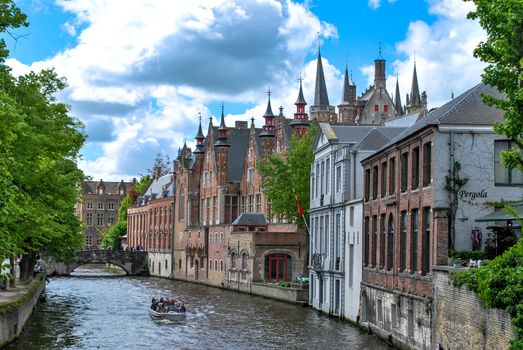
If you were to draw a fairytale town from memory, you would probably draw Dinant. Clinging to a sheer limestone cliff face along the winding Meuse River, this French-speaking Belgian gem is dominated by the colossal Collegiate Church of Notre-Dame, whose pear-shaped bell tower pierces the sky.
Why It Beats Prague
Unlike Prague, where the Vltava River is choked with commercial cruise boats, the Meuse in Dinant is quiet. You can rent a small electric boat—no license required—and drift along the water, staring up at the fortified Citadel that looms 100 meters above the town.
The Insider Experience
Dinant is the birthplace of Adolphe Sax, the inventor of the saxophone. The town honors him with giant, artfully painted saxophones lining the Charles de Gaulle Bridge.
But the real secret lies in the local bakeries. Ask for a Couque de Dinant. It is an incredibly hard, sweet biscuit made only of wheat flour and honey, pressed into intricate wooden molds depicting historical scenes.
- Pro-Tip: Do not bite the Couque de Dinant directly unless you want an emergency trip to a Belgian dentist. Break off a small piece and let it melt on your tongue with a cup of local chicory coffee.
- The Hidden Spot: Skip the cable car to the Citadel. Instead, climb the 408 stone steps cut directly into the cliffside behind the church at 8:00 AM. You’ll have the misty morning views of the valley entirely to yourself.
---
2. Rye, East Sussex, England: The Smuggler’s Cobbled Haven
```
_.._
.' .-'`
/ / RYE: Where the streets are paved with flint
| | and the pubs are older than most nations.
\ \__.
'---'
```
The Vibe
Rye is a time capsule of Tudor England. Located just two hours from London, this elevated medieval citadel was once surrounded by sea. Today, it sits slightly inland, overlooking salt marshes, its crooked half-timbered houses leaning over streets paved with rounded sea cobbles.
Why It Beats Prague
Prague’s Old Town can feel like a stage set. Rye is living history. The town's layout hasn't changed since the 14th century, and the locals still gather in pubs that once hosted notorious pirate gangs.
The Insider Experience
Walk down Mermaid Street, widely considered the most beautiful street in Britain. The timber-framed houses have names like "The House Opposite" and "The House with the Two Front Doors."
Book a corner table at The Mermaid Inn (rebuilt in 1420). This creaking, sloping pub was the headquarters of the Hawkhurst Gang of smugglers in the 1700s. Sit by the giant open hearth, order a pint of local Sussex cider, and look for the secret escape tunnels hidden behind the wooden paneling.
- Pro-Tip: Climb the tower of St. Mary’s Church. It houses the oldest functioning church turret clock in England (built in 1561), featuring two hand-carved wooden "Quarter Boys" that strike the bells.
- The Hidden Spot: Walk past the town walls to the Rye Harbour Nature Reserve at dusk. The light hitting the abandoned Mary Stanford Lifeboat House across the salt marshes is a photographer's dream.
---
3. Girona, Catalonia, Spain: The Gothic Giant of the North
The Vibe
Often bypassed by travelers rushing from Barcelona to the Costa Brava, Girona is a masterclass in medieval preservation. With its towering stone walls, labyrinthine Jewish Quarter, and pastel-hued houses reflecting in the Onyar River, it offers an intense, atmospheric step back in time.
Why It Beats Prague
Prague’s Jewish Quarter is heavily commercialized. Girona’s El Call is one of the best-preserved medieval Jewish quarters in the world—a dark, cool maze of narrow stone alleyways, steep stairs, and hidden archways where the sun barely reaches the pavement.
The Insider Experience
Walk the Passeig de la Muralla, the restored Carolingian city walls. You can hike along the top of these ramparts for miles, looking down over the terracotta roofs of the old city on one side and the snow-capped Pyrenees on the other.
Girona is also a culinary powerhouse. After exploring, head to Rocambolesc, an whimsical ice cream parlor run by Jordi Roca of the world-famous, three-Michelin-starred El Celler de Can Roca.
- Pro-Tip: To avoid the midday Catalan heat, visit the Cathedral of Saint Mary at 9:00 AM. It boasts the widest Gothic church nave in the world (22.9 meters), surpassed only by St. Peter’s Basilica in Rome.
- The Hidden Spot: Find the tiny, secluded Jardins de la Francesa (French Gardens) tucked directly behind the cathedral. It’s a quiet oasis of wild roses and ancient stone ruins perfect for a midday siesta.
---
4. Monsaraz, Portugal: The Sun-Drenched Fortress of Schist
```
+---------------------------------------------------+
| MONSARAZ: A white-washed crown of stone guarding |
| the golden plains of the Alentejo. |
+---------------------------------------------------+
```
The Vibe
Perched high on a rocky hill overlooking the Spanish border, Monsaraz is one of Portugal's oldest medieval settlements. Constructed from local schist (a dark, layered metamorphic rock) and whitewashed to reflect the brutal Iberian sun, this walled village feels like it belongs to another century.
Why It Beats Prague
There are no cars, no neon signs, and no souvenir shops selling cheap trinkets here. Monsaraz is silent, save for the wind blowing off the Alqueva reservoir below and the occasional chime of goat bells in the valley.
The Insider Experience
Enter through the Porta da Vila (the main gothic archway) and wander down the cobbled Rua Direita. The houses are adorned with 14th-century coat of arms and iron balconies dripping with bougainvillea.
At the end of the ridge sits the Castle of Monsaraz. Climb the keep at sunset; the 360-degree views over the olive groves of the Alentejo region are unmatched.
- Pro-Tip: Monsaraz is located in the heart of the Alqueva Dark Sky Reserve, the world's first starlight tourism destination. Stay overnight at a local quinta (farmhouse) to witness the Milky Way with absolute clarity.
- The Hidden Spot: Visit the Ermida de Santa Catarina, a tiny, lonely Romanesque chapel built by the Knights Templar, located just outside the town walls on a rocky outcrop.
---
5. Rothenburg ob der Tauber, Germany: The Ultimate Franconian Fairy Tale
The Vibe
If you have ever seen a drawing of a traditional German village with steep gabled roofs, colorful timber-framed facades, and flower boxes overflowing with red geraniums, you were looking at Rothenburg. It is the most complete medieval walled town left in Germany.
Why It Beats Prague
While Prague has its charms, Rothenburg allows you to walk the entire perimeter of the town on the historic wooden battlements (Rothenburger Stadtmauer) completely free of charge.
The Insider Experience
Most tourists arrive on day-trip buses from Munich or Frankfurt, flooding the famous Plönlein (the iconic yellow timber house at the fork of two cobbled streets) between 11:00 AM and 4:00 PM.
The secret to loving Rothenburg is to stay overnight. At 8:00 PM, join the Night Watchman Tour. A guide dressed in traditional black robes, carrying a halberd and a lantern, leads you through the darkened alleyways, sharing dark, witty stories of plague, siege, and medieval defense.
- Pro-Tip: Skip the famous Schneeball (snowball pastry) sold in the tourist shops—they are notoriously dry. Instead, head to Café Meister Eck for authentic Franconian plum cake (Zwetschgenkuchen).
- The Hidden Spot: Walk through the Castle Gate (Burgtor) into the Castle Gardens (Burggarten) at sunrise. The view down into the Tauber Valley, with the morning mist rising off the river, is pure magic.
---
6. Sighișoara, Romania: The Neon-Pastel Transylvanian Citadel
```
/\_/\
( o.o ) SIGHIȘOARA: Dracula's birthplace is a
> ^ < riot of pastel towers and secret wooden stairs.
```
The Vibe
Located in the mountainous heart of Transylvania, Sighișoara is a gorgeous, UNESCO-listed inhabited citadel. Built by Saxon merchants in the 12th century, its nine surviving towers, cobblestone streets, and brightly painted houses look like they’ve been pulled straight from a Brothers Grimm illustration.
Why It Beats Prague
Sighișoara is incredibly budget-friendly. A hearty meal of traditional Romanian stews and a glass of local plum brandy (palincă) will cost you less than a coffee on Prague's Old Town Square.
The Insider Experience
This is the birthplace of Vlad the Impaler (the historical inspiration for Bram Stoker’s Count Dracula). You can visit the yellow house where he was born in 1431, which now houses a quirky, slightly campy restaurant.
For a more authentic thrill, climb the Scholars' Stairs (Scara Școlarilor), a covered wooden staircase built in 1642. The 176 steps protect you from the elements as you ascend to the Church on the Hill and its atmospheric, overgrown Saxon cemetery.
- Pro-Tip: Climb the 64-meter-high Clock Tower (Turnul cu Ceas). Watch the wooden figurines—representing peace, justice, and the days of the week—rotate precisely at midday.
- The Hidden Spot: Seek out the Towers of the Guilds. The Bootmakers' Tower and the Tinsmiths' Tower still bear the scars of Ottoman siege bullets and offer quiet courtyard spaces away from the main square.
---
Quick Facts & Travel Logistics
| Town | Est. Daily Budget | Best Month | Closest Major Airport | Signature Dish / Drink |
| :--- | :--- | :--- | :--- | :--- |
| Dinant | $$ ($120 - $170) | June | Brussels (BRU) | Flamiche (savory cheese tart) |
| Rye | $$$ ($180 - $250) | July | London Gatwick (LGW) | Romney Marsh Saltmarsh Lamb |
| Girona | $$ ($110 - $160) | September | Barcelona El Prat (BCN) | Xuixo (cream-filled pastry) |
| Monsaraz | $ ($70 - $110) | June | Lisbon Humberto Delgado (LIS) | Porco Preto (Iberian black pork) |
| Rothenburg| $$$ ($150 - $220) | September | Frankfurt (FRA) | Franconian Silvaner Wine |
| Sighișoara| $ ($50 - $90) | August | Cluj-Napoca (CLJ) | Sarmale (cabbage rolls) |
---
The Verdict: Where Should You Go This Summer?
Overtourism is changing the way we travel. If you want to spend your summer vacation fighting through crowds of selfie-sticks to catch a glimpse of a Gothic spire, go to Prague.
But if you want to sit on a 600-year-old stone wall, sipping local wine as the sun sets over an undisturbed valley, choose one of these six alternatives. They aren't just alternatives to Prague—they are, in every sensory, historical, and cultural way, far more charming.
---