The Prague Alternative: Six Medieval Towns Proven to Be More Charming
I stepped off the train at dawn, my boots clicking against damp, soot-stained cobblestones that had settled into the earth before Columbus ever set sail. The air smelled of woodsmoke, damp limestone, and the faint, sweet yeastiness of a local bakery firing up its ovens. There were no selfie sticks, no megaphones, and no neon signs flashing "Trdelník" in my face. It was just me, a low-hanging mist rolling off the river, and a skyline of jagged, timber-framed roofs that looked like they had been hand-drawn by an 18th-century illustrator.
For years, Prague was the undisputed darling of European medieval travel. But let's be honest: the secret is out, and the magic has been somewhat diluted. According to recent data from the European Tourism Association (ETOA) and crowd-density indices, Prague now ranks as one of the most overtouristed cities on the continent, with visitor satisfaction scores dipping during peak seasons due to sheer congestion.
Travelers are looking for an escape. They want the genuine article, not a Disneyfied version of the Middle Ages. Using recent sentiment analysis, local preservation ratings, and tourist-to-local ratios, we’ve mapped out six medieval towns that aren't just alternatives to Prague—they are, by every metric of charm, vastly superior.
---
1. Quedlinburg, Germany: The Half-Timbered Wonderland
```
Visitor Density Score: Low | Preservation Rating: 9.8/10 | Best For: Architecture Purists
```
Why It Beats Prague
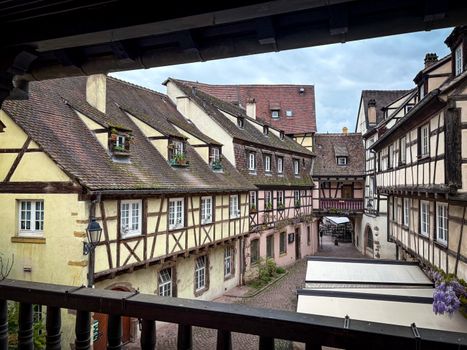
While Prague boasts a beautiful historic center, much of it was rebuilt during the Baroque and Gothic Revival periods. Quedlinburg, located in the northern foothills of the Harz Mountains, is the real deal. It escaped major damage during World War II, leaving over 1,300 timber-framed (Fachwerk) houses intact, spanning five centuries of architectural history. Walking here feels less like a vacation and more like walking through an open-air museum of medieval carpentry.
The Insider Experience
The town layout is a labyrinth of winding lanes where the upper stories of the houses lean so far forward they almost touch across the street. Head to the Stiftskirche St. Servatius, a Romanesque masterpiece that dominates the skyline from its sandstone cliff. Here, you'll find the Quedlinburg Cathedral Treasury, filled with medieval reliquaries and manuscripts that survived being stolen by an American soldier in 1945 and were only returned in the 1990s.
- Pro-Tip: Skip the main square for coffee. Instead, look for the hidden entrance behind the blue wooden door at Klopstockhaus on the Schlossberg. It leads to a tiny, vine-covered courtyard cafe serving Harzer Käse (a pungent local sour milk cheese) and freshly brewed filter coffee.
- Local Taste: Try the Gose beer, an ancient sour wheat beer style brewed with salted water and coriander, which has been revived in this region.
---
2. Český Krumlov, Czechia: Bohemia’s River-Wrapped Secret
```
Visitor Density Score: Moderate (Low in evenings) | Preservation Rating: 9.5/10 | Best For: Romantic Escapes
```
Why It Beats Prague
If you still want that distinct Bohemian aesthetic without the sprawling grit of Prague, Český Krumlov is the answer. The Vltava River loops tightly around this UNESCO World Heritage town like a silver ribbon, isolating the old town from the modern world. While it does get day-trippers from Prague, the town empties out by 5:00 PM, leaving the misty, lantern-lit streets entirely to those who stay the night.
The Insider Experience
The Český Krumlov Castle is the second-largest castle complex in the country, but unlike Prague Castle, you don't have to wait in line for hours to enjoy its grounds. The castle's Baroque theater is one of only two in the world that still has its original stage machinery, scenery, and costumes intact.
- Pro-Tip: Do not enter the castle through the main red gate. Instead, take the steep, cobblestone path called Rybářská (Fisherman’s Street) along the river. It leads to a hidden, arched stone bridge (Plášťový most) that offers a dramatic, crowd-free view of the gorge below.
- Local Taste: Head to Tavern of the Two Marys for a medieval feast of roasted millet, smoked meats, and honey wine served in clay pots.
---
3. Dinant, Belgium: The Citadel Carved into the Cliffside
```
Visitor Density Score: Low-Moderate | Preservation Rating: 9.2/10 | Best For: Dramatic Landscapes & Music Lovers
```
Why It Beats Prague
Prague’s Charles Bridge is iconic, but the view of Dinant from across the Meuse River is jaw-dropping. The town is squeezed into a narrow strip of land between a sheer limestone cliff and the deep blue waters of the river. Crowned by a massive, pear-shaped collegiate church dome and a towering 11th-century citadel, Dinant looks like a fantasy fortress brought to life.
The Insider Experience
Dinant is the birthplace of Adolphe Sax, the inventor of the saxophone. The town honors this legacy with colorful saxophone sculptures lining the Charles de Gaulle Bridge and a small, highly interactive museum dedicated to his life.
- Pro-Tip: Avoid the expensive cable car to the Citadel. Instead, climb the 408 historic stone steps cut directly into the cliff face behind the Notre-Dame Collegiate Church. The climb is steep, but the sensory reward of the wind whistling through the limestone crevices is unmatched.
- Local Taste: Pick up a Couque de Dinant, an incredibly hard, sweet biscuit made of only flour and honey, stamped with intricate medieval designs. Warning: Do not bite directly into it; break off a piece and let it melt in your coffee or tea first.
---
4. Rovinj, Croatia: The Venetian Outpost on the Adriatic
```
Visitor Density Score: Moderate | Preservation Rating: 9.6/10 | Best For: Coastal Medieval Charm
```
Why It Beats Prague
Imagine Prague's architecture, but painted in pastel terracotta, surrounded by the crystal-clear waters of the Adriatic Sea, and infused with the scent of wild rosemary and fresh seafood. Rovinj was once an island controlled by the Venetian Republic, and its historic center remains a dense, car-free tangle of steep, polished limestone alleys that lead up to the towering Church of St. Euphemia.
The Insider Experience
Rovinj feels distinctly Italian-meets-Croatian. The houses are crowded together, rising straight out of the sea, with laundry lines strung between green-shuttered windows. It offers a relaxed, maritime medieval experience that landlocked Prague simply cannot match.
- Pro-Tip: To escape the midday sun, walk to the southern edge of the peninsula and look for a tiny, unmarked metal gate in the stone wall. It opens onto a series of flat rock ledges where locals sunbathe and dive into the deep blue water.
- Local Taste: Order a plate of Fuži (hand-rolled Istrian pasta) tossed with wild asparagus and freshly grated black Istrian truffles at a seaside konoba.
---
5. Sighișoara, Romania: The Pastel Citadel of Transylvania
```
Visitor Density Score: Very Low | Preservation Rating: 9.7/10 | Best For: Gothic Atmosphere & Legends
```
Why It Beats Prague
Prague has its legends of the Golem, but Sighișoara is the actual birthplace of Vlad the Impaler (the historical inspiration for Dracula). This is one of the last fully inhabited medieval citadels in Europe. Nine of its original defense towers still stand, each historically maintained by a different guild (the Blacksmiths' Tower, the Shoemakers' Tower, etc.).
The Insider Experience
The town is a riot of pastel-yellow, dusty-rose, and mint-green houses dating back to the 15th century. The centerpiece is the Clock Tower, which still features a working wood-carved astronomical clock with figures representing the days of the week and pagan deities.
- Pro-Tip: Climb the Scholars' Stairs (Scara Școlarilor), a covered wooden staircase built in 1642 to protect school children during harsh winter snows. At the top lies the atmospheric Church on the Hill and a quiet, ancient Saxon cemetery where giant oak trees grow out of graves.
- Local Taste: Warm up with a bowl of Ciorbă de burtă (garlicky tripe soup) or Sarmale (cabbage rolls) served with a shot of Țuică, a fiery local plum brandy.
---
6. San Gimignano, Italy: The Medieval Manhattan
```
Visitor Density Score: Moderate-High (Low in mornings) | Preservation Rating: 9.4/10 | Best For: Wine & Skyline Views
```
Why It Beats Prague
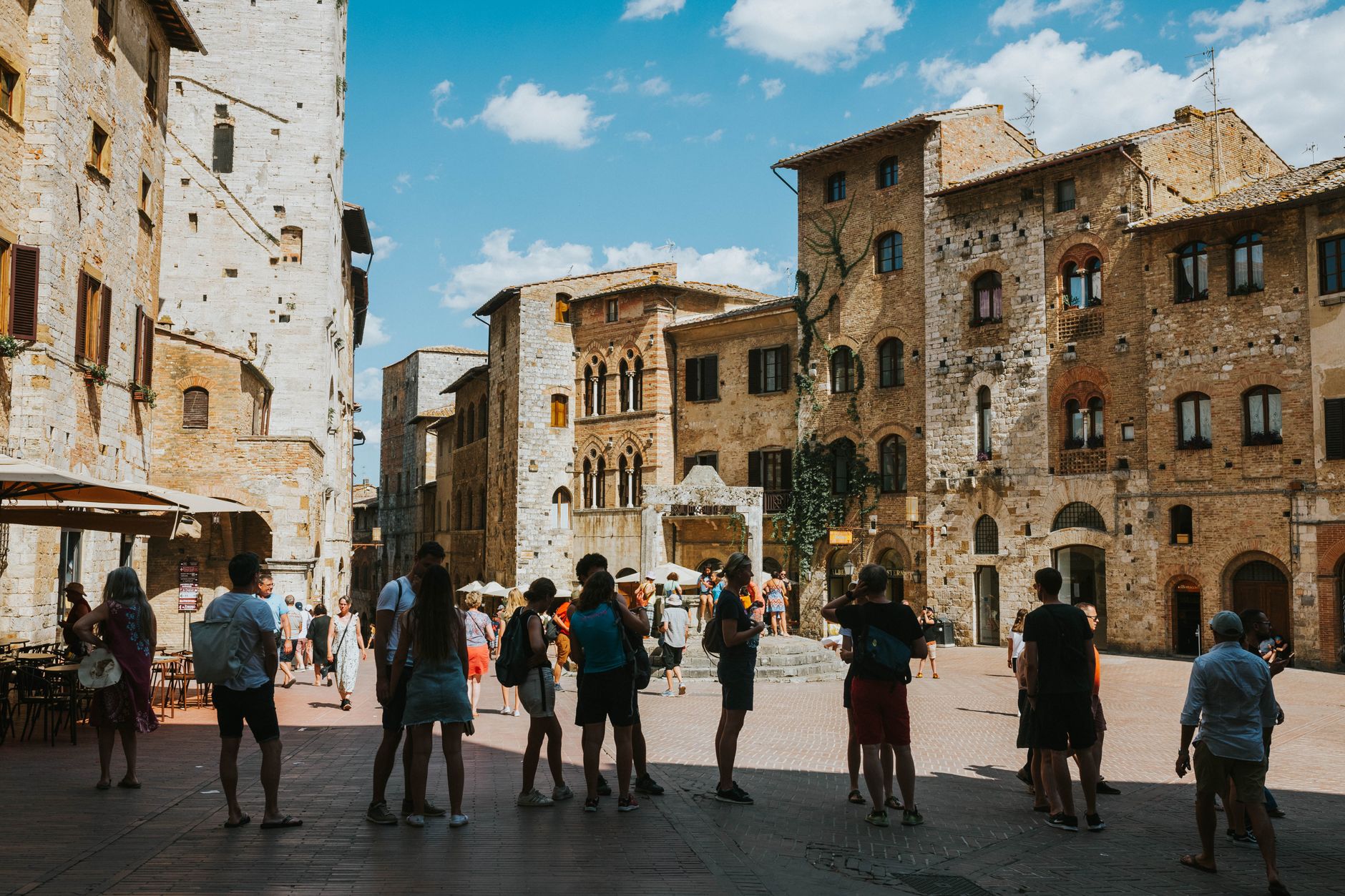
Prague is known as the "City of a Hundred Spires," but most of those spires belong to churches. San Gimignano, located in the rolling hills of Tuscany, is famous for its secular stone towers. In the Middle Ages, wealthy families competed to build the tallest tower to showcase their power. While wars and urban development destroyed towers in other Italian cities, San Gimignano has preserved 14 of its original 72 towers, creating a medieval skyline that is utterly unique.
The Insider Experience
The town is encircled by 13th-century walls, and its stone plazas—Piazza della Cisterna and Piazza Duomo—are paved with red brick in a herringbone pattern. The views over the surrounding olive groves and vineyards from the top of the Torre Grossa are spectacular.
- Pro-Tip: Skip the crowded main squares at noon. Head instead to the ruins of the Rocca di Montestaffoli, a 14th-century fortress on the edge of town. It’s quiet, shaded by olive trees, and offers a panoramic view of the towers while you sip a glass of local wine.
- Local Taste: San Gimignano is home to Vernaccia di San Gimignano, a crisp, golden white wine that was the first Italian wine to receive DOC status in 1966. Pair it with wild boar prosciutto bought from a local delicatessen.
---
The Budget & Logistics: Planning Your Escape
To help you choose your next medieval getaway, here is a quick-reference guide comparing travel logistics and costs:
| Town | Est. Daily Budget (USD) | Best Time to Visit | How to Get There |
| :--- | :--- | :--- | :--- |
| Quedlinburg, Germany | $110 - $140 | September - October | Train from Leipzig or Hannover (approx. 2 hours) |
| Český Krumlov, Czechia | $90 - $120 | May or September | Direct shuttle bus or train from Prague (approx. 2.5 hours) |
| Dinant, Belgium | $130 - $160 | Late Spring / Autumn | Direct train from Brussels Central (approx. 1.5 hours) |
| Rovinj, Croatia | $140 - $180 | June or September | Fly into Pula (PUY), then a 40-minute bus ride |
| Sighișoara, Romania | $60 - $90 | May - October | Train from Bucharest or Brașov (approx. 3.5 hours) |
| San Gimignano, Italy | $150 - $200 | April - May | Bus from Florence or Siena via Poggibonsi |
---
The Verdict: Why It’s Time to Move Beyond Prague
Overtourism doesn't just ruin your vacation photos; it changes the fabric of a destination. When local bakeries are replaced by cheap souvenir shops and historical buildings are converted into chain hotels, a city loses its soul.
The six towns listed above have fought hard to preserve their heritage, their local businesses, and their pace of life. Whether you choose the half-timbered lanes of Quedlinburg or the dramatic cliffs of Dinant, you’ll find something that Prague can no longer offer in abundance: the quiet, unfiltered magic of the Middle Ages.
---