The Hook: Beyond the Trdelník Tunnels
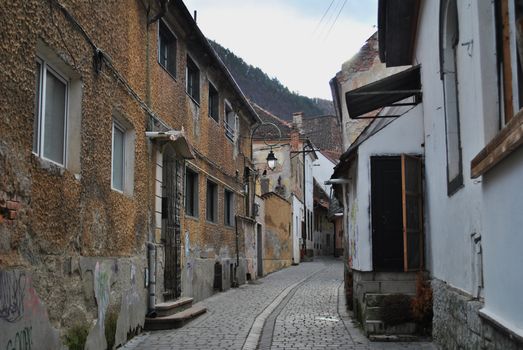
I stepped off the local regional train in Quedlinburg, and the first thing that hit me wasn't the smell of roasted cinnamon or the sound of a tour guide’s megaphone. It was the scent of damp slate and woodsmoke, and the absolute, jarring silence of a town that has looked exactly like this since the year 1500.
As I walked toward the Altstadt, my boots clicked against uneven schist pavers that had been smoothed by five centuries of foot traffic. There was no "Disney-fied" sheen here. No rows of shops selling mass-produced Russian nesting dolls (which aren't even Czech, by the way). Just the leaning, gravity-defying tilt of half-timbered houses and the distant tolling of a heavy bronze bell.
Prague is magnificent—don't get me wrong. But Prague has become a victim of its own beauty. It’s a museum where you can’t touch the exhibits because there are ten thousand people in the way. If you want the feeling of the Middle Ages—the mystery, the grit, and the unadulterated charm—you have to look where the standard travel advisors aren't pointing.
1. Quedlinburg, Germany: The Timber-Framed Time Capsule
If you want to see what a town looks like when it survives 1,000 years without a scratch, you go to Quedlinburg. Located in the Harz Mountains, this UNESCO World Heritage site boasts over 1,300 half-timbered houses.
The Vibe:
It’s like walking through a Grimm Brothers’ sketchbook. The houses don’t just stand; they huddle together, their upper floors jutting out over the street to save on 16th-century ground taxes.
The Insider Secret:
Most tourists stick to the Market Square. Don’t. Head to the Münzenberg district. It’s a hill overlooking the town where the "poor" people used to live. The houses are tiny, the streets are narrower than your wingspan, and the views of the Romanesque St. Servatius Church are unparalleled.
Pro-Tip:
Find the "Klopstockhaus." Behind the unassuming blue door in the courtyard, there is a small herb garden that smells exactly like a medieval apothecary.
2. Tallinn, Estonia: Where High-Tech Meets Hanseatic
Tallinn’s Old Town is arguably the best-preserved medieval city in Northern Europe. While Prague feels Baroque and grand, Tallinn feels Hanseatic and fortified.
The Vibe:
Think limestone walls, red-tiled conical roofs, and the Baltic wind whistling through the "Short Leg" and "Long Leg" gates. It’s a city of layers—literally.
The Meat:
The lower town was for the merchants; the upper town (Toompea) was for the nobles. To get the "more charming than Prague" experience, visit the Masters' Courtyard (Meistrite Hoov). It’s a hidden pocket where local artisans blow glass and forge iron just as they did in the 14th century.
Pro-Tip:
Skip the overpriced restaurants on the main square. Go to III Draakon inside the Town Hall. There’s no electricity—only candles. You have to fish your own pickles out of a giant wooden barrel, and the elk soup costs about 3 Euros. It’s messy, dark, and perfectly authentic.
3. Sighisoara, Romania: The Gothic Soul of Transylvania
Travel advisors often forget Romania, which is a crime. Sighisoara is one of the few inhabited citadels in Europe. People still live, work, and go to school within these 12th-century walls.
The Vibe:
It’s moody, colorful, and slightly eerie. The houses are painted in ochre, dusty rose, and sage green.
The Details:
This is the birthplace of Vlad the Impaler (the inspiration for Dracula), but ignore the kitschy vampire tours. Instead, climb the Scholars' Stairs—a covered wooden staircase built in 1642. It feels like climbing into another dimension. At the top, you’ll find the Church on the Hill and a peaceful, ancient Saxon cemetery.
Pro-Tip:
Visit the Clock Tower at exactly 9 AM. You can see the wooden figurines—representing different days of the week—rotate. It’s a mechanical marvel that has been ticking since the 1600s.
4. Ceský Krumlov, Czech Republic: The Bohemian Rival
Yes, it’s in the same country, but Ceský Krumlov is what Prague used to be thirty years ago. Wrapped in a tight loop of the Vltava River, this town is dominated by a massive castle that looks like it was carved directly out of the rock.
The Vibe:
Bohemian rhapsody. It’s softer and more romantic than the capital.
The Meat:
The castle moat doesn't have water; it has bears. They’ve been kept there since the 16th century (and are very well cared for by the local "Bear Man"). The Baroque theater inside the castle is one of only two in the world that still has its original stage machinery.
Pro-Tip:
For the best photo, don't go to the castle tower. Go to the Seminární zahrada (Seminary Garden) at sunset. The light hits the castle's round tower in a way that makes the pink and green frescoes glow like they’re being lit from within.
5. Colmar, France: The Living Watercolor
Located in the Alsace region, Colmar is the town that allegedly inspired the village in Disney’s Beauty and the Beast.
The Vibe:
A fusion of French elegance and German sturdiness. Canals lined with flowers, shutters in every pastel shade imaginable, and the smell of tarte flambée (a thin-crust pizza with cream, onions, and bacon) wafting through the air.
The Insider Detail:
Head to "La Petite Venise" (Little Venice). Rent a flat-bottomed boat. While the crowds are fighting for space on the bridges, you’ll be gliding under them, seeing the moss-covered foundations of houses built in the 1300s.
Pro-Tip:
Visit the Unterlinden Museum not for the art, but for the cloister. It’s a silent, stone-arched courtyard that offers an immediate escape from the afternoon tourist rush.
6. Regensburg, Germany: The Danube’s Best-Kept Secret
While Rothenburg gets all the Instagram fame, Regensburg is the real deal. It was the only major German city to escape heavy bombing in WWII, meaning its medieval core is 100% original.
The Vibe:
Intellectual and ancient. It has more "patrician towers" (tall stone towers built by wealthy families to show off) than any city north of the Alps.
The Meat:
The Stone Bridge (Steinerne Brücke) is a 12th-century engineering miracle. Walk across it to the island of Stadtamhof for a view of the cathedral spires reflecting in the Danube.
Pro-Tip:
You must eat at the Wurstkuchl (Historic Sausage Kitchen). It has been leaning against the city walls since 1135 AD. Order the "Six on Kraut." The sausages are grilled over charcoal and served with a sweet mustard that they’ve been making the same way for centuries.
7. Dinant, Belgium: The Fortress on the Cliff
Squeezed between a vertical rock face and the Meuse River, Dinant is a vertical masterpiece of medieval planning.
The Vibe:
Dramatic and brassy. It’s the birthplace of Adolphe Sax (inventor of the saxophone), and giant colorful saxophones line the bridge.
The Details:
The Collegiate Church of Notre Dame features a unique pear-shaped bell tower that looks like something out of an Eastern European fairytale, but the real draw is the Citadel perched 100 meters above.
Pro-Tip:
Don't take the cable car. Climb the 408 stone steps to the Citadel. It’s grueling, but halfway up, there’s a small landing where you can see the rooftops of the town perfectly aligned like a row of teeth.
---
Quick Facts & Logistics
| Town | Best Time to Visit | Est. Daily Cost ($) | How to Get There |
| :--- | :--- | :--- | :--- |
| Quedlinburg | October (Fall foliage) | $80 - $110 | Train from Berlin (3h) |
| Tallinn | Late August | $90 - $130 | Ferry from Helsinki or Flight |
| Sighisoara | June or September | $50 - $70 | Train from Bucharest (5h) |
| Ceský Krumlov | May (Before the rafts) | $70 - $100 | Shuttle/Bus from Prague (3h) |
| Colmar | December (Xmas Markets) | $120 - $160 | Train from Strasbourg (30m) |
| Regensburg | July (Beer Gardens) | $100 - $140 | Train from Munich (1.5h) |
| Dinant | September | $110 - $150 | Train from Brussels (1.5h) |
---
The Verdict: Why These Beat Prague
Prague is a victim of its own success. The "Medieval towns more charming than Prague travel advisors suggest" aren't just alternatives; they are the antidote to over-tourism. In these seven spots, you aren't just a number in a crowd; you’re a guest in a living history book.
You can still find the "Old World" in Europe, but you won't find it on the main tourist trail. You'll find it in the smell of the charcoal grill in Regensburg, the creak of the wooden stairs in Sighisoara, and the silence of a Quedlinburg morning.
Stop following the advisors. Start following the cobblestones.
---