The Hook: Waking Up in the Clouds (Minus the Megaphone)
I stepped off the dirt path at 5:15 AM, the soles of my boots caked in the dark, rich loam of the Peruvian high jungle. The air smelled intensely of damp earth, bruised ferns, and the sharp, medicinal tang of wild muña (Andean mint).
Above me, the sky was a deep, bruised violet, transitioning slowly to gold. Below, the Apurímac River roared, a silver thread snaking through a canyon so deep it made my knees ache just looking at it.
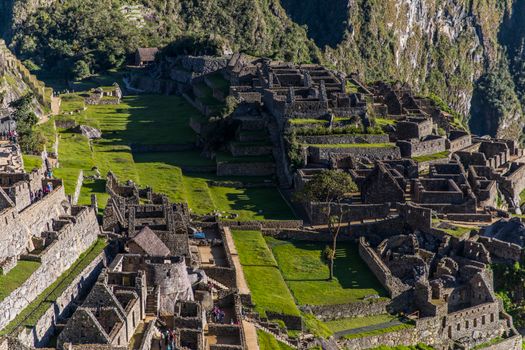
As the mist parted, it didn't reveal the iconic postcard view of Huayna Picchu. Instead, it unveiled the massive, moss-draped agricultural terraces of Choquequirao, plunging down the sheer mountainside like giant green steps built for gods.
I turned around to share the moment with someone—anyone. But there was no one there. No tour groups, no megaphones, no brightly colored selfie sticks clashing with the ancient stone. Just me, two grazing llamas, and the quiet rustle of the wind.
```
[Choquequirao: The True Sister City]
/\ /\ /\
/ \ / \ / \ <-- 3,050 meters high
/____\\__\\____\
| || || || || <-- Only 35% excavated
|__||__||__||__|| (9x larger than Machu Picchu)
```
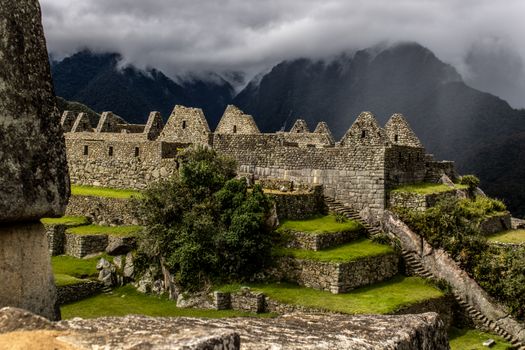
Machu Picchu is a wonder of the world, and deservedly so. But with daily visitor caps, strictly policed one-way circuits, and a booking process that requires months of planning, it can sometimes feel more like an ancient theme park than a spiritual sanctuary.
If you crave the raw, untamed romance of discovery, it is time to look beyond the standard itinerary. These are the definitive Machu Picchu alternatives without the crowds worth considering for your next Andean adventure.
---
1. Choquequirao: The Cradle of Gold
The Vibe: Machu Picchu on Steroids (and Empty)
Choquequirao is not just an alternative; it is Machu Picchu’s actual sister city. Built by the Incas in the late 15th century as a royal estate and military outpost, it shares almost identical classic imperial masonry.
The catch? It is roughly three times larger than Machu Picchu, yet only about 35% of it has been excavated. On any given day, you will share these massive plazas, temples, and the famous "Llama Terraces" (white slate llamas inlaid directly into the dark granite walls) with fewer than 30 other travelers.
```
___________________________________________
/ THE CHOQUEQUIRAO EXPERIENCE \
|--------------------------------------------|
| - Daily Visitors: ~30 to 50 |
| - Accessibility: Foot/Mule only |
| - Key Feature: Llama Terraces (Inlaid stone)|
\___________________________________________/
```
How to Get There
This is a true pilgrimage. There are no trains or roads here. You must complete a grueling 4-day, 28-mile round-trip trek starting from the tiny village of Cachora (a four-hour drive from Cusco). The trail drops 1,500 meters down into the searing heat of the Apurímac Canyon, crosses a suspension bridge, and climbs 1,500 meters straight back up the other side.
- Pro-Tip: Do not skimp on a mule team. Hire a local arriero (muleteer) in Cachora to carry your heavy gear. It supports the local economy directly and saves your knees for the brutal descent.
---
2. Kuélap: The Fortress in the Northern Mist
The Vibe: Game of Thrones Meets the Amazon
Predating the Incas by at least 500 years, Kuélap was built by the Chachapoyas—the "Warriors of the Clouds." Located in the rugged mountains of northern Peru, this massive walled city sits on a limestone ridge 3,000 meters above sea level.
```
===================================
KUÉLAP WALLS
===================================
[ ] [ ] [ ] [ ] [ ] [ ] [ ] <-- 20-meter high outer walls
[ ] [ ] [ ] [ ] [ ] [ ] [ ]
[ ] [ ] [ ] [ ] [ ] [ ] [ ]
===================================
```
Instead of the sharp, rectangular lines of Inca architecture, Kuélap features over 400 circular stone homes adorned with geometric friezes, zigzag patterns, and stylized carvings of condors and pumas. The ruins are draped in bromeliads, orchids, and Spanish moss, giving the site a surreal, lost-world feel.
How to Get There
Fly from Lima to Chachapoyas (via a quick connection or direct flight depending on the season). From Chachapoyas, take a collective taxi or tour bus to the village of Tingo, where you can board Peru’s first modern cable car system. The 20-minute ride glides over deep gorges directly to the visitor center, making this an excellent, low-impact option for those who want epic views without the multi-day hike.
- Pro-Tip: Visit the nearby museum in Leymebamba beforehand. It houses over 200 incredibly preserved Chachapoyas mummies recovered from a cliffside tomb at the Lake of the Condors.
---
3. Waqrapukara: The Horned Fortress
The Vibe: Gothic Fantasy in the High Andes
If Batman built a fortress in the Andes, it would look like Waqrapukara. This dramatic archaeological site is perched on a jagged, double-horned volcanic peak overlooking the Apurímac Canyon at a dizzying 4,300 meters (14,100 feet) above sea level—nearly double the altitude of Machu Picchu.
```
/ \ / \
/ \ / \ <-- The "Horns" (Waqra)
| |___| |
| [FORTRESS] |
/ \
/ \ <-- 4,300m Drop to Canyon
```
Originally built by the pre-Inca Qanchi culture and later modified by the Incas, Waqrapukara served as both a military stronghold and an astronomical sanctuary. The sheer scale of the drop-offs surrounding the ruins is enough to induce vertigo, but the lack of crowds makes the experience deeply spiritual.
How to Get There
You can reach Waqrapukara via a long day-trip from Cusco. Drive three hours south to the trailhead at Campi or Sangarará. From Sangarará, it is a challenging 3-to-4-hour hike across high-altitude puna (grassland) dotted with wild vicuñas.
- Pro-Tip: Pack a windbreaker, gloves, and a warm hat. At 4,300 meters, the wind whipping through the rocky horns of Waqrapukara can drop the temperature to freezing in a matter of minutes, even on a sunny day.
---
4. Marcahuamachuco: The Forgotten Northern Empire
The Vibe: A Pre-Inca Metropolis Frozen in Time
Largely ignored by international tourists due to its remote northern location, Marcahuamachuco is one of the most significant archaeological complexes in Peru. Built by the Huamachuco culture between 400 and 1000 AD, this vast stone city spans a high-altitude plateau over three kilometers long.
The architecture is characterized by massive, multi-story circular stone galleries (castillos) and defensive walls that rise up to 12 meters high. The sheer scale of the site suggests it was a major religious and political center, yet you will likely have the entire plateau to yourself.
```
___________________________________________
/ MARCAHUAMACHUCO QUICK METRICS \
|--------------------------------------------|
| - Age: Older than Machu Picchu by 1,000 yrs|
| - Key Structure: Las Torres (Circular forts)|
| - Altitude: 3,700 meters above sea level |
\___________________________________________/
```
How to Get There
From the coastal city of Trujillo, take a scenic 4-to-5-hour bus ride inland to the mountain town of Huamachuco. From town, you can hire a local moto-taxi or private car to take you up the winding dirt road to the archaeological park entrance (about 30 minutes).
- Pro-Tip: Look closely at the stone walls to find the sockets where wooden floor beams once rested, indicating these structures were originally three stories tall—a rarity in ancient Andean architecture.
---
5. Ingapirca: Ecuador's Imperial Sun Temple
The Vibe: Two Empires, One Temple
For those looking to explore outside of Peru, Ecuador’s premier archaeological site offers a fascinating look at the clash and integration of two distinct cultures: the native Cañari and the invading Incas.
The centerpiece of Ingapirca is the Temple of the Sun, a unique, elliptical structure built around a sacred rock. Unlike typical rectangular Inca buildings, this curved temple showcases the masterfully carved, mortarless green-andesite stonework typical of imperial Cusco, blended seamlessly with Cañari moon-worshipping platforms.
```
________________________
/ [TEMPLE OF THE SUN] \ <-- Elliptical shape
| __________________ |
| | | | <-- Mortarless Cusco masonry
| | Sacred Rock | |
|___|__________________|___|
```
How to Get There
Ingapirca is highly accessible. It lies just two hours north of the beautiful colonial city of Cuenca. You can catch a direct public bus from Cuenca’s terminal terrestre or hire a private guide for a day trip.
- Pro-Tip: Walk the short Intihuaico (Sun Trail) loop behind the ruins to see the Cara del Inca—a massive natural rock formation that closely resembles a human face staring out across the valley.
---
6. Huchuy Qosqo: The Little Cusco
The Vibe: The Ultimate Sacred Valley Day Hike
Perched on a natural terrace high above the town of Lamay in the Sacred Valley, Huchuy Qosqo ("Little Cusco") was built as a country estate for the eighth Inca emperor, Viracocha, in the early 15th century.
Because it is inaccessible by road, it receives only a fraction of the visitors that flock to nearby Pisac or Ollantaytambo. The site features impressive stone-and-adobe two-story buildings, a vast central plaza, and an intricate stone irrigation canal that still channels mountain spring water through the ruins.
```
[High Andean Peaks]
____________________
/ \
/ HUCHUY QOSQO \ <-- Accessed only by foot
/________________________\
| | [Stone & Adobe] | |
| | | |
============================
[Sacred Valley Floor Below]
```
How to Get There
There are two main ways to hike to Huchuy Qosqo. The most dramatic route starts high above Cusco near the lagoon of Piuray (near Chinchero) and crosses a mountain pass at 4,300 meters before descending into the ruins. Alternatively, you can opt for a steep, 3-hour uphill climb directly from the town of Lamay in the Sacred Valley.
- Pro-Tip: Pack plenty of water and some fresh fruit. There are no shops, restaurants, or water stations at the ruins—just a small guardian's hut and endless, quiet terraces to sit and picnic on.
---
The Budget & Logistics: Head-to-Head Comparison
| Destination | Difficulty | Est. Cost (USD) | Best Time to Visit | Key Highlight |
| :--- | :--- | :--- | :--- | :--- |
| Choquequirao | Challenging (4-day trek) | $150 - $400 | May to October | The Llama Terraces & deep canyon views |
| Kuélap | Easy (Cable car access) | $40 - $80 | May to October | Circular stone houses & cloud forest flora |
| Waqrapukara | Moderate to Hard (High altitude) | $50 - $120 | May to October | The dramatic "horned" rock formations |
| Marcahuamachuco| Easy (Short walk from road) | $20 - $50 | May to October | Multi-story pre-Inca stone galleries |
| Ingapirca | Very Easy (Accessible road) | $15 - $30 | June to September | Elliptical Temple of the Sun |
| Huchuy Qosqo | Moderate (Full-day hike) | $30 - $70 | May to October | Royal estate overlooking the Sacred Valley |
---
The Verdict: Which Alternative is Right for You?
- For the Hardcore Trekker: Choose Choquequirao. The physical challenge makes reaching the ruins feel like a true achievement, and the sheer scale of the empty site is unmatched.
- For the History Buff: Choose Kuélap or Marcahuamachuco. These sites offer a fascinating look at cultures that thrived long before the Incas rose to power.
- For the Instagrammer / Photographer: Choose Waqrapukara. The gothic, fantasy-like silhouette of the ruins against the deep canyon sky is unlike anything else on earth.
- For the Casual Traveler: Choose Ingapirca. It offers clean logistics, incredible history, and can easily be tackled in a single relaxed afternoon from Cuenca.
---
Frequently Asked Questions (FAQ)
Are these alternatives safe to travel to independently?
Yes, but they require a higher level of self-reliance than Machu Picchu. While Machu Picchu has a highly structured tourism pipeline (trains, buses, English-speaking guides at every turn), sites like Waqrapukara or Marcahuamachuco require navigating local transportation (colectivos) and carrying your own food, water, and emergency gear.
Do I need to book permits in advance for these sites?
Unlike Machu Picchu and the classic Inca Trail, which require booking 4 to 6 months in advance, none of these alternatives currently require pre-booked permits. You can purchase your entry tickets directly at the site gates or visitor centers on the day of your visit.
How do I deal with altitude sickness at these alternative ruins?
Several of these sites, particularly Waqrapukara (4,300m) and Huchuy Qosqo (3,600m), are significantly higher than Machu Picchu (2,430m).
To avoid altitude sickness (soroche):
1. Spend at least 2 to 3 days acclimating in Cusco or Arequipa before attempting any strenuous hikes.
2. Drink plenty of water and local muña or coca tea.
3. Consult with your doctor about taking acetazolamide (Diamox) before your trip.
---