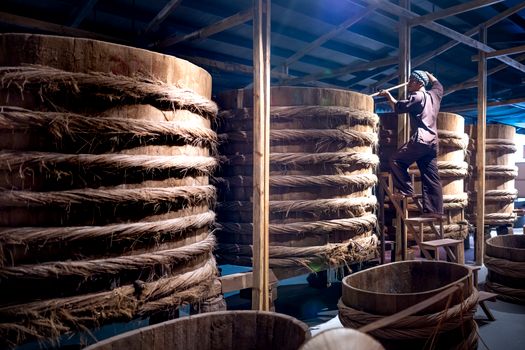
The Smell of Microaerophilic Magic: My Awakening in Kakheti
I lowered myself into the damp cellar beneath a three-hundred-year-old stone marani in Telavi, Georgia, and was immediately hit by a smell I will never forget: damp terra-cotta clay, fizzy wild yeast, wet flint, and the intoxicating sweet-sour perfume of crushed Rkatsiteli grape skins.
My host, a silver-haired artisan named Giorgi, handed me a long wooden pole wrapped in cherry bark. "Scrape the inside walls of the qvevri gently," he whispered, pointing into a subterranean clay vessel completely submerged under the earthen floor. "Listen closely. She's breathing."
He wasn't exaggerating. A soft, rhythmic hiss bubbled up from the depths of the clay pot—the audible sound of wild, uncultivated yeasts transforming fruit into liquid gold.
For decades, modern travel writing has directed food lovers toward pasta-making in Tuscany or sushi-rolling in Tokyo. But if you want to understand the living, breathing soul of a region’s terroir, you have to follow the microbes. Fermentation isn't just a preservation technique; it is a geographic timestamp, capturing the unique bacteria, yeast, temperature, and flora of a hyper-specific locale.
If you are ready to elevate your culinary journey, skip the generic cooking schools. These five surprising countries offer world-class, hands-on fermentation workshops that will completely alter how you think about flavor, health, and human history.
---
1. Georgia: Subterranean Qvevri Wine & Wild Botanical Ferments
While Georgia is steadily gaining recognition among natural wine geeks, few realize that its 8,000-year-old unbroken fermentation culture extends far beyond the wine glass.
```
+------------------+-----------------------------------------------------+
| QUICK FACTS | GEORGIA FERMENTATION RETREAT |
+------------------+-----------------------------------------------------+
| Estimated Cost | $120–$250 USD per day (includes room & workshop) |
| Best Time | September to October (Harvest season / Rtveli) |
| How to Get There | Fly to Tbilisi (TBS), drive 2 hours east to Kakheti |
+------------------+-----------------------------------------------------+
```
The Workshop Experience
In the eastern province of Kakheti, small family estates offer immersive multi-day workshops. You won't just observe; you will scrub the interior walls of giant subterranean earthenware qvevri using specialized brushes crafted from St. John’s Wort. You'll harvest indigenous grape varieties, stomp them barefoot in limestone troughs (satsnakheli), and seal the vessels with raw beeswax and clay to initiate subterranean micro-oxygenation.
Beyond wine, these workshops cover ancestral lacto-ferments like jonjoli—sprouted buds of the Caucasian bladdernut tree, salted and fermented in wooden barrels until they yield a bright, caper-like tang. You’ll also forge wild green plums to brew tkemali, a fiercely sour, garlic-laced fermented plum sauce that accompanies nearly every Georgian meal.
- Pro-Tip: Book your workshop during late September to catch Rtveli (the grape harvest). Request a lesson on beeswax vessel-sealing techniques from Master Artisan Zura Natroshvili near Telavi; the entrance to his cellar is marked only by an unpainted iron gate past the town’s main square fountain.
---
2. Colombia: High-Altitude Cacao Microbes & Ancestral Chicha
Forget standard coffee tours. Colombia’s dramatic topography hides some of the world’s most dynamic biodiversity, creating perfect microclimates for wild, indigenous yeasts.
```
+------------------+-----------------------------------------------------+
| QUICK FACTS | COLOMBIA ALTITUDE FERMENTATION WORKSHOP |
+------------------+-----------------------------------------------------+
| Estimated Cost | $80–$180 USD per day |
| Best Time | December to March (Dry season, ideal for cocoa) |
| How to Get There | Fly to Santa Marta (SMR), taxi up to Minca village |
+------------------+-----------------------------------------------------+
```
The Workshop Experience
Tucked away in the humid cloud forests of Minca in the Sierra Nevada de Santa Marta mountains, pioneering flavor labs offer intense workshops on cacao and beverage fermentation.
Here, cacao isn't just roasted—it is fermented in layered wooden boxes made of native Caracolí timber. You’ll spend three days learning how the sticky white mucilage surrounding the raw bean undergoes three distinct ecological succession phases: an anaerobic yeast phase, a lactic acid bacteria boom, and an aerobic acetic acid breakdown that generates complex chocolate precursors.
In the cooler altitudes of Bogotá’s historic La Candelaria district, urban fermentation revivalists host deep-dive masterclasses on Chicha and Masato. You'll work with malted purple maize, wild panela (unrefined sugar cane juice), and indigenous aromatic herbs (prontoalivio) to engineer ancient fermented maize beverages inside porous clay vats.
- Pro-Tip: Look for small-batch workshops led by local ethnobotanists in Minca. When visiting subterranean chicherías in Bogotá, step past the commercial tourist shops and seek out small communal kitchens off Calle 12B; look for green fabric flags hung above the doorway, signalling fresh, unpasteurized chicha batches.
---
3. Estonia: Bogs, Pine Needles & Nordic Lacto-Preservation
Estonia is 50% forest, 20% bog, and 100% obsessed with gathering and fermenting wild edibles. With centuries of harsh, freezing winters, Estonians perfected preservation long before refrigeration existed.
```
+------------------+-----------------------------------------------------+
| QUICK FACTS | ESTONIAN WILD FORAGE & FERMENT COURSE |
+------------------+-----------------------------------------------------+
| Estimated Cost | €150–€300 EUR per day |
| Best Time | Late July to September (Peak mushroom & berry time) |
| How to Get There | Fly to Tallinn (TLL), rental car 1.5 hrs to Soomaa |
+------------------+-----------------------------------------------------+
```
The Workshop Experience
Immerse yourself in Soomaa National Park, where eco-farms host seasonal forage-and-ferment retreats. You'll put on specialized rubber bog-shoes to navigate mossy peatlands, gathering spruce tips, wild chanterelles, juniper berries, and lingonberries.
Under the guidance of master fermenters, you’ll transform these forest finds into Nordic delicacies:
* Pine Needle Kvass: A sparkling naturally carbonated beverage made with wild forest yeasts.
* Lacto-Fermented Chanterelles: Salted and weighted down in oak kegs to create deeply savory, acid-bright umami bombs.
* Traditional Rye Sourdough (Rukkileib): Learn to care for century-old starter cultures infused with malted rye flour and dark forest honey.
The workshop culminates in a traditional smoke sauna session, where you'll sip wild fermented birch sap while learning how heat and humidity affect airborne starter cultures.
- Pro-Tip: Pack heavy-duty waterproof footwear. The best wild lacto-fermentation intensive is held at a small timber-frame homestead near the Navesti River; register six months in advance as class sizes are capped strictly at six people to minimize ecological impact on the bogs.
---
4. Mexico (Oaxaca & Tlaxcala): Pulque, Agave & Ancestral Maize
While tourist crowds flock to Mezcal distilleries in Oaxaca, a far more ancient, microbially complex tradition is quietly making a comeback: ancestral fermented agave and maize preparations.
```
+------------------+-----------------------------------------------------+
| QUICK FACTS | ANCESTRAL MEXICAN FERMENTATION EXPEDITION |
+------------------+-----------------------------------------------------+
| Estimated Cost | $90–$200 USD per day |
| Best Time | November to April (Cooler, dry months) |
| How to Get There | Fly to Oaxaca City (OAX) or Puebla (PBC) |
+------------------+-----------------------------------------------------+
```
The Workshop Experience
Travel high into the highlands of Tlaxcala or the Central Valleys of Oaxaca to enter the secret world of the Tinacal—the dedicated fermentation room where Pulque is born.
Pulque is made from the raw sap (aguamiel) of mature agave plants, fermented not by cultured commercial yeast, but by a complex wild symbioses of Zymomonas mobilis bacteria and native yeast strains. In hands-on workshops, you will learn to harvest the viscous sap using traditional long gourds (acocotes), manage the rapid, viscous fermentation cycle, and cure the final product with crushed roasted pine nuts, guava, or wild celery.
Further south in Oaxaca, workshops focus on Pozol (a fermented nixtamalized maize dough wrapped in banana leaves) and Tepache (a effervescent brew of fermented pineapple rinds, piloncillo sugar, and Mexican cinnamon).
- Pro-Tip: True, active pulque contains living enzymes and cannot be bottled or transported easily; it must be consumed fresh. Visit traditional rural tinacales before noon, when the daily fermentation peak is reached and the liquid yields its silky, citrusy profile. Look for humble Adobe buildings marked with fresh palm leaves outside the door.
---
5. Ghana: Subterranean Cassava Magic & Heirloom Kenkey
West Africa houses some of the most sophisticated, high-protein cereal and root-crop fermentations on the planet, yet it remains completely under the radar for mainstream culinary travelers.
```
+------------------+-----------------------------------------------------+
| QUICK FACTS | GHANA WEST AFRICAN CULINARY INTENSIVE |
+------------------+-----------------------------------------------------+
| Estimated Cost | $70–$150 USD per day |
| Best Time | November to March (Low rainfall, pleasant climate) |
| How to Get There | Fly to Accra (ACC), transport to Volta Region |
+------------------+-----------------------------------------------------+
```
The Workshop Experience
In the bustling artisan pockets of Greater Accra and the lush Volta region, master traditional cooks conduct workshops on ancestral starch processing.
You’ll master the complex, multi-day lactic acid fermentation of cassava roots to produce Agbelima, and heirloom white corn to create Ga Kenkey. This isn't a quick two-hour cooking demonstration; it involves:
1. Grating and soaking root vegetables in woven jute sacks.
2. Weighting the sacks with heavy river stones to squeeze out moisture while encouraging anaerobic wild lactic acidification.
3. Hand-kneading the fragrant, sour dough (Aflata) over open timber fires.
4. Wrapping the partially cooked dough in dried corn husks or plantain leaves before final steam-baking.
You'll also learn the art of brewing Pito, a sour, refreshing fermented sorghum beer crafted in clay vessels using open-air microbial inoculation.
- Pro-Tip: The humidity in Ghana accelerates fermentation dramatically compared to Western climates. Bring a digital pH meter and a thermal camera if you want to track the rapid temperature spikes within the fermentation doughs. Seek out workshops run by women's culinary collectives in the historic Ga Mashie neighborhood of Accra.
---
How to Prepare for a Global Fermentation Pilgrimage
Stepping into the world of wild microbial food requires a shift in mindset. You aren't just learning recipes; you are learning to manage living ecosystems. Here is how to prepare for your trip:
```
+--------------------------+--------------------------------------------------+
| PREPARATION STEP | ACTIONABLE ADVICE |
+--------------------------+--------------------------------------------------+
| Pack the Right Gear | Bring glass pH strips, a digital probe thermometer|
| | and food-grade silicone fermentation airlocks. |
| Respect Microflora | Avoid wearing strong synthetic perfumes or hand |
| | sanitizers right before working with ferment vats|
| Study Local Nomenclature | Learn terms like Qvevri (GE), Tinacal (MX), |
| | Marani (GE), and Aflata (GH) before arriving. |
+--------------------------+--------------------------------------------------+
```
Understanding Terroir and Microbial Health
When traveling, your personal gut microbiome changes rapidly. Consuming wild, unpasteurized ferments abroad acts as an incredible natural probiotic booster, but introduce these active cultures to your system gradually over the first few days of your journey.
---
Final Thoughts: The Future of Culinary Travel is Alive
The modern world is obsessed with hyper-sanitization and standardized tastes. Traveling to engage with real, living, wild fermentation is the ultimate antidote. It connects you directly with the soil, the air, the history, and the people of a region in a way that no Michelin-starred meal ever could.
So pack your bags, leave room in your luggage for airlocks and starter cultures, and get ready to experience the world's most surprising flavors—one microbe at a time.
---