The Subterranean Siren Song: Why Underground Affinage is Trending
I stepped off the narrow-gauge mountain train in Asturias, northern Spain, and immediately felt the temperature drop fifteen degrees. The sweet scent of wild gorse and salty Atlantic air evaporated, replaced by a sharp, intoxicating draft of damp earth, stone, and the unmistakable, prickly aroma of blue mold.
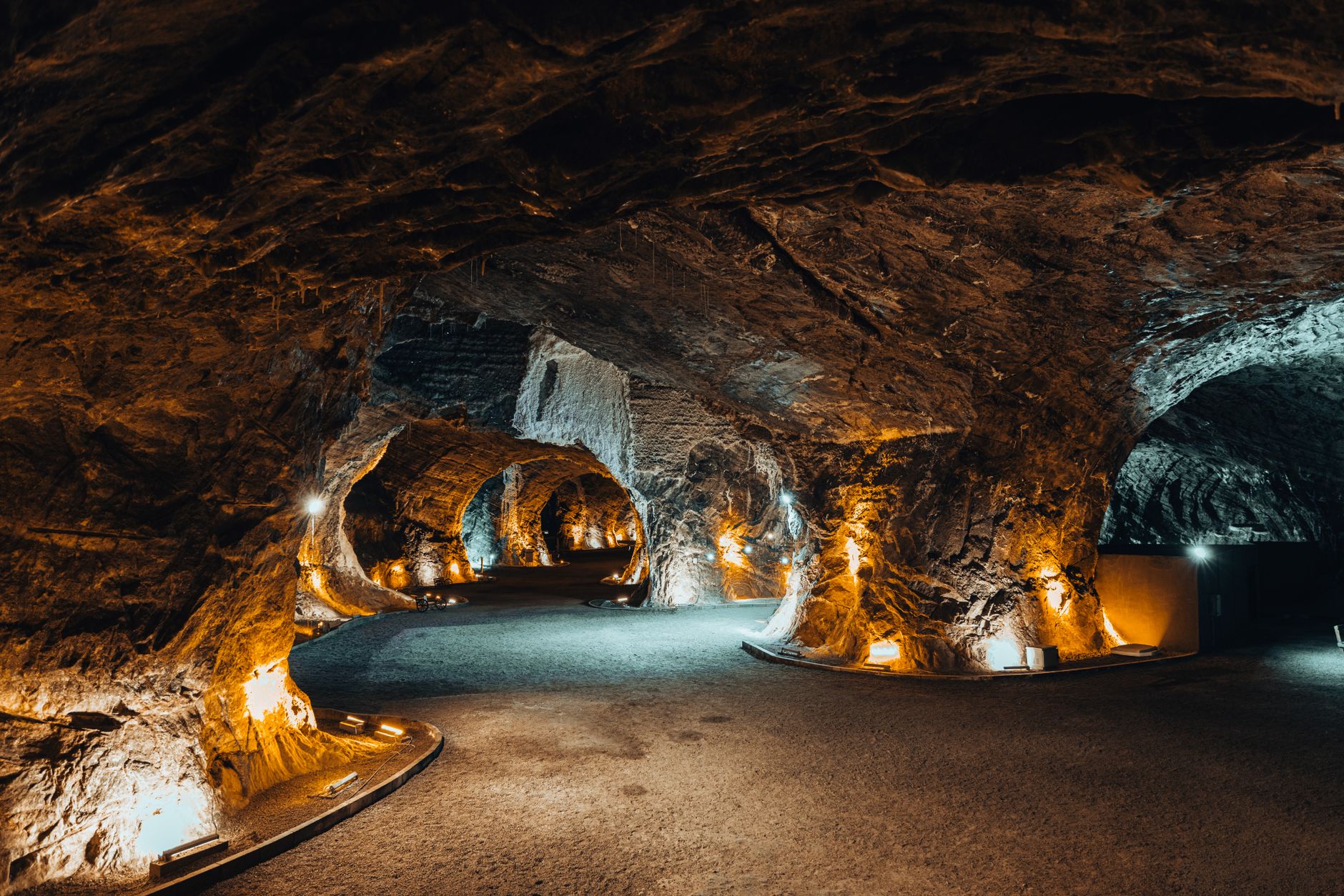
Following a local elaborador (cheese maker) down a steep, moss-slicked limestone path in the shadow of the Picos de Europa, we reached a heavy wooden door set directly into the cliffside. When he swung it open, the darkness breathed on us: a cool, 90% humidity breeze carrying the scent of Penicillium roqueforti and fermenting mountain milk. Inside, stacked on native chestnut planks, were hundreds of cylinders of Cabrales cheese, their crusts blooming with a natural, dusty gray-green velvet.
This isn't just food production; it’s geological alchemy.
This summer, travelers are abandoning over-touristed coastal traps in search of deep, sensory authenticity. "Culinary spelunking" has emerged as the definitive trend for epicurean travelers. The magic lies in affinage—the ancient art of aging cheese. In these subterranean microclimates, temperature and humidity remain constant year-round, allowing unique molds and yeasts to colonize the rinds, imparting complex flavors of toasted hazelnuts, wet stone, barnyard hay, and sweet cream that simply cannot be replicated in modern, climate-controlled stainless steel rooms.
If you want to taste cheese at its absolute source—where the earth itself acts as an ingredient—these six trending cheese caves deserve a spot on your summer itinerary.
---
1. Fort des Rousses: The Monumental Comté Cathedral (Jura, France)
```
Location: Jura Mountains, France | Cheese: Comté AOC | Temperature: Constant 8°C (46°F)
```
The Scale of Greatness
To understand the sheer majesty of French cheese culture, you must visit Fort des Rousses. Originally built as a military fortress in the 19th century to house 3,500 soldiers, this colossal stone labyrinth was decommissioned and converted in 1997 by Juraflore, one of France’s premier Comté affineurs.
Today, it houses over 100,000 wheels of Comté, each weighing a massive 88 pounds. Walking through the vaulted stone galleries feels less like visiting a food processing facility and more like wandering through a cathedral dedicated to dairy. The air is thick with the scent of ammonia, roasted nuts, and caramelized onions—the signature aromatic profile of aging Comté.
The Tasting Experience
The guided sensory tour takes you through the vaulted brick galleries where you can watch the robotic caveurs (cellar masters) brush and turn the massive wheels. The tour culminates in a tutored tasting of Comté aged at different intervals: 12, 18, and 24+ months. You will learn to identify the crunchy tyrosine crystals (often mistaken for salt) that develop in long-aged wheels, indicating peak maturity.
- Pro-Tip: The fort is massive and notoriously cold. Even in July, you will need a heavy fleece or light down jacket. Wear sturdy, closed-toe walking shoes as the stone floors can be damp and slick.
- The Insider Secret: Book the "Prestige Tour." It is limited to small groups and includes access to the private "Charles VII" cellar, which houses the oldest, rarest reserve wheels.
---
2. Cheddar Gorge Cheese Company: The Birthplace of a Legend (Somerset, England)
```
Location: Somerset, England | Cheese: Cave-Aged Cheddar | Temperature: Constant 11°C (52°F)
```
The True Origin of Cheddar
Most of the "cheddar" consumed globally is a mass-produced, block-molded shadow of its former self. To taste the real thing, you must travel to the dramatic limestone cliffs of Cheddar Gorge in Somerset. Here, the Cheddar Gorge Cheese Company remains the only producer still making cheddar in the village of its birth.
After hand-crafting the curd using raw local milk, the cheesemakers wrap the wheels in traditional cotton cloth, seal them with lard, and wheel them deep into the natural karst caves of the Gorge (specifically Gough’s Cave). The constant humidity and temperature inside the limestone chambers allow the clothbound wheels to breathe, developing a complex, mottled gray rind and a deep, earthy flavor profile.
The Tasting Experience
After exploring the dramatic stalactites of Gough’s Cave, head to the visitor center to watch the live cheesemaking process through viewing windows. The tasting flight is a revelation: compare their standard mature cheddar with the Cave-Aged Cheddar. The cave-aged variety is distinctly different—drier, crumblier, with pronounced mineral notes, a sharp, grassy bite, and a lingering finish reminiscent of wild mushrooms.
- Pro-Tip: Arrive at the visitor center at 10:00 AM to watch the "scalding" and "cheddaring" process (where the blocks of curd are stacked and turned by hand) before heading up to the caves.
- The Insider Secret: Pick up a jar of their local Somerset cider apple chutney at the gift shop; its sweet acidity cuts through the rich, buttery fat of the cave-aged cheddar beautifully.
---
3. Cueva del Queso de Cabrales: The Extreme Blue of Asturias (Arenas de Cabrales, Spain)
```
Location: Asturias, Spain | Cheese: Cabrales DOP | Temperature: 8°C–12°C (46°F–53°F)
```
The Wild Blue of the Picos de Europa
Cabrales is not for the faint of heart. It is a powerful, unpressed blue cheese made from a blend of raw cow's, sheep's, and goat's milk. Unlike Roquefort or Stilton, where the blue mold spores are manually injected into the curd, Cabrales is colonized entirely by the wild, airborne spores present inside the damp, high-altitude limestone caves of the Picos de Europa mountain range.
The Cueva del Queso (Cheese Cave Exhibit) in Arenas de Cabrales is an active aging cave that has been partially converted into an immersive museum. To reach it, you walk along a rushing mountain stream before entering a cavern where the humidity hovers at a dripping 90%.
The Tasting Experience
The tour includes a fascinating audiovisual presentation inside the natural cave, showing how shepherds historically braved steep mountain passes to age their cheeses in remote, high-altitude caverns. The tasting at the end features Cabrales paired with local Asturian natural cider, poured from high above the glass (escanciado) to aerate the liquid. The sweet, tart, effervescent cider is the perfect counterpoint to the intense, spicy, almost peppery kick of the cheese.
- Pro-Tip: Do not touch your eyes during or after the cave tour. The airborne mold and salt dust can cause a mild stinging sensation if you have sensitive skin or eyes.
- The Insider Secret: Look for the small, family-run tiendas in the village of Arenas de Cabrales and ask for "Cabrales de Tres Leches" (made from all three milks). It is exponentially more complex than the single-milk varieties.
---
4. Luigi Guffanti 1876: The Historic Cellars of Lake Maggiore (Arona, Italy)
```
Location: Piedmont, Italy | Cheese: Gorgonzola, Castelmagno, Bettelmatt | Temperature: Variable by room
```
The Cradle of Italian Affinage
Located on the scenic shores of Lake Maggiore, the Guffanti family has been selecting, aging, and perfecting Italian cheeses since 1876. Rather than producing cheese, they are master affinatori (selectors and refiners). They source young cheeses from artisanal producers across Italy and bring them to their historic brick cellars in Arona to undergo bespoke aging programs.
The cellars are a sensory overload. Different rooms are calibrated for different styles of cheese: one room is filled with towering stacks of Gorgonzola Dolce and Piccante, dripping with blue veins; another houses massive, crusty wheels of Parmigiano-Reggiano and rare, mountain-born Bettelmatt.
The Tasting Experience
Guffanti offers highly customized, private cellar tours followed by structured tastings led by a professional cheese sommelier. You will sit in their elegant tasting room and sample a curated progression of cheeses, starting with delicate, fresh goat cheeses and ending with intensely pungent, long-aged blues, paired with local Piedmontese wines like Nebbiolo and Barbera.
- Pro-Tip: This is a highly professional, working cellar. Tours must be booked weeks in advance via their website; walk-ins are not permitted.
- The Insider Secret: Ask to taste their "Gorgonzola Croce"—a rare, artisanal style of Gorgonzola that is aged on wooden shelves rather than plastic, resulting in a vastly superior texture and depth of flavor.
---
5. The Cellars at Jasper Hill: Modern American Artistry (Vermont, USA)
```
Location: Greensboro, Vermont | Cheese: Harbison, Bayley Hazen Blue | Temperature: Calibrated by vault
```
The Vanguard of the American Cheese Renaissance
While Europe boasts centuries of cave-aging tradition, the United States has built its own world-class equivalent in the rolling green hills of Vermont. The Cellars at Jasper Hill is a state-of-the-art, 22,000-square-foot underground facility consisting of seven concrete vaults radiating from a central path, buried deep beneath a hillside pasture.
Each vault is engineered to create a specific microclimate tailored to a particular style of cheese. Vault 5, for example, is highly humid and warm, perfect for developing the white, pillowy bloomy rinds of Moses Sleeper and the spruce-bark-wrapped Harbison. Vault 2 is cooler and drier, optimized for the aging of their award-winning, natural-rind cheddar, Cabot Clothbound.
The Tasting Experience
Because of strict USDA biosecurity protocols, the active production vaults are closed to the general public. However, Jasper Hill hosts exclusive, curated tasting experiences and educational seminars at their nearby farmstead and partner venues in Greensboro during the summer months.
- Pro-Tip: Keep an eye on their social media channels for summer "Open Farm" days, which offer rare behind-the-scenes access to the farm, the cows, and outdoor tastings.
- The Insider Secret: If you buy a wheel of Harbison, do not slice it. Instead, peel back the top rind like a lid and spoon out the gooey, woodsy, paste-like interior with a piece of crusty sourdough.
---
6. Sbrinz Cheese Cellars: The Alpine Giant (Stans, Switzerland)
```
Location: Nidwalden, Switzerland | Cheese: Sbrinz AOP | Temperature: 12°C–14°C (53°F–57°F)
```
Europe’s Oldest Hard Cheese
Before there was Parmigiano-Reggiano, there was Sbrinz. This ancient, extra-hard Swiss cheese has been produced in the alpine valleys of Central Switzerland since at least the 11th century. To age this dense, slow-maturing cheese, it requires a unique environment.
In the small town of Stans, the Sbrinz aging cellars house thousands of these massive, golden-brown wheels. Unlike most cheeses, which are stored flat on shelves, Sbrinz wheels are stored vertically in custom-built wooden racks. This vertical storage allows the wheels to dry out evenly, expelling excess moisture and concentrating the rich, savory flavors of Alpine grasses and summer wildflowers.
The Tasting Experience
The cellars in Stans offer guided tours where you can walk through the towering aisles of vertical wheels and learn about the historic "Sbrinz Route"—the ancient trade path over the Alps to Italy. The tasting includes Sbrinz served in three distinct ways: shaved into paper-thin curls (Möckli), broken into rough chunks with a cheese chisel, and grated over traditional alpine dishes.
- Pro-Tip: Combine your cellar visit with a trip up the nearby Stanserhorn mountain on the open-top CabriO cable car for a full sensory connection between the alpine pastures and the cellar.
- The Insider Secret: Sbrinz must be aged for at least 18 months to be sold, but ask your guide if you can taste a 30-month-aged wheel. The crystallization and flavor intensity at this age rival the finest Parmigiano.
---
Logistics, Budgets, and Quick Facts
Planning your summer subterranean cheese safari? Use this quick-reference guide to map out your journey, estimate costs, and secure your bookings.
| Location | Primary Cheese | Est. Tour Cost ($ USD) | Best Time to Visit | How to Get There | Booking Difficulty |
| :--- | :--- | :--- | :--- | :--- | :--- |
| Fort des Rousses (France) | Comté | $18 - $30 | June to September | Train to Morez, then 15-minute taxi to the fort. | Medium (Book 2-3 weeks ahead) |
| Cheddar Gorge (England) | Clothbound Cheddar | $25 (Includes Cave access) | July & August | Train from London to Weston-super-Mare, then local bus. | Low (Walk-ins welcome) |
| Cueva del Queso (Spain) | Cabrales | $10 - $15 | May to October | Fly to Santander, rent a car, drive 1.5 hours into Picos de Europa. | Low (Seasonal hours apply) |
| Luigi Guffanti (Italy) | Gorgonzola / Rare Italian | $50 - $120 (Includes private tasting) | Year-round | Train from Milan Malpensa to Arona (approx. 45 mins). | High (Private booking required months ahead) |
| Jasper Hill (USA) | Harbison / Bayley Hazen | $35 - $75 (Off-site experiences) | June to August | Fly to Burlington, VT, rent a car, drive 1.5 hours northeast. | High (Events sell out quickly) |
| Sbrinz Cellars (Switzerland) | Sbrinz | $20 - $35 | June to September | Train from Lucerne to Stans (20 minutes). | Medium (Group tours on request) |
---
The Spelunker's Cheese Etiquette: 3 Rules of the Cave
Before you descend into these sacred dairy vaults, keep these three golden rules of cheese cave tourism in mind:
- Ditch the Perfume: The high humidity and enclosed space of a cheese cave amplify scents. Wearing heavy cologne or perfume will ruin the sensory experience for you and everyone else on the tour—and can potentially taint the sensitive rinds of the aging cheeses.
- Respect the Microclimate: Do not touch the cheeses or the wooden shelves unless explicitly invited to do so by your guide. The oils, bacteria, and sanitizers on your hands can disrupt the delicate, wild ecosystem of molds growing on the rinds.
- Dress for Autumn, Not Summer: It may be 30°C (86°F) outside, but inside a cheese cave, it is a perpetual late autumn. Bring layers, closed-toe shoes with good grip, and a light scarf to protect against the damp chill.
---