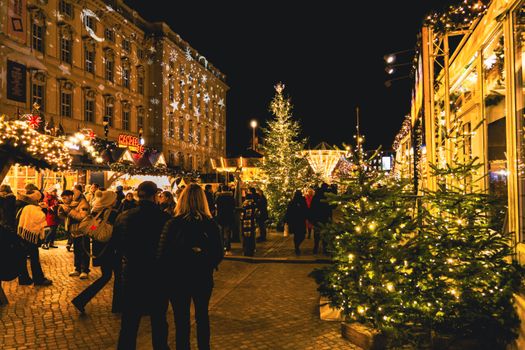
The Secret Santa List: Unearthing Europe's Hidden Christmas Market Gems
There’s a confession I need to make. For years, my December pilgrimage involved a single-minded devotion to Germany’s Christmas markets. Nuremberg, Dresden, Cologne – I’d brave the throngs, sip Glühwein, and marvel at the festive cheer. It was magical, yes, but also… a lot. Elbow-to-elbow crowds, endless queues, and a distinct feeling that I was experiencing a beautifully curated tourist spectacle rather than genuine local tradition.
Then, a few years ago, a local friend in Berlin, observing my wide-eyed but slightly overwhelmed state, leaned in conspiratorially. "You know," she whispered, "the real magic isn't always where the tour buses go." She then proceeded to rattle off a list of places I’d barely considered, markets tucked away in corners of Europe that promised charm, authenticity, and a distinct lack of selfie sticks obstructing every view. My travel blogger senses tingled. Could there be a whole other world of festive wonder out there, just waiting to be discovered?
The answer, my friends, is a resounding YES. And since then, I’ve made it my mission to uncover these lesser-known, truly local Christmas market experiences. These aren't just alternatives; they're destinations in their own right, brimming with unique traditions, delicious regional treats, and an atmosphere so genuinely heartwarming, you'll feel like you've stepped into a holiday postcard.
So, if you’re ready to ditch the crowds and discover the secret Santa list of Europe’s best Christmas markets – the ones locals cherish and quietly hope you don’t find – then grab a mug of something warm, because we’re about to embark on a truly unforgettable festive journey.
1. Colmar, France: An Alsatian Fairytale Beyond the Strasbourg Spotlight
Let's start with a slightly mischievous entry. Colmar, in France’s Alsace region, isn't exactly "unknown," but it often plays second fiddle to its bigger, brasher sibling, Strasbourg. And that, my friends, is precisely its charm. While Strasbourg is a magnificent beast of a market, Colmar offers a more intimate, storybook experience that feels like stepping into a living advent calendar. Locals here pride themselves on their unique Franco-Germanic heritage, and the Christmas markets reflect this exquisite blend.
My Personal Anecdote:
I first visited Colmar on a chilly December morning, the air crisp with the scent of spiced wine and gingerbread. I’d arrived early, before the midday rush, and wandered through the Petite Venise quarter, where half-timbered houses, adorned with twinkling lights and giant bows, reflected in the canals. It felt less like a market and more like a town-wide celebration, with five distinct markets spread across its historic center. I found myself chatting with a chocolatier about his family's secret recipe for pain d'épices (gingerbread) and later, a vendor selling hand-carved wooden toys, each piece a testament to generations of craftsmanship. It was the lack of frantic energy, the ability to linger and truly connect, that made it so special.
What Makes it Unique:
Colmar’s markets are renowned for their incredible artisan crafts. You won’t find mass-produced trinkets here. Instead, expect exquisite pottery, hand-blown glass, unique textiles, and intricate wooden carvings. The food is also a highlight: flammekueche (a thin, crispy tart), bredele (Alsatian Christmas cookies), and vin chaud (mulled wine) with local twists. The entire town is a spectacle, with stunning illuminations and decorations that transform every street into a festive wonderland.
How to Experience it Like a Local:
* Go Early or Late: The markets open around 10 AM. Arrive then for a peaceful stroll. Evenings after 8 PM also see fewer crowds.
* Explore Beyond the Main Hubs: While Place des Dominicains and Place de l'Ancienne Douane are popular, seek out the smaller markets like the one at Place Jeanne d'Arc for local produce and crafts, or the Koïfhus market focusing on regional artisans.
* Dine Away from the Squares: Duck into a winstub (traditional Alsatian tavern) on a side street for an authentic meal. Try choucroute garnie (sauerkraut with various meats) or baeckeoffe (a hearty meat and potato stew).
* Prices: Expect to pay around €3-€4 for a mug of vin chaud, €5-€8 for a flammekueche, and €10-€30+ for quality artisan crafts.
* Getting There: Colmar is easily accessible by train from Strasbourg (30 mins) or Basel (Switzerland, 45 mins). Its compact size makes it perfect for walking.
2. Zagreb, Croatia: A Modern Fairytale with Balkan Charm
When I first heard about Zagreb’s Christmas market, I admit, I was skeptical. Croatia? For Christmas? But after winning "Best European Christmas Market" multiple times, my curiosity was piqued. What I found was a vibrant, sprawling celebration that felt both contemporary and deeply rooted in tradition, a delightful contrast to the medieval German markets. Zagreb brings a youthful, energetic spirit to its festive season that is utterly infectious.
My Personal Anecdote:
My first evening in Zagreb was a blur of twinkling lights and bustling energy. The city truly comes alive. I remember standing in Ban Jelačić Square, sipping a rakija (fruit brandy) infused with honey, watching ice skaters glide across the rink in King Tomislav Square, and then stumbling upon the "Fuliranje" street food festival, which felt more like a giant, joyful block party than a traditional market. There was live music, creative gourmet street food (think truffle burgers and pulled pork sandwiches alongside local specialties), and an incredible sense of community. It wasn’t just about shopping; it was about celebrating together. The warmth of the people, despite the chilly air, was palpable.
What Makes it Unique:
Zagreb’s markets are less about quaint medieval stalls and more about creating an immersive, city-wide festive experience. The focus is heavily on food, drink, and entertainment. You’ll find unique Croatian delicacies like fritule (miniature doughnuts), kobasice (sausages), and strukli (a warm cheese pastry), alongside modern twists on festive treats. The ice rink in King Tomislav Square is a major draw, as are the numerous live music performances and interactive installations. The entire city center is beautifully decorated, creating a magical atmosphere.
How to Experience it Like a Local:
* Embrace the "Fuliranje" Spirit: Don’t just stick to the main squares. "Fuliranje" (meaning "fooling around" or "having fun") is the heart of Zagreb's festive vibe, typically on Strossmayer Square and European Square. It's where the locals gather for the best street food and live music.
* Try Local Delicacies: Seek out licitar hearts (traditional gingerbread cookies, often used as decorations), kuhano vino (mulled wine with a Croatian twist), and the aforementioned fritule.
* Take the Funicular: Ride the shortest public funicular in the world up to the Upper Town (Gornji Grad) for breathtaking views of the illuminated city below, and explore the charming, quieter market stalls there.
* Prices: Food and drink are generally very affordable. Expect €3-€5 for a fritule or a sausage, and €2-€3 for mulled wine. Artisan crafts vary widely but offer excellent value.
* Getting There: Zagreb is well-connected by train and bus from Ljubljana, Vienna, and Budapest. The city center is very walkable.
3. Ljubljana, Slovenia: A Fairytale by the River
Nestled in the heart of Slovenia, Ljubljana is a city that feels plucked from a storybook at any time of year. But in December, with its baroque architecture dusted in snow and the Ljubljanica River reflecting thousands of twinkling lights, it transforms into a truly enchanting Christmas wonderland. It's smaller, quieter, and infinitely more intimate than its Central European neighbors, making it a perfect escape for those seeking genuine festive charm without the crush.
My Personal Anecdote:
I arrived in Ljubljana on a crisp evening, the air thick with the scent of pine and cinnamon. My first impression was of pure wonder. The illuminations along the riverfront, designed by local artists, were breathtakingly creative, each bridge and building a canvas for light. I found a quiet spot on the Triple Bridge, watching families stroll by, their breath misting in the cold, and listened to a choir singing traditional Slovenian carols. It felt incredibly authentic and peaceful. Later, I stumbled upon a small market stall selling potica, a traditional Slovenian rolled pastry, and the vendor, a kindly old woman, insisted I try a piece, sharing stories of her grandmother's recipe. It was these small, personal interactions that made Ljubljana so special.
What Makes it Unique:
Ljubljana’s market isn't about grand scale; it's about intimate charm. The main market stretches along the riverbanks, offering stunning views and a relaxed atmosphere. You’ll find a strong emphasis on Slovenian crafts, from unique woolen goods and wooden toys to intricate lace. The food stalls offer hearty Slovenian fare, including various sausages, warming stews, and of course, potica in countless flavors. The city’s unique illuminations, which change theme each year, are a major draw and provide incredible photo opportunities.
How to Experience it Like a Local:
* Take a Boat Ride: See the city’s illuminations from a unique perspective with a festive boat ride along the Ljubljanica River.
* Explore Beyond the Riverfront: While the riverfront is the main hub, venture into Prešeren Square and Congress Square for additional stalls and festive activities.
* Taste the Local Flavors: Don't miss kranjska klobasa (Carniolan sausage), štruklji (dumplings with various fillings), and plenty of kuhano vino (mulled wine) or medica (honey liqueur).
* Visit the Castle: Take the funicular up to Ljubljana Castle for panoramic views of the city lights and a smaller, charming market within the castle walls.
* Prices: Similar to Zagreb, Ljubljana offers great value. Mulled wine around €2.50-€3.50, sausages €4-€6, and artisan crafts are reasonably priced.
* Getting There: Ljubljana is easily reachable by train or bus from Vienna, Zagreb, or Trieste (Italy). The city center is compact and pedestrian-friendly.
4. Krakow, Poland: Medieval Majesty and Hearty Hospitality
Krakow, with its magnificent Main Market Square (Rynek Główny), is a city steeped in history and legend. During Christmas, this already stunning square transforms into one of Europe’s most picturesque festive scenes, yet it retains a distinctly Polish charm that feels less commercialized than many Western European counterparts. It's a place where tradition, affordability, and genuine warmth combine to create an unforgettable experience.
My Personal Anecdote:
I’ll never forget my first sight of Krakow’s Rynek Główny at Christmas. The Cloth Hall (Sukiennice) gleamed under countless lights, the towering St. Mary's Basilica stood majestically, and the air was filled with the scent of roasted chestnuts and grilled oscypek (smoked sheep's cheese from the Tatra Mountains). I found myself drawn to a stall where an elderly woman was meticulously painting intricate glass ornaments, each one a miniature work of art. She didn't speak much English, but her smile and the warmth in her eyes transcended any language barrier. Later, I huddled with friends around a bonfire, sipping grzane wino (mulled wine) and feasting on pierogi, feeling utterly content and connected to the centuries of tradition unfolding around me.
What Makes it Unique:
Krakow’s market is set against the breathtaking backdrop of one of Europe's largest medieval squares. The focus is on traditional Polish crafts, including hand-painted glass baubles, wooden toys, amber jewelry, and sheepskin products. The food is hearty and delicious: pierogi (dumplings), bigos (hunter's stew), grilled meats, and the unique oscypek cheese served hot with cranberry jam. The atmosphere is vibrant but also deeply respectful of Polish customs, with carol singers and folk dancers often performing.
How to Experience it Like a Local:
* Sample Everything: Be adventurous with the food! Try different types of pierogi, kiełbasa (Polish sausage), and the grilled oscypek. Don't forget grzane piwo (mulled beer) if you're feeling brave!
* Seek Out Unique Crafts: Look for genuine amber jewelry, hand-embroidered linens, and the incredibly detailed Christmas ornaments. These make for unique and meaningful souvenirs.
* Visit the Nativity Scene Competition: If you're there in early December, don't miss the annual Szopka Krakowska (Krakow Nativity Scene) competition. These elaborate, architectural masterpieces are displayed around the square and later in the Ethnographic Museum, showcasing incredible local artistry.
* Explore Kazimierz: While the main market is in the Old Town, take time to explore the historic Jewish Quarter, Kazimierz, for a different vibe, excellent food, and charming, quieter streets.
* Prices: Krakow is incredibly affordable. Mulled wine is around €2.50-€3.50, pierogi €5-€7, and most crafts are very reasonably priced, offering excellent value.
* Getting There: Krakow has an international airport (KRK) and is well-connected by train to other major European cities. The city center is very walkable.
5. Tallinn, Estonia: A Medieval Baltic Fairytale
Imagine a Christmas market set within the walls of a perfectly preserved medieval Old Town, where snow often blankets cobblestone streets and the air is filled with the scent of gingerbread and spruce. That's Tallinn, Estonia, during the festive season. Its market, consistently ranked among the best, offers a truly unique Northern European experience that feels straight out of a Grimm’s fairytale, yet remains wonderfully authentic and far less crowded than its German counterparts.
My Personal Anecdote:
My trip to Tallinn in December was a revelation. Stepping into the Old Town felt like time travel. The Town Hall Square, dominated by the historic Town Hall and a magnificent Christmas tree, was the heart of the market. I remember a particularly cold evening, watching a group of local children singing carols, their rosy cheeks glowing in the lamplight. I warmed my hands around a cup of glögi (Estonian mulled wine, often with almonds and raisins) and savored a traditional blood sausage, a surprisingly delicious local delicacy. The market had a quiet, profound magic – less about bustling commerce and more about embracing the ancient traditions and the spirit of the season.
What Makes it Unique:
Tallinn's market is renowned for its enchanting atmosphere. The stalls, often resembling miniature log cabins, offer a wide array of Estonian handicrafts: woolen sweaters, felt hats, wooden utensils, and intricate amber jewelry. The food is distinctly Baltic, with options like blood sausage, sauerkraut, marzipan, and plenty of gingerbread. A magnificent Christmas tree stands proudly in the square, a tradition dating back to 1441, making it one of the first public Christmas trees in Europe. There's often live music, folk dancing, and even Santa Claus making an appearance.
How to Experience it Like a Local:
* Warm Up with Glögi: Estonian mulled wine (glögi) is a must-try. Many stalls offer different variations.
* Try Local Delicacies: Be adventurous and sample blood sausage (verivorst) with lingonberry jam, sauerkraut, and, of course, the famous Estonian marzipan.
* Explore the Crafts: Tallinn is a treasure trove of unique, high-quality handicrafts. Look for hand-knitted woolens, ceramics, and carved wooden items. They make fantastic, authentic souvenirs.
* Climb St. Olav's Church Tower: For a breathtaking panoramic view of the snow-dusted Old Town and the illuminated market from above (check if it's open in winter, as hours can be limited).
* Prices: Tallinn offers good value, though slightly higher than Poland or Croatia. Glögi around €3-€4, food items €5-€10, and crafts vary.
* Getting There: Tallinn has an international airport (TLL) and is easily accessible by ferry from Helsinki or Stockholm, or by bus from Riga. The Old Town is pedestrian-friendly.
6. Budapest, Hungary: Thermal Baths & Festive Delights
Budapest, the "Pearl of the Danube," truly shines during the festive season. While its main Vörösmarty Square market can attract crowds, the city offers several other charming markets that feel more local, more intimate, and equally enchanting. Combine the festive cheer with a soak in a thermal bath, and you have a uniquely Hungarian Christmas experience that's hard to beat.
My Personal Anecdote:
One chilly afternoon in Budapest, after exploring the grandeur of Buda Castle, I found myself drawn to the market outside St. Stephen's Basilica. It was bustling but in a relaxed, joyful way. The aroma of kürtőskalács (chimney cake) filled the air, and I watched in fascination as a vendor expertly rolled dough around a spit, baking it over an open flame. Later, I discovered a smaller, more artisanal market on Fővám tér, near the Great Market Hall, where I found unique handmade leather goods and tasted homemade pálinka (fruit brandy). The evening culminated in a magical light show projected onto the Basilica, a truly spectacular and unexpected highlight.
What Makes it Unique:
Budapest’s markets offer a blend of traditional Hungarian crafts and gastronomy. You'll find intricate embroidery, handmade jewelry, and unique pottery. The food is a major draw: kürtőskalács, lángos (fried dough with various toppings), hearty goulash, and plenty of forralt bor (mulled wine). The market outside St. Stephen's Basilica is particularly beautiful, with a small ice rink and a stunning 3D light show projected onto the Basilica's facade every evening. The thermal baths provide a perfect contrast – a relaxing, unique way to warm up after market explorations.
How to Experience it Like a Local:
* Explore Multiple Markets: While Vörösmarty Square is famous, don't miss the market at St. Stephen's Basilica for its ambiance and light show, and look for smaller markets like the one on Fővám tér or in Óbuda for a more local feel.
* Indulge in Hungarian Treats: Beyond kürtőskalács and lángos, try töltött káposzta (stuffed cabbage), kenyérlángos (a flatbread pizza), and gesztenyepüré (chestnut purée with whipped cream).
* Soak in a Thermal Bath: After a day of market hopping, there’s nothing quite like warming up in the Szechenyi or Gellért Thermal Baths. It’s an iconic Budapest experience, especially in winter.
* Take a Danube River Cruise: See the city's illuminated landmarks from the water, offering a different perspective on Budapest's festive beauty.
* Prices: Budapest is generally affordable. Mulled wine is around €2.50-€4, chimney cake €5-€7, and main dishes €8-€15. Crafts vary widely.
* Getting There: Budapest has an international airport (BUD) and is a major rail hub, easily accessible from Vienna, Prague, and other Central European cities. The city has an excellent public transport system.
Your Secret Guide to Unforgettable Festive Adventures
So there you have it – my secret Santa list of Europe’s most enchanting Christmas markets, the ones that offer genuine charm, unique traditions, and that elusive feeling of truly experiencing something special, far from the madding crowds. These are the places where the scent of spiced wine mingles with local stories, where every twinkling light feels like a personal invitation, and where the magic of Christmas truly comes alive.
This year, challenge yourself to look beyond the obvious. Venture into the heart of these cities, chat with the local artisans, sample the regional delicacies, and discover a side of European Christmas that few tourists ever get to see. You'll not only bring home unique souvenirs but also memories that shimmer with authentic festive joy.
Which of these hidden gems will be on your Christmas market itinerary this year? Have you discovered a secret market that locals are trying to keep to themselves? Share your adventures and tips in the comments below! Let’s keep the magic of authentic travel alive.
---