The Whisper of the Unseen: My Journey to Discover Hidden Healing Traditions
The humid air of Ubud, Bali, clung to me like a second skin, heavy with the scent of frangipani and incense. I’d come seeking the island’s famed spiritual energy, but after a week of yoga retreats and rice paddy selfies, I felt… disconnected. A persistent dull ache in my shoulder, a souvenir from a poorly packed backpack, mirrored a deeper unease. I mentioned it to Wayan, the kindly owner of my guesthouse, a woman whose eyes held the quiet wisdom of generations. She listened patiently, then simply said, "Sometimes, the body speaks what the mind cannot. You need to see a Balian."
But not the Balian, the famous one from the books, the one with the queues of eager tourists. "No, no," she chuckled, "that one is for show. There is another, in the village, who helps us." Her words were a revelation, a whispered invitation into a world I hadn't known existed – a world of traditional healers, cherished by locals, whose practices are often deliberately shielded from the mainstream tourist gaze. This wasn't just about my shoulder; it was about an authentic connection, a rare glimpse into the beating heart of a culture. And it changed my entire approach to travel.
This isn't an exposé, nor is it a guide to "find the best deals" on ancient wisdom. It's an exploration of how to respectfully seek out and engage with these profound, often deeply private, cultural experiences. It’s about understanding why locals guard these secrets, and how to earn a brief, respectful entry into their sacred spaces.
Beyond the Tourist Trail: Why Some Wisdom Stays Hidden
Imagine a sacred ritual, passed down through generations, suddenly becoming a photo opportunity. Imagine ancient remedies, carefully prepared with intention, reduced to a novelty. This is precisely what many traditional communities fear, and why some of their most powerful practices remain off-limits to the casual tourist.
Locals don't want you to know about these healers for several reasons:
1. Preservation of Authenticity: Commercialization can dilute the spiritual essence and efficacy of practices. What was once a profound healing session can become a staged performance.
2. Respect and Privacy: Many healing traditions involve deeply personal, sometimes vulnerable, interactions. The presence of curious onlookers can be disruptive and disrespectful.
3. Protection of Sacred Knowledge: Some knowledge is considered sacred, meant only for those within the community or those who approach with genuine intent and respect, not mere curiosity.
4. Avoiding Exploitation: There's a history of traditional practices being appropriated, misrepresented, or exploited for profit without benefiting the originating community.
5. Capacity and Focus: Healers often serve their local communities first and foremost. Their time and energy are finite, and their primary role is not tourism.
Understanding these reasons is the first, crucial step in approaching such experiences ethically. It’s not about "sneaking in," but about being invited in, through trust and genuine respect.
The Unwritten Invitation: How to Earn Trust and Find a Guide
So, how do you find these hidden healers if they're not on Google Maps or in your guidebook? The answer is simple, yet profound: through genuine human connection.
My experience in Bali was a perfect example. I hadn't gone searching for a healer; I had built a relationship with Wayan over several days, showing genuine interest in her culture, sharing meals, and simply listening.
Here’s how to cultivate those connections:
- Stay Local: Opt for guesthouses, homestays, or locally-owned accommodations rather than large resorts. These environments naturally foster deeper interactions.
- Engage with Purpose: Don't just ask for directions; ask about local life, traditions, challenges. Show genuine interest in the culture beyond its tourist attractions.
- Learn Basic Phrases: Even a few words in the local language can break down barriers and show respect.
- Be Patient and Present: Don't rush. Spend time in a place, allow relationships to develop naturally.
- The Power of a Gentle Inquiry: Once you've established some rapport, you might gently inquire about local wellness practices, or if you have a genuine ailment, mention it as I did. Frame it as seeking local wisdom, not as demanding a "tourist experience."
- Trust Your Gut: Not every local you meet will be the right person to guide you. Look for individuals who exude warmth, wisdom, and a deep connection to their community.
Remember, the goal isn't to force an encounter but to be open to one if it arises organically and respectfully. The "secret" is less about a specific location and more about the mindful way you travel.
Glimpses of Ancient Wisdom: My Encounters with Traditional Healers
Over the years, after that initial experience in Bali, I’ve been incredibly fortunate to have a few more such encounters, always guided by trusted local friends. Each one was unique, deeply personal, and profoundly moving.
1. The Balinese Balian: Realigning Energy (Ubud, Bali)
Following Wayan's directions, I found myself in a simple, open-air compound. There, amidst offerings of flowers and incense, sat a woman with kind eyes and a powerful presence. She wasn't the theatrical Balian I'd read about. This was Ibu Komang. She didn't speak English, but Wayan's nephew translated.
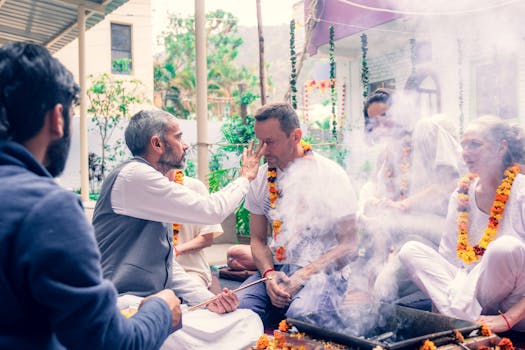
Ibu Komang didn't ask about my shoulder directly. Instead, she felt my pulse, observed my aura, and then, with gentle hands, began to work. She applied a warm, fragrant paste made from local herbs to my temples and wrists, chanting softly. Her fingers moved with a precise, almost surgical grace, pressing on points I didn't even know existed. It wasn't just a massage; it felt like a realignment, a gentle recalibration of something within me. She spoke of blocked energy, of the need for balance, and of letting go of worries I hadn't consciously acknowledged.
The session lasted about an hour. Afterwards, I felt an incredible lightness, not just in my shoulder (which indeed felt significantly better), but in my spirit. I offered a respectful donation – Wayan had advised me on the appropriate amount, making it clear it was an offering, not a fee. Ibu Komang accepted it with a serene nod, her eyes holding a silent blessing. It was a profound lesson in the interconnectedness of body, mind, and spirit, delivered with humble grace.
- Practical Tip: Always ask your local guide about the appropriate offering. It's rarely a fixed price, but a gesture of respect for their time and wisdom. In Bali, a range of 100,000-300,000 IDR (approx. $7-$20 USD) is often considered appropriate for a humble Balian, but this can vary greatly.
2. The Curandero of the Andes: Cleansing and Clarity (Sacred Valley, Peru)
Years later, while trekking in the Sacred Valley of Peru, I connected with a Quechua family through a sustainable tourism initiative. My host, Mateo, a man deeply rooted in his ancestral traditions, sensed my travel fatigue and spiritual restlessness. He introduced me to his aunt, Mama Rosa, a curandera (traditional healer) known for her plant medicine and spiritual cleansings.
Mama Rosa's home was high in the mountains, a simple adobe structure filled with the earthy scent of herbs. She performed a limpia – a spiritual cleansing ritual. She used a bundle of fresh herbs, sweeping them over my body while chanting in Quechua, as if brushing away negative energies. She offered me a small cup of a bitter herbal tea, explaining it would cleanse my internal system. Then, she read coca leaves, scattering them onto a woven cloth and interpreting their patterns. Her words, translated by Mateo, spoke of ancestral connections, future paths, and the importance of connecting with Pachamama (Mother Earth).
The experience was raw, powerful, and deeply grounding. I felt a sense of release, as if a weight had been lifted. It wasn't about a specific cure, but about reconnecting with a deeper sense of self and the ancient wisdom of the land.
- Practical Tip: Be prepared for sensory experiences – strong herbal scents, sometimes bitter tastes, and unfamiliar rituals. Approach with an open mind and heart.
3. The Bone Setter of Thailand: Restoring Balance (Rural Northern Thailand)
During a motorcycle trip through rural northern Thailand, a minor accident left me with a jarring pain in my wrist. My guesthouse owner, a jovial man named Somchai, immediately recommended a Moh Nuad Boran (traditional Thai massage healer) in a nearby village, a man known for his bone-setting skills.
This was less spiritual, more practical, but still deeply traditional. The healer, an elderly man with powerful hands, examined my wrist. He didn't speak English, but his gestures were clear. He applied a strong-smelling herbal compress, then, with surprising force and precision, manipulated my wrist. There was a sharp crack, a gasp from me, and then… a profound sense of relief. He then demonstrated exercises and wrapped my wrist in a traditional cloth, instructing me to keep it warm.
The immediate relief was undeniable. It was a stark reminder that traditional healing encompasses a vast spectrum, from spiritual guidance to practical physical therapies, all rooted in generations of empirical knowledge.
- Practical Tip: For physical ailments, always exercise caution. While many traditional practices are effective, know your limits and seek professional medical advice for serious injuries.
The Unwritten Rules: Ethical Engagement & Respectful Travel
These aren't tourist attractions. They are sacred practices, and your engagement must reflect that.
- Seek Permission, Not Demand Access: Always be guided by a trusted local. Never show up unannounced expecting a session.
- Respect Confidentiality & Privacy: What happens in a healing session is often private. Don't take photos unless explicitly invited, and even then, be discreet and respectful. Never share personal details of the healer or their location publicly without their permission.
- Dress Modestly: Show respect for the cultural context. Cover your shoulders and knees.
- Be Present and Open-Minded: Leave skepticism and judgment at the door. Approach with an open heart and a willingness to learn.
- Offer a Respectful Donation/Exchange: Always ask your local guide what is appropriate. It's often not a fixed price but a donation, an offering, or an exchange. It should reflect your gratitude and the value of their time and wisdom, but also be culturally appropriate. Avoid haggling.
- No Medical Claims: Traditional healing practices are complementary. They are not a substitute for conventional medical care, especially for serious conditions. Be clear about your intentions and don't expect a miraculous "cure" for a chronic illness.
- Give Back to the Community: Consider supporting local initiatives, ethical tourism projects, or directly contributing to the community that hosts these healers.
- Listen More Than You Speak: Absorb the wisdom, the atmosphere, and the teachings.
Beyond the Cure: What You'll Truly Gain
While a physical ailment might be the catalyst, the true "healing" from these experiences often goes much deeper. You gain:
- Profound Cultural Understanding: A rare, intimate glimpse into the heart of a culture, its beliefs, and its wisdom.
- Personal Growth: A chance to reflect, reconnect with yourself, and gain new perspectives on well-being.
- Spiritual Connection: For many, these encounters offer a powerful spiritual awakening or a deepening of their existing spiritual path.
- Authentic Memories: These aren't just experiences; they are transformative moments that stay with you long after your journey ends.
- A Lesson in Humility: An understanding that knowledge comes in many forms, and that modern science doesn't hold all the answers.
Practicalities & Planning: Your Ethical Compass
You won't find these experiences advertised on TripAdvisor. Your best bet is to:
- Build Relationships: As mentioned, this is paramount. Spend time in a place, connect with locals, especially those involved in community work, sustainable tourism, or cultural preservation.
- Ethical Tour Operators (Rare but Exist): A very small number of highly ethical, community-focused tour operators specialize in cultural immersion. They often have long-standing relationships with communities and can facilitate respectful introductions. Research them meticulously to ensure their practices genuinely benefit the local community.
- Language Barrier: Be prepared for a language barrier. A trusted local who can translate is invaluable, not just for communication but for cultural interpretation.
- Safety First: Always prioritize your safety. If a situation feels uncomfortable or unsafe, politely decline and remove yourself. Trust your instincts.
- Be Prepared for the Unexpected: These aren't clinical settings. Expect rustic environments, traditional tools, and practices that may seem unfamiliar.
Remember, this is about seeking a genuine, reciprocal exchange, not a transactional service. It's about opening yourself to a different way of seeing the world, guided by the wisdom of those who have held it sacred for generations.
The True Spirit of Travel: A Call to Mindful Exploration
My journey to discover these hidden healers began with a simple shoulder ache, but it led me to profound insights about connection, respect, and the incredible diversity of human wisdom. These are not "attractions" to tick off a list, but sacred encounters that demand humility, patience, and a deep reverence for culture.
The "secrets" locals keep aren't meant to be stolen, but perhaps, occasionally, shared with those who approach with a truly open heart. If you travel with intention, cultivate genuine connections, and always lead with respect, you might just find yourself invited into one of the most enriching and transformative experiences of your life.
Have you ever had an authentic encounter with traditional healing or cultural practices off the beaten path? Share your stories and tips for ethical engagement in the comments below! Let's inspire each other to travel more mindfully and respectfully.
---