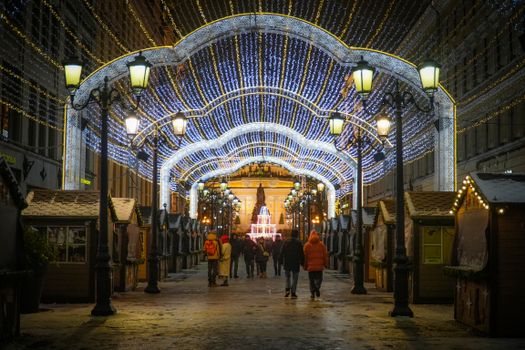
Europe's Secret Christmas Markets: Beyond Germany's Insta-Faves!
Let me tell you a secret. A few years ago, I booked a trip to one of the "most famous" German Christmas markets. You know the one. The one all the Instagram influencers flock to, posing with their perfect mugs of Glühwein, strategically blurred fairy lights in the background, and captions about "pure magic." I arrived, camera charged, expectations sky-high. And what did I find? Shoulder-to-shoulder crowds, endless queues, and a distinct feeling that I was experiencing a highly curated, slightly artificial version of "Christmas magic." It was beautiful, yes, but it lacked that je ne sais quoi, that authentic spark I was chasing.
That trip sparked a mission: to find the real magic. The Christmas markets that haven't been over-Instagrammed, over-marketed, and overrun. The ones where local traditions still shine, where the scent of spiced wine mingles with genuine smiles, and where you can actually breathe. And guess what? I found them. A whole continent full of them, waiting just beyond the well-trodden paths.
So, if you're ready to ditch the influencer-approved itineraries and discover some truly enchanting, often more affordable, and undeniably authentic festive experiences, pull up a cozy blanket, grab a hot drink, and let's dive into Europe's best-kept Christmas market secrets. These are the places Instagram influencers don't want you to know about, because once you go, you won't want to go back to the mainstream.
1. Poland: Krakow & Wroclaw – The Eastern European Enchantment
Poland, my friends, is a winter wonderland waiting to be discovered, and its Christmas markets are nothing short of spectacular. While the world flocks to Germany, Poland offers a vibrant, historically rich, and incredibly affordable alternative.
Krakow's Rynek Glowny:
Imagine a sprawling medieval market square, one of the largest in Europe, dusted with snow and twinkling under thousands of lights. That's Krakow's Christmas market. My first time there, I was immediately struck by the sheer scale and beauty. The Cloth Hall (Sukiennice) gleams, and the scent of grilled oscypek (smoked sheep's cheese, often served with cranberry jam – a must-try!) fills the air. It’s less about mass-produced trinkets and more about handcrafted wooden toys, intricate amber jewelry, and beautifully embroidered textiles.
- My Personal Take: I remember huddling around a bonfire barrel, sipping grzane wino (mulled wine) that tasted like pure comfort, listening to carolers, and feeling utterly transported. The atmosphere is genuinely joyous, not just performative. Prices here are significantly lower than in Western Europe. You can get a delicious pierogi platter for about €6-8, and a mug of mulled wine for €3-4.
- Practical Tips: Don't miss the local honey wine (miód pitny) – it's a Polish specialty. Take a horse-drawn carriage ride around the square for a truly magical experience. Combine your visit with a trip to the magnificent Wawel Castle.
- Instagram-Worthy Moment (for your memories): A shot of the illuminated Cloth Hall at dusk, or a close-up of the intricately carved wooden ornaments.
Wroclaw's Rynek:
If Krakow is grand, Wroclaw is pure fairy tale. Its market square, ringed by colorful gabled houses, feels like stepping into a storybook. The market stalls are adorned with charming gingerbread decorations, and the city's famous gnomes (small bronze statues scattered throughout the city) often get festive makeovers.
- My Personal Take: Wroclaw felt even more intimate and whimsical than Krakow. I spent an afternoon simply wandering, finding hidden courtyards and enjoying the quiet hum of conversation. The food stalls here are incredible – try the bigos (hunter's stew) or a crispy potato pancake.
- Practical Tips: The market typically runs from late November to late December. Wroclaw is easily accessible by train from Krakow or by flight into its international airport. Book accommodation in advance, especially for weekend visits.
2. Croatia: Zagreb – Reigning King of Advent (The Unexpected Gem)
"Croatia? For Christmas markets?" I hear you ask. Yes, my friends, yes. Zagreb has quietly, yet definitively, claimed its spot as one of Europe's top Christmas market destinations, winning "Best European Christmas Market" multiple times. And yet, it still retains an air of delightful surprise for most travelers.
Zagreb's Advent celebration isn't confined to one square; it sprawls across the city, transforming parks, squares, and even pedestrian tunnels into illuminated wonderlands. From Ban Jelačić Square to Zrinjevac Park, and the charming European Square, each location offers a unique vibe.
- My Personal Take: What struck me first about Zagreb was the sheer variety. Zrinjevac Park felt like a romantic movie set, with old music playing from a bandstand and ice skaters gliding under fairy lights. European Square was livelier, with pop-up bars and DJs. And the 'Fuliranje' street food festival near Tomislav Square was a culinary dream – think gourmet street food with a Croatian twist, from truffle burgers to traditional štrukli (cheese pastry). I still dream about their mulled gin!
- Practical Tips: The market usually runs from the first Sunday of Advent until early January. Don't miss the ice park in King Tomislav Square for a magical skating experience. Look out for the festive tram, offering free rides and carolers. Accommodation in Zagreb is generally very affordable compared to Western European capitals. Expect to pay around €4-6 for a mulled wine or craft beer, and €7-12 for a hearty street food dish.
- Instagram-Worthy Moment: The glowing tree and ice rink at King Tomislav Square, or a candid shot of friends laughing over mulled wine at Fuliranje.
3. Estonia: Tallinn – Medieval Magic in the Baltics
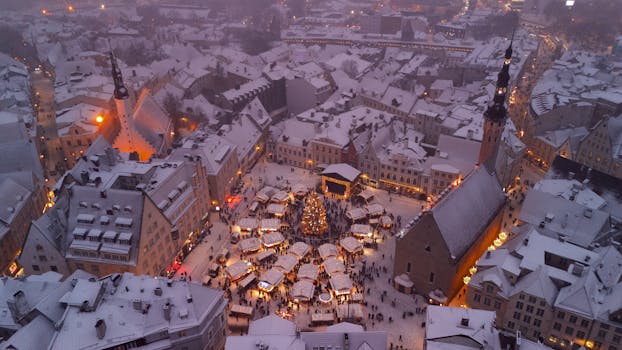
Step back in time to a truly enchanting medieval Christmas market experience in Tallinn, Estonia. The market, held in the historic Town Hall Square, feels like something straight out of a fairy tale, with its charming wooden stalls nestled around a magnificent Christmas tree.
- My Personal Take: Tallinn's Old Town is already incredibly picturesque, but at Christmas, it reaches another level. The crisp Baltic air, the snow-dusted cobblestones, and the warm glow of the market lights create an atmosphere that's both cozy and utterly magical. I loved browsing the unique Estonian crafts – hand-knitted woolens, wooden carvings, and intricate felted items. The food here is hearty and warming: think black pudding (verivorst), sauerkraut, and gingerbread. And yes, they have their own delicious mulled wine, glögi, often spiced with cardamom and raisins.
- Practical Tips: The market typically opens in mid-November and runs until early January. Tallinn is a compact city, and the market is easily walkable from most Old Town accommodations. Combine your visit with exploring the medieval city walls and towers. Dress warmly – it gets cold! A cup of glögi is around €3-4, and a hearty meal around €8-12.
- Instagram-Worthy Moment: The iconic Town Hall Square with the massive Christmas tree and medieval buildings in the background, especially after a fresh snowfall.
4. Italy: South Tyrol (Bolzano & Merano) – Alpine-Mediterranean Fusion
When you think "Italian Christmas markets," you might picture bustling city squares. But head north to the autonomous region of South Tyrol, nestled in the Dolomites, and you'll discover a unique blend of Italian flair and Austrian tradition. Bolzano and Merano offer some of the most picturesque and delicious Christmas markets you'll ever encounter.
- My Personal Take: This region is a revelation. I was completely charmed by Bolzano's Piazza Walther, where the market is set against the backdrop of stunning Alpine peaks. The aroma of strudel, apple fritters, and vin brûlé (Italian mulled wine) filled the air. What makes these markets special is the focus on quality local products – intricate wooden toys, handcrafted nativity scenes, and delicious regional delicacies. Merano, with its thermal baths and elegant promenade, offers a slightly more sophisticated, spa-town market experience.
- Practical Tips: Markets typically run from late November to early January. Bolzano is easily reachable by train from Verona or Innsbruck. Merano is a short train ride from Bolzano. Don't miss trying the Zelten (traditional fruit bread) and the delicious speck (cured ham). Prices are mid-range, perhaps slightly higher than Eastern Europe but often offering better value than Germany. A mug of vin brûlé costs about €4-5, and a good meal around €10-15.
- Instagram-Worthy Moment: The dramatic mountain backdrop behind Bolzano's market, or a cozy shot of you enjoying a slice of strudel in Merano.
5. Belgium: Ghent & Bruges – Waffles, Cobblestones & Christmas Cheer
While often overshadowed by their German counterparts, the Christmas markets of Belgium offer a distinct charm, steeped in history and, of course, delicious food. Forget Brussels (though it's lovely); for a truly authentic and picturesque experience, head to Ghent and Bruges.
Ghent's Winter Wonderland:
Ghent transforms its historic center into a magical "Winter Wonderland," stretching from St. Bavo's Cathedral to the end of the Korenmarkt. It’s less about traditional wooden chalets and more about a vibrant, festive atmosphere, complete with an ice rink, Ferris wheel, and a stunning light walk.
- My Personal Take: Ghent surprised me with its energetic yet cozy vibe. The sheer number of food stalls was overwhelming in the best way possible. I remember indulging in a freshly made Liege waffle, dripping with chocolate, while admiring the medieval architecture illuminated by thousands of lights. The local genever (Dutch gin) is a must-try, served in tiny chocolate cups!
- Practical Tips: The market runs from early December to early January. Ghent is easily walkable, and its canals add an extra layer of romance. Enjoy a boat tour of the canals for a different perspective of the festive lights. Mulled wine or genever is around €4-6, and a waffle or frites around €3-5.
Bruges' Winter Glow:
Bruges, already a UNESCO World Heritage site, becomes even more enchanting during its "Winter Glow" festival. The market is smaller and more intimate, centered around the Markt and Simon Stevinplein, but its medieval backdrop makes it incredibly atmospheric.
- My Personal Take: Bruges felt like stepping into a perfectly preserved medieval painting. The market here is more traditional, with classic wooden stalls offering local crafts, chocolates, and, of course, more waffles! I loved simply strolling through the cobbled streets, soaking in the fairy-tale ambiance, and enjoying the festive lights reflecting in the canals.
- Practical Tips: Bruges is a popular destination, even in winter, so book accommodation well in advance. Consider visiting on a weekday to avoid weekend crowds. Don't leave without trying Belgian frites with a variety of sauces, and definitely visit a local chocolatier.
6. Slovenia: Ljubljana – A Dragon's Tale of Winter Wonder
Ljubljana, Slovenia's charming capital, is a hidden gem that truly sparkles during the festive season. Its Christmas market, spread along the Ljubljanica River and in Prešeren Square, offers a uniquely intimate and picturesque experience.
- My Personal Take: Ljubljana immediately stole my heart. The city's famous Triple Bridge and Dragon Bridge are beautifully illuminated, and the market itself feels incredibly cozy and welcoming. I loved the focus on local Slovenian crafts, from intricate lacework to delicious honey products and unique wooden toys. The mulled wine here (kuhano vino) is excellent, and you can also find local schnapps and hot tea with rum.
- Practical Tips: The market typically runs from early December to early January. Ljubljana is very walkable, and its compact size makes it easy to explore on foot. Take a funicular ride up to Ljubljana Castle for panoramic views of the illuminated city. Prices are similar to Poland or Croatia, offering excellent value. Mulled wine for €3-4, and local sausages or pastries for €5-8.
- Instagram-Worthy Moment: A shot of the Triple Bridge and Prešeren Square illuminated at night, or a cozy scene by the river with the castle in the background.
Practical Tips for Your Off-the-Beaten-Path Christmas Market Adventure
You're ready to ditch the crowds and embrace the authentic, but a little planning goes a long way!
- Go Mid-Week, Early Season: Even these less-known markets can get busy on peak weekends. Aim for a Tuesday-Thursday visit, or consider going in the last week of November/first week of December for fewer crowds and potentially better deals on flights/accommodation.
- Book Accommodation in Advance: Regardless of the destination, popular dates around Advent and New Year will see hotels fill up. Use sites like Booking.com or Airbnb, and look for places with good cancellation policies.
- Dress in Layers: European winters can be chilly! Think thermal base layers, a good waterproof and windproof outer jacket, hat, gloves, and waterproof boots. You'll be spending a lot of time outdoors.
- Embrace Public Transport: Most European cities have excellent public transport systems. Consider a rail pass if you're visiting multiple cities, or rely on local buses and trams.
- Cash is King (Sometimes): While cards are widely accepted, many smaller market stalls prefer cash, especially for quick purchases. Have some local currency on hand.
- Learn a Few Local Phrases: "Hello," "thank you," "please," and "cheers" in the local language will go a long way in showing respect and often earns you a warmer reception.
- Savor the Local Flavors: Don't just stick to mulled wine! Each region has its unique festive drinks and dishes. Be adventurous and try everything from local sausages to specific pastries.
- Pack an Empty Reusable Bag: You'll likely find unique souvenirs and gifts that you'll want to bring home. A sturdy bag will be invaluable.
- Check Market Dates & Times: While most run from late November to late December, specific opening and closing dates vary each year. Always double-check before you finalize your travel plans.
The True Magic is in the Discovery
So, there you have it. A world of enchanting Christmas markets beyond the usual suspects, waiting to be explored. These are the places where the magic feels genuine, the traditions run deep, and the crowds are manageable enough for you to truly soak it all in.
Forget the perfectly staged influencer photos. Your memories of sipping mulled wine in a medieval Estonian square, devouring a gourmet hot dog in festive Zagreb, or finding a unique handcrafted ornament in a snow-dusted Polish market will be far more precious than any fleeting 'like'.
Are you ready to write your own authentic Christmas market story?
Which of these hidden gems will you explore first? Share your plans in the comments below, and let's inspire each other to discover the true spirit of Christmas in Europe!
---