Beyond the €18 Sandwich: Why Europe is Losing the Street Food Game
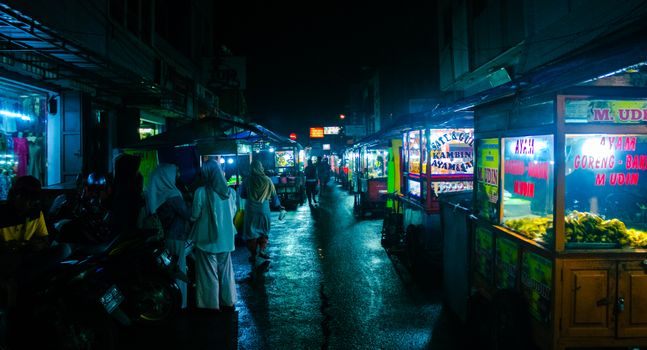
I stepped off the train at Tainan Station into a wall of thick, humid air that smelled unmistakably of caramelized shallots, rendered pork fat, and sweet woodsmoke. It was 9:00 PM. Two weeks prior, I had been standing in London’s Borough Market, paying £16 for a mediocre duck confit sandwich while dodging selfie sticks. The contrast couldn't have been starker.
European food markets—once the gold standard for global foodies—have increasingly morphed into sterilized, overpriced outdoor food courts optimized for social media feeds rather than flavor.
If you want real culinary soul, blistering heat, and heritage recipes passed down across generations, you need to head East. Right now, Asia’s street food markets are operating on a level of speed, affordability, and sheer mouthwatering quality that leaves Europe far behind.
Here are six legendary street food hubs across Asia that prove the real culinary magic lives under red plastic stools and glowing neon signs.
---
1. Ban Tad Thong Road, Bangkok (Thailand)
### The local alternative to overcrowded Yaowarat
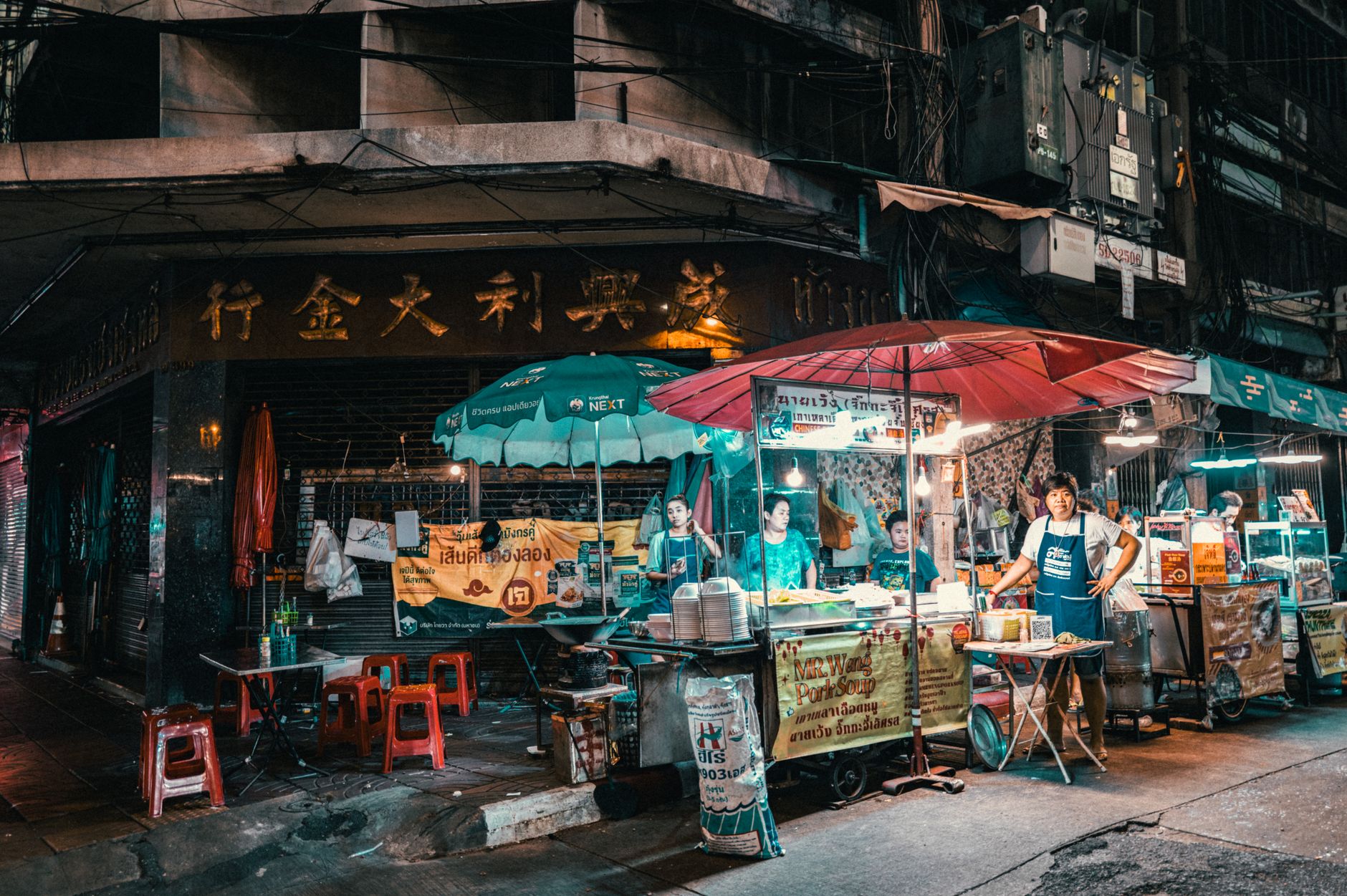
While tourist crowds pack Chinatown’s Yaowarat Road shoulder-to-shoulder, Bangkok’s savvy food obsessives head south of the Siam shopping district to Ban Tad Thong Road. This dynamic university-adjacent corridor has quietly transformed into the city's premier late-night dining strip, running parallel to Chulalongkorn University.
```
[ Ban Tad Thong Road Street Food Map ]
---------------------------------------------------
(BTS National Stadium) ---> [Soi 10 Seafood Stalls]
|
[Jeh O Chula (Crispy Pork)] <----+----> [Lavo Cream Buns]
|
[Phet Sa-ngat Boat Noodles]
---------------------------------------------------
```
Here, the air smells of crushed bird’s eye chilies, lime leaf, and smoky pork neck fat roasting over mangrove charcoal. The energy is kinetic, driven by university students, local off-duty chefs, and families lining up outside understated storefronts.
```
[ Local Dish Highlight ]
+---------------------------------------+
| Khao Man Gai Loaded with Crispy Pork |
| Crispy pork skin, fragrant garlic |
| rice, poached chicken broth dip. |
| |
| Price: 70 THB ($2.00 USD) |
+---------------------------------------+
```
What to Eat
* Crispy Pork Belly (Moo Krob): Look for stalls hanging slab after slab of golden-brown pork. The skin shatters like glass, yielding to succulent, perfectly seasoned fat.
* Boat Noodles (Kuay Teow Reua): Deep, dark, star-anise-scented blood broth served with bouncy pork balls, morning glory, and pork crackling.
* Pandan Sweet Buns (Kanom Pang): Fluffy white rolls toasted over charcoal and stuffed with oozing, aromatic green pandan custard.
> Pro-Tip: Skip the famous 3-hour wait at Jeh O Chula for Tom Yum by arriving at 5:00 PM sharp to take a paper queue number, then walk two blocks to Elsa Snow Ice for a bowl of shaved grass jelly while you wait.
>
> Hidden Location: The best boat noodle cart isn't on the main strip—it's tucked 20 meters inside Chula Soi 10, marked only by a bright blue plastic banner and three bubbling brass pots.
---
2. Dadong & Garden Night Markets, Tainan (Taiwan)
### The undisputed street food capital of Formosa
Taipei gets the international headlines, but Tainan is where Taiwanese chefs go to eat. Tainan’s street food heritage dates back centuries, defined by a distinct preference for subtle sweetness, ocean-fresh seafood, and simmered pork gravies.
Unlike fixed-location markets, Tainan's markets operate on a rotating daily schedule (remember the local mnemonic rule: "Sann, Wu, Liou" to track which market is open on which day). Garden Night Market (Huayuan) and Dadong Night Market dominate the scene.
```
+-----------------------------------------------------------------+
| TAIWAN NIGHT MARKET ROTATION CALENDAR |
+---------------------+-------------------------------------------+
| Day of the Week | Active Market |
+---------------------+-------------------------------------------+
| Monday & Tuesday | Dadong Night Market |
| Wednesday | Wusheng Night Market |
| Thursday | Garden (Huayuan) Night Market |
| Friday | Dadong Night Market |
| Saturday & Sunday | Garden (Huayuan) Night Market |
+---------------------+-------------------------------------------+
```
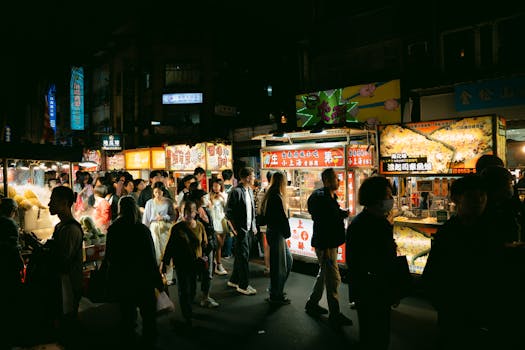
Navigating these markets requires moving through sea-like crowds under a forest of tall, fluttering promotional flags. The aroma of fermenting stinky tofu competes with the fragrance of braised star anise and sweet pork sausage.
What to Eat
* Coffin Bread (Guan Chai Ban): A thick slab of deep-fried white bread hollowed out like a casket and filled with rich seafood chowder made with chicken, peas, squid, and milk.
* Tainan Beef Soup (Niu Rou Tang): Ultra-thin slices of raw, locally slaughtered beef laid into a bowl and instantly cooked by pouring over a piping-hot broth of beef bones, ginger, and medicinal herbs.
* Danzai Noodles: Springy wheat noodles bathed in a pork-and-shrimp broth, topped with minced pork gravy, fresh prawns, and a splash of black vinegar.
> Pro-Tip: Tainan beef soup is best consumed at 6:00 AM when the fresh beef arrives straight from the slaughterhouse in Shanhua. For night markets, arrive by 6:15 PM before the pedestrian lanes lock up entirely.
>
> Insider Custom: When ordering beef soup, ask for a side of pork rice (lu rou fan) and stir a spoonful of sweet chili paste directly into your soup bowl—that is how Tainan elders have done it for fifty years.
---
3. Cecil Street Market, Penang (Malaysia)
### Wok hei mastery under a tin roof
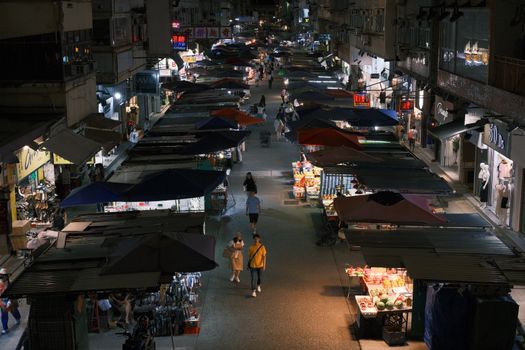
While European cities charge top dollar for street food cooked on electric hotplates, Penang's hawkers cook over roaring charcoal fires and steel woks heated to scorching temperatures. Cecil Street Market (known locally as 7th Street Market) is a gritty, sensory powerhouse operating inside a massive iron-roofed warehouse in George Town.
```
[ Cecil Street Market Layout ]
+------------------------------------------+
| [Wet Market: Seafood/Produce] |
| --------------------------------------- |
| [Hawker Section] |
| ├── Row A: Duck Meat Koay Teow Soup |
| ├── Row B: Char Kway Teow (Charcoal) |
| └── Row C: Nyonya Kuih & Pasembur |
+------------------------------------------+
```
Here, the air is thick with smoke carrying the scent of soy sauce, duck fat, crushed peanuts, and dried shrimp paste. It is fast, loud, and entirely unpretentious.
```
[ Dish Highlight: Char Kway Teow ]
+----------------------------------------------+
| Flat rice noodles, duck egg, lap cheong |
| (sweet sausage), bean sprouts, chives, |
| and fresh cockles seared over raw charcoal. |
| |
| Price: 8 MYR ($1.70 USD) |
+----------------------------------------------+
```
What to Eat
* Char Kway Teow: Flat rice noodles flash-fried in lard over charcoal with duck egg, plump prawns, lap cheong (Chinese sausage), bean sprouts, and fresh blood cockles. Look for the distinctive smoke ring (wok hei).
* Penang Asam Laksa: A tart, spicy fish broth infused with tamarind, shredded mackerel, lemongrass, torch ginger flower, and topped with a dollop of thick, sweet shrimp paste (petis udang).
* Nyonya Kuih: Vibrant multi-layered rice flour cakes sweetened with coconut milk and gula melaka (palm sugar), tinted blue using natural butterfly pea flowers.
> Pro-Tip: Cecil Street is half wet-market, half hawker centre. Visit between 1:30 PM and 4:00 PM when the morning market closes down and the evening food stalls are fired up, but before the after-work rush hits.
>
> Ordering Etiquette: Sit at a table first, note your table number, and order from stalls by giving them your table number. You pay only when the food is delivered directly to your seat.
---
4. Nakasu Yatai Stalls, Fukuoka (Japan)
### Micro-dining along the riverbanks
While Tokyo and Osaka have cleared out many of their historic street stalls for modern infrastructure, Fukuoka has preserved its open-air food culture: the iconic Yatai. These are wooden food carts that pop up at dusk along the banks of the Naka River on Nakasu Island.
```
[ Fukuoka Yatai Setup ]
_____________________________
/ Wooden Counter Stalls \
| [Stove] [Grill] [Noodle Pot] |
| (Seat) (Seat) (Seat) (Seat) |
\_____________________________/
|||
[Naka Riverbank Promenade]
```
Measuring just 2.5 by 3 meters, each Yatai is a complete mini-restaurant housing a chef, a gas stove, a charcoal grill, and seating for just 8 to 10 guests. The atmosphere is intimate and convivial; strangers sit shoulder-to-shoulder under lit paper lanterns, steaming bowls of soup warming their hands.
What to Eat
* Hakata Tonkotsu Ramen: Fukuoka’s signature dish featuring an intensely rich pork bone broth simmered for up to 18 hours, served with ultra-thin, hard-boiled noodles and topped with tender chashu pork belly.
* Motsunabe (Small Portion): A hot-pot dish made with beef offal, cabbage, garlic chives, and chili flakes in a savory soy or miso broth.
* Bite-Sized Hakata Gyoza: Tiny pork dumplings fried in a cast-iron skillet until the bottoms form a crisp, lace-like golden crust.
> Pro-Tip: Each guest must order at least one drink and one food item. Do not linger once you finish your food if there is a line behind you—Yatai dining relies on fast seat turnover.
>
> Hidden Gem: Head away from the main tourist strip on Nakasu Island toward the Tenjin Bank of Japan Yatai cluster. Stalls like Yatai Pyonkichi serve incredible gyoza with far fewer tourists.
---
5. Mangwon Market, Seoul (South Korea)
### Ditch Gwangjang for the neighborhood favorite
While Gwangjang Market has been overwhelmed by camera-toting tour groups following Netflix features, Seoul locals head to Mangwon Market in Mapo-gu. This covered neighborhood arcade delivers traditional market culture combined with creative street food innovations.
```
[ Mangwon Market Highlights ]
----------------------------------------------------
[Subway Exit 2] ---> Entrance
|
[Mangwon Handmade Kalguksu] ($3.50 Knife-cut noodles)
|
[Kyung-yung Dakgangjeong] (Sweet & Spicy Chicken)
|
[Hoonhoon Hotteok] (Deep-fried Seed Pancakes)
----------------------------------------------------
```
The air smells of frying oil, fermented chili paste (gochujang), toasted sesame oil, and sweet cinnamon sugar. The walkways are wide, clean, and filled with local residents doing their daily shopping alongside young food lovers.
```
[ Local Favorite Dish ]
+------------------------------------+
| Dakgangjeong (Korean Fried Chicken)|
| Boneless bite-sized chicken twice-|
| fried and coated in garlic, honey,|
| or spicy gochujang glaze. |
| |
| Price: 5,000 KRW ($3.75 USD) |
+------------------------------------+
```
What to Eat
* Handmade Kalguksu: Wheat noodles rolled, knife-cut, and cooked to order in a clear anchovy and kelp broth, served with fresh, garlic-heavy kimchi.
* Dakgangjeong: Crispy, double-fried boneless chicken nuggets tossed in sweet-and-spicy glazed sauces ranging from sweet garlic to cheese-mustard.
* Pork Belly Kimchi Rolls (Samgyeopsal Kimchi Mai): Slices of pork belly wrapped around kimchi, vegetables, and cheese, then seared on a flat-top grill with a blowtorch finish.
> Pro-Tip: Grab a tray of sweet hotteok (cinnamon-stuffed pancakes) from Hoonhoon Hotteok located in the basement level near the market's middle intersection.
>
> Payment Tip: Korea is almost entirely cash-free now, even in street markets. T-Money transit cards or local credit cards are widely accepted at almost every stall here.
---
6. Chau Long & Truc Bach District, Hanoi (Vietnam)
### Lakeside bites away from Old Quarter chaos
Hanoi’s Old Quarter is legendary, but its tiny sidewalks are often jammed with motorbikes and tourists. To experience Hanoi’s food culture like a local resident, head north to the narrow streets around Truc Bach Lake and Chau Long Market.
```
[ Truc Bach Lake Food Loop ]
~~~~~~~~~~~~~~~~~~~~~~~~~~~~~~~~~~~~~~~~~~~~~~~~~~
~ Truc Bach Lake ~
~~~~~~~~~~~~~~~~~~~~~~~~~~~~~~~~~~~~~~~~~~~~~~~~~~
|| ||
[Pho Cuon Huong Mai] [Bia Hoi Stalls]
(Fresh Rice Paper Rolls) (Draft Beer $0.40)
|| ||
=============================================
[Chau Long Covered Market]
(Banh Xeo & Nem Lui Charcoal Skewers)
```
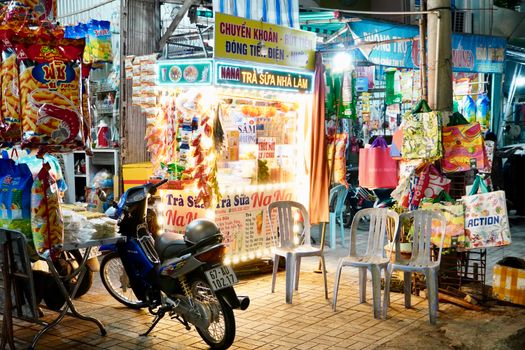
Here, plastic stools spill out onto leafy lakeside sidewalks under red banners. The breeze coming off the water carries the fresh aromas of mint, coriander, fish sauce (nuoc mam), sizzling pork, and roasting coffee beans.
What to Eat
* Pho Cuon: Sheets of fresh uncut pho noodle paper wrapped around stir-fried garlic beef and a mountain of fresh cilantro, dipped in light fish sauce with green papaya slices.
* Banh Xeo: Sizzling rice flour and turmeric crepes stuffed with fatty pork, shrimp, and bean sprouts, wrapped in lettuce leaves before eating.
* Bia Hoi: Fresh, unpasteurized draught beer brewed daily and delivered in wooden kegs to roadside corners, costing less than $0.50 per ice-cold glass.
> Pro-Tip: Sit down at Pho Cuon Huong Mai (Ngu Xa street) and order both Pho Cuon (fresh rolls) and Pho Chien Phong (puffed deep-fried squares of rice noodle topped with gravy and beef).
>
> Navigation Note: Walk the quiet perimeter of Ngu Xa street around 6:30 PM. Look for stalls with large aluminum trays filled with charcoal-grilled lemongrass pork skewers (Nem Lui).
---
Street Food Logistics & Cost Comparison
Planning a trip to these culinary engines? Here is how they stack up against classic European market experiences on budget and accessibility:
| Location / Market | Average Dish Price ($ USD) | Recommended Hours | Nearest Transit Stop | Cash vs. Card |
| :--- | :--- | :--- | :--- | :--- |
| Ban Tad Thong (Bangkok) | $2.00 – $4.50 | 6:00 PM – 11:00 PM | BTS National Stadium (Exit 2) | 90% Cash |
| Garden Market (Tainan) | $1.50 – $3.50 | 6:30 PM – 11:30 PM | Tainan Station + T-Bike/Taxi | 100% Cash |
| Cecil Street (Penang) | $1.50 – $3.00 | 1:30 PM – 5:00 PM | RapidPG Bus 101 / Grab | 100% Cash |
| Nakasu Yatai (Fukuoka) | $4.50 – $9.00 | 7:00 PM – Midnight | Subway Nakasu-Kawabata | 80% Cash |
| Mangwon Market (Seoul) | $3.00 – $6.00 | 11:00 AM – 8:00 PM | Mangwon Station Line 6 (Exit 2) | 95% Card / T-Money |
| Truc Bach (Hanoi) | $1.00 – $3.50 | 5:30 PM – 10:00 PM | Grab Bike to Ngu Xa Street | 100% Cash |
| Borough Market (London) | $14.00 – $22.00 | 10:00 AM – 5:00 PM | London Bridge Station | 100% Card |
| Mercado de San Miguel (Madrid)| $12.00 – $20.00 | Noon – Midnight | Sol Station | 100% Card |
---
4 Rules for Street Food Survival in Asia
```
+-----------------------------------------------------------------+
| STREET FOOD SURVIVAL KIT |
| |
| [1] High Turnover = Fresh & Safe |
| [2] Carry Local Cash Small Denominations |
| [3] Follow the Local Grandmothers |
| [4] Sanitize Hands, Not the Chopsticks |
+-----------------------------------------------------------------+
```
- Follow the Local Grandmothers: Ignore online influencer reviews. Look for lines filled with local families and elderly residents. A stall with high turnover means ingredients are replenished every few hours, ensuring freshness and food safety.
- Observe the Wok Temp: If you are worried about sensitive stomachs, stick to dishes cooked right in front of you over high heat, such as wok-fried noodles, broth soups, or charcoal grills. Avoid foods that sit out under heat lamps.
- Master the Cash Breakdown: Always carry small bills (e.g., 20/50 THB, 100 TWD, 5 MYR). Handing a vendor a high-denomination bill for a $1.50 snack slows down their operation and marks you as an unprepared tourist.
- BYO Wet Wipes & Tissues: Most authentic Asian hawker markets do not supply napkins or handwashing stations. Keep a pack of wet wipes and pocket tissues in your daypack at all times.
---