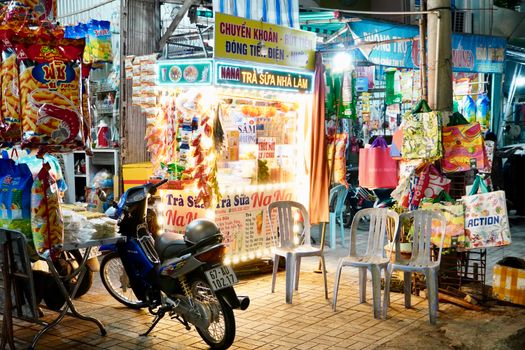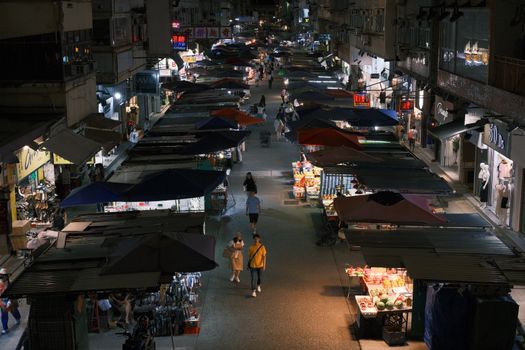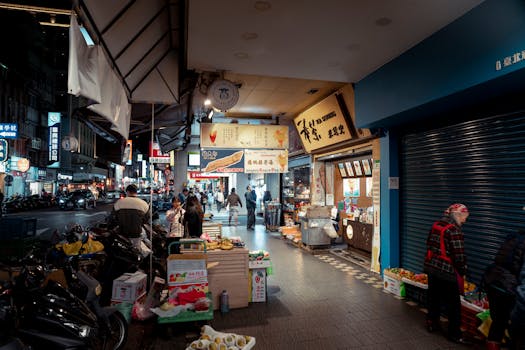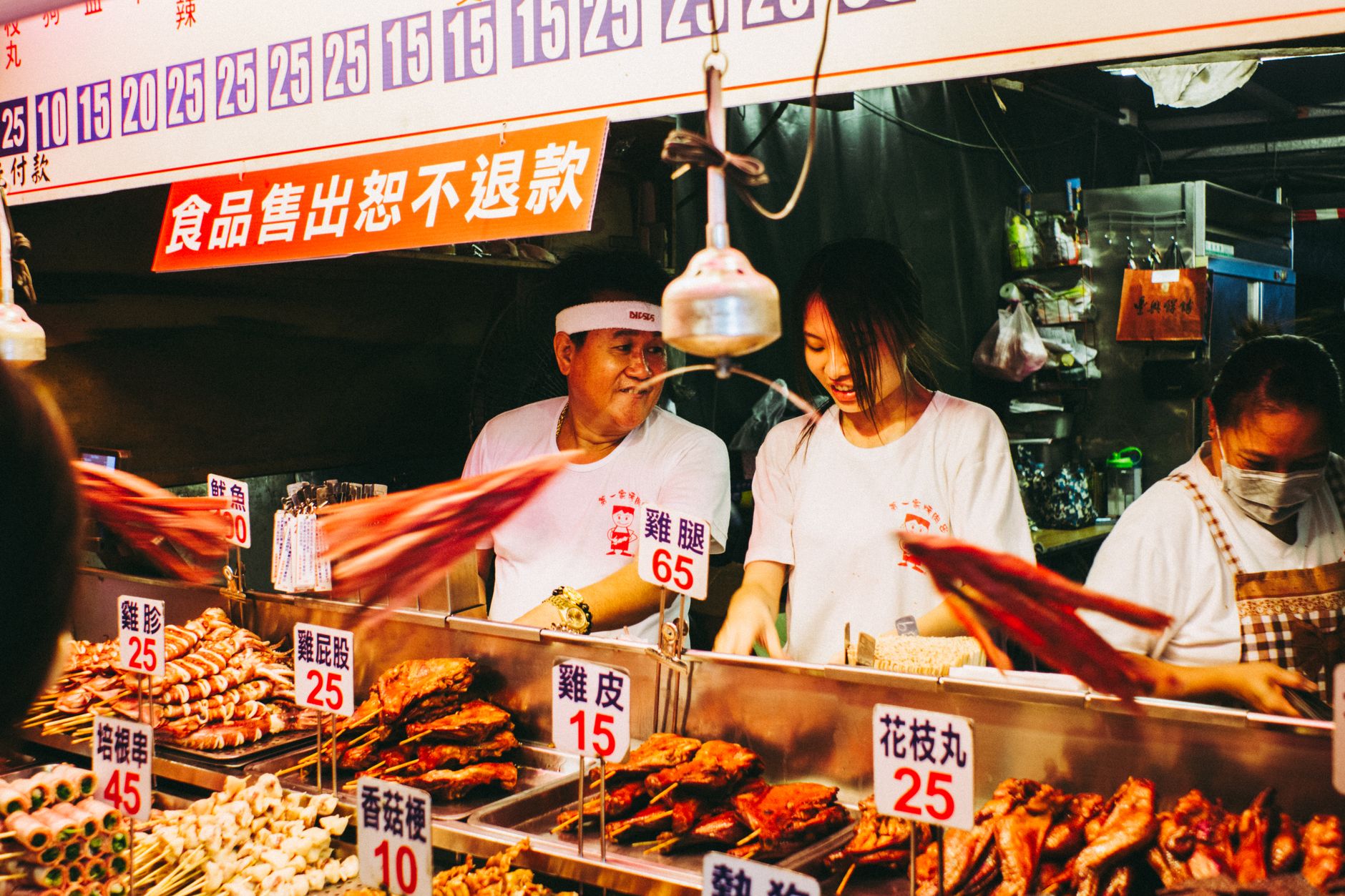
The air was thick with the scent of garlic, chili, and something unidentifiably delicious. My senses were on high alert, the cacophony of vendors shouting, woks clanging, and motorbikes whizzing by creating a symphony of urban life. I watched as a grandmother, her face etched with a lifetime of stories, meticulously wrapped sticky rice into banana leaves. This wasn't the sanitized, Instagram-perfect night market you see in travel brochures. This was raw, vibrant, and utterly authentic. This, my friends, was a night market where locals actually eat, and tourists are a rare, curious sight.
For years, my travel quest has been simple: find the heart of a city through its food. But after countless disappointing trips to "famous" night markets overrun by selfie sticks and overpriced, watered-down versions of local dishes, I knew I had to dig deeper. I wanted the real deal – the greasy, chaotic, utterly delicious spots where families gather, friends gossip, and the food tastes like home. And after years of chasing these elusive culinary unicorns, I’ve found them. The kind of places locals guard fiercely, whispering directions only to trusted friends. Today, I’m breaking the silence. I’m sharing the secrets.
The Art of the Hunt: How to Spot a Truly Local Market
Before we dive into specific locations, let’s talk strategy. How do you, a curious traveler, sniff out these hidden havens? It’s not always easy, but there are tell-tale signs:
- The Language Barrier is Your Friend: If you hear more local chatter than English, you’re on the right track. Menus might be solely in the local language, or hand-scrawled on a whiteboard. Embrace it! Pointing, smiling, and a few basic local phrases (like "delicious" or "thank you") go a long way.
- Location, Location, Location: These markets are rarely in the city center's main tourist drag. They’re often tucked away in residential neighborhoods, under flyovers, or a short (and sometimes slightly intimidating) ride away on public transport. Google Maps and a local SIM card are your best friends here. Look for clusters of food stalls away from major landmarks.
- The Crowd is Key: Observe the demographic. Are there families with kids, elderly couples, groups of friends laughing over beers? Are they dressed casually, like they just finished work? If so, you’re likely among locals. If everyone has a camera around their neck, abort mission.
- Prices Tell a Story: Tourist markets inflate prices. Local markets offer incredible value. If you’re paying more than a few dollars for a substantial meal, you might be in a tourist trap. Expect to pay cents to a few dollars per dish.
- Follow the Smoke and the Scents: Sometimes, the best way to find them is to just wander. Let your nose guide you. A plume of fragrant smoke, the sizzle of a griddle, the sweet aroma of fried dough – these are beacons.
Now, with your detective hat on, let’s embark on a global street food odyssey!
---
Unveiling the Gems: Secret Night Markets Where Authenticity Reigns
1. Bangkok, Thailand: Wang Lang Market (ตลาดวังหลัง)
Forget Khao San Road or the glitzy Rot Fai markets. For a taste of real Bangkok life, hop on a cross-river ferry to Wang Lang Market. Tucked away on the Thonburi side of the Chao Phraya River, this bustling market is a labyrinth of narrow alleys, primarily catering to students and locals from Siriraj Hospital.
- My Anecdote: My first visit was pure chaos. I got off the ferry, completely overwhelmed by the sheer density of people and stalls. I saw a line snaking around a corner, filled entirely with Thais. Naturally, I joined. It led to a tiny stall selling the most incredible khao mok gai (Thai chicken biryani) I'd ever tasted, served with a tangy green chili sauce. The chicken was fall-off-the-bone tender, the rice fragrant with spices. It cost me less than $2. I ate it standing, jostled by passersby, and it was glorious.
- What to Eat: Beyond khao mok gai, look for nam prik pla tu (fried mackerel with chili dip), crispy fried insects (if you're brave!), fresh seafood, and an endless array of Thai desserts like kanom krok (coconut pancakes) and mango sticky rice. Don't miss the fresh fruit shakes.
- Details: Accessible by express boat to Wang Lang Pier (N10). Open daily, but evenings are when the food stalls truly come alive. Expect to pay ฿40-100 ($1.10-$2.80 USD) per dish.
2. Penang, Malaysia: Jalan Pasar Air Itam Night Market
While Penang is famous for its hawker food, many of the well-known spots are now swarming with tourists. For a truly local experience, head to Jalan Pasar Air Itam, especially on a Friday or Saturday night. This market feels like stepping back in time, with old-school vendors and dishes passed down through generations.
- My Anecdote: I was led here by a local friend who swore it had the best laksa outside of the famous 'Laksa Assam' stall. We navigated through narrow walkways, past stalls selling clothes and household goods, until we found a tiny cart with a bubbling pot. The assam laksa here was a revelation – the broth was intensely sour and spicy, packed with flaked fish, and the thick rice noodles soaked up all the flavor. It was served with a generous dollop of prawn paste, which added a pungent, umami kick. The vendor, an elderly woman, gave me a knowing smile as I finished every last drop.
- What to Eat: Assam Laksa is a must-try. Also look for char koay teow (fried flat noodles), lok lok (skewered food cooked in boiling broth), popiah (fresh spring rolls), and various curries.
- Details: Located in Air Itam, near the Kek Lok Si Temple. Best visited Friday-Sunday evenings. Dishes typically cost RM5-15 ($1.10-$3.30 USD).
3. Hanoi, Vietnam: Nghia Tan Market (Chợ Nghĩa Tân)
Hanoi’s Old Quarter markets are charming, but for an authentic, youth-centric food scene, venture to Nghia Tan. This market, popular with students from nearby universities, is a vibrant hub of cheap, delicious, and incredibly varied street food. It’s less about shopping and more about eating.
- My Anecdote: A local student I met on a tour proudly declared Nghia Tan to be his "second home." He took me there, and it was a revelation. We sat on tiny plastic stools, surrounded by boisterous students, sharing plates of banh xeo (crispy savory pancakes) and nem chua ran (fried fermented pork rolls). The atmosphere was electric, the food unbelievably fresh and flavorful. He taught me how to properly dip the nem chua ran in the sweet chili sauce, and we laughed as I struggled with my chopsticks. It felt like being part of something truly local, a secret club.
- What to Eat: Don't miss nem chua ran, banh xeo, bun dau mam tom (fermented shrimp paste noodles – an acquired taste but a local favorite), che (sweet dessert soups), and endless varieties of skewers.
- Details: Located in the Cau Giay district. Most active in the evenings. Expect to pay VND20,000-50,000 ($0.80-$2.00 USD) per dish.
4. Taipei, Taiwan: Nanjichang Night Market (南機場夜市)
While Shilin and Raohe get all the tourist love, Nanjichang is Taipei's hidden gem, a classic, old-school night market that has resisted the urge to modernize. It’s a haven for traditional Taiwanese comfort food, beloved by locals for its authentic flavors and reasonable prices.
- My Anecdote: I arrived here on a recommendation from a taxi driver who scoffed at my mention of Shilin. "Too many tourists," he grumbled. Nanjichang was a breath of fresh air. I found a stall specializing in stinky tofu – not the fried kind, but the braised version. The pungent aroma was intense, but the flavor was surprisingly complex and delicious, served with pickled cabbage and chili. Then, I indulged in gua bao (pork belly buns) from a vendor who had been there for decades. Each bite was a perfect balance of savory, sweet, and soft. The quiet hum of local life here was a stark contrast to the tourist-heavy markets.
- What to Eat: Stinky tofu (braised and fried), gua bao, oyster omelet, lu rou fan (braised pork rice), douhua (tofu pudding), and various noodle dishes.
- Details: Located in the Zhongzheng District. Best to visit in the evenings, typically from 5 PM onwards. Prices range from NT$30-100 ($1.00-$3.30 USD) per dish.
5. Mexico City, Mexico: Mercado de Coyoacán
Coyoacán is a popular district, yes, but the Mercado de Coyoacán itself is a vibrant, very local market separate from the main square's tourist bustle. It's where locals shop for groceries, flowers, and most importantly, incredible food.
- My Anecdote: After exploring Frida Kahlo's Casa Azul, I ducked into the market, seeking refuge from the crowds. The aroma of roasted meats and fresh tortillas was intoxicating. I found a stall specializing in tostadas – crispy tortillas piled high with various toppings. I chose a tinga de pollo (shredded chicken in chipotle sauce) and a pata (pickled pig's trotters, surprisingly delicious!). The woman behind the counter, with quick, practiced movements, assembled my tostadas, adding a generous dollop of cream and cheese. Eating these standing at a counter, surrounded by the lively chatter of Spanish, was an authentic taste of CDMX.
- What to Eat: Tostadas (with every imaginable topping), quesadillas, tacos al pastor, esquites (corn salad), churros, and fresh juices.
- Details: Located in Coyoacán. Open daily, but evenings offer a different vibe as vendors transition to prepared foods. Expect to pay MXN30-80 ($1.70-$4.50 USD) per item.
---
Navigating the Labyrinth: Ordering Like a Local
Don't let the language barrier intimidate you. Here's how to order like a pro:
- Point and Smile: This is your universal language. Point to what looks good, make eye contact, and smile.
- Learn Key Phrases: "Hello" (e.g., Sawadee Khrap/Ka in Thai, Xin Chao in Vietnamese), "Thank you" (Khob Khun Khrap/Ka, Cam On), "Delicious!" (Aroy Mak, Ngon Qua), and "How much?" (Tao Rai?, Bao Nhieu?).
- Observe and Imitate: Watch what locals are ordering and how they do it. If a dish doesn't have a name you recognize, just point to someone else's plate!
- Embrace the Unknown: Sometimes the best dishes are the ones you can't identify. Take a chance!
- Cash is King: Most local market stalls are cash-only. Have small denominations ready.
The Unspoken Rules: Etiquette and the True Cultural Immersion
Beyond the food, these markets offer a window into local life.
* Be Patient: Service might be slower, or you might need to wait for a spot. It's part of the experience.
* Be Polite: Acknowledge the vendors, even if just with a nod and a smile.
* Clean Up After Yourself: While some stalls might have staff to clear, it's good practice to tidy your area if you can.
* Respect Local Customs: Dress appropriately if visiting during the day, and be mindful of your surroundings.
* Engage: If a vendor speaks a little English, strike up a conversation. Ask about their dish, where they learned to cook. These interactions are priceless.
* Take Photos (Respectfully): Capture the vibrant scenes, but always ask permission before taking close-up photos of people, especially vendors. A gesture with your camera and a polite smile usually works.
Beyond the Plate: The True Cultural Immersion
Eating at these markets isn't just about satisfying hunger; it's about experiencing the pulse of a city. It's the scent of jasmine and exhaust fumes mingling, the rhythmic chop of a cleaver, the laughter of children playing between stalls. It's seeing families share meals, friends catching up, and the sheer joy people find in simple, good food. These are the moments that truly define a trip, etching themselves into your memory long after the flavors fade. You're not just a tourist; you're a participant, a temporary local, sharing in a timeless ritual.
So, the next time you travel, ditch the guidebooks that lead you to tourist traps. Arm yourself with curiosity, a sense of adventure, and these insider tips. Seek out the hidden gems, where the food is real, the prices are fair, and the experience is authentically unforgettable. These are the night markets where locals actually eat, and now, you're in on the secret. Go forth, explore, and eat well!
Your Turn!
Have you stumbled upon a secret local night market that blew your mind? Share your finds in the comments below! Let's build a global list of hidden culinary treasures together. And don't forget to tag #TripsoraSecrets and #LocalEats on your next food adventure!
---