The Hook: Waking Up at 190 Miles Per Hour
I stepped off ÖBB Nightjet 468 onto the fog-slicked platforms of Paris Gare de l’Est at precisely 9:14 AM. My senses were hit all at once: the sharp, metallic tang of brake dust and ozone mixing with the buttery aroma of fresh pain au chocolat from a baker's cart on Platform 4. Ten hours earlier, I had been sipping a dark, bitter Gösser beer on the platform in Vienna, watching the moonlight reflect off the Danube. I hadn’t cleared a single TSA line, stripped off my shoes for a scanner, or shoved my weekend bag into a metallic size check box. I simply slid my duffel under my berth, drifted off to the rhythmic click-clack of the tracks through Bavaria, and woke up in the French capital ready for breakfast.
This isn't romanticized vintage nostalgia—this is the reality of traveling Europe by rail right now.
We are currently living through the greatest era of European train travel since the 1920s. A booming green movement, aggressive deregulation, and billions in infrastructure investment have triggered a total arms race among passenger rail operators. New low-cost high-speed operators are slashing ticket prices, while dark-horse sleeper routes are connecting cities you used to have to jump through airport hoops to bridge. If you know how to play the system, you can traverse the continent entirely on steel rails, faster, cheaper, and with infinitely more style than flying.
Here is your definitive, field-tested playbook to conquering Europe by train today.
---
1. The Financial Reality: Eurail Pass vs. Point-to-Point Tickets
The single biggest mistake first-timers make is assuming a Eurail Global Pass is an automatic money-saver. It might be—but only if your itinerary fits a very specific profile.
```
+--------------------------+---------------------------------+----------------------------------+
| Rail Strategy | Ideal For... | The Catch |
+--------------------------+---------------------------------+----------------------------------+
| Eurail / Interrail Pass | Spontaneous, multi-country hops | Mandatory reservation fees in |
| | covering vast distances. | France, Italy, and Spain. |
+--------------------------+---------------------------------+----------------------------------+
| Point-to-Point Advance | Fixed itineraries with 2-4 | Non-refundable; requires |
| Direct Tickets | major high-speed hubs. | booking 60–90 days out. |
+--------------------------+---------------------------------+----------------------------------+
| Low-Cost Open Access | Budget travelers focusing on | Strict luggage limits and |
| Operators (Iryo, Ouigo) | single countries (Spain/France).| suburban station departures. |
+--------------------------+---------------------------------+----------------------------------+
```
Doing the Brutal Math
If you are planning to zip between major, high-speed rail countries like France, Italy, and Spain, a Eurail Pass will not cover your total transportation costs. These nations enforce mandatory seat reservations for pass holders on high-speed lines (TGV, Frecciarossa, AVE).
- The France Trap: A TGV seat reservation inside France costs €10 to €20 per leg for pass holders—and seat allocations for Eurail users on TGVs are capped per train. Once those seats are gone, you are locked out, even with an active pass.
- The Italian Tax: Le Frecce trains require a mandatory €13 reservation fee for every single ride.
- The Cross-Border Pain: Taking the international TGV from Paris to Barcelona will set pass holders back a whopping €25 to €35 extra per seat.
When to buy a Eurail Pass:
If you are traveling through Germany, Switzerland, Austria, Belgium, the Netherlands, and Great Britain. These countries generally do not require seat reservations on domestic high-speed trains (ICE, IC, Elizabeth Line, ÖBB Railjet). You simply hop on, find an unreserved seat, and show your pass QR code.
When to buy Point-to-Point tickets:
If your itinerary is locked in 60 to 90 days in advance. National rail carriers release cheap advance fares (like Deutsche Bahn’s Sparpreis or Trenitalia’s Super Economy) that beat the cost of a Eurail pass day-for-day.
---
2. Master the Sleeper Train Renaissance
Night trains are back with a vengeance, spearheaded by Austria’s national rail operator, ÖBB, and their sleek Nightjet fleet. Taking a sleeper train solves two problems simultaneously: it eliminates the cost of a hotel night and converts wasted travel hours into sleeping time.
```
TYPICAL NIGHTJET CABIN LAYOUT
+------------------------------------------------------------------------+
| [ Upper Berth ] [ Upper Berth ] | Private En-Suite Shower/WC |
| [ Middle Berth] [ Middle Berth] | (Sleeper Deluxe Only) |
| [ Lower Berth ] [ Lower Berth ] | +--------------------------+ |
| -------------------------------- | | [Sink] [Toilet] [Shwr] | |
| Couchette Cabin (4 or 6 Berth) | +--------------------------+ |
+------------------------------------------------------------------------+
```
The Three Classes of Night Travel
1. Seater Coach: Do not do this unless you are 19 and running on pure espresso. You will sit upright under fluorescent light variants with five strangers.
2. Couchette (4-berth or 6-berth): The sweet spot for solo travelers and groups on a budget. Bunks fold out from the wall, complete with fresh sheets, a pillow, a lightweight blanket, and a bottled water. Couchettes are lockable from the inside. Insider Hack: Book a female-only couchette if you are a solo female traveler—all major operators offer this at no extra cost.
3. Sleeper Cabin (Single, Double, or Triple): The gold standard. Includes a real mattress, duvet, washbasin, and a hot breakfast cooked by your cabin attendant. "Deluxe" options even include a tiny, private wet-room with a shower and toilet.
> Pro-Tip: Nightjet tickets open for booking 180 days in advance on ÖBB’s official site (`nightjet.com`). Cabins sell out within 48 hours for summer routes (especially Vienna-Venice, Brussels-Berlin, and Zurich-Amsterdam). Set an alarm on your phone for six months prior to your target travel date.
---
3. High-Speed Competition: The Open-Access Revolution
A secret win for travelers right now is open-access rail competition. National railways no longer hold monopolies in their home countries, resulting in luxury amenities and basement-level ticket pricing.
```
HIGH-SPEED OPERATORS: WHO WINS THE ROUTE?
+-------------------+--------------------+-----------------------+
| Route | Top Budget Pick | Top Luxury Pick |
+-------------------+--------------------+-----------------------+
| Madrid to Seville | Avlo / Ouigo Spain | Iryo (Infinita Class) |
| Milan to Rome | Italo Treno | Frecciarossa 1000 |
| Paris to Lyon | Trenitalia France | TGV INOUI |
+-------------------+--------------------+-----------------------+
```
Italy: Frecciarossa vs. Italo
The battle between state-owned Trenitalia (Frecciarossa) and private operator Italo has turned the Turin-Milan-Florence-Rome-Naples trunk line into the best rail corridor in the world. High-speed trains run every 10–15 minutes.
* The Hack: Compare prices on both apps. Italo frequently runs promo codes (up to 40% off) on their Twitter/X feed every Friday afternoon. Meanwhile, Trenitalia’s Executive Class on the Frecciarossa 1000 features four single rotating leather armchairs, a dedicated meeting room, and complimentary champagne served by a steward.
Spain: The Four-Way Rail War
Spain is currently the cheapest country in Europe for high-speed rail. You have four competing brands on main lines like Madrid-Barcelona and Madrid-Seville:
1. AVE (Renfe): The traditional state-owned flagship train.
2. Avlo (Renfe): Renfe's low-cost, bright-purple budget alternative.
3. Ouigo España: French SNCF double-decker budget trains operating inside Spain.
4. Iryo: A sleek Spanish-Italian venture with high-end Italian design, unbeatable food options, and exceptional quiet cars.
> Pro-Tip: Fly into Madrid and take the Iryo down to Andalucia. You can routinely catch $12 (€11) tickets for 186-mph journeys if booked 30 days ahead.
---
4. The Scenic Route Secret: Skip the Tourist Trains, Take the Local
You do not need to spend $300 on fancy panoramic tourist trains to see Europe's most dramatic landscapes. Almost every famous scenic train runs along standard tracks used by humble regional commuter trains.
```
+---------------------------+----------------------------+-----------------------------+
| Famous Tourist Train | Budget Regional Substitute | Savings Per Ticket |
+---------------------------+----------------------------+-----------------------------+
| Bernina Express | Regional Express (IR38) | ~$70 (No seat reservation |
| (Switzerland) | Chur to Tirano | required + drop-down window)|
+---------------------------+----------------------------+-----------------------------+
| Glacier Express | Matterhorn Gotthard Bahn | ~$90 (Same tracks, regional |
| (Zermatt to St. Moritz) | Local Hop (change at Dis.) | trains run every hour) |
+---------------------------+----------------------------+-----------------------------+
| GoldenPass Express | MOB Regional | ~$45 (Covers identical |
| (Montreux to Interlaken) | (Montreux to Zweisimmen) | Bernese Oberland views) |
+---------------------------+----------------------------+-----------------------------+
```
The Bernina Express Hack
The official Bernina Express features panoramic glass windows, required seat reservations, and crowded carloads of tour groups taking photos of their own reflections.
What to do instead:
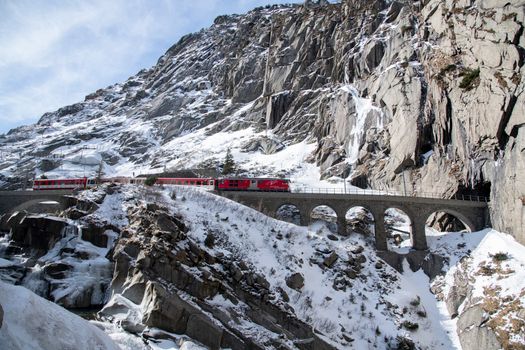
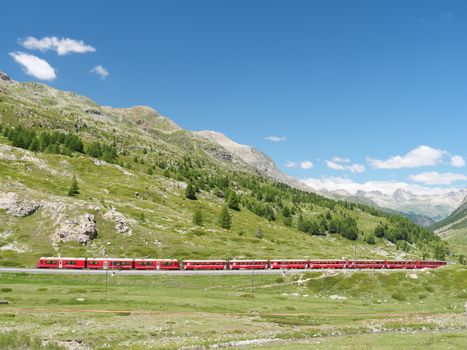
Take the regular red Rhätische Bahn (RhB) Regional Express trains running on the exact same line from Chur/St. Moritz to Tirano (Italy).
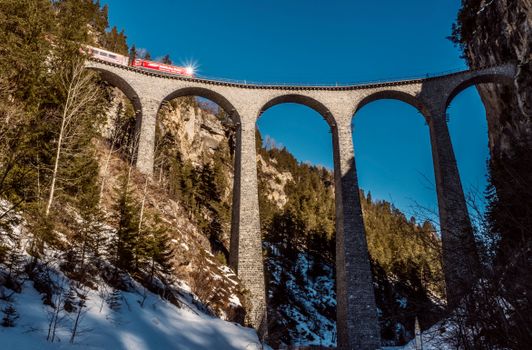
* Why it’s better: You don't pay a single Swiss Franc in reservation fees (it’s 100% covered by Eurail/Swiss Travel Pass). Best of all, regional trains feature old-school drop-down windows. You can lean your head out into the Alpine air and capture crisp, glare-free photos of the Landwasser Viaduct without a window reflection ruining your shot.
---
5. Tech & Essential Apps: Your Digital Pocket Control Center
Do not try to manage European rail travel using third-party aggregate booking engines alone. When delays, platform changes, or strikes happen, third-party apps leave you stranded.
```
YOUR RAIL TECH STACK
+-------------------------------------------------------------+
| App | Primary Function |
+-------------------------------------------------------------+
| DB Navigator | The unofficial master schedule of all |
| | European train systems. |
| Rail Planner | Offline route planning & logging for |
| | Eurail pass holders. |
| SBB Mobile | Micro-precision navigation for Swiss |
| | train/bus/ferry connections. |
| Seat61.com | The gospel website for track plans, |
| | carriage layouts, and border advice. |
+-------------------------------------------------------------+
```
Why DB Navigator Rules Europe
Germany’s national operator app, DB Navigator, contains live tracking data for almost every cross-border train in Western and Central Europe. Even if you aren't in Germany, use DB Navigator to check if your train from Vienna to Prague is running on time, what platform it will arrive at, and the exact carriage layout (Wagenstandsanzeiger) so you know where to stand on the platform.
Platform Hacks: Decoding the Composition Board
When standing on a platform in Europe, look up at the electronic overhead display or the physical paper Wagenstandsanzeiger poster. It will show sections labeled A, B, C, D, E.
* The display will show that Carriage 24 (First Class) will stop in Sector B, while Carriage 5 (Second Class) will stop in Sector D.
* Walk to your designated sector before the train arrives. You will avoid the frantic, luggage-lugging stampede when a train makes a tight 3-minute stop.
---
6. Budget & Logistics Quick Facts
Planning a rail voyage requires a firm grip on real-world timing and costs. Use this cheat sheet to calibrate your trip expectations:
```
+-------------------------+-----------------------------------------------------------------------+
| Item | Real-World Logistics & Cost Expectation |
+-------------------------+-----------------------------------------------------------------------+
| Average Daily Rail Cost | $45–$85/day (mix of regional & high-speed advance tickets) |
| Eurail Global Pass Cost | $330 (4 days in 1 month) to $750 (15 continuous days) |
| Seat Reservation Budget | Factor in $12–$35 per seat for high-speed legs in IT/FR/ES |
| Best Booking Window | High-Speed: 60-90 days prior; Nightjet: 180 days prior |
| Connection Buffer Time | Minimum 20 mins for simple hubs; 45 mins for Paris/Frankfurt interchanges |
+-------------------------+-----------------------------------------------------------------------+
```
- Best Time for Rail Travel: Shoulder season (April–May or September–October). Summer heat can overwhelm older regional rail air-conditioning units, and heavy passenger loads cause cascading luggage rack bottlenecks.
- Luggage Rules: Unlike airlines, most trains have no weight limits. However, you must carry everything yourself up narrow, steep metal steps. If you can't lift your suitcase above your head into an overhead rack in five seconds flat, drop down a bag size.
---
7. The Insider Route Itinerary: The Ultimate 10-Day Rail Transversal
Here is a perfectly optimized high-speed/scenic cross-continent route designed to maximize track efficiency while minimizing transfer stress:
```
[Day 1-2: London] ==(Eurostar)==> [Day 3-4: Paris]
||
(ÖBB Nightjet Sleeper)
\/
[Day 8-10: Venice] <==(Frecciarossa)== [Day 5-7: Vienna]
```
Day 1–2: London to Paris (The Undersea Sprint)
* Train: Eurostar (Under the English Channel).
* Time: 2 hours 16 minutes.
* Pro-Tip: Arrive at St. Pancras International 90 minutes early for French border control in London. Grab a seat on the left side of the train facing forward for the best countryside views after emerging from the Channel Tunnel into France.
Day 3: Paris to Vienna (The Sleeper Shift)
* Train: ÖBB Nightjet 468 (Departing Paris Est at ~7:12 PM).
* Time: 14 hours overnight.
* Pro-Tip: Pack your own dinner picnic. Buy a crispy baguette, triple-crème Brie, salted butter, prosciutto, and a bottle of Bordeaux from L'Épicerie de Saint-Germain near the station. Enjoy a candlelit dinner in your bunk as the French suburbs blur into darkness.
Day 4–7: Vienna to Florence (The Alpine Descent)
* Train: ÖBB Railjet down to Venice/Florence via the Semmering Pass.
* Time: ~7 hours.
* Pro-Tip: The Semmering Railway section is an UNESCO World Heritage route. Sit on the left side of the train to admire stone viaducts bridging mountain chasms.
Day 8–10: Florence to Rome (The High-Speed Finale)
* Train: Frecciarossa 1000.
* Time: 1 hour 35 minutes.
* Pro-Tip: Skip the main line cafe cart; order a cold Aperol Spritz delivered directly to your seat via the Trenitalia app portal while cruising along at 186 mph.
---
Final Thoughts: The Joy of the Open Track
Travel isn't just about reaching a destination; it's about reclaiming the territory in between. When you step onto a European train, you bypass the soul-crushing logistics of modern aviation. You are plunged straight into the heart of living, breathing cities, stepping straight out of grand 19th-century terminal halls directly onto historic cobblestones.
Pack light, download your digital boarding passes, grab a espresso at the platform bar, and listen for the conductor’s whistle. The tracks are waiting.
---