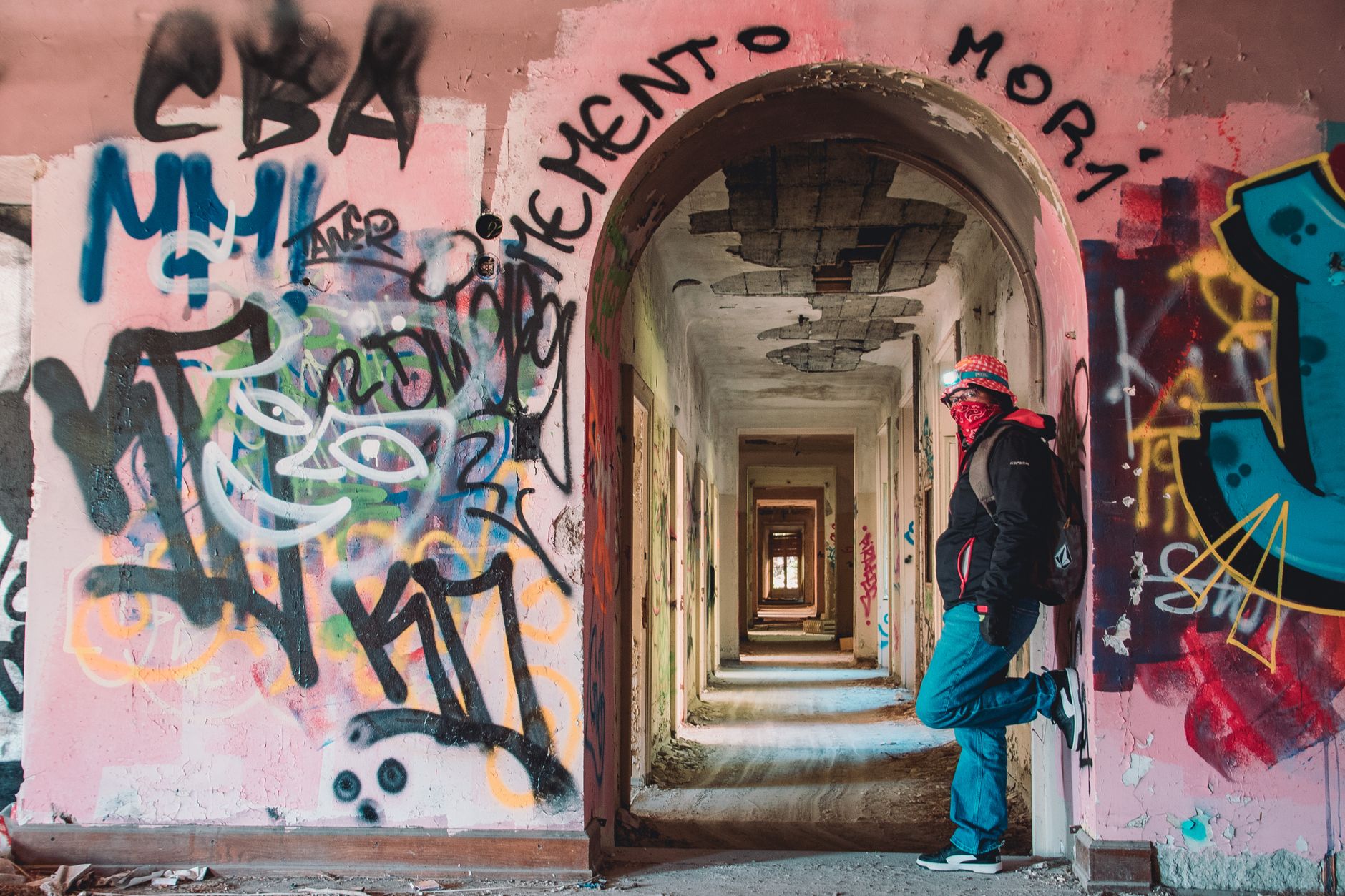
The air hung heavy with the scent of damp earth and forgotten dreams. Dust motes danced in the single shaft of sunlight piercing a broken window, illuminating a rusted, child-sized tricycle in what was once a bustling village square. I stood there, heart pounding, a mix of awe and melancholy washing over me. This wasn't on any map, nor was it mentioned in any guidebook. This was a secret, a hushed whisper passed between a trusted few, a place locals actively tried to keep hidden from the eager eyes of tourists. And it was, hands down, one of the most profoundly beautiful and authentic travel experiences I’ve ever had.
I'm a travel blogger, and like many of you, I've seen the iconic sights, snapped the postcard-perfect photos, and navigated the throngs of fellow adventurers. But a few years ago, I started craving something more – a deeper connection, a raw, unfiltered glimpse into a place's soul. That's when I stumbled into the world of "urbex" (urban exploration) and discovered the magnetic pull of abandoned places. These aren't just derelict buildings; they're time capsules, silent witnesses to lives lived, industries boomed and busted, and dreams either fulfilled or shattered. They offer a unique kind of beauty, a poignant poetry in decay.
But here’s the kicker: the most incredible ones, the truly untouched, atmospheric gems, are often the ones locals guard fiercely. And for good reason. They want to protect their history, prevent vandalism, or simply preserve the peace of places that hold deep, sometimes painful, significance. This isn't about disrespecting their wishes; it's about understanding and appreciating the privilege of discovery, and exploring with the utmost respect.
So, buckle up, fellow explorers. I'm taking you on a journey to some of the most captivating abandoned places I've had the honor of discovering – places that, for a multitude of reasons, locals might not want tourists to know. These are my stories, my tips, and my plea for responsible, respectful adventure.
The Allure of the Forgotten: Why We Seek Them Out
What is it about a crumbling wall, an overgrown path, or a silenced machine that calls to us? For me, it's the sheer mystery. Every peeling paint chip, every broken pane of glass, every faded photograph tells a story. When you step into an abandoned place, you're not just observing; you're participating in a silent dialogue with history. It's a stark contrast to the polished museums and curated experiences. Here, history is raw, tangible, and often, heartbreakingly beautiful in its decay.
There's an undeniable thrill in the chase – the research, the cryptic clues, the journey to find a place that feels truly "undiscovered." It's a quest for authenticity in an increasingly globalized world. And for photographers, these sites are a dream: the interplay of light and shadow, the textures of rust and moss, the dramatic narratives waiting to be captured. But with this allure comes a profound responsibility, especially when you're treading on ground that holds meaning for local communities.
Whispers in the Tuscan Hills: Valle Perduta, Italy
My quest for hidden Italy led me far from the crowded piazzas of Florence and the rolling vineyards of Chianti. I was in a tiny trattoria near Siena, enjoying a glass of robust Sangiovese, when I overheard a hushed conversation between two elderly men. They spoke of "Valle Perduta," a village lost to time, where a rare plague had forced its inhabitants to flee centuries ago, never to return. Intrigued, I gently inquired. The initial response was a wave of the hand, a dismissive shrug. But after a few more visits, sharing stories, and demonstrating genuine respect for their history, one of the men, an old shepherd named Marco, drew me a crude map on a napkin.
The journey was as captivating as the destination. My rental car struggled up a winding, unpaved road, through olive groves and dense forests, until the path narrowed to a mere track. I parked and continued on foot, the only sounds the chirping of cicadas and the crunch of gravel under my boots. And then, through a clearing, it appeared: Valle Perduta.
It wasn't a grand ruin, but a cluster of stone houses, their roofs collapsed, walls softened by ivy and fig trees. A small church, its bell tower leaning precariously, still stood sentinel. Inside the houses, rusted farming tools lay where they were dropped, a child’s wooden toy half-buried in the dust. The silence was profound, broken only by the wind sighing through empty windows. It felt as though the inhabitants had simply vanished yesterday, leaving their lives frozen in time.
Why locals keep it quiet:
Marco explained that Valle Perduta is deeply personal. It's a place of ancestry, of sorrow, and of reverence. They fear vandalism, disrespectful tourists, or worse, commercialization that would strip away its soul. They want it to remain a place of quiet remembrance, not a "dark tourism" hotspot.
My experience:
I spent hours there, not just taking photos, but sitting, listening to the wind, imagining the lives lived within those crumbling walls. I left a small, smooth stone on the church altar, a gesture of respect.
Practical Tips:
* Finding it: This is where local connection is key. Don't demand; ask gently, share your genuine interest in history, and be prepared for rejection. Sometimes, a local guide (if you can find one willing to share) is your best bet.
* Access: It’s often unmarked. Be prepared to walk.
* Respect: This is paramount. Do not disturb anything. Leave no trace. Remember, you are a guest in someone's history.
* Cost: Free, once you find it. But consider supporting the local economy by eating at nearby trattorias or buying local produce.
* Instagram-worthy: The golden hour light filtering through the ruins, the juxtaposition of nature reclaiming man-made structures. Think soft, ethereal shots.
Echoes of Industry: The Chrome Mine of Krumovgrad, Bulgaria
Bulgaria, often overlooked for its more glamorous European neighbors, holds a treasure trove of forgotten history, particularly from its socialist past. I’d heard whispers of an abandoned chrome mine near Krumovgrad, a town in the remote Rhodope Mountains. My initial inquiries in the town were met with blank stares or polite redirection. "Nothing to see there," a hotel owner told me, eyes darting away. It reeked of a secret.
Undeterred, I found a grizzled, ex-miner named Stoyan in a small pub. He was initially gruff, skeptical of a "city girl" wanting to see the "old misery." But after buying him a few rakia and genuinely listening to his stories of the mine's glory days and its eventual, painful closure, his demeanor softened. He agreed to take me, but only if I promised to be respectful and understand its significance.
The mine was a colossal, brutalist symphony of rust and concrete. Towering processing plants, conveyor belts snaking into the earth, and cavernous workshops stood silent, frozen in time. Rusted tools lay on workbenches, forgotten hard hats sat on dusty shelves. The scale was immense, a testament to human ambition and industrial might. Stoyan walked me through, pointing out where he'd worked, where accidents had happened, his voice heavy with a mix of pride and sorrow.
Why locals keep it quiet:
For Krumovgrad, the mine's closure meant economic devastation. It's a painful reminder of lost livelihoods and a rapidly changing world. They don't want tourists gawking at what they consider a symbol of their hardship, especially if it's done disrespectfully. Stoyan explained they feared it would become a playground for vandals, further desecrating a place that, despite its hardship, was once the heart of their community.
My experience:
It was a visceral experience. The sheer scale of the machinery, the eerie silence, the stories from Stoyan – it painted a vivid picture of a once-thriving industry. I felt privileged to witness it through his eyes.
Practical Tips:
* Safety: Industrial sites are inherently dangerous. Rusted metal, unstable structures, deep shafts. Never go alone. Hiring a local guide like Stoyan is essential, not just for access, but for safety and invaluable historical context.
* Gear: Sturdy boots, long pants, gloves, and a headlamp are a must.
* Respect: Understand the economic and emotional impact of these sites on local communities. Avoid sensationalism.
* Cost: Stoyan refused payment, but I insisted on buying him dinner and left a generous "tip" for his time and invaluable insight. A good bottle of local wine also goes a long way.
* Instagram-worthy: Dramatic wide-angle shots of the towering structures, close-ups of rusted machinery, the contrast of industrial decay against the rugged Rhodope landscape.
Island of Ghosts: Isla Fantasma, Philippines
My love affair with the Philippines led me to Palawan, a paradise of turquoise waters and limestone karsts. But even here, I yearned for something beyond the bustling tourist boats. Over a beer with a local fisherman in El Nido, I heard a cryptic tale of "Isla Fantasma" – Ghost Island. It was said to be home to an abandoned luxury resort, a grand project that went bankrupt before it ever opened, now slowly being swallowed by the jungle. The fisherman warned of "bad spirits" and refused to take me.
It took several days of patient negotiation and a higher-than-usual charter fee, but eventually, another boatman, Mang Tonyo, agreed. "But we go quick, no staying long," he insisted, his eyes a little wide.
Approaching Isla Fantasma was like sailing into a dream. Lush green jungle spilled down to pristine white sand beaches, but peeking through the canopy were the skeletal remains of what were meant to be opulent villas. We landed on a deserted beach, the only footprints ours. The resort's main building, a grand structure with a massive, empty swimming pool, was a haunting sight. Palm trees grew through what were once luxurious lobbies, and vines snaked through glassless windows. The swimming pool was filled with brackish water, reflecting the sky like a broken mirror. It was a testament to nature's relentless power to reclaim.
Why locals keep it quiet:
Superstition plays a big role here. Many locals believe the island is indeed haunted by the spirits of the failed project, or perhaps ancient island spirits disturbed by the development. There's also a desire to keep the island pristine and undeveloped, preventing it from becoming another crowded tourist trap.
My experience:
It was an eerie, beautiful experience. The silence, broken only by the rustling of leaves and the distant waves, was profound. I imagined what it would have been, and what it had become. We swam in the crystal-clear waters off the beach, a surreal juxtaposition to the decaying luxury just beyond the treeline.
Practical Tips:
* Access: You’ll need to charter a private boat. Negotiate the price beforehand, and be prepared to pay a premium for a less-traveled route.
* Leave No Trace: Bring all your trash back with you. Do not disturb the wildlife or the ruins.
* Safety: Be aware of uneven surfaces, sharp objects, and potential wildlife.
* Cost: Boat charter can range from $80-150 USD for a full day, depending on negotiation and the distance.
* Instagram-worthy: Tropical decay, vibrant green jungle against crumbling concrete, reflections in the brackish pool, drone shots capturing the island's haunting beauty.
The Grand Silence: Belle Époque Sanatorium, Ardennes, Belgium
My fascination with abandoned medical facilities led me to the dense, misty forests of the Ardennes. Through dedicated urbex forums and a cryptic exchange with a fellow explorer, I got a rough location for a sprawling Belle Époque sanatorium, a place where tuberculosis patients once sought healing in the fresh mountain air. It was notoriously difficult to find, hidden deep within a nature reserve, and fiercely guarded by a community that held its history with a mix of reverence and melancholy.
The drive itself was atmospheric, winding through ancient forests. After parking discreetly, I followed a barely visible deer trail for what felt like miles. And then, through a clearing, its grand, imposing facade emerged from the mist – a magnificent, yet decaying, testament to a bygone era.
Inside, the silence was almost deafening. Sunlight streamed through broken windows, illuminating dust motes dancing in the air like tiny spirits. Grand staircases with ornate banisters spiraled upwards, their wood groaning underfoot. Peeling paint revealed layers of history – vibrant blues and greens under drab institutional whites. In some rooms, old medical equipment lay scattered, rusted and forgotten. Patient records were strewn across floors, their personal histories now a public, if unread, testament. The sheer scale and the palpable sense of lives lived and lost within those walls were overwhelming.
Why locals keep it quiet:
This sanatorium holds a deeply sensitive history. It was a place of suffering, hope, and often, death. Locals want to protect the privacy of those who were once patients and prevent the site from becoming a morbid "ghost hunting" destination. They fear vandalism and disrespect for a place that, despite its current state, is still sacred in their collective memory.
My experience:
I spent a solemn afternoon there, moving slowly, quietly, taking in every detail. I imagined the nurses, the doctors, the patients, their hopes and fears. It was a profound lesson in empathy and the transient nature of life.
Practical Tips:
* Legality & Safety are paramount: Many such sites are on private property. Do not trespass. Research thoroughly to see if there are any official tours or permitted access. If not, admire from a distance. Structural integrity can be compromised, so always prioritize safety.
* Photography: Bring a wide-angle lens for grand interiors and a tripod for low-light shots. Natural light through broken windows creates incredible atmosphere.
* Respect: Do not touch or move anything. These are historical artifacts. Do not remove anything.
* Cost: Free if you find legal access.
* Instagram-worthy: Dramatic architectural shots, peeling paint textures, natural light illuminating decay, wide-angle shots of grand halls.
The Unwritten Rules of Urbex: How to Explore Responsibly
The allure of these abandoned places is undeniable, but the privilege of exploring them comes with a profound responsibility. The "locals don't want you to know" aspect isn't an invitation to disrespect; it's a call for extra sensitivity and care.
- Take Nothing But Pictures, Leave Nothing But Footprints: This is the golden rule. Do not remove anything, do not move anything, do not leave any trash. Preserve the site exactly as you found it.
- Respect Private Property: Many abandoned sites are still privately owned. Do not trespass. Research thoroughly to determine ownership and access laws. If a site is fenced, locked, or clearly marked "No Trespassing," respect those boundaries. Find sites that offer legal access, or admire from afar.
- Safety First: Abandoned buildings can be extremely dangerous. Floors can be unstable, roofs can collapse, and there can be hidden hazards like asbestos, broken glass, or open shafts. Never explore alone. Wear sturdy shoes, bring a flashlight, and assess risks before entering.
- Research and Local Knowledge: Before you go, research the history of the site. Understand its significance to the local community. If you are lucky enough to get local guidance, listen intently and respect their wishes.
- Be Discreet and Respectful: Keep a low profile. Don't draw unnecessary attention to the site or yourself. Avoid loud noises or any behavior that could disturb nearby residents or the sanctity of the place.
- Support Local Economies: If you travel to a remote area to find a hidden gem, make an effort to support local businesses in nearby towns – eat at their restaurants, buy supplies from their shops, stay at their guesthouses. This shows your appreciation and helps build positive relationships.
- Share Responsibly (or Not at All): If you do share your finds online, consider being vague about precise locations, especially for sensitive sites. The goal isn't to create a tourist stampede, but to inspire responsible exploration.
The Silent Call of the Forgotten
Exploring abandoned places is an experience unlike any other. It’s a journey into silence, into history, and into the raw, unfiltered essence of a place. These are not just ruins; they are monuments to time, to human endeavor, and to the relentless power of nature. And the ones that locals guard so closely, the ones that require patience, respect, and a genuine desire for authentic connection, are often the most rewarding.
So, are you ready to step off the well-trodden path? To seek out the whispers of history and the silent beauty of the forgotten? Remember, the greatest adventures aren't always found on a map, but in the spaces between, in the stories untold, waiting for a respectful ear and an open heart.
What abandoned place calls to your adventurous spirit? Share your thoughts (responsibly!) in the comments below!
---