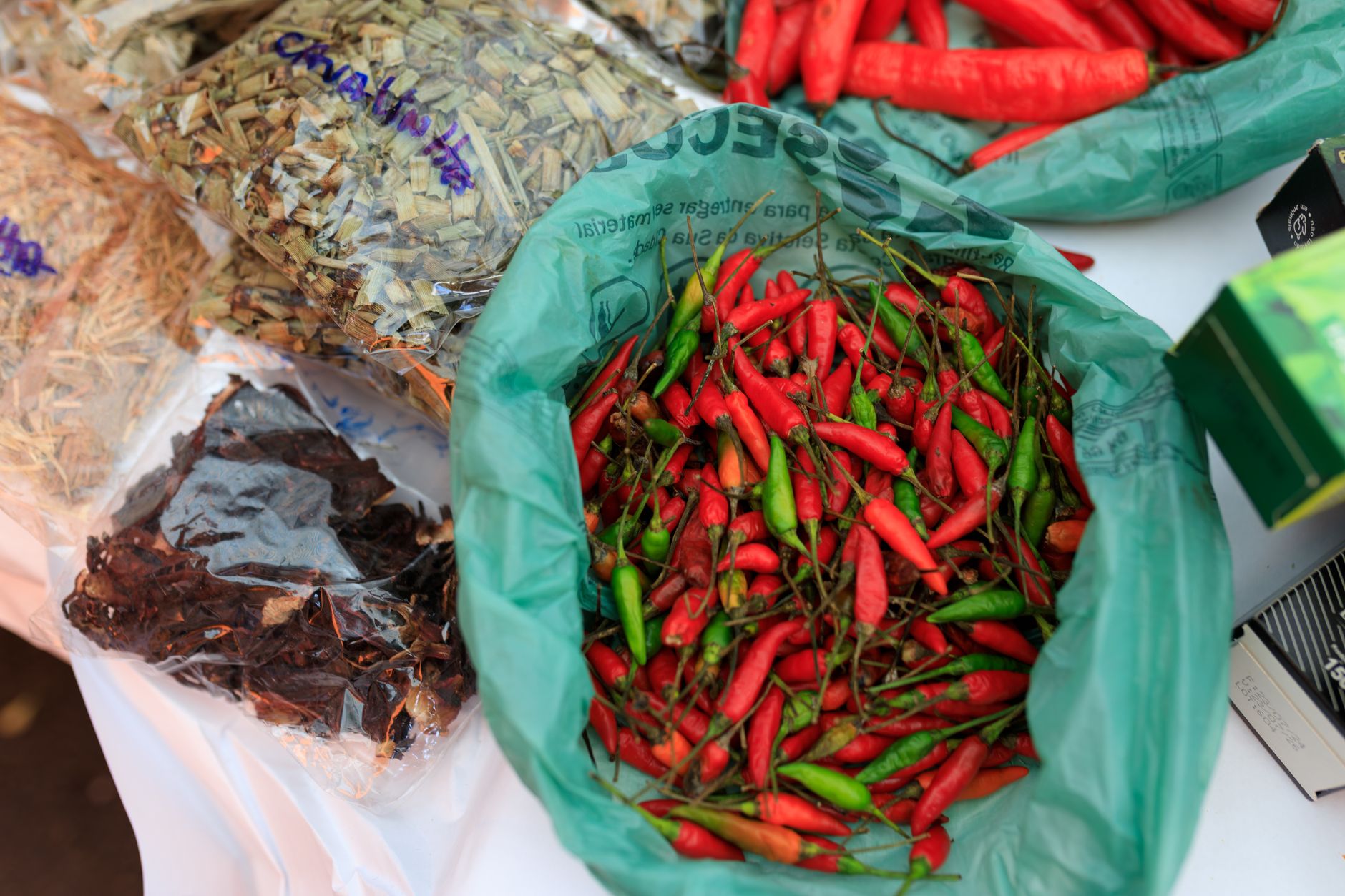
The Scent of the Source: Why Spice Tourism Just Got Serious
I stepped off the local, wooden-benched KSRTC bus in Munnar, India, and was immediately hit by a wall of air so thick with crushed cardamom and damp eucalyptus it felt like breathing in a hot, medicinal infusion. My boots sank into the red, iron-rich laterite clay. To my left, a rusted iron gate creaked open.
This wasn’t the manicured "demonstration garden" advertised to busloads of tourists in town. This was a working, high-altitude estate where the air smelled of woodsmoke and terpene-rich green pods.
```
[Global Spice Sourcing Shift]
Traditional Bulk Export ---> Single-Origin Micro-Lots
(Commodity Pricing) (Terroir-Focused & Traceable)
```
For decades, the commercial spice industry operated behind a curtain of industrial processing and bulk blending. However, recent data from the International Trade Centre (ITC) indicates a massive 18.4% surge in consumer demand for "single-origin, traceable spices."
To capture this market, elite plantations are doing something once unthinkable: they are opening their private estates to travelers and revealing the highly guarded botanical secrets that give their crops their signature flavor profiles.
If you want to understand how real food works, you have to go to the dirt. Here are the six secret-bearing spice plantations around the globe that should be on your immediate travel radar.
---
1. The Vanilla Alchemists of Sambava (SAVA Region, Madagascar)
```
[The Vanilla Curing Secret]
Green Bean -> Hot Water Scalding (63°C) -> Sweating (Wool Blankets) -> Slow Sun Drying -> Conditioning (Wood Boxes)
```
Madagascar produces over 80% of the world’s vanilla, but the vast majority of it is swept up by corporate conglomerates. In the northeastern SAVA region, a small collective of family-owned farms is finally revealing the exact science behind vanilla curing—a process that was treated like state secrets for generations.
The Secret Ingredient: The "Marriage" and the Sweat
True Bourbon vanilla (Vanilla planifolia) is an orchid that flowers for only a few hours one morning a year. It must be hand-pollinated using a bamboo splinter—a delicate process locals call le mariage.
But the real secret revealed by recent agricultural analysis is the controlled enzyme activation during the "sweating" phase. Farmers scald the green beans in 63°C water, then wrap them in wool blankets inside airtight wooden boxes. This triggers a massive release of vanillin, alongside 250 other volatile compounds (including guaiacol and 4-hydroxybenzaldehyde) that give the bean its smoky, fig-like complexity.
- Pro-Tip: Skip the crowded tours in Antananarivo. Fly into Maroantsetra and hire a local pirogue (dugout canoe) guide to take you to the edge of Masoala National Park. The hidden entrance to the organic vanilla cooperatives is marked by a simple blue wooden sign reading "Association des Planteurs." Visit at 8:00 AM to watch the delicate pollination process live.
---
2. The Red Gold of Kampot (Dâmrei Mountains, Cambodia)
Kampot pepper isn't just seasoning; it’s a protected geographical indication (PGI) product that chefs treat like fine Bordeaux wine. The secret to its legendary status lies in the unique microclimate of the Dâmrei (Elephant) Mountains, where quartz-rich soils meet heavy maritime rain.
```
[Kampot Pepper Color Spectrum]
Green (Unripe, Fresh) -> Black (Sun-Dried Green) -> Red (Fully Ripe Drupes) -> White (Soaked Red, Skin Removed)
```
The Secret Ingredient: Late-Harvest Red Drupes
While commercial black pepper is harvested green and dried until shriveled, Kampot’s secret weapon is its Late-Harvest Red Pepper. Farmers leave the peppercorns on the vine until they turn a brilliant crimson.
Recent laboratory profiling shows that these fully ripe drupes contain exceptionally high levels of piperine balanced by sweet, jammy notes of stone fruit and clover—a compound profile completely lost in standard industrial harvesting.
- Pro-Tip: Head to La Plantation in Kampot. To avoid the midday heat and the tour buses, arrive at 7:30 AM. Ask for Sothy, a veteran guide who can lead you past the main processing barn to the "Heritage Plot," where vines over fifty years old are grown using traditional bat guano fertilizer.
---
3. The Volcanic Nutmeg Masters of Belmont Estate (St. Patrick, Grenada)
Known as the "Spice Isle," Grenada’s volcanic interior is a fertile jungle of cocoa, cloves, and nutmeg (Myristica fragrans). Belmont Estate, dating back to the 17th century, has recently transitioned to fully organic, biodynamic farming, revealing the intricate processing secrets of this dual-yield spice.
The Secret Ingredient: The Blood-Red Mace Aril
Nutmeg is actually a fruit. When ripe, the yellow outer husk splits open to reveal a dark brown nut wrapped in a brilliant, waxy, blood-red lace called mace.
```
[Nutmeg Fruit]
|
+-------+-------+
| |
[Nutmeg] [Mace]
(Warm, Woody) (Citrus, Pine)
```
Recent soil-mapping data from the Grenada Co-operative Nutmeg Association shows that the high concentration of potassium and iron in the northern volcanic slopes directly increases the concentration of myristicin and elemicin in the mace, yielding an incredibly intense, citrus-pine flavor profile that cannot be replicated in sandy coastal soils.
- Pro-Tip: Visit Belmont Estate on a Wednesday morning. This is when the master sorters grade the nutmegs by hand. The secret viewpoint is the old wooden loft stairs behind the drying trays—from here, you can photograph the sea of crimson mace drying in the sun without interfering with the workers.
---
4. The Cloud-Forest Cardamom of Munnar (Kerala, India)
High up in the Western Ghats of India, cardamom (Elettaria cardamomum) thrives under the shade of massive jungle canopies. This is the birthplace of green cardamom, and recent data from the Spices Board of India highlights a shift toward preserving ancient forest-grown varieties over high-yield hybrids.
The Secret Ingredient: The Wood-Fired "Bhatti" Curing
The secret to the intense, almost menthol-like punch of Keralan cardamom is the traditional smoke-curing chamber, or bhatti. Instead of using modern electric dehydrators, traditional estates dry the green pods over slow-burning firewood collected from wild plum trees.
This infuses the cardamom with a subtle, woodsy undertone that grounds its bright, citrusy terpinyl acetate top notes.
```
[Cardamom Flavor Profile]
Terpinyl Acetate (Bright, Citrusy) + Cineole (Cool, Menthol) + Woodsmoke (Earthy Depth)
```
- Pro-Tip: Avoid the roadside "spice gardens" in Munnar town, which are tourist traps filled with planted specimens. Instead, rent a Royal Enfield motorcycle and ride 25 kilometers to the Lockhart Estate. Head to the curing sheds at 4:00 PM when the day's harvest is brought in; the aroma of hot, smoking cardamom pods is life-changing.
---
5. The Saffron Alchemists of Kozani (Western Macedonia, Greece)
Saffron (Crocus sativus) is the world's most expensive agricultural product by weight. While Iran dominates global production, recent chemical analysis from the European Union shows that the organic saffron grown in the red soils of Kozani, Greece, consistently registers the highest levels of crocin (the compound responsible for saffron's intense color) and safranal (its aroma).
Secret Ingredient: The Morning Dew Extraction
The secret to Kozani saffron's potency is the incredibly tight harvest window. The purple crocus flowers open at dawn and must be plucked before the midday sun wilts the petals.
The three delicate red stigmas inside each flower are then hand-separated from the purple petals on the very same day, using a specialized wooden screen and gentle blowing techniques.
- Pro-Tip: Plan your travel for the last two weeks of October. The fields around the village of Krokos turn into a purple carpet. Knock on the door of the Cooperative of Saffron Producers of Kozani in the morning. If you are respectful and dress warmly, they will often allow you to sit with the local grandmothers as they separate the stigmas—an experience accompanied by traditional polyphonic singing.
---
6. The Wild Cinnamon Peelers of Mahé (Seychelles)
While Sri Lanka is famous for Ceylon cinnamon (Cinnamomum verum), the wild forests of Mahé in the Seychelles hold a genetically distinct, highly potent variety introduced by French colonists in the 18th century. Recent forestry data shows these wild-growing trees have adapted to the granite-rich island soils, producing an exceptionally sweet, clove-like bark.
The Secret Ingredient: The "C5 Alba" Peeling Technique
True cinnamon is not the thick, woody bark you find on cassia trees in your supermarket. It is the ultra-thin, inner bark of young branches.
The secret lies in the peeling: master peelers use a brass rod called a kokotta to rub the bark, loosening it from the wood before making precise longitudinal incisions to peel off sheets that are less than a millimeter thick. These are then rolled together like fine cigars to air-dry.
```
[Cinnamon Bark Comparison]
Cassia Bark: Thick, single hard layer, high coumarin (cheap)
Ceylon Cinnamon: Multi-layered, paper-thin, low coumarin (premium)
```
- Pro-Tip: Hike the Copolia Trail in the Morne Seychellois National Park. Halfway up, the air turns sweet and spicy. Look for wild cinnamon trees (identifiable by their glossy, triple-veined leaves). If you gently scratch a fallen leaf, it releases a powerful scent of cloves and cinnamon. To see the professional peeling, book a private visit to the Val d'End d'Or traditional farm in the south of Mahé.
---
The Smart Traveler's Spice Toolkit: Logistics & Data
To help you plan your journey, here is a quick-reference guide to the logistics, costs, and best times to visit these aromatic wonders.
| Destination | Best Time to Visit | Est. Entry/Tour Cost ($ USD) | Key Secret Revealed | How to Get There |
| :--- | :--- | :--- | :--- | :--- |
| Sambava, Madagascar | October to January | $25 - $50 (Local Guide) | Hot-water scalding & wool blanket sweating | Fly to Sambava (SVB) via Antananarivo; hire a 4x4. |
| Kampot, Cambodia | January to May | Free entry; $15 private tour | Late-harvest red drupe preservation | 2.5-hour taxi from Phnom Penh to Kampot. |
| Belmont Estate, Grenada | January to April | $10 (Includes tasting) | Soil-mineral impact on mace quality | 1-hour drive north from St. George’s. |
| Munnar, India | September to March | $5 (Lockhart Estate) | Wood-fired bhatti smoke curing | 4-hour drive from Cochin International Airport (COK). |
| Kozani, Greece | Mid-to-Late October | Free (Registration required) | High-crocin morning dew harvest | 1.5-hour drive from Thessaloniki (SKG). |
| Mahé, Seychelles | Year-round | Free (Self-guided trails) | Granite-soil wild bark peeling | Hike the Copolia Trail or visit Val d'End d'Or. |
---
How to Spot a "Fake" Spice Tour: 3 Red Flags
As culinary tourism grows, so does the rise of commercialized trap gardens. Here is how to ensure your money supports real agricultural science and local farmers:
- The "One of Everything" Garden: If a garden has one vanilla orchid, one black pepper vine, and one nutmeg tree all planted next to each other in a neat little path, it is a stage set. Real spices require wildly different microclimates, shade levels, and soil profiles. They do not grow in a convenient row.
- The Instant Hard Sell: If your tour lasts fifteen minutes and ends in a massive, brightly lit gift shop selling pre-packaged "miracle cure" spice mixes with English labels, you are on a commercial conveyor belt. Authentic plantations sell raw, rustic, single-origin products, often in simple brown paper bags stamped with the harvest date.
- No Farmers in Sight: If you don't see actual agricultural work happening—pruning, composting, drying, sorting—you are not in a working plantation. Look for dirty hands, calloused fingers, and the real, unvarnished sounds of farm machinery.
---
Bringing the Terroir Home: How to Store Your Haul
Once you’ve successfully sourced these single-origin ingredients, do not ruin them by throwing them in a glass jar on a shelf above your stove. Heat, light, and oxygen are the enemies of volatile essential oils.
- Store Whole: Never buy pre-ground spices abroad. Whole green cardamom, Kampot peppercorns, and whole nutmegs can retain their flavor compounds for up to three years if kept whole.
- The Double-Barrier Method: Store your spices in airtight tin canisters or dark amber glass jars. Keep them inside a cool, dark pantry—not next to your oven or microwave.
- Grind to Order: Invest in a heavy-duty granite mortar and pestle or a dedicated ceramic-burr spice grinder. Grinding your spices immediately before use releases the volatile oils directly into your dish, preserving the hard work of the farmers you met on your travels.
---