The Hook: The Day I Walked Away from the Glass Pyramid
I stepped off the metro at Palais Royal-Musée du Louvre, the sharp, metallic tang of the underground air giving way to the scent of rain-dampened gravel and caramelized sugar from a nearby crêpe stand. Emerging into the Cour Napoléon, my romantic notions of Parisian art appreciation evaporated.
Before me lay a serpentine beast of a queue: thousands of damp, frustrated travelers huddled under grey skies, waiting hours just to clear security. Inside, I knew what awaited—a claustrophobic sprint through the Denon Wing to catch a fleeting, distant glimpse of a 30-inch portrait behind bulletproof glass.
That afternoon, I walked away. I wandered across the Tuileries Garden to a modest, light-filled greenhouse at the water's edge.
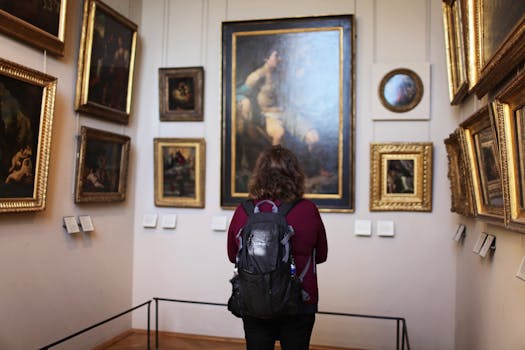
Inside, there were no velvet ropes, no selfie sticks, and no shouting guards. I sat on a clean white bench, surrounded by Claude Monet’s massive, curved Nymphéas (Water Lilies) canvases. The room was silent save for the soft, rhythmic scuff of a docent’s leather shoes on the parquet. The natural light shifting through the glass ceiling made the painted water lilies seem to ripple.
It was a religious experience. And it cost me zero minutes of waiting.
This is the secret elite travel advisors keep close to their chests. You do not need to endure the Louvre to witness humanity’s greatest artistic triumphs. Here are the six definitive, low-crowd masterpieces of the museum world that deserve a spot at the top of your travel bucket list.
---
1. Musée de l'Orangerie (Paris, France)
### The Ultimate Impressionist Sanctuary Just Steps from the Louvre
While the masses choke the halls of the Louvre, those in the know walk fifteen minutes west to the edge of the Tuileries. Built in 1852 to protect the royal orange trees from winter frosts, this elegant structure now houses some of the most transcendent Impressionist and Post-Impressionist works on earth.
```
[ Tuileries Garden Entrance ]
|
[ Oval Room I: Monet ] <-- Natural overhead light
|
[ Oval Room II: Monet ]
|
[ Lower Level: Walter-Guillaume Collection ]
(Cézanne, Matisse, Picasso, Modigliani)
```
The crown jewel of the Orangerie is the pair of custom-built, oval-shaped subterranean rooms designed under Claude Monet’s personal direction. Here, eight massive compositions of his Water Lilies wrap around you, creating a seamless, panoramic illusion of his water garden in Giverny.
Downstairs, the Walter-Guillaume collection offers an intimate look at early 20th-century modernism, featuring masterworks by Paul Cézanne, Henri Matisse, Pablo Picasso, and Amedeo Modigliani.
- The Vibe: Ethereal, meditative, and flooded with natural light.
- The Masterpiece: Monet’s Nymphéas cycle.
- Pro-Tip: Book the 9:00 AM ticket on a Thursday. While the Louvre is notoriously packed on Thursdays, the Orangerie remains quiet. Enter through the side gate of the Tuileries near the Place de la Concorde to bypass the main garden crowds.
---
2. Museo Nazionale del Bargello (Florence, Italy)
### Where Donatello Outshines Michelangelo’s Crowds
Florence visitors routinely lose half a day standing in the blistering sun outside the Uffizi Gallery or the Accademia. What travel advisors rarely tell the public is that the city’s most dramatic, emotionally charged Renaissance sculptures live inside a 13th-century fortress-prison just a five-minute walk from the Piazza della Signoria: the Bargello.
```
+-------------------------------------------------------------+
| BARGELLO COURTYARD |
| - Made of rugged pietra forte stone |
| - Decorated with coats of arms of medieval magistrates |
| - Open-air, quiet, smelling of old stone and wax polish |
+-------------------------------------------------------------+
```
The Bargello’s interior smells of ancient stone, beeswax, and history. Its grand hall houses Donatello’s bronze David—the first free-standing nude male sculpture since antiquity.
Unlike Michelangelo’s colossal marble David at the Accademia, which you must view over a barricade of raised smartphones, Donatello’s David stands at eye level. You can walk 360 degrees around the bronze figure, observing the delicate, controversial sensuality of his posture and the intricate details of Goliath's helmet under his foot.
- The Vibe: Gothic, dramatic, and intensely atmospheric.
- The Masterpiece: Donatello’s bronze David and Michelangelo's Bacchus (his first large-scale sculpture).
- Pro-Tip: Visit at 1:30 PM. The tour groups head off for heavy Tuscan lunches, leaving the cool, vaulted halls of this medieval fortress almost entirely to you. Be sure to look up in the courtyard to see the coats of arms of the medieval magistrates carved into the stone.
---
3. Kunsthistorisches Museum (Vienna, Austria)
### Imperial Grandeur Without the Vatican-Style Crush
If you want the scale and opulence of the Louvre without the logistical nightmare, Vienna’s Museum of Fine Arts (Kunsthistorisches Museum) is the gold standard. Built by Emperor Franz Joseph I to house the dizzying art collection of the Habsburg dynasty, the building itself is a neo-Renaissance masterpiece of colored marble, stucco ornament, and gold leaf.
The central staircase features early, exquisite murals painted by none other than Gustav Klimt. Once inside the Picture Gallery, you are face-to-face with the world's premier collection of Pieter Bruegel the Elder, including The Tower of Babel and The Hunters in the Snow.
You can stand inches from these hyper-detailed Northern Renaissance masterpieces, dissecting the tiny, intricate lives of Bruegel’s peasants, without anyone bumping your shoulder.
- The Vibe: Imperial, opulent, and intellectual.
- The Masterpiece: Pieter Bruegel the Elder’s The Tower of Babel.
- Pro-Tip: Book the "Gourmet Evening" on a Thursday night. You can dine on world-class Austrian cuisine under the spectacular dome of the museum's café, and then wander the imperial galleries until 9:00 PM when they are practically empty.
---
4. Sir John Soane’s Museum (London, UK)
### An Eccentric Labyrinth of Antiquities and Hidden Walls
Tucked away in the leafy square of Lincoln's Inn Fields is the former home of Sir John Soane, the brilliant, eccentric neo-classical architect who designed the Bank of England. Rather than a sterile gallery, this museum is a dense, three-dimensional puzzle of art, architectural fragments, and archaeological curiosities.
Soane designed his home to maximize every square inch of space. The highlight is the Picture Room, where the walls are actually large, hinged folding panels.
When opened by a museum warden, they reveal hidden layers of paintings, including William Hogarth’s famous satirical series A Rake’s Progress and breathtaking ruins by Piranesi.
- The Vibe: Labyrinthine, moody, and deeply personal.
- The Masterpiece: The sarcophagus of Pharaoh Seti I in the basement sepulchre.
- Pro-Tip: Go at 10:00 AM on a Wednesday. Entry is completely free, but they limit the number of visitors inside to preserve the fragile, cramped interiors. Alternatively, try to secure a ticket for their monthly "Soane Lates," where the entire house is lit solely by candlelight, casting dramatic shadows across ancient Roman marbles.
---
5. The Kröller-Müller Museum (Otterlo, Netherlands)
### Van Gogh in the Middle of a National Park
Most art lovers flock to Amsterdam’s Van Gogh Museum, enduring timed-entry scrambles and crowded galleries. The ultimate insider alternative lies seventy-five kilometers east, nestled inside the heather-fields and pine forests of the Hoge Veluwe National Park.
The Kröller-Müller Museum houses the second-largest collection of Van Gogh paintings in the world (nearly 90 paintings and over 180 drawings), compiled by Helene Kröller-Müller, one of the first European women to recognize Vincent's genius.
Here, you can stand before Café Terrace at Night or The Sower surrounded by floor-to-ceiling glass walls that look out onto a sprawling, 75-acre sculpture garden.
```
[ National Park Entrance ]
│
(Grab a Free White Bicycle)
│
[ 15-Min Ride Through Pine Forests ]
│
[ Kröller-Müller Museum ]
```
- The Vibe: Serene, modernist, and deeply connected to nature.
- The Masterpiece: Vincent van Gogh's Café Terrace at Night.
- Pro-Tip: Arrive at the park gates at 9:30 AM. Grab one of the park’s famous free white bicycles and enjoy a brisk, 15-minute ride through the dunes and woodlands to the museum entrance. You’ll arrive energized, clear-headed, and ahead of any morning tour buses.
---
6. The Calouste Gulbenkian Museum (Lisbon, Portugal)
### A Mid-Century Brutalist Oasis of Pure Quality
Calouste Gulbenkian, an Armenian oil magnate who settled in Lisbon during World War II, lived by a strict collecting rule: "Only the best." He did not buy in bulk; he bought individual masterpieces of unparalleled quality.
His legacy is housed in a stunning mid-century modernist concrete pavilion, surrounded by lush, wild gardens designed by landscape architect António Viana Barreto.
The collection is a masterclass in curation. You transition seamlessly from ancient Egyptian treasures to Persian carpets, through to paintings by Rembrandt, Rubens, and Turner, ending with the world's most spectacular collection of Art Nouveau jewelry designed by René Lalique.
It is small enough to digest in two hours, yet rich enough to rival any national collection in the world.
- The Vibe: Mid-century cool, intimate, and impeccably curated.
- The Masterpiece: René Lalique's legendary Dragonfly-woman corsage ornament.
- Pro-Tip: Visit around 4:00 PM. The golden Portuguese sun streams through the massive panoramic windows, casting long, dramatic shadows across the galleries and illuminating the delicate glasswork of the Lalique collection just as the afternoon crowds disperse.
---
The Budget & Logistics Matrix
To help you plan your crowd-free cultural pilgrimage, here is a quick-reference guide to the logistics of these six elite alternatives:
| Museum | Location | Est. Cost (€/£) | Best Time to Visit | How to Get There |
| :--- | :--- | :--- | :--- | :--- |
| Musée de l'Orangerie | Paris, France | €12.50 | Thursday, 9:00 AM | Metro Line 1, 8, or 12 to Concorde. |
| Museo del Bargello | Florence, Italy | €10.00 | Daily, 1:30 PM | 5-minute walk from Piazza della Signoria. |
| Kunsthistorisches Museum | Vienna, Austria | €21.00 | Thursday evening (Gourmet Night) | U-Bahn U2 or U3 to Volkstheater. |
| Sir John Soane’s Museum | London, UK | Free | Wednesday, 10:00 AM | Central Line to Holborn station. |
| Kröller-Müller Museum | Otterlo, Netherlands | €25.00 (Park + Museum) | Morning, 9:30 AM | Train to Apeldoorn, then Bus 108 to the park. |
| Calouste Gulbenkian | Lisbon, Portugal | €10.00 | Late afternoon, 4:00 PM | Metro Blue/Red lines to São Sebastião. |
---
Why the "Slow Art" Movement is the Future of Travel
The era of checklist tourism is dying. Racing through the Louvre or the Vatican just to snap a blurry photo of a famous painting from thirty feet away is no longer a luxury experience—it is a chore.
By choosing these curated, lower-crowd alternatives, you are embracing the "Slow Art" movement. You are choosing to spend thirty minutes sitting in front of a single canvas, watching how the light changes the brushstrokes, rather than spending thirty minutes standing in a security line.
These six museums don't just offer an escape from the crowds; they offer a return to why we travel in the first place: to be genuinely moved by beauty, history, and human ingenuity.
---