Beyond the Savannah: Mind-Blowing Safaris That Will Redefine Your Wild Side
The crackle of a campfire, the distant roar of a lion, the silhouette of an acacia tree against a fiery sunset – for many, this is the quintessential safari dream, firmly set in the heart of Africa. And don't get me wrong, the African plains are utterly magical. I’ve been fortunate enough to witness that magic firsthand, feeling the earth tremble under a herd of wildebeest and meeting the piercing gaze of a leopard in the dappled light.
But what if I told you that some of the most profound, surprising, and downright mind-blowing wildlife adventures I’ve ever had were thousands of miles away from the Serengeti? What if I told you that the concept of a "safari" – that thrilling quest to observe magnificent animals in their natural habitats – is a global phenomenon, waiting to be discovered in the most unexpected corners of our planet?
This isn't just about spotting a rare bird or a cute mammal. This is about immersing yourself in ecosystems so unique, so vibrant, and so different from the African model that they will challenge your perceptions, ignite your spirit, and leave an indelible mark on your soul. From tracking elusive big cats in dense jungles to navigating pristine wetlands teeming with life, these non-African safaris are not just alternatives; they are destinations in their own right, each offering a distinct flavor of wild wonder.
So, pack your binoculars, charge your camera, and prepare to have your mind blown. We're going on an adventure that proves the wild heart of the world beats strong, everywhere.
1. India: The Royal Bengal Tiger's Realm – A Roar Beyond Expectations
My first "safari" was in Ranthambore National Park, India, years ago. I remember scoffing slightly, thinking, "How can this compare to Africa?" Oh, how gloriously wrong I was. The moment our open-top jeep rumbled into the dense, thorny scrub, the air alive with the calls of peacocks and langur monkeys, I knew this was something entirely different. The landscape, dotted with ancient ruins and banyan trees, felt like stepping into an epic historical novel.
The Experience:
India is synonymous with the Royal Bengal Tiger. These majestic predators, with their fiery coats and piercing eyes, are the undisputed stars of the show. Parks like Ranthambore, Bandhavgarh, and Kanha National Park offer incredible opportunities for tiger tracking. It’s a game of patience, stealth, and keen observation, often guided by the alarm calls of deer and monkeys. My heart pounded with anticipation for hours, until suddenly, there it was – a magnificent tigress, walking with serene confidence along a dusty track, her stripes a perfect camouflage against the shadows. The silence in our jeep was deafening, broken only by the whirring of cameras. It was a moment of pure, raw connection.
But India’s wildlife tapestry is richer than just tigers. You’ll also encounter sloth bears, leopards, wild dogs (dhole), sambar deer, and an astonishing array of birdlife. Each park has its unique charm: Ranthambore with its historic fort, Bandhavgarh with its high tiger density, and Kanha with its sprawling meadows that inspired Kipling's Jungle Book.
Practical Tips & Details:
* Best Time to Visit: October to June, with March to May being prime for tiger sightings as vegetation thins and animals seek water.
* Locations:
* Ranthambore National Park (Rajasthan): Easily accessible from Jaipur. Known for its iconic fort and relatively open terrain.
* Bandhavgarh National Park (Madhya Pradesh): Famous for one of the highest tiger densities in India.
* Kanha National Park (Madhya Pradesh): Larger, more diverse landscape, great for general wildlife viewing.
* Booking: Safari permits are highly sought after and must be booked well in advance (often 120 days for Ranthambore). Work with a reputable tour operator.
* Cost: A 3-hour jeep safari (shared) can range from $30-$70 USD per person. Private jeeps are significantly more. Accommodation varies from budget guesthouses ($50/night) to luxury lodges ($300+/night). Factor in flights to major cities like Delhi or Jaipur, then domestic flights or trains.
* Instagram-worthy moment: A majestic tiger strolling past ancient ruins, or a sunrise over the jungle mist.
2. Sri Lanka: Leopard Paradise & Elephant Sanctuaries – Asia's Hidden Gem
My journey to Sri Lanka was initially for its stunning beaches and ancient temples, but a detour to Yala National Park completely shifted my focus. I'd heard whispers of its leopard population, but nothing prepared me for the sheer thrill of tracking these elusive big cats in a landscape that felt like a wild, tropical garden.
The Experience:
Sri Lanka is arguably the best place in the world to see leopards in the wild. Yala National Park (Block 1) boasts one of the highest leopard densities globally, making sightings a real possibility. Unlike their African counterparts who often prefer the cover of night, Sri Lankan leopards are frequently seen during the day, lounging on rocky outcrops or slinking through the dense scrub. My heart nearly burst from my chest when our guide, with an uncanny sixth sense, spotted a magnificent male leopard stretched out on a granite boulder, completely unbothered by our presence. His emerald eyes met mine, and time seemed to stand still.
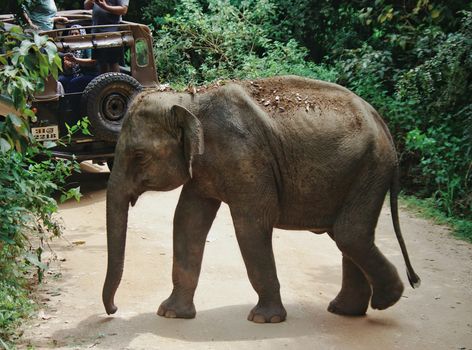
But Sri Lanka offers so much more. Wilpattu National Park, less crowded than Yala, provides a more serene experience with its unique "villus" (natural lakes) attracting a variety of wildlife. And then there are the elephants! Massive herds roam freely in parks like Uda Walawe National Park, offering incredible opportunities to witness these gentle giants in their natural habitat, often around watering holes. Beyond the big mammals, you’ll find sloth bears, crocodiles, water buffalo, and an astonishing array of endemic bird species.
Practical Tips & Details:
* Best Time to Visit: Yala: February to July (dry season, animals congregate around water sources). Uda Walawe: Year-round.
* Locations:
* Yala National Park: Southeast coast. Known for leopards.
* Wilpattu National Park: Northwest coast. Larger, less crowded, good for leopards and bears.
* Uda Walawe National Park: South-central. Excellent for elephant sightings.
* Booking: Safari jeeps and experienced drivers are readily available at park entrances or through your accommodation. Book in advance, especially for Yala.
* Cost: Park entrance fees are around $25-$35 USD per person. A 3-4 hour private jeep safari can cost $40-$70 USD (excluding park fees, but including driver/guide). Accommodation ranges from $40/night for guesthouses to luxury tented camps near the parks ($200+).
* Instagram-worthy moment: A leopard casually draped over a rock, or a herd of elephants silhouetted against a golden sunset.
3. Brazil's Pantanal: The Jaguar's Wetland Kingdom – South America's Serengeti
Before visiting the Pantanal, I thought the Amazon was the ultimate South American wilderness. Then I experienced the Pantanal. This vast, shimmering wetland, larger than many European countries, is a biodiversity hotspot unlike any other. It feels wilder, more untamed, and offers a level of wildlife viewing that rivals Africa's best. My boat glided silently through the murky waters, the humid air thick with the buzzing of insects and the calls of unseen birds. It was utterly captivating.
The Experience:
The Pantanal is the best place on Earth to see jaguars in the wild. While their elusive nature makes them a challenge, the concentrated prey (caimans, capybaras) along the riverbanks of the Transpantaneira Highway (especially near Porto Jofre) dramatically increases your chances. My heart hammered when our guide pointed to a low-hanging branch across the river – a magnificent jaguar, its rosette-patterned coat shimmering, was stealthily watching a group of capybaras. We spent over an hour observing it, completely mesmerized.
But the Pantanal is a wildlife spectacle even without the jaguars. It's home to the largest concentration of wildlife in South America. You'll encounter thousands of caimans (South American alligators), giant capybaras (the world's largest rodents), playful giant river otters, anacondas, tapirs, and hundreds of bird species, including vibrant macaws and jabiru storks. Safari experiences here are often boat-based, allowing you to get up close and personal with aquatic and riverine wildlife, interspersed with horseback riding and walking safaris.
Practical Tips & Details:
* Best Time to Visit: Dry season (May to October) is ideal for jaguar sightings as rivers recede, concentrating prey and predators. The wet season (November to April) is lush and great for birdwatching, but jaguars are harder to spot.
* Locations:
* Northern Pantanal (Cuiabá side): Best for jaguar sightings (Porto Jofre).
* Southern Pantanal (Campo Grande side): Offers more diverse activities like horseback riding and cattle drives.
* Booking: A multi-day package (3-5 days is recommended) is the best way to experience the Pantanal. Most visitors stay at a fazenda (ranch) that offers all-inclusive tours.
* Cost: Pantanal tours can range from $150-$400 USD per person per day, depending on the level of luxury and included activities. This typically covers accommodation, meals, and guided safaris. Flights to Cuiabá or Campo Grande are additional.
* Instagram-worthy moment: A jaguar lounging on a riverbank, a caiman-filled waterway at sunset, or a vibrant macaw in flight.
4. Borneo: Orangutans and Rainforest Giants – An Ethical Encounter
Borneo was a revelation. The sheer biodiversity of its ancient rainforests, combined with the urgent need for conservation, makes for an incredibly poignant and powerful safari experience. Seeing a wild orangutan high in the canopy, moving with such grace and intelligence, was a truly humbling moment that resonated deeply.
The Experience:
Borneo, an island shared by Malaysia, Indonesia, and Brunei, is one of only two places on Earth where you can see orangutans in their natural habitat (the other being Sumatra). The experience here is less about a traditional "game drive" and more about river cruises and jungle trekking. In Malaysian Borneo (Sabah), the Kinabatangan River is a fantastic place for boat safaris, where you can spot wild orangutans, pygmy elephants (the smallest elephants in the world!), proboscis monkeys with their distinctive long noses, crocodiles, and a bewildering array of birds.
Further inland, sites like the Sepilok Orangutan Rehabilitation Centre (Sabah) offer a unique opportunity to see rescued and rehabilitated orangutans learning to fend for themselves before release. While not strictly "wild," it’s an incredible chance to learn about these magnificent creatures and support their conservation. In Indonesian Borneo (Kalimantan), the multi-day klotok (houseboat) safaris in Tanjung Puting National Park offer a deep dive into the jungle, taking you directly to feeding stations and giving you a chance to truly disconnect. My personal highlight was a close encounter with a wild orangutan swinging through the trees, its intelligent eyes meeting mine for a fleeting second – a moment of pure magic.
Practical Tips & Details:
* Best Time to Visit: May to September (dry season) is generally best, with less rain and more active wildlife. However, the rainforest climate means rain can occur anytime.
* Locations:
* Malaysian Borneo (Sabah): Kinabatangan River (wildlife cruises), Sepilok Orangutan Rehabilitation Centre (rehabilitated orangutans), Danum Valley (pristine primary rainforest, more expensive).
* Indonesian Borneo (Kalimantan): Tanjung Puting National Park (klotok safaris for wild orangutans).
* Booking: For Kinabatangan River, many lodges offer all-inclusive packages. For Tanjung Puting, book a klotok tour from Pangkalan Bun.
* Cost: A 2-night/3-day Kinabatangan River package can range from $200-$500 USD per person (including accommodation, meals, guides, and safaris). A 3-day/2-night Tanjung Puting klotok tour might be $300-$600 USD. Flights to Borneo (e.g., Kota Kinabalu or Sandakan for Sabah, Pangkalan Bun for Kalimantan) are extra.
* Instagram-worthy moment: An orangutan swinging gracefully through the rainforest canopy, or a proboscis monkey posing by the river.
5. The Galapagos Islands, Ecuador: A Living Laboratory – Evolution in Action
While not a "safari" in the traditional sense of a jeep bouncing through a savanna, the Galapagos Islands offer one of the most extraordinary and immersive wildlife experiences on the planet. It's an archipelago safari, a journey through a living laboratory where evolution is on full display and animals have no fear of humans. My first encounter with a blue-footed booby, performing its comical dance just feet away, felt like a scene from a nature documentary playing out just for me.
The Experience:
Imagine swimming with playful sea lions, watching giant tortoises lumber across volcanic landscapes, observing marine iguanas basking on black rocks, and having blue-footed boobies and frigatebirds nest undisturbed just meters from your path. That’s the Galapagos. Each island offers a unique ecosystem and different species, making a cruise-based safari the ideal way to explore. You’ll spend your days snorkeling with sharks and rays, hiking across lava fields, and learning about Darwin's theories firsthand. The sheer fearlessness of the wildlife is what truly sets the Galapagos apart – these creatures have evolved without significant predators, allowing for incredibly close and respectful encounters.
My most memorable moment was snorkeling off Española Island. A sea lion pup, curious and playful, darted around me, twirling and blowing bubbles, its dark eyes full of mischief. It was an intimate, unscripted interaction that felt profoundly special, a testament to the unique bond you can form with nature here.
Practical Tips & Details:
* Best Time to Visit: Year-round. The "warm" season (December-May) offers calmer seas and warmer water for snorkeling. The "cool" season (June-November) brings more active marine life and cooler temperatures.
* Locations: Cruise itineraries typically visit multiple islands, including Santa Cruz, Española, Isabela, Fernandina, and San Cristóbal.
* Booking: A cruise is highly recommended for an optimal experience (4-day, 5-day, 8-day options). Book well in advance with a reputable operator. Land-based island hopping is also possible but offers less access to remote sites.
* Cost: This is one of the more expensive non-African safaris. A 4-day cruise can start from $2,000-$3,000 USD per person, going up significantly for longer or luxury options. This usually includes accommodation, meals, guided excursions, and inter-island transport. Flights to Ecuador (Quito or Guayaquil) and then to the Galapagos (Baltra or San Cristóbal) are additional, as is the Galapagos National Park entrance fee ($100 USD).
* Instagram-worthy moment: Swimming with sea lions, a blue-footed booby mid-dance, or a giant tortoise slowly making its way across a volcanic plain.
General Practical Tips for Your Non-African Safari Adventure:
Embarking on a safari beyond Africa requires a slightly different approach, but the thrill is just as immense. Here are some actionable tips to ensure your trip is unforgettable:
- Research, Research, Research: Each destination is unique. Understand the best time to visit for specific animal sightings, local customs, and the type of safari experience offered (jeep, boat, trekking, cruise).
- Choose Ethical Operators: Prioritize tour companies and lodges committed to sustainable tourism, wildlife conservation, and community engagement. This ensures your adventure supports the very ecosystems you're visiting. Look for certifications or clear mission statements.
- Pack Smart:
- Clothing: Earth-toned, lightweight, breathable fabrics. Long sleeves and pants are essential for sun protection and insect repellent. A good rain jacket is a must for rainforest destinations.
- Footwear: Comfortable walking shoes or hiking boots, and sandals for downtime.
- Gear: A good pair of binoculars (8x42 or 10x42 are ideal), a high-quality camera with a zoom lens (200-400mm is great), extra batteries, memory cards.
- Essentials: Sunscreen, wide-brimmed hat, insect repellent (with DEET), a reusable water bottle, and any personal medications.
- Be Patient & Respectful: Wildlife viewing requires patience. Animals operate on their own schedule. Always follow your guide's instructions, maintain a respectful distance, avoid loud noises, and never feed or disturb animals. Remember, you are a guest in their home.
- Budget Wisely: Non-African safaris can vary widely in cost. Factor in international flights, domestic transfers, park fees, guide fees, accommodation, food, and tips. Don't skimp on a good guide – their expertise is invaluable.
- Travel Insurance: Always, always get comprehensive travel insurance that covers medical emergencies, trip cancellations, and lost luggage.
- Embrace the Unexpected: The beauty of wildlife travel is its unpredictability. Some days you might see everything; other days, you might only see a few things. Every moment in the wild is a privilege, so soak it all in.
The World is Wild – Go Discover It!
My adventures beyond the African savannah have taught me that the definition of "safari" is far broader and more captivating than I ever imagined. From the intense thrill of tracking a tiger in India to the serene wonder of swimming with sea lions in the Galapagos, these experiences have not only introduced me to incredible animals but also to diverse cultures, breathtaking landscapes, and the profound importance of conservation.
These safaris aren't just trips; they are journeys of discovery, both of the wild world and of yourself. They challenge you, inspire you, and leave you with stories that will blow your mind and ignite a passion for exploration.
So, what are you waiting for? It's time to redefine your wild side. Which non-African safari will you embark on first? Share your dreams in the comments below, and let's inspire each other to explore the incredible wildlife that thrives beyond the familiar horizons!
---