The New Old World: 7 Restored Historical Sites Reopening to Visitors Right Now
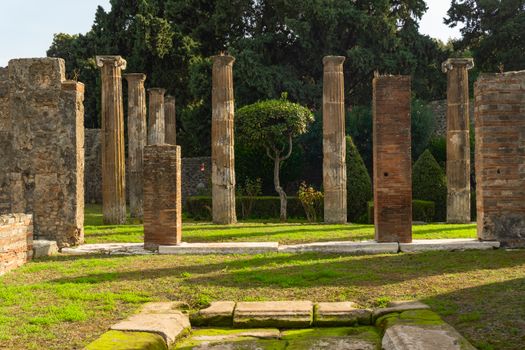
I stepped off the regional train at Pompei Scavi, and the air didn't just smell like Italian summer and diesel; it smelled like wet dust and centuries-old lime plaster. For twenty years, the House of the Vettii—the "Sistine Chapel of Pompeii"—was locked behind rusted gates and "Work in Progress" signs. When the heavy wooden doors finally creaked open this season, I wasn't just walking into a house; I was walking into the private, gaudy, and brilliant world of two formerly enslaved men who made it big in the Roman Empire.
Travel is shifting. We’re tired of the "Disney-fied" versions of history. We want the grit of the restoration, the precision of the laser-cleaned marble, and the thrill of being the first to see a site after decades of silence. Here is your definitive guide to the restored historical sites reopening to visitors right now.
---
1. The House of the Vettii: Pompeii’s Most Scandalous Reopening
After two decades of painstaking restoration using laser technology to strip away layers of grime and botched 19th-century "repairs," the House of the Vettii is finally fully open. This isn't a temple for the gods; it’s a monument to "new money." Owned by the Vettii brothers, successful freedmen, the house is a riot of color.
The Insider Detail:
Look for the fresco of Priapus at the entrance—it’s a literal weigh-in of his "assets" against a bag of gold. It was meant to ward off the "evil eye" of jealous neighbors. The garden, too, has been replanted using carbonized seed remains found on-site, meaning you’re smelling the same roses a Roman merchant smelled in 79 AD.
- Pro-Tip: Skip the main entrance. Enter through the side gate near the Thermopolium (the ancient snack bar) to hit the Vettii house before the tour groups arrive at 10:30 AM.
2. Chichén Viejo: The Secret Side of Chichén Itzá, Mexico
For 25 years, archaeologists have been working in the shadows of the famous El Castillo pyramid. In late 2023 and early 2024, they finally began allowing limited access to Chichén Viejo (Old Chichén). This is the "residential" district of the Maya elite, and it feels entirely different from the manicured lawns of the main site.
The Insider Detail:
The "Temple of the Owls" features intricate carvings of birds and celestial symbols that haven't been bleached white by the sun. The jungle still hugs these buildings tightly. You’ll see the Sacbe (white roads) that connected these complexes, still stained with local lichen.
- Pro-Tip: You currently need a special ticket or a registered INAH guide to enter this section. Don't just show up at the main gate; book a "Series Initial" tour in advance.
3. The Grand Staircase of the Grand Egyptian Museum (GEM), Giza
While the full opening of the GEM has been teased for years, the Grand Staircase is finally open to the public. This isn't just a flight of stairs; it’s a chronological ascent through 3,000 years of Egyptian kingship.
The Insider Detail:
As you climb, you are flanked by 60 massive statues. The engineering is designed so that at the very top, you turn around and see the Pyramids of Giza framed perfectly through the floor-to-ceiling glass. It makes the pharaohs look like they are guarding the plateau.
- Pro-Tip: Go at 4:00 PM. The sun hits the limestone of the pyramids through the GEM's glass facade, creating a golden glow that makes for the best photography without the midday haze.
4. At-Turaif: The Mud-Brick Marvel of Diriyah, Saudi Arabia
The birthplace of the Saudi state, At-Turaif is a UNESCO World Heritage site that has undergone a multi-billion dollar restoration. Built in the unique Najdi architectural style using mud-brick and palm wood, it was closed for years to stabilize the fragile structures.
The Insider Detail:
Notice the triangular windows (shurrafat). They aren't just decorative; they are designed for cross-ventilation and to allow women inside to see out without being seen from the street. The texture of the mud walls is surprisingly soft to the touch, tempered with local straw.
- Pro-Tip: Visit during the "Diriyah Season" (winter months). The site stays open late, and the night-time projection mapping on the mud walls is world-class.
5. The Queen’s House at the Tower of London, UK
While the Tower is always open, the Queen’s House—the timber-framed Tudor gem where Anne Boleyn allegedly spent her final nights—has recently reopened after a delicate conservation project.
The Insider Detail:
This is one of the few places you can see original 16th-century "wattle and daub" construction. The restoration focused on the "Great Hall," where the timber beams have been treated with traditional beeswax and turpentine, giving the room a distinct, honeyed scent that hits you the moment you walk in.
- Pro-Tip: Ask the Yeoman Warders (Beefeaters) specifically about the "graffiti" in the nearby Beauchamp Tower; they often have keys to areas not on the standard map.
6. The Hypogeum of the Colosseum, Rome
For centuries, visitors looked down into the "basement" of the Colosseum. Now, for the first time in history, a new 160-meter walkway allows you to walk through the Hypogeum—the backstage area where gladiators and animals waited.
The Insider Detail:
Look for the vertical grooves in the stone. These were the tracks for the hegmeta (elevators) used to hoist lions and tigers into the arena through trap doors. The dampness here is palpable, and the sheer scale of the brickwork reveals the industrial genius of Roman engineering.
- Pro-Tip: This requires a "Full Experience" ticket. They sell out weeks in advance. If you miss out, check the official CoopCulture site at 9:00 AM CET for last-minute cancellations.
---
Quick Facts & Logistics
| Site | Location | Est. Cost (USD) | Best Time to Visit | How to Get There |
| :--- | :--- | :--- | :--- | :--- |
| House of the Vettii | Pompeii, Italy | $20 (Full site) | Oct - April | Circumvesuviana train from Naples |
| Chichén Viejo | Yucatan, Mexico | $35 (Guide incl.) | 8:00 AM sharp | ADO Bus from Mérida or Tulum |
| Grand Egyptian Museum | Giza, Egypt | $40 (Staircase) | Late Afternoon | Uber from Cairo (easiest) |
| At-Turaif | Riyadh, KSA | $25-$50 | Sunset | 20-min drive from Riyadh center |
| Queen's House | London, UK | $38 (Tower tkt) | Weekdays | Tower Hill Tube Station |
| Colosseum Hypogeum| Rome, Italy | $24 (Full Exp.) | Early Morning | Metro Line B to 'Colosseo' |
---
Why These Sites Matter Now
We are living in a "Golden Age of Restoration." Technology like LiDAR and 3D chemical mapping is allowing conservators to fix the mistakes of the past—like the heavy cements used in the 1960s that actually trapped moisture and destroyed ancient stone.
When you visit these sites right now, you are seeing the closest version to the original intent of the builders. You aren't seeing "ruins"; you are seeing a living architectural record that has been scrubbed clean of the soot of the industrial revolution and the wear of 20th-century mass tourism.
The Takeaway:
Don't just take a selfie. Run your hand (where allowed!) over the Najdi mud-brick or the Roman fresco. Smell the cedarwood and the ancient dust. These sites have been silent for decades; go listen to what they have to say.
*