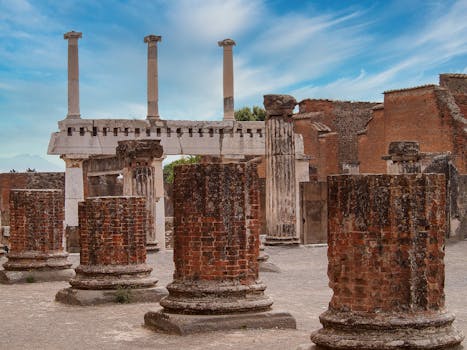
The Hook: A Whisper from the Dust
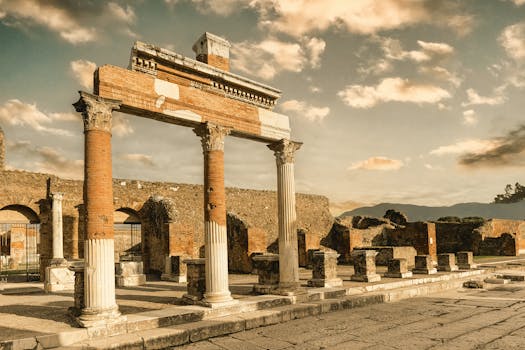
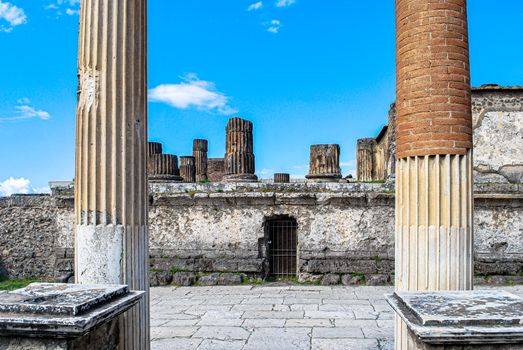
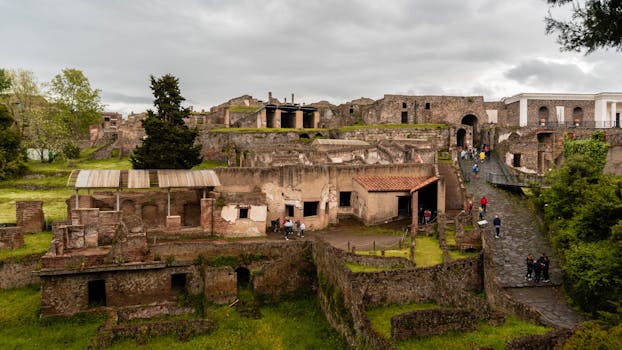
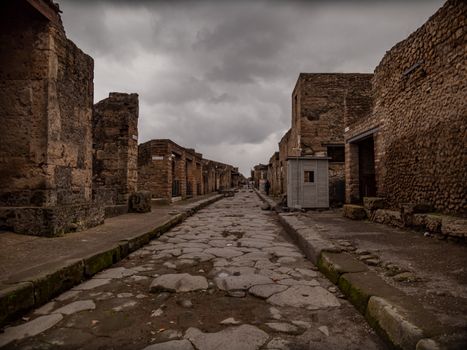
I stepped off the circumvesuviana train at Pompeii Scavi, expecting the usual dry heat and the familiar, chalky smell of sun-baked Roman concrete. But as I walked through the newly unbolted wooden doors of the House of the Vettii, the air changed. It smelled of damp earth, fresh lime mortar, and something else—the faint, metallic tang of ancient pigments revived.
For twenty years, this legendary domus was locked behind rusted scaffolding, its brilliant walls crumbling under the weight of moisture and well-meaning but disastrous past restorations. Now, standing in the central atrium, the morning light hit a wall of deep, lustrous Pompeian red. The painted cupids, miniature goldsmiths, and mythological beasts seemed so vivid they looked wet, as if the Roman master had just rinsed his brush in the impluvium.
This isn't just sightseeing; it’s a time-slip. Across the globe, a quiet revolution in archaeological preservation is happening. Using non-invasive lasers, bacteria that eat grime, and structural engineering that would make ancient builders weep with envy, teams of international experts have spent the last decade quietly bringing the world’s most iconic ruins back from the brink.
If you are tired of the same old bucket-list destinations and want to experience history before the rest of the world catches on, these are the newly restored historical sites reopening to visitors that experts are recommending right now.
---
1. House of the Vettii: Pompeii’s Sistine Chapel Reborn
For two decades, the crown jewel of Pompeii was off-limits. The House of the Vettii, owned by two wealthy freedmen (former slaves who made fortunes in the wine trade), represents the absolute peak of late-Roman interior design before Vesuvius sealed it in ash in 79 AD.
```
+------------------+----------------------------------------------------+
| Architectural Style| Fourth Style Pompeian Wall Painting |
| Key Highlight | The Priapus Fresco & The Cupid Friezes |
| Restoration Tech | Laser ablation and micro-injection lime mortars |
+------------------+----------------------------------------------------+
```
The Restoration Marvel
Previous 20th-century preservation efforts used paraffin wax and heavy varnishes to "protect" the frescoes, which tragically locked in moisture and turned the brilliant colors a muddy, opaque yellow. Conservators have painstakingly stripped away these destructive coatings using microscopic scalpels and chemical compresses.
The result is staggering. The peristyle garden has been replanted based on ancient root cavities discovered during excavation, complete with working replicas of the original bronze and marble fountains.
- The Vibe: High-society Roman decadence. The infamous fresco of Priapus weighing his massive phallus against a sack of coins at the entrance is as cheeky and colorful as the day it was painted.
- Pro-Tip: Enter the house via the rear entrance of Vicolo dei Vettii at exactly 9:00 AM. Most tour groups head straight to the Forum first, giving you about twenty minutes of absolute silence to enjoy the central garden alone.
---
2. The Hypogeum of the Colosseum: Walking the Underworld of Rome
For nearly two millennia, the labyrinth of tunnels beneath the Colosseum's wooden arena floor was a dark, damp mystery filled with rubble and wild vegetation. Now, thanks to a multi-million-dollar restoration funded by Italian luxury brand Tod’s, the Hypogeum is fully open to the public via a newly constructed, state-of-the-art footbridge.
```
+------------------+----------------------------------------------------+
| Depth Below Arena| 6 meters (20 feet) |
| Key Highlight | The elevator shafts and beast cage corridors |
| Best Time to Go | Late afternoon for dramatic light shafts |
+------------------+----------------------------------------------------+
```
The Restoration Marvel
Engineers and archaeologists spent three years cleaning the travertine and brick walls of the hypogeum using water-mist sprays and soft-bristle brushes to remove centuries of black soot, algae, and calcification. They mapped the entire two-acre subterranean network using 3D thermal imaging to ensure its structural integrity.
Walking through these narrow brick corridors, you can see the precise slots where wooden lifts (capstans) once hoisted lions, leopards, and heavily armed gladiators up through trapdoors into the roaring arena above.
- The Vibe: Claustrophobic, awe-inspiring, and deeply sobering. You can still see the Roman numerals carved into the stone headers where stagehands organized the scenery.
- Pro-Tip: Book the "Full Experience Underground" ticket at least 30 days in advance. Standard tickets do not grant access to this lower level, and walk-up tickets are practically non-existent.
---
3. The Graeco-Roman Museum of Alexandria: Egypt’s Forgotten Golden Age
While the world holds its breath for the Grand Egyptian Museum in Giza, Egypt quietly pulled off one of the most significant museum reopenings of the century in Alexandria. The Graeco-Roman Museum, closed since 2005 due to structural instability and outdated curation, has officially reopened its doors.
```
+------------------+----------------------------------------------------+
| Artifact Count | Over 20,000 rare pieces spanning 1,000 years |
| Key Highlight | The black basalt statue of the Apis Bull |
| Local Flavor | Mediterranean sea breezes and Alexandria coffee |
+------------------+----------------------------------------------------+
```
The Restoration Marvel
The historic 1892 neo-classical building has been completely gutted, seismically retrofitted, and expanded. The real triumph, however, is the conservation of thousands of delicate objects that were rotting in damp basements.
The museum masterfully tells the story of the syncretism of Egyptian, Greek, and Roman cultures. Here, you’ll find statues of Roman emperors dressed as Egyptian pharaohs and stunning Tanagra terracotta figurines that look like they were sculpted in Athens last week.
- The Vibe: Intellectual, coastal, and refreshingly uncrowded compared to Cairo.
- Pro-Tip: Don’t skip the open-air courtyard garden. It houses a beautifully reconstructed temple portal dedicated to Sobek, the crocodile god, surrounded by wild papyrus plants.
---
4. Notre-Dame de Paris: The Phoenix of the Seine
In April 2019, the world watched in horror as the spire of Notre-Dame de Paris collapsed in a plume of smoke and flame. Now, following an unprecedented global mobilization of artisans, stone masons, and master carpenters, the cathedral is preparing to reopen its heavy oak doors to the public.
```
+------------------+----------------------------------------------------+
| Spire Height | 96 meters (reconstructed exactly to Viollet-le-Duc)|
| Key Highlight | The cleaned, white-blonde interior limestone |
| Restoration Tech | Dry-ice blasting of lead soot and smoke residue |
+------------------+----------------------------------------------------+
```
The Restoration Marvel
If you visited Notre-Dame before the fire, you likely remember a dark, somber, and somewhat grimy interior. The fire, devastating as it was, forced a complete deep-cleaning of every single square inch of the cathedral’s interior stone.
Using a specialized latex paste and dry-ice blasting, conservators stripped away 800 years of candle soot, coal smoke, and dust. The result is a revelation: the interior of Notre-Dame is now a brilliant, light-filled sanctuary of pale-blonde Lutetian limestone, showcasing colorful 19th-century wall paintings that were previously invisible.
- The Vibe: A breathtaking triumph of human craftsmanship over tragedy.
- Pro-Tip: The newly designed parvis (the plaza in front of the cathedral) now features climate-adapted green spaces. Enter from the Rue du Cloître-Notre-Dame side for the best angles of the newly carved gargoyles.
---
5. Hegra (AlUla, Saudi Arabia): The Desert Kingdom’s Sealed Vaults
For centuries, the Nabataean kingdom’s southern capital of Hegra lay silent in the golden sands of the AlUla desert, known only to local Bedouins. While Petra in Jordan has long been overrun by tourists, Hegra has only recently opened to the public following a meticulously managed conservation master plan.
```
+------------------+----------------------------------------------------+
| Number of Tombs | 111 monumental rock-cut tombs |
| Key Highlight | Tomb of Lihyan, Son of Kuza (The Lonely Castle) |
| Conservation Tech| Micro-climatic monitoring and windbreak planting |
+------------------+----------------------------------------------------+
```
The Restoration Marvel
The sandstone of Hegra is incredibly delicate, highly susceptible to wind erosion and salt crystallization. Conservators have utilized cutting-edge chemical consolidants that strengthen the stone from within without changing its natural color or blocking its ability to "breathe."
Specialists have also restored the ancient water-harvesting cisterns built by the Nabataeans, proving that ancient sustainability techniques are key to preserving these sites against modern climate change.
- The Vibe: Cosmic, silent, and deeply mysterious. The monolithic tombs rise out of the flat desert floor like ancient spaceships frozen in stone.
- Pro-Tip: Book the "Hegra Vintage Land Rover Tour." You’ll be driven between the tombs in an open-top, classic 1980s Defender as the sun sets, painting the sandstone in shades of deep violet and gold.
---
6. The Step Pyramid of Djoser (Saqqara, Egypt)
Often overshadowed by her younger sisters at Giza, the Step Pyramid of Djoser is actually the world's oldest monumental stone building, designed by the legendary architect Imhotep in the 27th century BC. After a painstaking, 14-year restoration plagued by political instability and funding shortages, the interior burial chambers are finally safe for travelers to enter.
```
+------------------+----------------------------------------------------+
| Age | Approx. 4,700 years old |
| Key Highlight | The blue faience tiled wall panels |
| Interior Depth | 28-meter shaft leading to the sarcophagus |
+------------------+----------------------------------------------------+
```
The Restoration Marvel
The pyramid was on the verge of collapse after a 1992 earthquake loosened the internal stone blocks. British and Egyptian engineers used giant water bladders to support the ceiling while they injected specialized lime-based grouting into the internal fissures.
Inside, they have restored the stunning blue faience tiles—designed to mimic the reed mats of the Pharaoh's earthly palace—and cleared the path to the massive granite sarcophagus chamber.
- The Vibe: Stepping into the literal birth of monumental architecture.
- Pro-Tip: The descent into the pyramid is steep and low-ceilinged. If you are claustrophobic, skip the interior and focus on the surrounding Heb-Sed court, which has been beautifully reconstructed using original stone fragments.
---
The Budget & Logistics: Planning Your Heritage Pilgrimage
To help you turn this list into your next itinerary, here is a quick-reference guide to the logistics, costs, and best times to visit these newly restored masterpieces.
| Site & Location | Est. Entry Cost (USD) | Best Time to Visit | How to Get There (Insider Route) |
| :--- | :--- | :--- | :--- |
| House of the Vettii (Pompeii, Italy) | $24 (Standard Pompeii ticket) | October to April (avoid summer heat) | Take the Campania Express train from Naples directly to Pompeii Scavi. |
| Colosseum Hypogeum (Rome, Italy) | $35 - $60 (depending on tour) | November or February | Take Rome Metro Line B to Colosseo. Use the Stern entrance for group tours. |
| Graeco-Roman Museum (Alexandria, Egypt) | $10 | Spring or Autumn | Take the luxury Talgo train from Cairo Ramses Station to Alexandria (approx. 2 hours). |
| Notre-Dame de Paris (Paris, France) | Free (Reservations required) | Late Autumn weekdays | Take Metro Line 4 to Cité or RER B to Saint-Michel Notre-Dame. |
| Hegra (AlUla, Saudi Arabia) | $25 (Standard entry) | November to March | Fly into AlUla (ULH) and hire a private driver or rent a car for the 30-minute drive to the winter park. |
| Step Pyramid of Djoser (Saqqara, Egypt) | $15 (plus $5 pyramid interior ticket) | November to February | Hire a private taxi from Cairo (approx. 45 mins). Combine with a visit to the Imhotep Museum. |
---
The Final Word: Travel with Reverence
As I stood in the shadow of Hegra’s Tomb of Lihyan, watching the desert wind slowly sculpt the dunes, I realized something vital. These sites aren't just attractions to be checked off a list or backdrops for a quick social media post. They are fragile survivors.
The teams of conservators who spent decades of their lives working in dusty tunnels and hot sun did so to preserve a shared human story. When you visit these newly reopened wonders, take your time. Put down the camera for five minutes. Breathe in the scent of the ancient stone, listen to the wind through the columns, and appreciate the incredible artistry that brought these places back from the dead.
---