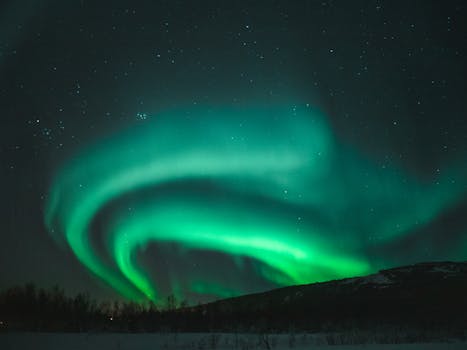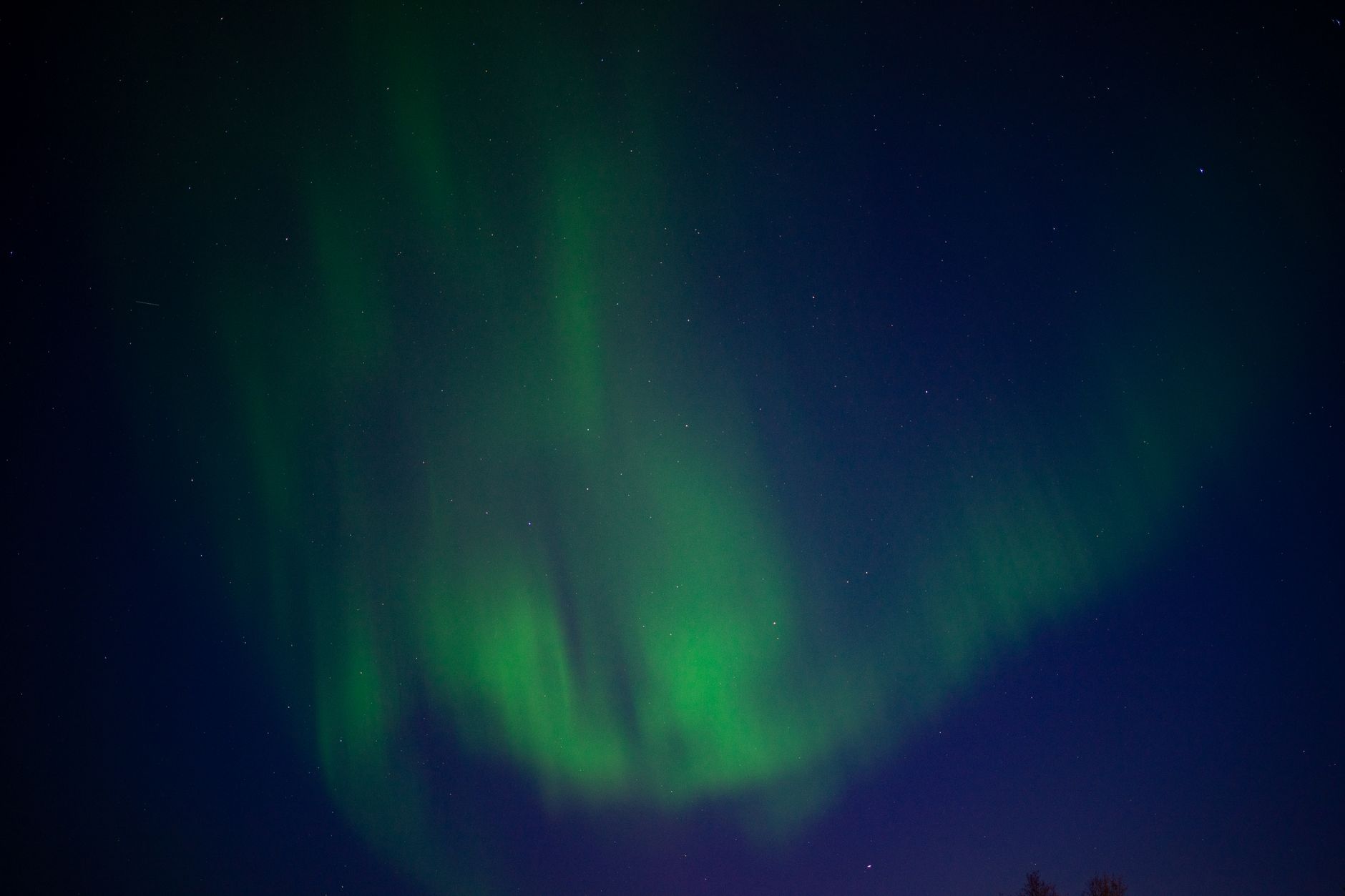
The first time I saw the Northern Lights, it was from a packed viewing platform outside Tromsø. Don't get me wrong, it was breathtaking – a shimmering green ribbon dancing across the inky sky, met by a chorus of gasps and camera clicks. But amidst the jostle for the best photo angle, the glowing phone screens, and the murmur of a dozen languages, I felt a pang of something missing. The magic was there, yes, but the intimacy wasn't. It felt… observed, rather than truly experienced.
It wasn't until a few years later, huddled around a crackling bonfire with a group of Sámi reindeer herders deep in the Finnish Lapland, that I truly understood. We were miles from the nearest town, the only light coming from the flames and a billion stars. Then, slowly, silently, the sky began to bleed green. This time, there was no crowd, no competition for space, just the quiet awe of a handful of people and the vast, untamed wilderness. The Aurora wasn't just a spectacle; it was a conversation with the cosmos, a shared secret between us and the ancient land. This was the real Northern Lights experience, the one locals cherish and rarely share with outsiders.
And that, my friends, is what this post is all about. Over years of chasing the lights, befriending locals, and often getting gloriously lost in the Arctic wilderness, I’ve compiled a list of truly special, often overlooked Northern Lights viewing spots. These aren't the places you'll find on the front page of tourist brochures. These are the hidden gems, the quiet corners, the local favorites that offer an unparalleled, authentic encounter with the Aurora Borealis.
Why Go Local? The Secret to Aurora Immersion
Before we dive into specific locations, let's talk about why these local spots are superior. It boils down to a few key factors:
- Zero Light Pollution: Tourist hubs, even small ones, generate light. The best Aurora viewing requires absolute darkness. Locals know the darkest pockets, often just a short drive from towns, where artificial light simply ceases to exist.
- Peace & Quiet: Imagine the ethereal dance of the Aurora accompanied by the gentle crunch of snow underfoot, the rustle of wind through trees, or the distant howl of a wolf. Now imagine it with camera shutters clicking incessantly and hushed (or not-so-hushed) conversations. The choice is clear. Local spots offer solitude, allowing for true immersion.
- Unique Perspectives: While iconic backdrops are lovely, locals often know spots with unique foregrounds – a lone cabin, a frozen waterfall, an ancient tree, or a specific bend in a river that creates stunning reflections. These make for truly Instagram-worthy, one-of-a-kind photos.
- Authentic Connection: When you venture beyond the tourist trails, you're more likely to interact with locals, learn about their culture, and perhaps even share a moment under the lights that transcends language barriers.
Chasing the Aurora is as much about the journey as the destination. It requires patience, flexibility, and a willingness to embrace the unknown. But trust me, the reward of finding that perfect, undisturbed spot is immeasurable.
The Art of the Chase: General Local Wisdom for Aurora Hunters
Locals don't just stumble upon these spots; they understand the rhythm of the Arctic. Here's their collective wisdom:
- Timing is Everything (and Nothing): The "best" time is generally between September and April, with peak activity often around the equinoxes. However, locals will tell you it's less about the month and more about the night. Clear skies are paramount. Check the forecast religiously.
- Embrace the Apps: While locals often rely on intuition and experience, even they use technology. Download "My Aurora Forecast" or "Aurora Alerts" for real-time KP index (geomagnetic activity) and cloud cover predictions. A KP of 3 or higher is good, but even a KP of 1 or 2 can produce incredible displays in truly dark skies.
- Patience is Your Best Friend: The Aurora is a fickle beast. Sometimes it bursts forth immediately; other times, you wait for hours in the biting cold. Bring snacks, hot drinks, and good company. Locals often make an evening of it, setting up camp, telling stories, and waiting.
- Layers, Layers, Layers: This cannot be stressed enough. Think thermal base layers, fleece mid-layers, down jackets, waterproof outer shells, warm hats, thick gloves (mittens are warmer!), and insulated boots. Frostbite is real.
- Eyes on the Horizon (and Up): The Aurora can appear anywhere in the northern sky. Scan constantly. Sometimes it starts as a faint grey "cloud" before erupting into vibrant color.
- Silence and Respect: When you find a spot, be mindful. Keep your voice down, turn off all unnecessary lights (especially headlamps, which ruin night vision), and leave no trace. This is their backyard.
Now, let's get to the good stuff – the specific, lesser-known locations that have stolen my heart and offered some of the most profound Aurora experiences of my life.
---
Norway's Coastal Secrets: Fjords, Islands & Aurora's Embrace
Norway is arguably the most famous Aurora destination, and for good reason. But beyond the crowded cruise ship ports, there are pockets of magic.
- Senja Island: The Aurora's Untamed Playground
- Where: Just southwest of Tromsø, often overshadowed by its more famous neighbor, Lofoten. Senja is Norway's second-largest island, a microcosm of Norwegian beauty with dramatic mountains plunging into fjords.
- Why it's a secret: While Lofoten draws the masses, Senja remains relatively wild. Its rugged coastline offers countless vantage points with unique foregrounds (jagged peaks, tiny fishing villages, pristine beaches). Light pollution is minimal outside of a few small settlements.
- My Experience: I rented a rustic cabin near Gryllefjord on the western side. One night, after a day of hiking, I walked down to the small, frozen bay. The sky was clear, and after an hour of waiting, the Aurora ignited directly over the Okshornan peaks, known as the "Devil's Teeth." The reflections in the still water were otherworldly. It was just me, the mountains, and the dancing lights. Pure magic. Another local tip: the area around Bergsbotn viewpoint (during off-peak hours) or the drive towards Tungeneset offers incredible dark sky access once you pull off the main road.
- Practicalities: Rent a car from Tromsø (about a 3-4 hour drive, including a ferry in winter) or fly into Bardufoss (BDU) and rent from there. Accommodation ranges from cozy guesthouses to isolated cabins. Prices are typical for Norway, but self-catering can save money. Expect to pay €100-€200/night for a decent cabin.
- The Lyngen Alps Foothills: A Majestic Backdrop
- Where: East of Tromsø, a stunning mountain range known for ski touring.
- Why it's a secret: Most tourists head west or south from Tromsø. The Lyngen Alps are less accessible without a car and offer vast, open spaces with dramatic peaks, perfect for Aurora photography. The light pollution from Tromsø is behind you if you head far enough east.
- My Experience: A local photographer I met in a café in Tromsø drew me a hand-drawn map. "Go past Lyngseidet," he instructed, "and find the small road towards Jægervatnet lake." It was a bumpy, unpaved track, but worth every jolt. The lake, framed by snow-capped peaks, provided an incredible mirror for the Aurora. The silence was profound, broken only by the occasional crack of ice on the lake.
- Practicalities: Definitely need a rental car. Drive east from Tromsø towards Lyngseidet (allow 2-3 hours). There are a few small guesthouses or cabins for rent in the area, but camping (responsibly!) is also an option in warmer months.
---
Iceland's Volcanic Veil: Beyond the Golden Circle
Iceland's dramatic landscapes make for an incredible Aurora backdrop, but the Golden Circle and Reykjavík get swamped. True local spots demand a bit more effort.
- The Snaefellsnes Peninsula's Northern Coast: Lava Fields & Solitude
- Where: The "mini-Iceland" peninsula, west of Reykjavík.
- Why it's a secret: While the southern coast (Kirkjufell) can get busy, the northern side of the peninsula is far quieter. The sprawling lava fields, black sand beaches, and remote fishing villages offer endless dark sky opportunities. You can often pull off the Ring Road (Route 54) onto smaller gravel tracks.
- My Experience: I spent a night near the small village of Grundarfjörður, but instead of joining the crowds at Kirkjufell, I drove a bit further west, past Ólafsvík, and found a turn-off towards a small lighthouse. The road was barely more than a gravel track. Parked the car, walked a short distance, and lay on a blanket over the lava rocks. The Aurora appeared, slowly at first, then intensified, painting the sky above the Atlantic. The sound of waves crashing on the volcanic shore was my only companion. It felt ancient, primal.
- Practicalities: Rent a 4x4, especially in winter. The drive from Reykjavík is 2-3 hours. There are guesthouses and hotels in the main towns (Grundarfjörður, Stykkishólmur), but consider a remote Airbnb or guesthouse on the quieter northern coast for better access to dark skies. Prices for accommodation can range from €150-€300/night.
- Eastfjords' Remote Serenity: Fjords, Farms & No Crowds
- Where: The isolated, rugged eastern coast of Iceland.
- Why it's a secret: This region is far off the typical tourist path. The winding, often unpaved roads and sparse population mean incredibly dark skies and very few other people. Each fjord offers its own unique, dramatic backdrop.
- My Experience: After a long drive, I stayed at a small guesthouse on a sheep farm outside of Seyðisfjörður. The owner, a grizzled but kind farmer, pointed me towards a small, abandoned pier a few kilometers down the road. "No lights there," he grunted. That night, the Aurora exploded, stretching from one end of the fjord to the other, reflected perfectly in the still water. It was an overwhelming display, made even more poignant by the feeling of being utterly alone in such a vast, beautiful place.
- Practicalities: A 4x4 is essential, especially in winter. The Eastfjords are a long drive from Reykjavík (6-8 hours), so plan to spend several days exploring. Accommodation is limited to small guesthouses or farm stays, often more affordable than the south coast (€100-€200/night).
---
Finland & Sweden's Wilderness Whispers: Forests, Lakes & Silent Skies
The vast, forested landscapes of Finnish and Swedish Lapland offer a completely different, yet equally magical, Aurora experience.
- Finland: Beyond Rovaniemi – The Silent Forests of Posio
- Where: Southeast of Rovaniemi, in the Finnish Lakeland region, bordering Lapland.
- Why it's a secret: Rovaniemi is Santa's official hometown and a major tourist hub. While you can see the Aurora there, light pollution is an issue. Posio, on the other hand, is known for its pristine nature, including the Riisitunturi National Park, and is far less visited by international tourists.
- My Experience: My Sámi guide (the one from my intro story!) actually took me to a spot near a frozen lake outside of Posio. We hiked a short distance through snow-laden trees, the only sound being the crunch of our boots. We built a small fire on the ice, and as the embers glowed, the sky above us came alive. The Aurora seemed to emerge from the silent depths of the forest, weaving between the dark silhouettes of the pines. It was intensely peaceful, a truly meditative experience.
- Practicalities: Rent a car from Rovaniemi (about a 1.5-hour drive). Accommodation includes small hotels, guesthouses, and cabins. Prices are generally more affordable than Norway or Iceland (€80-€150/night).
- Sweden: Abisko's Quieter Neighbors – Kiruna's Outskirts & Beyond
- Where: Near Kiruna, Sweden's northernmost city, and the famed Abisko National Park.
- Why it's a secret: Abisko is known for its "Blue Hole" (a meteorological phenomenon that often keeps skies clear), but it's also a major tourist magnet. Locals often head away from the immediate Abisko area, finding equally clear skies with far more solitude.
- My Experience: A local bus driver in Kiruna, after hearing I was looking for "quiet places," suggested I drive south on the E10, past the main tourist turn-offs, towards a small, unpaved road that leads to a place called Vittangi. "Just find a pull-off, anywhere," he said with a wink. I found a spot near a small, frozen river. The air was crisp, and the surrounding birch forest, coated in snow, glowed faintly under the moonlight. The Aurora appeared directly overhead, a vibrant green arch that pulsed and shimmered for nearly an hour. The only other sign of life was a distant snowmobile.
- Practicalities: Fly into Kiruna (KRN) and rent a car. Accommodation in Kiruna or nearby villages is available. Staying slightly outside Kiruna itself will yield better dark skies. Prices for guesthouses are around €100-€200/night.
---
Alaska's Untamed North: Far from Fairbanks' Crowds
Alaska offers a truly wild Aurora experience, and while Fairbanks is a popular base, the real magic lies further afield.
- The Denali Highway: A Wilderness Symphony
- Where: A mostly unpaved, 135-mile road connecting Paxson to Cantwell, south of Denali National Park.
- Why it's a secret: Only open seasonally (roughly May to September/October), it’s not accessible for winter Aurora viewing in its entirety. However, the approaches to it, particularly near Paxson or Cantwell, offer incredible dark skies once the snow flies. The road itself is a summer/fall gem.
- My Experience: I drove the Denali Highway in late September, just before the first heavy snows. I stayed at a rustic lodge near Paxson, a place that felt like the edge of the world. One clear night, I walked out onto the frozen lake next to the lodge. The vastness of the Alaskan wilderness stretched out around me, punctuated by distant mountain peaks. The Aurora was a spectacle of impossible scale, filling the entire sky, reflecting off the ice. It wasn't just green; there were hints of pink and purple, swirling and dancing with an intensity I hadn't witnessed before. The raw, untamed nature of Alaska made the experience profoundly humbling.
- Practicalities: This is a summer/fall option for the full highway. For winter Aurora, focus on areas accessible by paved roads near Paxson or Cantwell. A 4x4 is essential. Accommodation is very sparse, mostly small lodges or cabins. Book well in advance. Prices can be higher due to remoteness (€150-€300/night).
---
The Local's Toolkit: What to Pack, How to Act, and Capturing the Magic
Finding these spots is only half the battle. Here’s how to maximize your experience:
- Respect the Locals: These are their homes, their natural wonders. Be polite, ask for advice (but don't demand secret spots), and respect their privacy. If you see someone else at a spot, give them space.
- Minimal Light Pollution, Maximum Courtesy: When you arrive at a viewing spot, turn off your car engine and headlights as soon as safely possible. Use a red-light headlamp if you absolutely need light (it preserves night vision better). Avoid shining lights into the sky or at other people.
- Photography Tips for the Aurora:
- Tripod is a MUST: For long exposures.
- Wide-angle lens: To capture the vastness.
- Manual focus: Set to infinity.
- High ISO: Start around 800-1600.
- Wide aperture: f/2.8 or wider.
- Shutter speed: 5-20 seconds (experiment based on Aurora intensity).
- Extra batteries: Cold drains them quickly. Keep spares in an inside pocket.
- Remote shutter release: Prevents camera shake.
- Dress your camera: Protect it from condensation when bringing it indoors.
- Safety First: Inform someone of your plans, especially if venturing off-road. Carry a fully charged phone, extra food, water, and emergency supplies. Know how to change a tire. Winter driving conditions can be treacherous.
- Embrace the Journey: Sometimes the lights don't appear. Sometimes the weather turns. That's part of the adventure. Enjoy the stunning daytime landscapes, the local food, and the unique culture. The Aurora is a bonus, a spectacular gift from nature.
Conclusion: Your Aurora Adventure Awaits!
Chasing the Northern Lights is an experience that transcends mere sightseeing. It's a quest, an act of patience, and ultimately, a profound connection with the natural world. By venturing beyond the well-trodden paths and seeking out the spots locals cherish, you're not just finding a better view; you're finding a deeper, more authentic encounter with one of Earth's most spectacular phenomena.
These hidden gems offer solitude, unparalleled darkness, and a chance to truly immerse yourself in the magic. So, pack your warmest layers, rent that 4x4, and prepare to forge your own unforgettable Aurora memories. The Arctic wilderness is calling, and its secrets are waiting to be discovered.
Now it's your turn! Have you found a secret Aurora spot? Or are you planning your next adventure? Share your thoughts and questions in the comments below! And if this guide inspires your next trip, don't forget to share it with your fellow wanderlusters!
---