Beyond the Postcard: Why Learning an Ancient Trade is Your Next Travel Obsession
I remember standing in a bustling market in Marrakech, the air thick with the scent of spices and tanned leather. My eyes scanned the stalls, overflowing with intricate lamps, hand-woven rugs, and vibrant ceramics. For years, my travel philosophy had been simple: see it, photograph it, maybe buy a small token. But that day, something shifted. I watched an elderly artisan meticulously stitching a leather pouf, his fingers dancing with practiced ease, and a sudden, powerful thought hit me: I don't just want to buy this. I want to know how to make it.
That moment sparked a new chapter in my wanderlust, one focused not just on witnessing culture, but on participating in it. I realized that the most profound souvenirs aren't bought; they're made. They're the skills you acquire, the stories you forge, and the connection you build with traditions that have shaped humanity for millennia.
In an age where everything feels fast-paced and digital, there's a growing yearning for the tangible, the authentic, the slow craft. And guess what? You don't need to commit to an apprenticeship or a months-long course. Across the globe, incredible workshops offer "learn in a day" experiences, allowing travelers like us to dip our toes (and often, our whole hands!) into ancient trades.
These aren't just classes; they're portals to history, a chance to understand the ingenuity of our ancestors, and a deeply satisfying way to create something beautiful and uniquely yours. Forget mainstream. These are the ancient trades you can learn in a day before they become mainstream, giving you bragging rights and a skill that lasts a lifetime. Ready to get your hands dirty? Let's dive in!
1. The Wheel of Time: Pottery & Ceramics
There’s something primal, almost meditative, about working with clay. It's earth, water, and fire, transformed by human hands into something both functional and beautiful. My first encounter with a potter's wheel was in a cozy studio nestled in the backstreets of Kyoto, Japan, a city steeped in traditional artistry.
I walked into the workshop, a little nervous, a lot excited. The sensei, a gentle woman with flour-dusted hands, greeted me with a warm smile. The air hummed with the soft whirring of wheels and the quiet concentration of other students. My first attempts were... catastrophic. The clay wobbled, collapsed, and spun off-center more times than I could count. It felt like a battle between my clumsy hands and the centrifugal force. But with the sensei's patient guidance, her hands gently guiding mine, something magical happened. The clay began to listen. It rose, it narrowed, it opened.
By the end of the three-hour session (costing around ¥4,000-¥6,000, or roughly $30-$45 USD), I had created a wobbly, imperfect, but undeniably mine tea bowl. It wasn't perfect, but it was a testament to perseverance and the joy of creation. They glazed and fired it for me, shipping it home a few weeks later – a much more meaningful souvenir than any mass-produced trinket.
Why it's amazing:
It’s incredibly tactile, therapeutic, and offers a tangible, often beautiful, take-home piece. You learn about patience, centering, and the beauty of imperfection.
Where to find it:
* Kyoto, Japan: Many studios offer single-day experiences, often including tea ceremonies. Look for workshops in the Gion or Higashiyama districts.
* Lisbon, Portugal: Portugal has a rich ceramic tradition (think Azulejos!). Smaller studios offer wheel throwing and hand-building classes.
* Santorini, Greece: Learn to make traditional Greek pottery with stunning Aegean views.
Practical Tips:
* Wear old clothes: Clay will get everywhere.
* Embrace imperfection: Your first piece won't be gallery-worthy, and that's the beauty of it.
* Look for local masters: Often, the best experiences are with multi-generational artisans in smaller, authentic studios.
* Check firing and shipping: Most workshops will fire your piece and can arrange shipping, though it might cost extra.
Instagram-Worthy Moment:
Your hands, caked in mud, shaping a spinning lump of clay, or a proud shot of your (wobbly) finished pot. #PotteryLife #ClayTherapy #HandmadeSouvenir
2. Dyeing for History: Traditional Textile Arts
Imagine creating vibrant patterns on fabric using techniques passed down through generations. Traditional textile dyeing and printing is an explosion of color, history, and hands-on creativity. My most vivid experience was in Jaipur, India, the "Pink City," renowned for its block printing heritage.
I found myself in a vibrant, open-air workshop, the air thick with the scent of natural dyes and the rhythmic thud of wooden blocks. Our instructor, a jovial man with hands permanently stained with indigo, taught us the intricate art of Sanganeri block printing. We learned about the different wooden blocks, each a tiny piece of art, and the process of mixing natural dyes derived from plants and minerals.
The process was mesmerizing. Dipping the carved wooden block into a tray of vibrant color, aligning it just so, and pressing it firmly onto the fabric. The precision needed, the careful repetition, the thrill of seeing a pattern emerge from a blank canvas. I spent hours printing a scarf, making mistakes, laughing, and eventually, creating a piece that felt truly alive. The workshop, including all materials and a take-home scarf, cost around INR 1,500-2,500 (approx. $18-$30 USD).
Why it's amazing:
It's a deeply satisfying way to create wearable art, connect with ancient design principles, and understand the origins of fast fashion. Plus, you get a unique, handmade textile!
Where to find it:
* Jaipur, India: The epicenter of block printing. Many workshops offer full-day courses.
* Ubud, Bali, Indonesia: Learn batik (wax-resist dyeing) or natural indigo dyeing amidst lush rice paddies.
* Fez, Morocco: Explore traditional leather dyeing or carpet weaving techniques.
Practical Tips:
* Ask about dye sources: Seek out workshops using natural, eco-friendly dyes.
* Wear clothes you don't mind staining: Seriously, dyes are stubborn!
* Bring a plain item: Some workshops allow you to bring your own t-shirt or tote bag to print on.
* Support ethical practices: Ensure the workshop fairly compensates its artisans and uses sustainable methods.
Instagram-Worthy Moment:
Hands stained with indigo, a close-up of intricate block patterns, or a vibrant scarf drying in the sun. #BlockPrinting #NaturalDyes #TextileArt #JaipurCrafts
3. Forged in Fire: Basic Blacksmithing
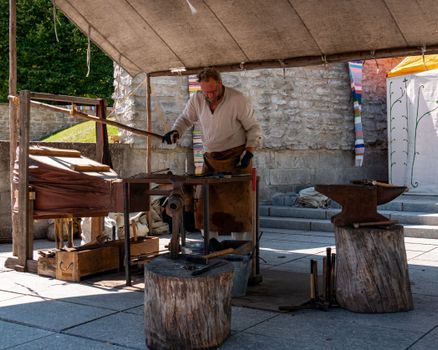
Okay, this one might sound intimidating, but hear me out! Blacksmithing, the ancient art of shaping metal with fire and hammer, is surprisingly accessible for beginners in a day-long workshop. It's powerful, loud, and incredibly rewarding.
My own foray into the forge happened at a historical village in Colonial Williamsburg, Virginia, USA. They offer various immersive experiences, and I opted for a half-day "Introduction to the Forge." Walking into the blacksmith's shop, the heat was immediate, the clang of hammer on anvil rhythmic, and the smell of coal smoke intoxicating.
Under the watchful eye of a master blacksmith, I learned how to handle a hammer, manage the heat of the forge, and the basic techniques of drawing out, upsetting, and bending metal. My project? A simple, but incredibly satisfying, decorative hook. Watching the dull metal glow cherry-red, feeling the vibrations of the hammer through my arms, and seeing the steel slowly yield to my will was an exhilarating experience. It wasn't just physical; it was deeply meditative, a dance between force and precision. The workshop cost approximately $150-$200 USD for a 4-hour session.
Why it's amazing:
It challenges you physically and mentally, connects you to an ancient trade that literally built civilizations, and leaves you with a truly unique, handmade metal object.
Where to find it:
* Colonial Williamsburg, USA: Excellent historical context and experienced instructors.
* Various craft schools (UK, Germany, Scandinavia): Many offer introductory "forge experience" days. Search for "blacksmithing taster session."
* Rural artisan workshops: Often found in historical districts or countryside studios.
Practical Tips:
* Listen to your instructor: Safety is paramount when working with fire and hot metal.
* Wear sturdy, natural fiber clothing: No synthetics that can melt! Closed-toe leather shoes are a must.
* Hydrate: It gets hot by the forge!
* Embrace the noise: It's part of the experience.
Instagram-Worthy Moment:
Sparks flying as you strike hot metal, a close-up of glowing steel, or a proud (and sweaty) shot holding your newly forged creation. #Blacksmithing #ForgeLife #HandForaged #AncientCraft
4. Crafting with Heritage: Leatherworking
The scent of leather, the feel of its supple strength, the satisfaction of creating something both beautiful and functional – leatherworking is an ancient craft with enduring appeal. From Roman sandals to medieval armor, leather has been indispensable. My journey into this craft began in Florence, Italy, a city synonymous with exquisite leather goods.
I stumbled upon a small, family-run workshop near the Ponte Vecchio, offering a "Make Your Own Leather Wallet" class. Inside, the workshop was a sensory delight: stacks of various leathers, rows of gleaming tools, and the rich, earthy aroma of tanned hides. Our instructor, a charming Florentine named Marco, spoke passionately about the history of Florentine leather and the importance of quality materials.
Over four hours (costing around €80-€120, or $90-$130 USD), we learned to cut, punch, stamp, and hand-stitch a simple cardholder or small wallet. The precision required for each cut, the rhythmic motion of stitching, the satisfying 'thwack' of a hammer setting a rivet – every step was a lesson in mindful creation. I left with a beautifully crafted cardholder, imperfect in its handmade charm, but utterly unique and a constant reminder of my time in Florence.
Why it's amazing:
It's a practical skill that results in a durable, stylish item. You learn about different types of leather, tools, and the dedication required for quality craftsmanship.
Where to find it:
* Florence, Italy: Many workshops, from large schools to small artisan studios, offer introductory classes.
* Marrakech, Morocco: Explore traditional tanneries and learn basic leather embossing or bag making.
* Mexico (Guanajuato, Oaxaca): Discover vibrant, hand-tooled leather traditions.
Practical Tips:
* Ask about the leather: Opt for vegetable-tanned leather for a more traditional and eco-friendly experience.
* Start small: A wallet, keyring, or bracelet is perfect for a day class.
* Patience is key: Leatherworking requires precision and a steady hand.
* Learn a few Italian phrases: Especially in Florence, it adds to the charm!
Instagram-Worthy Moment:
A flat lay of beautiful leather tools, hands meticulously stitching, or a close-up of your finished, personalized leather item. #LeatherCraft #FlorentineLeather #HandmadeWallet #ArtisanSkills
5. Strokes of Serenity: Calligraphy
In a world of hurried texts and emails, the deliberate, artistic strokes of calligraphy offer a refreshing pause. This ancient art form, whether it's Japanese Shodo, Arabic script, or Western copperplate, is a powerful blend of discipline, meditation, and aesthetic beauty. My introduction to this world of ink and brush was in a serene studio in Tokyo, Japan.
The workshop was a haven of quiet concentration, tucked away from the city's neon pulse. Our sensei, a woman with an almost ethereal calm, introduced us to the tools: the fude (brush), sumi (ink), and washi (paper). She explained the philosophy behind Shodo – not just writing characters, but expressing oneself and finding harmony.
For three hours (costing around ¥5,000-¥8,000, or $35-$55 USD), I practiced basic strokes, learning to control the pressure and flow of the brush, to breathe with each character, and to find beauty in simplicity. It was challenging, requiring immense focus, but also incredibly calming. Each stroke felt like a tiny act of meditation. I left with my first attempts at "peace" and "beauty" in Kanji, feeling a deep sense of tranquility and a newfound appreciation for the written word.
Why it's amazing:
It's deeply meditative, connects you to rich cultural histories, and hones your focus and fine motor skills. Plus, you get beautiful, frame-worthy art.
Where to find it:
* Tokyo or Kyoto, Japan: Many cultural centers and temples offer Shodo classes for tourists.
* Istanbul, Turkey: Learn the intricate beauty of Ottoman calligraphy.
* Beijing or Shanghai, China: Discover the origins of Chinese brush calligraphy.
* London or New York: Specialized art schools often offer introductory Western calligraphy workshops.
Practical Tips:
* Embrace the meditative aspect: It's more about the process than perfection.
* Focus on breath: It helps with steadying your hand.
* Learn a few basic characters: Start simple and build confidence.
* Ask about the history: Understanding the cultural context enriches the experience.
Instagram-Worthy Moment:
A close-up of elegant brushstrokes on paper, your focused expression while writing, or a beautiful finished piece of calligraphy. #Calligraphy #Shodo #MindfulArt #CulturalImmersion
6. The Daily Bread: Artisan Baking
Before industrial ovens and mass production, bread was the staff of life, a craft passed down through generations. Learning to bake traditional artisan bread in a day is not just about food; it's about connecting with history, community, and the simple magic of fermentation. My most memorable baking experience was in a rustic kitchen in the heart of rural Provence, France.
I joined a small group for a "French Boulangerie Day," hosted by a charming local baker named Jean-Luc. His kitchen, filled with the comforting aroma of yeast and flour, felt like stepping back in time. Over six hours (costing around €100-€150, or $110-$165 USD), we learned the secrets of making a perfect baguette, a crusty pain de campagne, and even a sweet brioche.
From activating the sourdough starter (a living, breathing entity!), to the precise kneading techniques, the art of folding, and the critical role of proofing, every step was demystified. The highlight, of course, was pulling our golden, fragrant loaves from the wood-fired oven. Breaking open a warm baguette, its crust crackling, its interior soft and airy, and slathering it with local butter and jam – that's a memory you can taste. And yes, I took home several loaves, along with a piece of Jean-Luc's sourdough starter!
Why it's amazing:
It's a sensory experience – the smell, the feel of dough, the taste of fresh bread. It's a practical skill you can use at home, and it connects you to culinary traditions.
Where to find it:
* Rural France (Provence, Normandy): Many guesthouses and culinary schools offer bread-making workshops.
* Tuscany, Italy: Learn to bake traditional focaccia, ciabatta, or regional sourdoughs.
* San Francisco, USA: Famous for its sourdough, many bakeries offer classes.
* Iceland: Experience baking rye bread in geothermal ground ovens.
Practical Tips:
* Don't be afraid to get messy: Flour is your friend!
* Ask about local ingredients: What flours, yeasts, or even water contribute to the unique flavor.
* Bring an apron: Or wear clothes that can handle some flour.
* Take notes: Especially on timings and temperatures if you want to replicate it at home.
Instagram-Worthy Moment:
Flour-dusted hands kneading dough, golden loaves fresh from the oven, or a beautiful bread spread with local cheeses and wine. #ArtisanBread #SourdoughLife #BakingClass #TasteOfTravel
Your Next Adventure: Crafting a New Story
Stepping away from the well-trodden tourist paths and into a hands-on workshop is more than just a class; it's an immersion. It's a chance to slow down, to engage your senses, and to create a tangible connection with the places you visit. These ancient trades offer a window into the past, a challenge for the present, and a skill for the future.
Imagine returning home with not just photos, but a handmade ceramic bowl, a block-printed scarf, a forged hook, a leather wallet, a piece of calligraphy, or the knowledge to bake your own artisan bread. These aren't just souvenirs; they're stories. They're proof that you didn't just see the world, you engaged with it, you created with it, and you brought a piece of its ancient soul back with you.
So, on your next trip, dare to be different. Seek out these incredible experiences. Support local artisans. Learn a skill that transcends time. You might just discover a new passion, a hidden talent, or a deeper understanding of the human spirit.
Which ancient trade will you master first? Share your dream craft workshop in the comments below! And don't forget to tag #TripsoraCrafts and #AncientTrades in your social media posts when you embark on your own hands-on adventure!
---