1. The Hook: More Than Just a Viewpoint
I stepped off the low-floor shuttle at Zion’s Temple of Sinawava, and the first thing that hit me wasn’t the scale of the red rock cathedrals—it was the smell of damp sage and the rhythmic, crunching sound of my boots (and my companion’s wheels) on perfectly leveled, fine-grain gravel. There was no "accessible detour" signs pointing us toward a secondary, lesser experience. Instead, the Pa’rus Trail unfolded like a red-carpet invitation into the heart of the canyon.
For years, "accessible" in the context of National Parks meant a paved parking lot and a single, fenced-in overlook. But a new guard of rangers and engineers is changing the game. We are entering the era of "Universal Design," where the most stunning vistas aren't just reserved for those who can scramble up a Class 3 rock face. I’ve spent the last six months scouting the parks that experts are calling the new gold standard—places where accessibility isn't a checkbox; it’s the blueprint.
2. Acadia National Park: The Carriage Road Revolution
While most parks struggle to retrofit old trails, Acadia sits on a goldmine of pre-designed accessibility. John D. Rockefeller Jr. wasn’t thinking about the ADA in 1913, but his 45-mile network of Carriage Roads is a masterclass in inclusive engineering.
These aren't just "paths." They are wide, broken-stone roads with sophisticated drainage systems that keep the surface firm and level even after a Maine downpour.
* The Insider Secret: Head to the Eagle Lake loop. While the crowds fight for parking at Cadillac Mountain, the Carriage Roads offer a 6-mile circuit with views of glacial waters that feel entirely private.
* Why Experts Love It: The "coping stones"—large granite blocks lining the roads—serve as a natural safety barrier for wheelchair users and a tactile guide for those with visual impairments.
3. Grand Canyon: The Rim Trail Mastery
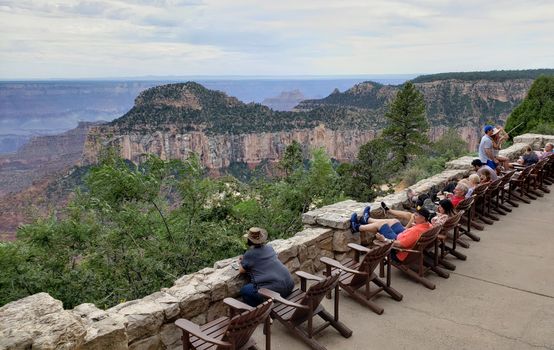
The Grand Canyon is often the "final boss" of travel bucket lists, and for good reason. But the South Rim has moved far beyond the Mather Point overlook. The Rim Trail offers nearly 13 miles of mostly paved, level walking that hugs the canyon’s edge.
Expert recommenders are currently pointing travelers toward the Hermit Road section. During the peak season (March–November), this road is closed to private vehicles, meaning the only things on the asphalt are the ultra-accessible park shuttles and you.
* Pro-Tip: Take the "Blue Route" shuttle to the Bright Angel Trailhead. There is a hidden, ramped viewing platform just behind the lodge that offers a 270-degree view of the inner canyon without the shoulder-to-shoulder crowds of the main visitor center.
4. Zion National Park: The Shuttle & The Pa’rus
Zion’s canyon floor is narrow, which usually spells disaster for accessibility. However, their shuttle system is the most robust in the NPS. Every bus is equipped with high-capacity ramps and dedicated space, ensuring that "waiting for the next one" isn't a constant frustration.
The Pa’rus Trail is the star here. It’s a 3.5-mile (one-way) paved trail that meanders alongside the Virgin River.
* Authentic Detail: Look for the Court of the Patriarchs stop. Most people just look up, but if you follow the accessible path toward the river, you’ll find the "sandstone ripples"—geological formations that are reachable and tactile, allowing travelers to literally feel the history of the Jurassic period.
5. Yellowstone: Geothermal Wonders on the Boardwalk
Yellowstone is a volatile landscape of boiling acid and explosive steam, which, ironically, makes it one of the most accessible parks in the world. Why? Because you have to stay on the boardwalks to survive.
The Old Faithful area and the Upper Geyser Basin feature miles of high-quality, level boardwalks. But experts are currently raving about the Grand Prismatic Overlook via the Fairy Falls Trail. Recent upgrades have made the initial stretch much more manageable for all-terrain chairs.
* Pro-Tip: Visit the Norris Geyser Basin at 7:30 AM. The steam rising from the "Porcelain Basin" creates a sensory experience—the hiss of the vents, the smell of sulfur, and the warmth of the mist—that is unparalleled before the midday wind kicks up.
6. Rocky Mountain National Park: The Sprague Lake Model
In many parks, the "accessible trail" is a short loop around a parking lot. Not at Rocky Mountain. Sprague Lake is a 0.9-mile loop that is completely flat and offers some of the most iconic "purple mountain majesty" views in the lower 48.
- Insider Language: This isn't just "paved." It’s a "hardened surface" designed to blend into the environment while maintaining a 5% or less grade.
- Pro-Tip: There is an accessible fishing pier on the western edge of the lake. Even if you don't fish, it’s the best spot for moose sightings at dusk. The water is so clear here you can see the brook trout darting between the submerged granite boulders.
7. The Logistics: Making It Happen
Traveling to these locations requires more than just a GPS. You need the right "keys" to the kingdom.
The Access Pass:
If you have a permanent disability, the Interagency Access Pass is your golden ticket. It’s free for U.S. citizens and provides lifetime entry to all national parks, plus 50% off some amenity fees (like camping).
Quick Facts Table:
| National Park | Best Time to Visit | Estimated Daily Cost ($) | Top Accessible Feature |
| :--- | :--- | :--- | :--- |
| Acadia | Sept - Oct | $150 - $250 | Carriage Road System |
| Grand Canyon | April - May | $200 - $350 | Hermit Road Shuttle |
| Zion | May or September | $180 - $300 | Pa’rus River Trail |
| Yellowstone | June or September | $250 - $400 | Geothermal Boardwalks |
| Rocky Mountain | July - August | $160 - $280 | Sprague Lake Loop |
How to get there:
* Acadia: Fly into Bangor (BGR), rent an accessible van; it's a 1-hour drive.
* Zion: Fly into Las Vegas (LAS) and drive 2.5 hours. The St. George (SGU) airport is closer but has fewer rental options.
* Grand Canyon: The Grand Canyon Railway from Williams, AZ, is fully accessible and adds a layer of vintage charm to the arrival.
8. The Final Word: Demand More
When we talk about "accessibility beyond requirements," we are talking about dignity. It’s the difference between seeing the wilderness through a window and feeling the grit of the trail under your wheels. The experts are recommending these parks because they’ve stopped asking "How do we comply?" and started asking "How do we include?"
Next time you plan a trip, don't just look for the wheelchair icon on a map. Look for the parks that have invested in the experience. The wild is waiting, and it’s finally open to everyone.
---