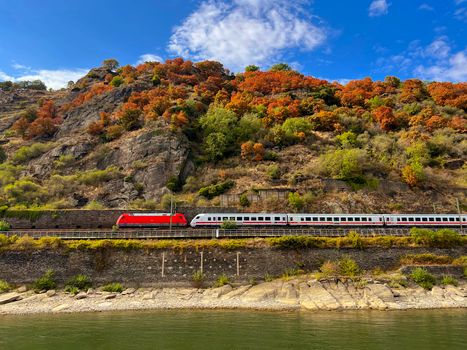
1. The Hook: The Romance of the 07:15 from Gare de Lyon
I stepped off the platform at Paris Gare de Lyon, the morning air already carrying the faint, warm scent of toasted brioche and hot espresso from the station bistros. Ahead of me sat the sleek, double-decker TGV Duplex—a silver-and-blue streak of engineering waiting to whisk me to Munich at 320 km/h. There was no security line to strip off my boots, no liquid restrictions, and no baggage drop queue. Just the satisfying beep of my digital ticket, the soft hiss of the pneumatic doors, and the gentle vibration of the train pulling out of the station exactly on time.
By noon, the French flatlands had morphed into the rolling Bavarian hills, and I was sipping a cold, draft Franziskaner Weissbier in the dining car while watching the world slide past my window.
July 2026 is the absolute zenith of European rail travel. With massive infrastructure upgrades completed, new cross-border sleeper routes active, and a unified digital ticketing landscape, there has never been a better—or more seamless—time to ditch the budget airlines and embrace the rails. But doing it in peak summer requires a tactical, highly strategic approach. Here is how you conquer Europe by train this July.
---
2. The 2026 Rail Landscape: What’s New and What to Expect
The European rail network has undergone a massive evolution leading into 2026. If you are planning a trip based on pre-pandemic blogs, your information is obsolete.
The Rise of Liberalization and Competition
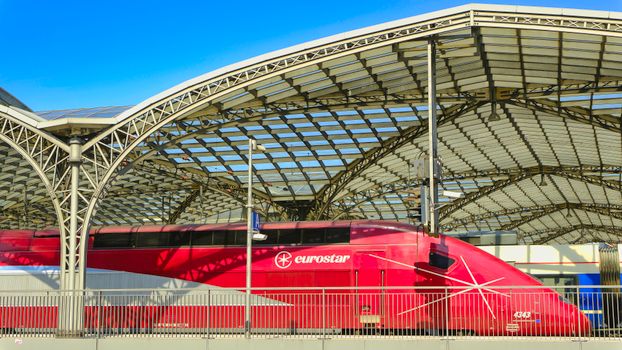
In 2026, competition on high-speed lines is fierce, which is a massive win for your wallet. In France, Italy, and Spain, multiple operators now compete on the same tracks. In Spain, you have Renfe, Avlo, Ouigo, and Iryo. In Italy, Trenitalia’s ultra-premium Frecciarossa 1000 competes directly with the private Italo fleet. This means ticket prices on major corridors have plummeted, and service quality has soared.
Unified Digital Ticketing
Gone are the days of printing paper tickets at obscure station kiosks. In 2026, the EU’s Single European Railway Area (SERA) initiatives mean that cross-border bookings are more integrated than ever. You can now book multi-country journeys on single platforms like Trainline, Omio, or directly via national operators like Deutsche Bahn (DB) and ÖBB without worrying about split-ticket failures.
---
3. The Ultimate July 2026 Route: The Cool-Climate Masterclass
July in Europe can be sweltering. To avoid the oppressive heat dome of Southern Europe while still experiencing iconic landscapes, culture, and gastronomy, we have designed the Trans-European Cool-Climate Loop. This 14-day itinerary keeps you in air-conditioned comfort, climbing through alpine passes and cultural capitals.
```
[London/Paris] ──(TGV)──> [Munich] ──(EuroCity)──> [Innsbruck] ──(Brenner Pass)──> [Venice] ──(Nightjet)──> [Vienna]
```
Stop 1: Paris to Munich (The High-Speed Sprint)
* The Train: TGV InOui or ICE 4
* Travel Time: 5 hours 30 minutes
* The Experience: Watch the champagne region of France dissolve into the dense forests of southwestern Germany. Grab a seat on the upper deck of the TGV for the best views.
Stop 2: Munich to Innsbruck (The Alpine Ascent)
* The Train: EuroCity (EC)
* Travel Time: 1 hour 45 minutes
* The Experience: A short, dramatic run that climbs into the heart of the Austrian Tyrol. The mountains rise sharply on either side of the track as you follow the Inn River.
Stop 3: Innsbruck to Venice via the Brenner Pass (The Scenic Classic)
* The Train: ÖBB EuroCity
* Travel Time: 5 hours
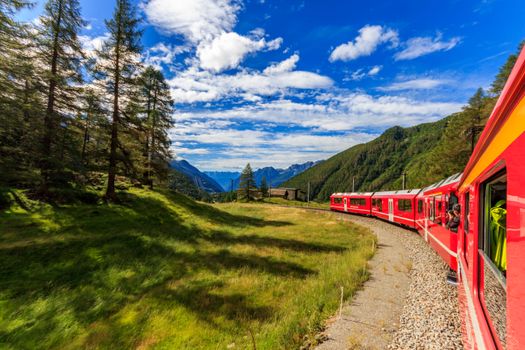
* The Experience: One of the most beautiful train journeys in the world. You will cross the spectacular Brenner Viaduct, winding down through the Italian-speaking South Tyrol, past vineyards and castles, before terminating right on the Grand Canal at Venice Santa Lucia.
Stop 4: Venice to Vienna (The Nightjet Sleepover)
* The Train: ÖBB Nightjet (New Generation)
* Travel Time: 9 hours (Overnight)
* The Experience: Fall asleep in Venice and wake up in Vienna. The new-generation Nightjet pods feature private mini-cabins with wireless charging, ambient lighting, and secure luggage lockers.
---
4. The Reservation Minefield (And How to Bypass It)
The biggest mistake travelers make when using a Eurail Pass in July is assuming they can just hop on any train. During the peak summer rush, this assumption will leave you stranded on a platform or facing a hefty fine.
```
+-------------------------------------------------------------------------+
| SEAT RESERVATION CHEAT SHEET |
+--------------------------+---------------------+------------------------+
| Train Type | Reservation Status | Booking Window |
+--------------------------+---------------------+------------------------+
| Eurostar (Cross-Channel) | Mandatory (High $) | 180 Days in Advance |
| French TGV | Mandatory ($10-$20) | 90 Days in Advance |
| Italian Frecciarossa | Mandatory ($15) | 90 Days in Advance |
| German ICE | Optional ($5) | Highly Recommended |
| Austrian Railjet | Optional ($4) | Highly Recommended |
| Regional Trains (R, RE) | Never Required | Just Hop On |
+-------------------------------------------------------------------------+
```
Pro-Tip: The "Double-Booking" Hack for Germany and Austria
In Germany (DB) and Austria (ÖBB), seat reservations are optional on ICE and Railjet trains. However, in July, these trains are packed.
* The Hack: Do not book your seat reservations through the Eurail portal (which charges a markup). Book them directly on the ÖBB website (oebb.at). Select "Seat only (no ticket)" under the search options. It costs just €3 to €4 per seat, and you can view the exact carriage layout to pick a window seat away from the family zones.
---
5. Night Trains: The Modern Sleeper Renaissance
Night trains are no longer the sketchy, drafty relics of the 1980s. In 2026, the sleeper train is a luxury travel hack that saves you a night’s hotel cost while moving you across the continent.
The ÖBB Nightjet Experience
Austria’s national railway (ÖBB) is the undisputed king of night travel. Their New Generation Nightjet trains are rolling hotels.
* Couchette vs. Sleeper: If you value privacy, book the Sleeper Cabin (Double or Single), which comes with a private en-suite shower, toilet, and a small welcome bottle of Prosecco. If you are on a budget, the Mini Cabins (capsule-hotel style pods for solo travelers) offer complete privacy and a lockable locker for your carry-on luggage.
* The Breakfast: Every sleeper cabin ticket includes a customizable hot breakfast. You fill out a card the night before, selecting your options (semmel rolls, alpine cheese, jam, and fresh coffee), which is delivered directly to your compartment 30 minutes before arrival.
Pro-Tip: The 180-Day Rule
Sleeper cabins sell out months in advance for July travel. Set a calendar reminder: ticket sales for most summer night trains open 180 days in advance. If you try to book a private sleeper compartment in June for a July trip, you will be out of luck.
---
6. Beat the July Heat & Crowds: Station-Level Survival
Navigating European train stations in July requires strategy. These are busy, historic hubs that can get hot and chaotic.
- The 7 AM Departure Golden Rule: Book your long-distance trains for departures before 08:00 AM. Not only are stations cooler and less crowded, but early morning trains are statistically far less likely to suffer cascading delays from network congestion.
- Find the Cold Water: European train stations rarely have obvious water fountains. At Firenze Santa Maria Novella in Florence, bypass the expensive platform kiosks and head to the hidden drinking water fountain located near the entrance of Platform 16—it is ice-cold and completely free.
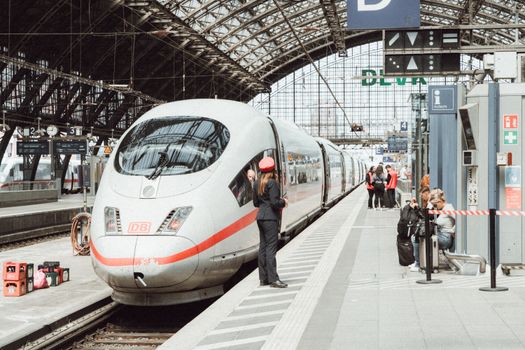
- The Luggage Strategy: Do not travel with a massive, hard-shell suitcase. Train vestibules have limited space, and lifting a 25kg suitcase onto the overhead rack of an ICE train is a recipe for a pulled muscle. Use a 45L travel backpack (like the Osprey Farpoint) or a compact, premium rolling duffel that can slide easily under your seat.
---
7. The Budget & Logistics Blueprint
Is a Eurail Pass actually worth it in 2026? Or should you book point-to-point tickets?
The Math: Eurail vs. Point-to-Point
If you have a highly structured itinerary with fixed dates and you book 3 months in advance, point-to-point tickets are almost always cheaper due to low-cost operators like Iryo or Ouigo.
However, if you want the freedom to change your plans on a whim, or if you are booking last-minute, the Eurail Global Pass (Continuous or Flexi) is unbeatable.
Quick Facts & Estimated Costs (July 2026)
- Estimated Daily Rail Budget: $45 - $85 USD (including seat reservations)
- Eurail Global Pass (5 days within 1 month): ~$310 USD (Adult, Standard Class)
- Best Time to Book July Travel: Mid-March to Early April 2026
- Essential Apps to Download:
- DB Navigator (The absolute best app for real-time schedule tracking across all of Europe, not just Germany).
- Rail Planner (The official Eurail app for logging journeys).
- SBB Mobile (Essential for Swiss train precision and platform numbers).
---
FEATURED_IMAGE_PROMPT:
A wide-angle, cinematic shot of a sleek, modern red Frecciarossa 1000 high-speed train curving gracefully along a stone viaduct in the Swiss-Italian Alps. The scene is bathed in the warm, golden hour glow of a July late afternoon. In the background, majestic snow-capped mountain peaks rise against a clear blue sky, while lush green pine forests and a small alpine village with stone-roofed houses sit nestled in the valley below. The camera angle is low and dynamic, capturing the motion blur of the train contrasting with the sharp, crisp details of the mountain landscape. 16:9 aspect ratio, photorealistic, shot on 35mm lens.
---
TAGS:
#TrainTravel #EuropeByTrain #Eurail2026 #SlowTravel #EcoTravel #EuropeItinerary #SummerInEurope #SleeperTrains #TravelHacks