Travelling to Siem Reap on a budget is entirely achievable, with frugal travellers comfortably managing on £20 to £35 per day for accommodation, meals, and local transport, while mid-range travellers can expect to spend £45 to £75 per day. The single largest expense you will encounter is the mandatory admission pass for the Angkor Archaeological Park, meaning that strategic planning around your temple sightseeing days is the most effective way to keep your total trip expenses low.
| Trip Factor | Details |
|---|---|
| Backpacker Daily Cost | £20 to £35 approx. per day (excluding Angkor pass) |
| Mid-Range Daily Cost | £45 to £75 approx. per day (excluding Angkor pass) |
| Angkor 1-Day Pass | Around £29 approx. ($37 USD) |
| Best Budget Season | May to October (wet season offers lower room rates) |
| Ideal Trip Duration | 3 to 5 days |
| Primary Currencies | Cambodian Riel (KHR) and US Dollar (USD) |
Realistic Daily Costs for Siem Reap on a Budget
To plan your expenditure accurately, it helps to understand what different comfort tiers look like on the ground. Prices in Cambodia are generally quoted in US Dollars, but local change is returned in Cambodian Riel. Please note that all currency figures below are approximate conversions to British Pounds; you should always check current exchange rates before your trip.
| Expense Category | Budget Tier | Mid-Range Tier | Comfortable Tier |
|---|---|---|---|
| Accommodation (per night) | £6 to £14 (dorm or basic fan room) | £18 to £38 (private room with air conditioning) | £45 to £90 (boutique hotel with pool) |
| Food and Drink (per day) | £6 to £10 (local stalls and markets) | £12 to £22 (casual cafes and Khmer diners) | £25 to £45 (tourist restaurants and drinks) |
| Town Transport (per day) | £2 to £5 (bicycle or ride-hailing apps) | £6 to £12 (on-demand remorks/tuk-tuks) | £15 to £25 (dedicated private tuk-tuk) |
| Daily Total (excluding Angkor pass) | £14 to £29 | £36 to £72 | £85 to £160 |
Pro tip: Always carry crisp, clean banknotes. Vendors and banks throughout Cambodia routinely reject US dollar bills with small tears, heavy creases, or ink marks, whereas slightly worn Cambodian Riel notes are universally accepted.
Accommodation: Where to Stay on a Low Budget
Siem Reap has an oversupply of tourist accommodation, which keeps prices competitive year-round. You do not need to settle for poorly reviewed properties to save money.
Wat Bo and Sala Kamreuk
Located on the eastern side of the Siem Reap River, the Wat Bo and Sala Kamreuk neighbourhoods offer a relaxed atmosphere with leafy side streets. These areas feature dozens of clean, family-run guesthouses and boutique hostels. A private room with an en-suite bathroom and air conditioning often costs between £15 and £22 per night. The area sits within a 10-minute walk of the town centre, saving you transport fares in the evenings.
Taphul Village and the Old French Quarter
Taphul Village sits just west of Sivutha Boulevard. It is renowned for high-density backpacker hostels, offering shared dormitory beds from around £5 to £8 per night, often including access to a swimming pool. The Old French Quarter features historic architecture and sits slightly closer to the river, with quiet guesthouses starting around £18 per night.
Eating Well for Less: Street Stalls and Markets
Dining in restaurants positioned directly around Pub Street or the Night Market can rapidly drain your daily funds. Walking just two streets away from primary tourist hubs brings prices down by half or more.
For breakfast, seek out local morning stalls serving bai sach chrouk (grilled pork sliced thin over broken rice, served with pickled cucumbers and a clear broth) for roughly £1 to £1.50. Another staple is kuy teav, a fragrant pork or beef noodle soup commonly eaten before midday.
For lunch and dinner, open-air eateries around Phsar Chas (the Old Market) and the riverside serve Khmer classics such as fish amok (a mild coconut curry steamed in banana leaves) and beef lok lak (stir-fried marinated beef served with a lime-and-black-pepper dipping sauce) for £2 to £3.50. Fresh fruit smoothies made from mango, dragon fruit, or passion fruit typically cost between £0.80 and £1.20 across town.
Managing the Cost of the Angkor Temples
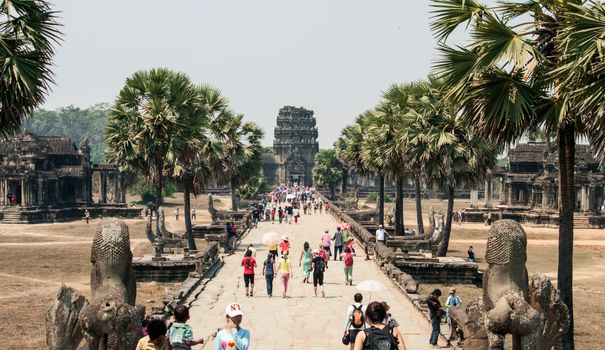
The Angkor Archaeological Park constitutes the bulk of sightseeing costs in the province. Entry passes issued by Angkor Enterprise are fixed-price: a 1-day pass costs approximately £29 ($37 USD), a 3-day pass costs around £49 ($62 USD), and a 7-day pass costs roughly £57 ($72 USD). You can purchase passes online through the official portal or in person at the Angkor Ticket Centre on the way to the park.
Maximising Your Pass
The 3-day pass offers the best overall balance of value and pacing. It allows three individual days of entry spread across a 10-day validity window. This schedule lets you rest between intense days of walking in humid conditions, preventing burnout.
If you purchase a 1-day pass at the official ticket counter after 4:45 pm, the ticket is valid for entry that same evening to watch the sunset from Phnom Bakheng, as well as the entire following day from dawn until dusk. This small timing trick gives you an extra evening without buying an additional ticket.
Temple Transport Costs
Touring the standard circuits requires vehicle transport due to the immense scale of the complex. The Small Circuit covers Angkor Wat, Ta Prohm, and the walled city of Angkor Thom (including the Bayon). Hiring a remork (Cambodian tuk-tuk) for this route costs approximately £12 to £16 for the day. The Grand Circuit, which extends further north to temples like Preah Khan, Neak Pean, and East Mebon, generally costs £16 to £20 for the day. Splitting a tuk-tuk with fellow travellers cuts this expense considerably.
Pro tip: Download the PassApp or Grab mobile applications upon arrival. Using app-based transport within central Siem Reap prevents overcharging and avoids fare negotiations, with short inner-town rides starting at roughly £0.80 to £1.20.
Free and Low-Cost Activities in Siem Reap
When you are taking a break from the main temple circuits, Siem Reap offers several cultural sights that cost little to nothing to explore:
- Wat Preah Prom Rath: A historic, active monastery located alongside the Siem Reap River, featuring colourful modern murals depicting Buddhist lore and manicured courtyards. Entry is free, though respectful dress covering shoulders and knees is mandatory.
- The Royal Independence Gardens: A public green space between the Raffles Grand Hotel d'Angkor and the river. It is a pleasant area for an afternoon stroll beneath towering trees populated by a large fruit bat colony.
- Phsar Leu Thom Thmey: Siem Reap's primary local trading market along National Road 6. Unlike tourist-centric markets, this venue provides an authentic window into daily commerce, selling local produce, spices, and clothing at local prices.
- Lotus Farm Visits: The agricultural flatlands toward the Tonle Sap lake feature small-scale lotus fields where you can sit in open-air wooden pavilions for the modest price of a cold drink.
What is Worth Paying Extra For?
Saving money should not mean missing out on experiences that make the destination unique. Spending a little extra on specific activities often delivers immense value:
Banteay Srei and the Remote Temples
Banteay Srei is situated roughly 30 kilometres north of the primary Angkor complex. Built predominantly from red sandstone, it contains some of the most intricate stone carvings found anywhere in Southeast Asia. Adding Banteay Srei to your itinerary incurs an extra fuel surcharge of £7 to £12 for your tuk-tuk driver, but the exceptional craftsmanship makes it well worth the supplementary transit cost.
Phare, The Cambodian Circus
Tickets for Phare start around £14 to £18. More than an acrobatic show, it functions as a social enterprise funding free education and vocational training in the performing arts for underprivileged youth. The high-energy performances combine traditional folklore with modern theatre and acrobatics, serving as one of the premier cultural experiences in town.
Common Mistakes That Waste Money
- Exchanging money at the airport: Siem Reap-Angkor International Airport foreign exchange counters tend to offer poorer rates than licensed gold-and-jewellery shops and international bank branches located in town.
- Paying flat-rate tuk-tuk fares from the street: Hailing an empty tuk-tuk directly outside luxury hotels or Pub Street often leads to quotes double or triple the prevailing rate. Use a taxi app or agree on a firm price before getting in.
- Buying bottled water continuously: Purchasing multiple single-use plastic bottles adds up quickly. Many budget hostels provide free or nominal-fee filtered water refill stations; bring an insulated metal flask.
- Renting a bicycle for long distances in high heat: While cycling around town is cheap (£1.50 to £3 per day), attempting to cycle the 40-kilometre temple circuit under the tropical sun frequently results in exhaustion, causing travellers to abandon the day and hire emergency transport.
Plan Your Trip
Constructing a balanced itinerary ensures you experience Angkor's monuments and Siem Reap's food scene without unnecessary spending. Use TripBuilder to arrange your route, manage your daily budget, and map out each step of your Cambodian adventure.
Frequently asked questions
How much money do I need per day in Siem Reap on a budget?
A backpacker can manage on £20 to £35 per day for basic accommodation, local meals, and transport around town. This estimate does not include the mandatory Angkor Archaeological Park admission pass, which costs roughly £29 for a single day.
Is the tap water safe to drink in Siem Reap?
No, tap water in Siem Reap is not safe for drinking. Use refill stations at your hotel to top up a reusable water bottle, or purchase sealed bottled water from local convenience stores.
What is the best way to get from the new airport to Siem Reap on a budget?
Siem Reap-Angkor International Airport sits roughly 45 kilometres east of town. The most economical transport option is the official airport shuttle bus, which runs several times daily and costs approximately £7 to £8 per passenger each way.
Can I pay with credit cards in Siem Reap to save cash?
Most street stalls, tuk-tuk drivers, and budget guesthouses operate strictly on cash. Mid-range restaurants and larger supermarkets accept Visa and Mastercard, but many add an extra surcharge of 2% to 3% for processing card payments.
How much does a tuk-tuk cost for the Angkor Wat circuit?
A typical day hire for the Small Circuit costs around £12 to £16, while the longer Grand Circuit ranges from £16 to £20. You can keep costs minimal by sharing the vehicle with up to three or four passengers.