My Jaw Hit the Floor: The Day I Discovered "Banned" Drinks Abroad
It was a balmy evening in Barcelona. The air hummed with the chatter of locals, the clinking of glasses, and the distant thrum of a flamenco guitar. I was at a trendy cocktail bar, feeling utterly cosmopolitan, flipping through a menu filled with exotic concoctions. "I'll have a... wait, is that Absinthe?" I mumbled, pointing to a drink listed with a flourish. The bartender, a suave man with a perfectly coiffed beard, nodded with a knowing smile. "Ah, the Green Fairy. A classic, no?"
My jaw hit the floor faster than a dropped cocktail glass. Back home in the USA, Absinthe had long been shrouded in myth and mystery, painted as a hallucinogenic elixir of poets and madmen, and for decades, it was completely banned. Yet here I was, about to order it as casually as a gin and tonic. That moment sparked a revelation: what’s perfectly normal, even celebrated, in one country can be forbidden fruit in another.
And that, my fellow travel enthusiasts, is how I tumbled down the rabbit hole of "banned" drinks – those fascinating, sometimes notorious, libations that are illegal, heavily restricted, or simply formulated differently in my home country (the USA), but are an integral part of culture and cuisine elsewhere. Forget just seeing the sights; truly experiencing a destination means tasting its unique flavors, even the ones that might blow your mind (and maybe skirt a few local regulations back home).
So, buckle up! We’re about on a wild ride to discover five mind-blowing drinks that are banned or heavily restricted in the USA, but are waiting for you to try them on your next global adventure. Just remember: always drink responsibly, respect local laws, and maybe don't try to smuggle them back in your suitcase!
---
1. The Green Fairy's Allure: Absinthe's Banned History & Global Comeback
The Ban:
For nearly a century, from the early 1900s to the early 2000s, Absinthe was largely illegal in the United States (and many other countries) due to sensationalist claims of its hallucinogenic properties and association with madness. The culprit was believed to be thujone, a chemical found in wormwood, one of Absinthe's key ingredients. While modern science has debunked many of these myths, the mystique remains. Today, Absinthe is legal in the US, but heavily regulated, requiring very low thujone levels, meaning the "original" formulations are still a taste best sought abroad.
My Experience:
My first authentic Absinthe experience wasn't in Barcelona, but in a dimly lit, bohemian bar in Prague. The bartender brought out a beautiful, ornate glass, a slotted spoon, and a sugar cube. Then, with an almost ceremonial reverence, he slowly dripped iced water over the sugar, dissolving it into the emerald-green spirit. The Absinthe clouded, turning an opaque, milky green – a phenomenon called "the louche." The aroma was intense: anise, fennel, and a complex herbal bouquet.
I took a sip. It was potent, licorice-forward, and surprisingly smooth. There was no "green fairy" dancing before my eyes, no sudden descent into madness. Just a warm, herbal buzz that felt distinctly European and incredibly sophisticated. It was a far cry from the cheap, pseudo-Absinthe shots I'd seen in college bars. This was history, art, and a delicious drink all rolled into one.
Where to Find It & How to Enjoy It:
* Best Spots: France (especially Paris), Czech Republic (Prague), Switzerland (its birthplace), and Spain. Many bars in these countries specialize in the traditional preparation.
* What to Look For: Authentic Absinthe should be made with wormwood (Artemisia absinthium) and have a natural green hue (or be clear, a "blanche"). Look for brands that adhere to traditional distillation methods.
* The Ritual: Always prepare it with a sugar cube and cold water drip. Never drink it neat; it's too strong and you'll miss the subtle complexities. The slow dilution is part of the experience.
* Price Range: A glass in a good bar might cost €8-€15 ($9-$17 USD). A decent bottle can range from €30-€80 ($35-$90 USD) depending on the quality and origin.
* Instagram-Worthy Moment: Capture the mesmerizing "louche" as the water drips and the Absinthe clouds. The elegant glassware and the ritual itself are incredibly photogenic.
---
2. The Caffeinated Conundrum: The Original Four Loko & Its Legacy
The Ban:
Ah, Four Loko. If you were in college in the late 2000s, you probably remember the infamous "blackout in a can." The original formulation, launched in 2005, combined high-ABV alcohol (up to 12%) with significant amounts of caffeine, guarana, and taurine. The potent mix led to a surge in emergency room visits and public health concerns, as people would get dangerously drunk without feeling the usual depressant effects of alcohol due to the stimulants. By 2010, the FDA declared caffeine an unsafe additive to alcoholic beverages, leading to a nationwide ban on the original caffeinated Four Loko and similar "alcopops" in the USA.
My Experience:
I remember the buzz around Four Loko (pun intended) before the ban. It was the ultimate party fuel, cheap and dangerously effective. While I never experienced the full "blackout" effect myself, I saw enough friends make questionable decisions after a can or two to understand the public health outcry. After the ban, the reformulated, non-caffeinated version just wasn't the same.
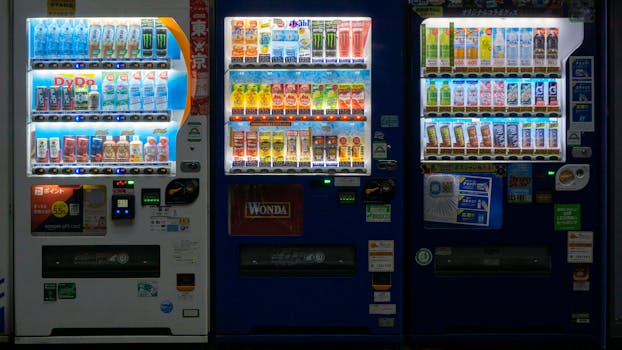
Fast forward to a trip to Japan, exploring a brightly lit convenience store, and there it was: a shelf full of high-caffeine, high-alcohol pre-mixed drinks. While not Four Loko specifically, they were the spiritual successors, brightly packaged and promising a similar jolt. It was a stark reminder of how different countries approach public health and product regulation. I didn't try them (decided to stick to sake!), but the sight alone was a mind-blower.
Where Similar Drinks Exist & What to Watch Out For:
* Global Pockets: While the original Four Loko is gone, similar high-caffeine alcoholic beverages can still be found in various forms in countries with less stringent regulations, particularly in parts of Asia (like Japan and South Korea) and some European nations. Look for pre-mixed cocktails or "energy alcohol" drinks.
* Practical Advice: Be extremely cautious. The combination of stimulants and depressants can mask the effects of alcohol, leading you to consume more than you realize. This can result in alcohol poisoning, impaired judgment, and dangerous situations. Always read labels carefully, especially if you're sensitive to caffeine or alcohol.
* The Takeaway: This isn't necessarily a "must-try" but rather a "must-be-aware-of." It highlights how different societies weigh individual freedom against public health. Seeing these types of drinks abroad serves as a powerful reminder of regulatory differences and the importance of personal responsibility.
---
3. Kava: Pacific Paradise or Potent Problem?
The Ban (or Caution):
Kava, a traditional ceremonial drink made from the root of the Piper methysticum plant, holds immense cultural significance in the South Pacific. It's known for its calming, muscle-relaxing, and mild euphoric effects. However, in the early 2000s, there were reports of liver toxicity associated with Kava consumption, leading to bans or severe restrictions in several Western countries, including past FDA advisories in the USA. While research has since suggested that these issues were often linked to specific plant parts (stems and leaves, not the root) or poor-quality extracts, the caution remains for some.
My Experience:
My journey to Fiji was a dream, and experiencing a traditional Kava ceremony was high on my list. In a small village outside Nadi, I sat cross-legged with locals, passing around a communal wooden bowl filled with the cloudy, earthy-smelling drink. The chief offered me the first cup, a half coconut shell (bilo). It tasted... well, like muddy water with a peppery kick. My tongue and lips quickly went numb, followed by a wave of gentle relaxation. It wasn't intoxicating in the way alcohol is; it was more of a mellow, serene calm, perfect for the laid-back island atmosphere.
The ceremony itself was beautiful – a chance to connect with the local culture, share stories, and feel truly present. It wasn't about getting "high," but about community, respect, and unwinding.
Where to Find It & How to Participate:
* Authentic Locations: Fiji, Vanuatu, Tonga, Samoa, and other South Pacific islands. You'll find Kava bars (or "nakamals" in Vanuatu) and traditional ceremonies in villages.
* What to Expect: Kava is typically prepared by grinding the root and mixing it with water. It's served in a "bilo" (coconut shell cup). The taste is earthy, sometimes bitter, and it causes a characteristic numbing sensation in the mouth.
* Tips for Trying: Seek out reputable Kava bars or ask your hotel/tour guide about legitimate village ceremonies. Always be respectful of local customs. Start with a small amount to gauge your reaction. Avoid driving or operating machinery after consuming Kava, as it can cause drowsiness.
* Price: A bilo of Kava is usually very inexpensive, often just a few dollars, or included as part of a cultural experience.
* Instagram-Worthy Moment: The communal Kava bowl, the "bilo" in hand, surrounded by friendly locals. It’s a powerful symbol of cultural immersion.
---
4. Beyond the Proof: The Saga of Super-High ABV Spirits
The Ban:
When we talk about "banned" drinks, sometimes it's not about the ingredients, but the sheer potency. Take Everclear 190 proof (95% alcohol by volume). This grain alcohol is so potent that it's actually illegal to sell in many US states (including California, Florida, Massachusetts, and New York, among others) due to public safety concerns. The fear is that its extreme strength makes it too dangerous for casual consumption and increases the risk of alcohol poisoning. Yet, in other states, and certainly in some countries abroad, spirits of similar or even higher proof are readily available.
My Experience:
I vividly remember a friend's ill-fated attempt to make "jungle juice" with Everclear 190 at a party in a state where it was legal. The results were... memorable, for all the wrong reasons. It underscored just how easily one can misjudge the strength of such a spirit.
Later, on a backpacking trip through Poland, I stumbled upon Spirytus Rektyfikowany (Rectified Spirit), clocking in at an astounding 96% ABV. It was proudly displayed on a liquor store shelf like any other vodka. My Polish friend, with a mischievous glint in his eye, warned me about its power. "Only for medicinal purposes," he joked, "or for lighting fires!" We bought a small bottle, not to drink neat, but to make a traditional cherry liqueur (Nalewka Wiśniowa), where its pure alcohol content was perfect for extracting flavors. Even a tiny sip of it neat felt like a fiery inferno.
Where to Find Them & How to Handle Them:
* Everclear 190: Legal in many US states (e.g., Illinois, Colorado, Texas, Georgia). Check local state laws before you travel.
* International Equivalents: Poland (Spirytus Rektyfikowany, 96% ABV), Germany (various Korn brands, some reaching 80%+), and other Eastern European countries.
* Practical Advice (EXTREME CAUTION!):
* Never drink neat: These spirits are not for sipping. They are designed for infusions, tinctures, or as a base for highly diluted cocktails.
* Dilute heavily: If you're using it in a mixed drink, use a tiny amount and dilute it significantly.
* Understand your limits: Alcohol poisoning is a very real risk.
* Check local laws: Purchase and consumption laws vary widely.
* Instagram-Worthy Moment: A beautiful, homemade infused liqueur bottle, perhaps with fruit or herbs, showcasing the creative use of high-proof alcohol rather than direct consumption.
---
5. The Hidden Ingredients: When "Normal" Sodas Get Banned
The Ban:
This one might surprise you. It's not about alcohol or psychoactive effects, but about food additives. Many common sodas, sports drinks, and even some fruit juices sold in the USA contain ingredients that are banned or heavily restricted in other parts of the world, particularly in the European Union and Japan, due to health concerns. Think artificial food dyes (like Red 40, Yellow 5, Yellow 6) or specific ingredients like Brominated Vegetable Oil (BVO).
For instance, Mountain Dew in the USA contains BVO, an emulsifier that keeps citrus flavoring from separating. BVO is patented as a flame retardant and is banned in the EU and Japan. Similarly, many brightly colored American candies and sodas use artificial dyes that are banned in the EU, often requiring a warning label in countries where they are allowed.
My Experience:
I first noticed this difference when I ordered a Fanta in Italy. It was a pale, almost cloudy orange, tasting like real oranges, not the vibrant, almost neon-orange, super-sweet version I was used to in the States. A quick check of the label confirmed it: natural flavors and colors, no artificial dyes. It wasn't "banned" in the sense of being illegal to consume, but the American formulation with specific additives would be illegal to sell in the EU.
It was a lightbulb moment. My "normal" drinks at home were considered potentially harmful elsewhere. It made me incredibly conscious of reading labels, even for familiar brands, when traveling.
Where to Find Different Formulations & What to Look For:
* Global Variations: You'll find cleaner, often naturally colored and flavored versions of popular sodas (Coca-Cola, Fanta, Mountain Dew, Sprite) in Europe and Japan. Even some energy drinks might have different sweetener or additive profiles.
* Practical Advice:
* Read the labels: Especially if you have sensitivities to artificial colors, flavors, or specific preservatives.
* Taste the difference: Don't be surprised if a familiar brand tastes subtly different; it's likely due to ingredient variations.
* Embrace local brands: Often, local sodas or fruit drinks will use more natural ingredients and offer unique flavors.
* Instagram-Worthy Moment: A side-by-side comparison of a familiar soda brand (e.g., Fanta) from the US and its European counterpart, highlighting the difference in color and ingredients list. It's a great conversation starter!
---
The World is Your (Forbidden) Oyster!
Exploring the world of "banned" drinks has been one of the most eye-opening aspects of my travels. It's a vivid reminder that what we consider normal, safe, or even desirable, is often a product of our specific cultural, legal, and historical context. Travel isn't just about seeing famous landmarks; it's about diving deep into the nuances of a culture, and sometimes, that means sipping on something a little controversial back home.
These drinks, whether steeped in history like Absinthe, a modern cautionary tale like original Four Loko, a cultural cornerstone like Kava, a potent spirit like Spirytus, or a familiar soda with an unfamiliar ingredient list, all tell a story. They highlight the incredible diversity of human experience and regulation across our planet.
So, on your next adventure, keep an open mind and a curious palate. You might just discover your new favorite sip – one that will truly blow your mind!
What's the wildest "banned" drink you've ever encountered on your travels? Share your stories and tips in the comments below! And don't forget to bookmark this guide for your next global sip adventure! Tag your travel buddy who needs to try these mind-blowing drinks!
---