I Stepped Off the Boat and Into a Living Laboratory
The air in the Maldives in May is thick with the scent of salt spray and blooming frangipani, but it was the metallic tang of scuba tanks that really signaled my arrival. I wasn’t here for the overwater bungalows or the infinity pools. I was here for the "nursery."
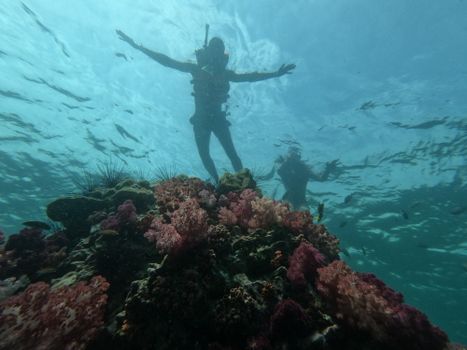
I remember the first time I held a fragment of Acropora—a tiny, finger-like piece of coral that felt surprisingly like rough porcelain. Under the guidance of a marine biologist, I carefully attached it to a hexagonal metal frame. Two years later, that "fragment" is a sprawling colony providing a home for damselfish and juvenile groupers. By May 2026, the world of regenerative travel will have shifted from a niche hobby to a global movement. If you want to be part of the solution while exploring the planet’s last great wilderness, here is exactly where you need to be.
1. The Maldives: Baa Atoll’s High-Tech Reef Recovery
While most tourists are busy taking drone shots of their breakfast, the Baa Atoll—a UNESCO Biosphere Reserve—becomes a hub of scientific activity in May. This is the transition period between the northeast and southwest monsoons, meaning the water is warm (around 29°C/84°F) and the manta rays are beginning to congregate.
In May 2026, several pioneering resorts have moved beyond simple "coral frames" to sophisticated land-based nurseries. You can spend your mornings in a lab learning about coral genetics and your afternoons diving to transplant "super corals" that have been bred to withstand rising temperatures.
- The Insider Edge: Look for programs partnered with Reefscapers. They use an innovative GPS-tracking system for every frame planted, so you can monitor your coral’s growth via a digital portal long after you’ve returned home.
- Pro-Tip: Book a "Resident Marine Biologist" experience. It’s a 3-day deep dive (pun intended) into reef ecology that gives you more than just a certificate—it gives you the skills to identify coral bleaching before it becomes a catastrophe.
2. Bonaire: The World Capital of Reef Renewal
Bonaire has long been the "Diver’s Paradise," but by 2026, it will be known as the "Restoration Capital." The Reef Renewal Foundation Bonaire (RRFB) is the gold standard for citizen science. Unlike other locations where you might just watch, in Bonaire, you get your hands dirty—or rather, salty.
The focus here is on elkhorn and staghorn corals. In May, the visibility is often a staggering 30+ meters (100 feet). You’ll spend your time at "nursery trees"—PVC structures suspended in the water column where coral fragments hang like Christmas ornaments.
- The Insider Edge: Don't just do a single dive. Enroll in the PADI Reef Renewal Distinctive Specialty course. It takes two days and qualifies you to volunteer at any RRFB site.
- Pro-Tip: The "Yellow Submarine" dive shop is a local legend. Head there at 5 PM on a Friday to rub shoulders with the scientists who actually designed these restoration techniques.
3. Indonesia: The Biorock Revolution in Gili Trawangan
If you want to see the intersection of physics and biology, head to the Gili Islands. May marks the start of the dry season in Indonesia—perfect skies and calm seas. Gili Trawangan is home to the world’s largest Biorock project.
Biorock technology involves passing a low-voltage electrical current through a steel structure submerged underwater. This current triggers a chemical reaction that coats the steel in natural minerals (limestone), which corals love to grow on. The result? Corals that grow up to five times faster than normal.
- The Insider Edge: Participate in a "Biorock Workshop." You’ll help weld the structures on land before they are submerged. It’s gritty, it’s hands-on, and it’s incredibly rewarding.
- Pro-Tip: Stay on the north side of the island. It’s quieter, and the "Biorock reef" is just a short 20-meter swim from the shore. No boat required.
4. The Florida Keys: The I.CARE Initiative
You don’t have to travel to the other side of the world to make a difference. In the Florida Keys, the I.CARE (Islamorada Conservation and Restoration Education) program has revolutionized how locals and tourists interact with the reef.
May in the Keys is "shoulder season"—the spring break crowds have vanished, but the hurricane season hasn't yet begun. The water is a comfortable 80°F. I.CARE partners with local dive operators to lead "Restoration Saturdays." You’ll spend the morning learning about the "stony coral tissue loss disease" and the afternoon out on the reef, outplanting healthy corals or cleaning algae off existing nurseries.
- The Insider Edge: The "Coral Outplanting" dives are the most popular. You’ll use a special marine epoxy to "glue" corals onto the reef substrate. It’s like underwater gardening with high-stakes consequences.
- Pro-Tip: After your dive, head to Square Grouper for the best coconut shrimp in the Keys. It’s where the dive masters eat.
5. Australia: The Great Reef Census (Cairns & Port Douglas)
By May 2026, the Great Barrier Reef will be entering a critical phase of its long-term recovery plan. While the reef is massive, the Citizens of the Great Barrier Reef have made it accessible.
In May, the "Stinger Season" is ending, and the trade winds haven't quite kicked in, making for smooth boat rides to the Outer Reef. You can participate in the "Great Reef Census," a massive citizen science effort where divers take reconnaissance photos of specific reef sections to help scientists map reef health in real-time.
- The Insider Edge: Look for operators like Passions of Paradise. They aren't just a tour company; they have a dedicated "Stewardship Coordinator" on board who will teach you how to identify different coral morphologies (shapes).
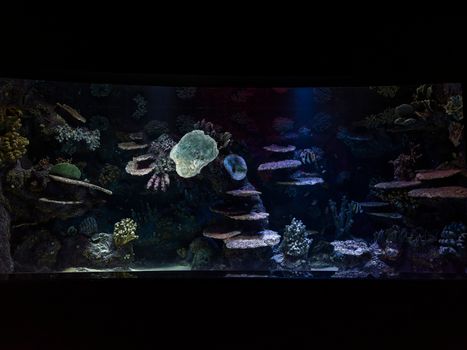
- Pro-Tip: Visit the Cairns Aquarium before you head out. They have a dedicated reef restoration exhibit that explains the "Coral Nurture Program" in detail, giving you the context you need for your dives.
Quick Facts: Planning Your May 2026 Trip
| Destination | Primary Method | Cost Est. ($) | Skill Level | Best For |
| :--- | :--- | :--- | :--- | :--- |
| Maldives | Lab-grown / Frames | $$$$ | Beginner | Luxury & Science |
| Bonaire | Nursery Trees | $$ | Intermediate | Dedicated Divers |
| Indonesia | Biorock (Electric) | $ | All Levels | Tech-Enthusiasts |
| Florida Keys | Outplanting | $$ | Beginner | Weekend Warriors |
| Australia | Photo Census | $$$ | All Levels | Adventure Seekers |
Logistics & The "How-To"
* Getting There: For the Maldives, fly into Velana International (MLE) and take a seaplane. For Bonaire, Flamingo International (BON) has direct flights from Miami and Amsterdam.
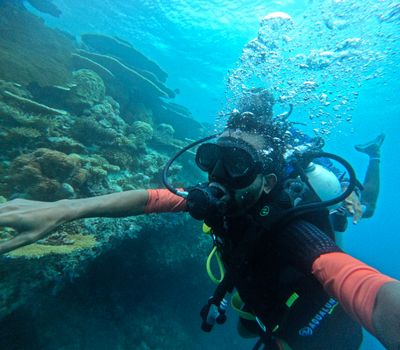
* Certification: While some programs allow snorkelers, you’ll have the most impact as a certified Open Water Diver. If you aren't certified yet, plan to do your course in April 2026 so you're ready for May.
* Gear: Bring your own mask and computer for comfort, but most importantly, ensure your sunscreen is Reef-Safe (Non-nano Zinc Oxide). In many of these locations, traditional sunscreens are actually illegal.
The Ethics of the "Blue Volunteer"
Let’s be real: not all volunteer programs are created equal. In your search for a 2026 program, avoid any "pay-to-play" schemes that don't have a resident marine biologist or a partnership with a recognized NGO.
Authentic restoration isn't just about the "money shot" for Instagram; it’s about the tedious work of scrubbing algae off plastic pipes and meticulously recording data. It’s hard, it’s often messy, and it’s the most fulfilling thing you will ever do in the water.
When you dive into the turquoise depths in May 2026, you aren't just a tourist. You're a steward. You’re the reason a parrotfish has a home and a coastline has a buffer against storms. See you in the blue.
---