The Moment the Reef Spoke Back
I rolled off the stern of the dive boat into forty feet of electric-blue Atlantic water, the crisp bite of salt water sealing my mask against my face. As the bubbles cleared and the familiar, rhythmic whoosh-pffft of my regulator settled into a pulse, I wasn't looking at a traditional dive site. There were no swim-throughs or dramatic drop-offs here off Tavennier in the Florida Keys.
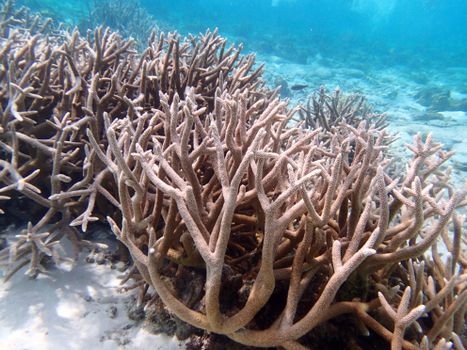
Instead, stretching into the blue haze were row upon row of floating white PVC structures shaped like bare winter trees, tethered to the sandy floor. Suspended from their branches were hundreds of finger-sized fragments of Acropora cervicornis—staghorn coral—swaying gently in the ocean current like underwater wind chimes.
A damselfish darted out from a nearby coral head, aggressively defending its turf, while the faint, ambient crackle of snapping shrimp hummed through my skull. Beside me, a marine biologist from the Coral Restoration Foundation handed me a scrub brush and a slate. My job for the next fifty minutes? Scrape away the suffocating macro-algae from the nursery limbs so these micro-fragmented polyps could channel all their energy into rapid growth.
For decades, we’ve been told to "take only pictures, leave only footprints" when visiting delicate marine ecosystems. But as climate anomalies, thermal stress, and stony coral tissue loss disease decimate global reefs, passive tourism is no longer enough. The top marine conservationists in the world are shifting the narrative: they want trained, enthusiastic citizen scientists getting their hands dirty—or rather, wet—in the ocean's blue nurseries.
Here are the absolute best, expert-vetted coral restoration programs across the globe where you can roll up your sleeves, pick up a dive slate or coral wire, and directly help bring our oceans back to life.
---
1. Florida Keys, USA: Coral Restoration Foundation (CRF)
The Pioneer of Offshore Coral Nurseries
The Florida Reef Tract is the third-largest living barrier reef system in the world, and it has taken a beating over the last half-century. Enter the Coral Restoration Foundation (CRF), headquartered in Tavernier, Florida. CRF operates the world’s largest offshore coral nurseries, cultivating thousands of staghorn, elkhorn, and star corals using innovative suspended fiberglass tree structures.
```
+--------------------------------------------------------------------+
| CRF AT A GLANCE |
+---------------------+----------------------------------------------+
| Location | Key Largo & Tavernier, Florida, USA |
| Key Activity | Nursery maintenance & outplanting fragments |
| Minimum Skill | Open Water Diver certification |
| Best Time to Visit | April to October (warmer, calmer waters) |
+---------------------+----------------------------------------------+
```
When you join a CRF Dive Program, your day begins with an intensive morning workshop onshore. You’ll dive deep into coral biology, learning how scientists use "micro-fragmentation"—cutting corals into tiny pieces to stimulate rapid tissue regrowth—before heading out on a two-tank boat dive with local partner charter operators like Ocean Divers or Horizon Divers.
On Dive One, you clean nursery trees using wire brushes or measure growth rates with underwater calipers. On Dive Two, you head to an active restoration reef site (like Carysfort or French Reef). Armed with non-toxic, two-part epoxy putty, you press live coral fragments directly onto cleared limestone substrates, securing them until they fuse to the natural reef base over the following weeks.
- Pro-Tip: Book the morning 8:00 AM charter during mid-week dives. Sea conditions are generally glassier, visibility easily clears 60+ feet, and you avoid weekend boat traffic from Miami.
- Logistics: Fly into Miami International Airport (MIA), rent a car, and drive 90 minutes south along Overseas Highway (US-1) to Key Largo.
---
2. Bonaire: Reef Renewal Foundation Bonaire (RRFB)
Shore-Diving Paradise Turned Restoration Lab
Bonaire is world-renowned for its hyper-accessible shore diving, but beneath the surface of this Dutch Caribbean island, Reef Renewal Foundation Bonaire (RRFB) is pioneering large-scale citizen-science restoration. RRFB focuses primarily on critically endangered branching corals (Acropora) and boulder corals using offshore rope and tree nurseries.
```
[PVC Central Trunk]
|
+-------------+-------------+ <- Hanging Branch
| | |
[Coral Frag] [Coral Frag] [Coral Frag]
```
Because Bonaire's marine park wraps around the entire island with virtually zero current, it is the ideal location for divers looking to hone their buoyancy while doing precision scientific work. Divers can complete a dedicated two-day PADI Reef Renewal Specialty Course through host dive shops such as Buddy Dive Resort, VIP Diving, or Wannadive Bonaire.
During the course, you learn the art of "hanging" coral fragments onto rope lines using specialized crimp tubes and zip-ties. Once the fragments reach maturity (often in as little as 6 to 9 months), you assist in outplanting them onto target degradation zones using bamboo frames or direct substrate anchoring.
- Pro-Tip: Head to the dive site known as "Something Special" early in the morning. After finishing your nursery maintenance tasks, swim along the sandy drop-off to spot wild frogfish and seahorses camouflaged in the sponge formations.
- Logistics: Direct flights run weekly to Flamingo International Airport (BON) from Houston, Atlanta, Miami, and Amsterdam. Rent a classic double-cab pickup truck to transport your tanks around the island.
---
3. Nusa Lembongan & Bali, Indonesia: Ocean Gardener
Mastering Coral Identification and Reef Mechanics
If you want an academic, deeply educational approach to reef restoration, Ocean Gardener is the world gold standard. Founded by marine biologist Vincent Chalias—who spent over two decades researching coral propagation across the Indonesian archipelago—this program blends hands-on farming with advanced coral taxonomy.
Operating out of Nusa Lembongan (a idyllic island just off Bali’s southeast coast) and Sanur, Ocean Gardener offers courses ranging from a 1-day introductory dive to a 3-day intensive Coral Reef Restoration Practitioner course.
Unlike programs focused solely on outplanting, Ocean Gardener teaches you how to identify specific coral genera (Porites, Acropora, Montipora, Pocillopora) and understand their hydrodynamic preferences. You'll learn:
* How to construct nursery ropes in sheltered lagoons.
* How to secure fragments using bio-compatible zip-ties and monofilament.
* How to monitor macro-algae competition and fish grazing interactions.
Even non-divers can participate in their intertidal reef-walking courses during low tide, making this ideal for families or non-certified travel companions.
```
+--------------------------------------------------------------------+
| OCEAN GARDENER HIGHLIGHTS |
+---------------------+----------------------------------------------+
| Location | Nusa Lembongan / Sanur, Bali, Indonesia |
| Standout Feature | Deep dive into coral taxonomy & identification|
| Non-Diver Friendly? | Yes (Shallow intertidal programs available) |
| Local Culture | Traditional Balinese ocean stewardship |
+---------------------+----------------------------------------------+
```
- Pro-Tip: Take the 30-minute fast boat from Sanur Beach to Jungutbatu Harbor on Nusa Lembongan. Stay at a local homestay near Mangrove Point for quick access to the calm restoration lagoons.
- Insider Food Spot: Stop by Warung Bu Lilik in Jungutbatu after your afternoon dive for a plate of authentic Nasi Campur (spiced rice with sambal, fresh grilled tuna, and coconut vegetables).
---
4. Baa Atoll, Maldives: Marine Savers & Coralive
High-Tech Submerged Frame Restoration in a UNESCO Biosphere
The Maldives is famous for overwater bungalows, but beneath its crystal lagoons lies a delicate coral ecosystem heavily impacted by El Niño warming events. At Four Seasons Landaa Giraavaru and Kamadhoo Island, organizations like Marine Savers and Coralive run sophisticated restoration programs using powder-coated steel frames (often called "coral spiders" or "coral frames").
```
/ \
/ \ <- Powder-coated steel frame
/ \
/=======\ <- Coral fragments attached with cable ties
/ / \ \
```
Here, citizen scientists are involved in the entire chain of restoration:
1. Harvesting: Collecting naturally broken "corals of opportunity" off the seabed that would otherwise die in the shifting sands.
2. Preparation: Attaching fragments to the submerged metal frames using specialized, non-corrosive ties.
3. GPS Mapping: Tagging each frame with a unique serial number and uploading its location to an interactive online database so you can monitor your specific frame’s growth via photo updates years after returning home.
For eco-conscious travelers who want a mix of high-end marine biology research and pristine island living, this program offers unprecedented scientific immersion.
- Pro-Tip: Time your visit between May and November. Not only do you get to participate in coral frame building, but you can also head to nearby Hanifaru Bay to swim alongside dozens of feeding manta rays and whale sharks.
- Logistics: Fly into Velana International Airport (MLE) in Malé, followed by a 35-minute seaplane flight to Baa Atoll.
---
5. Fitzroy Island, Great Barrier Reef, Australia: Reef Restoration Foundation
Protecting an Iconic Natural Wonder
Australia's Great Barrier Reef is vast, but localized thermal events have damaged iconic offshore outer reefs. Based on Fitzroy Island—a tropical national park island located just 45 minutes off the coast of Cairns—the Reef Restoration Foundation (RRF) operates the Great Barrier Reef’s first offshore coral nursery.
```
+--------------------------------------------------------------------+
| REEF RESTORATION FOUNDATION DETAILS |
+---------------------+----------------------------------------------+
| Location | Fitzroy Island (Cairns), QLD, Australia |
| Primary Focus | Heat-resilient Acropora propagation |
| Cert Requirement | Advanced Open Water (for offshore sites) |
| Eco-Bonus | Fitzroy Island Rehabilitation Centre nearby |
+---------------------+----------------------------------------------+
```
RRF focuses on growing fast-adapting coral strains that have survived previous ocean-warming events. Divers assist marine engineers and biologists in maintaining underwater nursery trees, measuring linear extension rates, and clearing away competitive organisms like bio-eroding sponges and damselfish algae lawns.
When you’re off-duty, you can walk straight off the coral-rubble shores of Welcome Bay into rainforest-covered hiking trails or volunteer at the Fitzroy Island Turtle Rehabilitation Centre.
- Pro-Tip: Book the early 8:30 AM Sunlover Reef Cruises ferry out of Cairns Reef Fleet Terminal. Grab a seat on the top outdoor deck starboard side for sweeping views of Cape Grafton as you approach the island.
- Logistics: Direct domestic and international flights land at Cairns Airport (CNS). It’s a 10-minute taxi ride from the airport to the marina ferry terminal.
---
How to Evaluate a Coral Restoration Program (Avoiding Greenwashing)
Not all coral programs are created equal. As voluntourism expands, some operators prioritize photo opportunities over genuine ecological outcomes. Experts recommend checking for these four non-negotiable markers before booking:
- Permitting & Scientific Oversight: Does the organization work under active government marine park permits and employ full-time, degree-holding marine biologists?
- Long-Term Monitoring: True restoration isn't just about planting coral; it's about tracking survival rates over 1 to 5 years. Look for programs that publish open-source monitoring data or annual impact reports.
- Focus on Native Species Diversity: Avoid programs that monoculture a single fast-growing coral type just for speed. Reliable projects cultivate a mix of structural types (branching, encrusting, and massive corals) to support a balanced reef food web.
- Community Integration: Top programs train and employ local island residents, ensuring that marine stewardship survives long after international travelers head home.
---
Logistics & Quick-Reference Guide
Planning your marine conservation trip? Use this quick-reference snapshot to compare locations, costs, and entry requirements:
| Destination | Organization | Primary Skill Level | Est. Volunteer/Course Cost | Best Travel Window |
| :--- | :--- | :--- | :--- | :--- |
| Florida Keys, USA | Coral Restoration Foundation | Open Water Diver | $100–$250 / day dive program | April – October |
| Bonaire | Reef Renewal Bonaire | Open Water Diver | $180–$300 (PADI Specialty) | Year-round |
| Bali, Indonesia | Ocean Gardener | Snorkeler to Advanced Diver | $120–$350 / course | April – October |
| Maldives | Marine Savers / Coralive | Snorkeler / Diver | $150–$500 per frame sponsor | January – April (Dry) |
| Cairns, Australia | Reef Restoration Foundation | Advanced Open Water | $200–$450 / dive day | May – November |
---
The Lasting Impact: Beyond the Dive Slate
Back on the boat deck in the Florida Keys, dripping wet with the midday sun baking the salt into my skin, the dive master handed me a marker. I noted down our coordinates, the number of Acropora fragments secured, and the substrate condition on our waterproof clipboard.
Descending onto a reef to take photos is a privilege. But kneeling carefully in the sand, securing a living piece of super-coral to a bare rock, and knowing it will form a thriving ecosystem for thousands of juvenile fish over the next decade? That is transformative travel at its absolute highest level.
Pack your dive log, double-check your buoyancy skills, and pick a destination. Our reefs don't just need our admiration—they need our hands in the water.
---