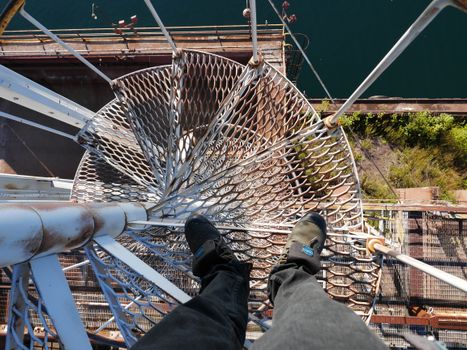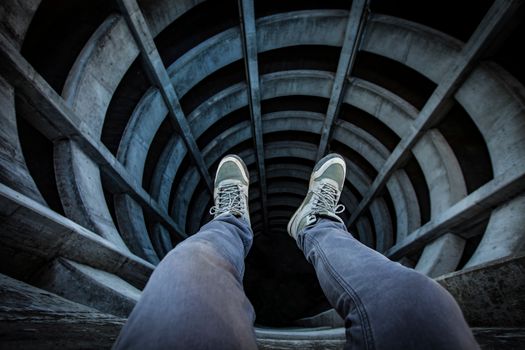
The world, for me, used to be divided into two categories: places I could enjoy, and places where my stomach would drop out from under me. A beautiful cliffside view? Nope. A charming balcony in Paris? Forget it. Even a slightly high escalator could send a shiver down my spine. My acrophobia wasn't just a minor inconvenience; it was a silent, suffocating companion that dictated my travels, limited my experiences, and whispered doubts into every adventurous thought.
I remember standing at the Grand Canyon’s Mather Point, rigid with terror, unable to truly appreciate the breathtaking panorama because my body was screaming "DANGER!" It wasn't the thrill of the height; it was the paralyzing fear of falling, the dizzying disconnect from the ground. I yearned for the freedom I saw in others – the carefree selfies on mountaintops, the confident strides along suspension bridges. I wanted to see the world from above, not just from the safety of flat ground.
Then came the unexpected invitation. My friend, a seasoned climber with a mischievous glint in her eye, suggested I try an indoor climbing wall. "It's different," she promised, "You're safe. You're in control." My immediate reaction was a hard pass. Me? Climb? The very idea made my palms sweat. But something, perhaps a tiny spark of rebellion against my own limitations, urged me on. What if she was right? What if this controlled environment was exactly what I needed to confront my deepest fear, head-on but safely? That day, I stepped into a climbing gym, utterly terrified, unknowingly embarking on a journey that would change my life forever.
The First Ascent: More Than Just a Wall, It Was a Mind Game
My first experience was at Brooklyn Boulders in Long Island City, NYC. The sheer scale of the place was intimidating – towering walls, a kaleidoscope of colorful holds, and people moving with an almost balletic grace. The air hummed with energy, a mix of focused effort and friendly banter. I felt like an alien. My heart hammered against my ribs as I signed the waiver, convinced I was about to make a fool of myself, or worse, have a panic attack.
The introductory class was a godsend. Our instructor, a patient woman named Maya, explained everything meticulously: the harness, the ropes, the belay device, the safety checks. She emphasized that falling was part of learning, and that the equipment was designed to catch you. It was all very logical, very reassuring, yet my body still wanted to bolt.
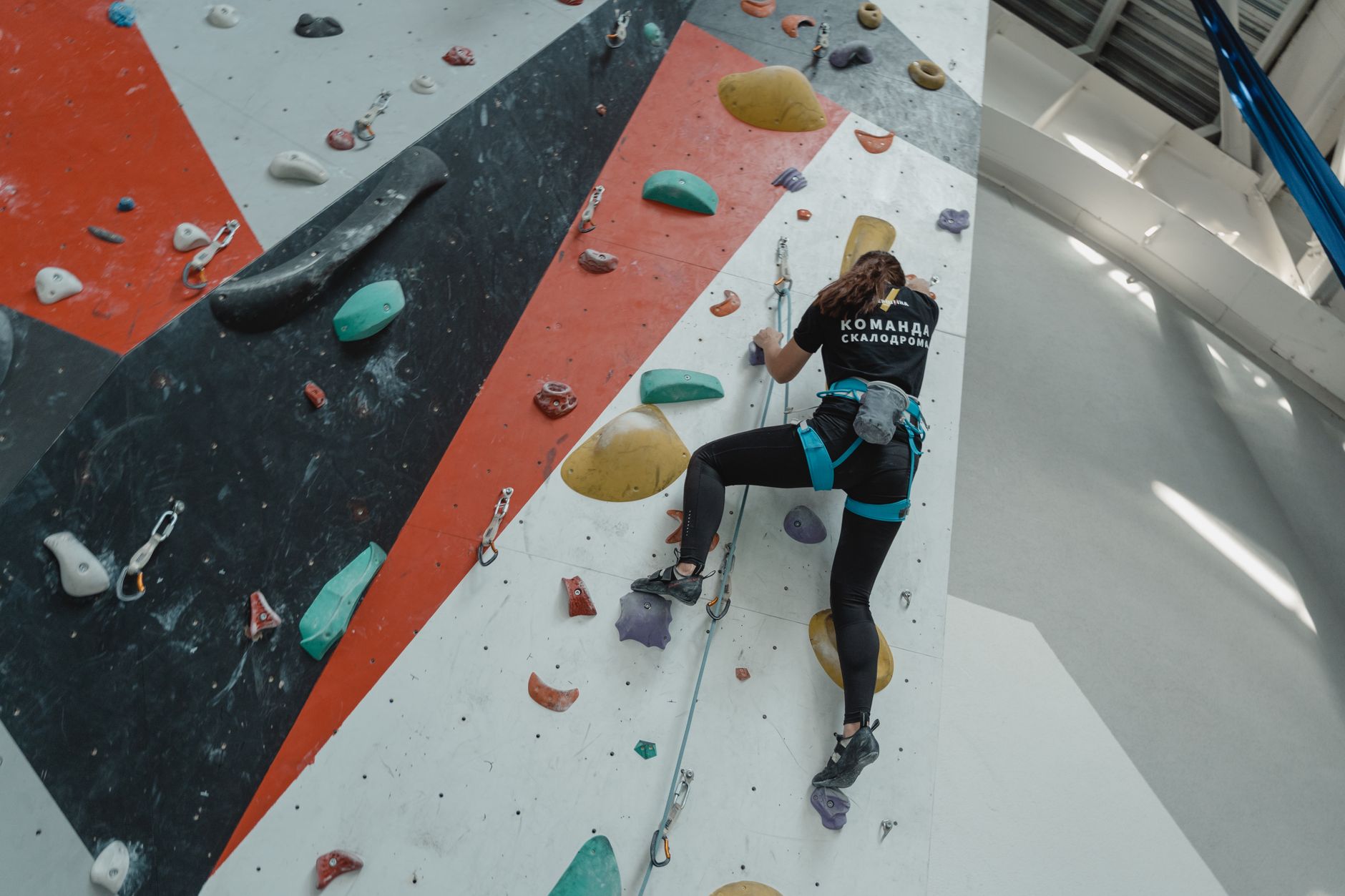
My first route was a simple auto-belay, a system where a mechanical device takes up the slack as you climb and gently lowers you down. No human belayer needed, which, for my anxious mind, was a huge relief. I clipped in, my hands clammy, and stared up at the wall. It looked impossibly high, even though it was only about 20 feet. "Just three holds," Maya encouraged. "Just see if you can get three holds."
I took a shaky breath, chalked my hands (a ritual that would soon become strangely comforting), and reached for the first hold. It was bigger, more secure than I imagined. My foot found purchase. Second hold. Third. My body was screaming, but my mind was slowly, grudgingly, starting to listen to Maya's calm instructions. I climbed maybe 10 feet before my fear overwhelmed me, and I signaled to be lowered. The descent was surprisingly smooth, a gentle glide back to earth. I was shaking, but I hadn't fallen. I hadn't panicked. I had climbed. And a tiny, almost imperceptible shift occurred within me.
Bouldering Bliss: Finding My Feet (and Hands) on the Ground
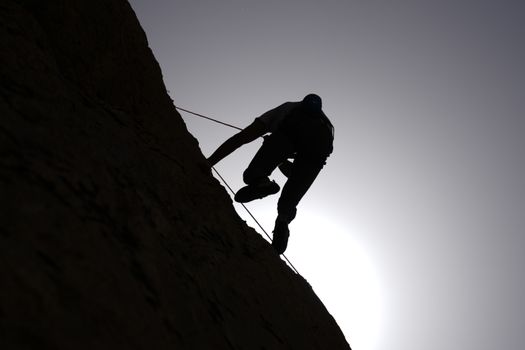
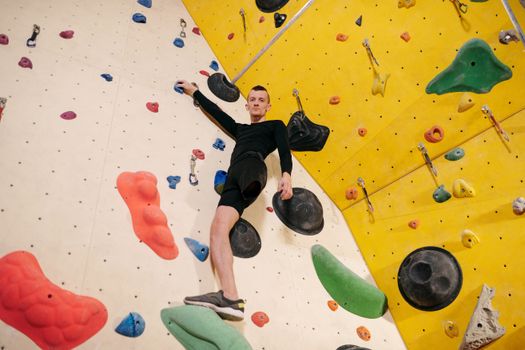
After that first taste, I realized that jumping straight into roped climbing was perhaps too much, too soon, for my acrophobia. Maya suggested bouldering – climbing shorter walls (typically no more than 15-20 feet) without ropes, with thick crash pads below. This was the game-changer.
Bouldering, I discovered, is like solving a puzzle with your body. Each "problem" (a designated route of holds) requires strategy, strength, and balance. The beauty of it for an acrophobe? You're never that high. If you fall, it's a controlled drop onto a soft surface, not a terrifying plunge. This psychological safety net allowed me to focus on the movement, the holds, the sequence, rather than the height.
I spent weeks at The Arch Climbing Wall in London, a massive multi-site bouldering gym that became my sanctuary. I started on the V0s and V1s (beginner-level problems), failing repeatedly, but always getting back up. The community was incredibly supportive. People would offer tips, cheer you on, or simply share a laugh when you looked utterly ridiculous trying to contort your body into an impossible position.
One particular problem, a V2 with a tricky overhang, haunted me for days. I'd fall on the same move, over and over. My ego was bruised, but my fear of heights was sidelined. I was too busy being frustrated by a technical challenge to worry about the distance from the ground. The day I finally "sent" that problem – reaching the top hold with both hands – was pure elation. It wasn't about the height; it was about the mastery, the perseverance. Bouldering taught me that failure isn't the end; it's just data for your next attempt.
Practical Tip for Acrophobes: Always start with bouldering. The lower heights and immediate proximity to the ground provide a crucial psychological buffer, allowing you to build confidence in your body and movement without the added stress of significant height. Focus on technique, not just strength.
Reaching New Heights: The Roped Ascent and Trusting the System
Once I felt comfortable navigating the bouldering problems, my fear of heights had lessened, but it wasn't gone. It was more like a quiet hum than a blaring alarm. I decided to revisit roped climbing, this time with a newfound understanding of my body and its capabilities.
I returned to auto-belays, slowly increasing the height I was willing to go. The key was trust. Trust in the harness, trust in the rope, trust in the auto-belay device. I visualized the system working, understood the mechanics, and slowly, my brain started to accept it.
Then came top-roping with a human belayer. This required an entirely new level of trust – in another person. My climbing friend, Sarah, patiently belayed me for hours. I'd climb, freeze at a certain height, breathe, and she'd offer calm encouragement: "You've got this. Just one more move." The feeling of her steady hand on the rope below was incredibly grounding.
I remember one particular route at Kletterzentrum Innsbruck in Austria, a stunning, modern climbing center nestled amidst the Alps. It was a 5.8 (a moderate difficulty), but it felt like Everest to me. About two-thirds of the way up, my old fear flared. My legs felt like jelly, my breath hitched. I just hung there, suspended, staring down at the tiny figures below. Panic threatened to overwhelm me. But this time, it was different. I didn't give in. I took deep breaths, looked for the next hold, and remembered all the times I'd fallen safely in bouldering. I told myself, "You are safe. You are strong. Just one more move." And then another. And another. Reaching the top was an overwhelming surge of triumph, a tear-inducing moment of pure, unadulterated joy. I looked out the window at the actual mountains surrounding me, and for the first time, I felt a sense of awe, not dread.
Practical Tip for Beginners: Always take an intro lesson. This isn't just about learning to climb; it's about understanding the safety protocols and building confidence in the equipment and the process. Rent gear initially; don't invest until you're sure it's for you.
Beyond the Grip: The Unexpected Life Lessons
The transformation wasn't limited to my relationship with heights. Climbing walls, in their vibrant, chalk-dusted embrace, offered a profound education in life itself.
- Mindfulness and Focus: When you're on a wall, every distraction melts away. You're utterly present, focusing on your breath, your grip, the next hold. This intense mindfulness translated into other areas of my life, helping me to stay grounded and focused even in stressful situations.
- Problem-Solving and Resilience: Every route is a puzzle. You analyze it, plan your moves, execute, and adapt when things don't go as planned. Falling is inevitable, but it teaches you to analyze what went wrong, dust yourself off, and try again. This resilience became a superpower, helping me navigate professional challenges and personal setbacks with a new perspective.
- Trust – In Myself and Others: I learned to trust my body's strength and intuition, even when my mind screamed otherwise. And I learned to trust my belayer implicitly, a lesson in vulnerability and interdependence that deepened my relationships.
- Community and Support: The climbing community is incredibly welcoming. Strangers offer beta (advice on how to climb a route), cheer you on, and celebrate your successes. It's a space where ego takes a backseat to shared passion and mutual encouragement. I've made incredible friends from all walks of life, all united by the love of the climb.
- Unleashed Confidence: This was the biggest takeaway. Conquering my acrophobia gave me an undeniable surge of confidence. If I could face that primal fear and climb to the top, what else could I do? It emboldened me to take on new travel adventures, speak up more at work, and generally approach life with a more "can-do" attitude. My travels now include experiences I once only dreamed of: hiking cliffside trails in Cinque Terre, zip-lining through Costa Rican rainforests, and even venturing onto glass-bottomed observation decks. The world truly opened up.
Your First Climb: Practical Tips for Acrophobes and Beginners
Ready to embrace the vertical world and potentially change your life? Here’s how to start:
- Choose the Right Gym: Look for a climbing gym that emphasizes beginner programs, has a welcoming atmosphere, and offers auto-belays. Read reviews. Places like The Cliffs at Callowhill in Philadelphia or Climb Central in Singapore are known for their accessibility and excellent intro classes.
- Start with an Introductory Class: This is non-negotiable. You'll learn essential safety, proper technique, and gain confidence with an experienced instructor. These classes typically range from $30-$60 USD and often include gear rental and a day pass.
- Embrace Bouldering First: As I mentioned, it’s a fantastic way to get comfortable with movement and holds without the added anxiety of significant height.
- Rent, Don't Buy: Most gyms offer gear rental (shoes, harness, belay device) for around $10-$15 USD. Don't invest in expensive equipment until you're sure climbing is for you.
- Go with a Friend (or Solo!): A supportive friend can make the initial experience less daunting. However, don't shy away from going alone! The climbing community is friendly, and you'll quickly find yourself chatting with fellow climbers.
- Patience and Persistence: You won't be scaling mountains on day one. It’s a journey. Celebrate small victories, like reaching a new hold or completing a slightly harder problem.
- Focus on Breathing: When fear or exertion sets in, it's easy to hold your breath. Consciously taking deep, steady breaths helps calm the nervous system and improves performance.
- Hydrate and Snack: Climbing is a workout! Bring water and a small snack to keep your energy up.
- Listen to Your Body: Don't push through pain. Rest when you need to.
- Explore Global Gyms: Wherever you travel, there's likely a climbing gym. It's a fantastic way to meet locals and experience a different side of a city.
- North America: Brooklyn Boulders (NYC/Boston), The Cliffs (various locations), Sender One (LA).
- Europe: The Arch (London), Blocbuster (Paris), Kletterzentrum Innsbruck (Austria).
- Asia: Climb Central (Singapore), Rockbusters (Bangkok).
- Day passes typically range from $20-$35 USD; monthly memberships $80-$150 USD.
The View From the Top (and Beyond)
My journey from a terrified acrophobe to a confident climber wasn't linear, nor was it instant. It was a series of small, intentional steps, each one building on the last. Climbing walls didn't just teach me to overcome my fear of heights; they taught me to embrace challenges, to trust the process, and to find joy in the struggle. The chalk dust on my hands now feels like a badge of honor, a reminder of how far I've come.
Today, when I stand on a high balcony or gaze down from a mountain peak, that old fear is still there, a faint echo. But it no longer dictates my actions. Instead, I feel a thrill, a sense of wonder, and an immense gratitude for the strength I've found within myself. I look out, not down, and truly see the world from a new, exhilarating perspective.
If you, like the old me, are held captive by a fear of heights, or any fear for that matter, I implore you: find a local climbing gym. Book an intro class. Take that first shaky step. You might just discover that the greatest view isn't from the top of a mountain, but from the summit of your own courage.
What's one fear you've conquered or want to conquer? Share your story in the comments below or on social media using #ClimbBeyondFear #TripsoraAdventure!