Conquer Heights: Climbing Walls Instagram Won't Show You (Because They're Too Real)
The first time I saw a picture of someone free-soloing El Capitan, my palms started sweating, and my stomach did a little flip. Not from awe, but from pure, unadulterated terror. You see, I have acrophobia. Not the debilitating, can't-leave-the-house kind, but enough to make me white-knuckle it on observation decks, avoid glass-bottomed boats, and certainly never, ever consider scaling a vertical rock face. For years, I believed adventure sports were simply not for me. My travel dreams were confined to solid ground, far from any precipice.
Then, a few years ago, on a rainy afternoon in Portland, Oregon, a friend dragged me to a local climbing gym. "Just try bouldering," she coaxed. "It's barely off the ground." Skeptical and armed with every excuse in the book, I reluctantly agreed. What I discovered that day wasn't just a new hobby; it was a revelation – a secret world of height-conquering possibilities that Instagram influencers, with their dramatic cliffside shots and 'fearless' personas, conveniently overlook. This isn't about conquering Everest; it's about conquering your Everest, one safe, padded, and incredibly fun step at a time.
The Instagram Illusion: Why Fearless Isn't Always Real
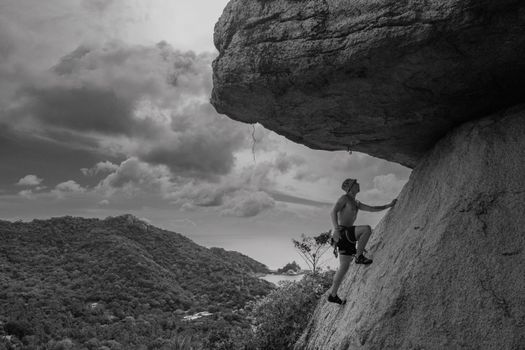
Scroll through any adventure travel feed, and you're bombarded with images of daredevils dangling precariously from cliffs, scaling snow-capped peaks, or skydiving into sunsets. It's exhilarating, aspirational, and frankly, a little intimidating. These perfectly curated snapshots often create an illusion: that true adventure is only for the inherently fearless, the adrenaline junkies, the ones who were born without a single nerve in their body.
But here's the truth: most of those climbers started somewhere, likely on an indoor wall, just a few feet off the ground. And many, many of them, deep down, still feel that familiar flutter of nerves when they look down. The "fearless" narrative is great for likes, but it alienates a huge demographic of potential adventurers – people like you and me, who yearn for challenge and growth but are held back by a very real, very human fear of heights.
This is where the magic of indoor climbing gyms comes in. They are designed for everyone, from seasoned pros to absolute beginners, and yes, even for those of us who break into a cold sweat at the thought of a tall ladder. They offer a controlled, safe environment to gradually expose yourself to heights, build confidence, and discover a strength you never knew you had.
Understanding Acrophobia: It's More Common Than You Think
Before we dive into how climbing walls can help, let's acknowledge acrophobia. It's a specific phobia characterized by an intense, irrational fear of heights. Symptoms can range from mild anxiety and dizziness to full-blown panic attacks, shortness of breath, and nausea. It's not just a "silly" fear; it's a real physiological response.
The good news is that phobias, particularly specific phobias like acrophobia, often respond well to exposure therapy – gradually introducing the feared object or situation in a safe, controlled manner. And guess what? Indoor climbing walls are practically tailor-made for this. They allow you to control the variables: how high you go, how fast you climb, and the reassurance of safety systems. It's exposure therapy disguised as a really fun workout.
Bouldering: Your Ground-Level Gateway to Greatness
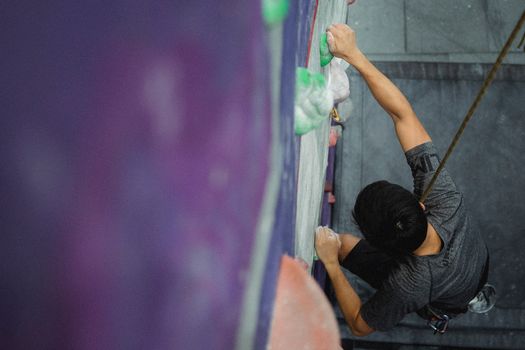
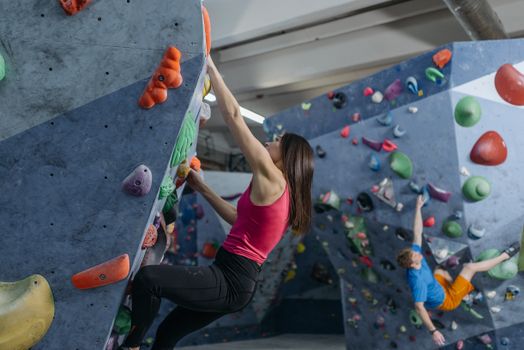
My journey began with bouldering, and I wholeheartedly recommend it as the absolute best starting point for anyone with a fear of heights. Imagine a climbing wall that's never more than about 12-15 feet high, with thick, plush padding covering the entire floor beneath you. There are no ropes, no harnesses, just you, the wall, and your hands and feet.
Bouldering is essentially puzzle-solving with your body. Each "problem" (a specific route marked by colored holds) requires you to figure out the best sequence of moves to reach the top. You're so focused on the next handhold, the balance, and the technique, that you often forget you're even off the ground. If you fall, you land softly on the mats. It's incredibly liberating!
My First Bouldering Experience:
I remember staring at the wall, thinking, "I can barely climb a tree, how am I supposed to do this?" My friend pointed out a beginner route, marked with bright green holds. I tentatively grabbed the first one, my heart thumping. My hands felt clumsy, my feet slipped, but the sensation of pulling myself up, even just a few feet, was exhilarating. The "thud" of landing back on the mat felt less like a failure and more like a reset button. I wasn't just climbing; I was problem-solving, moving my body in new ways, and, for the first time in a long time, not thinking about the height, but the process.
Practical Tips for Bouldering Beginners:
* What to Wear: Comfortable, athletic clothing that allows for full range of motion. Think yoga pants, leggings, or athletic shorts and a t-shirt.
* What to Expect: Most gyms offer a quick orientation. You'll rent climbing shoes (they're tight for a reason – precision!) and maybe a chalk bag (to keep hands dry).
* Cost: Day passes typically range from $15-$25, with shoe rental usually an additional $5-$7. Many gyms offer intro packages.
* Focus on Fun: Don't worry about getting to the top initially. Focus on movement, trying different holds, and enjoying the process. The community is incredibly supportive and non-judgmental.
Top Roping: Taking it Up a Notch (With a Safety Net)
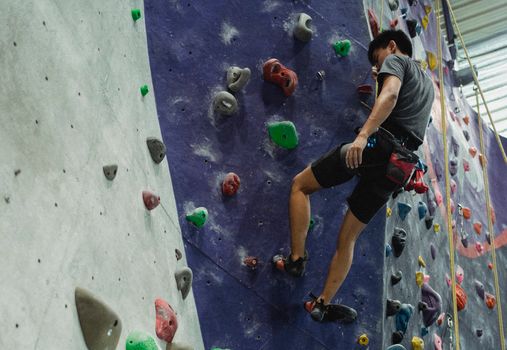
Once you've found your footing (pun intended!) with bouldering, top roping is the next logical step. This is where you introduce ropes and harnesses, but with a crucial difference: the rope goes through an anchor at the very top of the wall and then back down to a person on the ground (your belayer) who manages the rope, ensuring you're always safe.
With top roping, you can go much higher – often up to 30-60 feet or more – but the fear factor is significantly reduced because you know you're constantly secured. If you let go, you simply hang gently in your harness. This allows you to focus on the climb itself, trusting your gear and your belayer.
My First Top Rope Ascent:
After a few weeks of bouldering, my friend convinced me to try top roping. My heart was definitely racing as I clipped into the harness, the rope feeling surprisingly light. The initial few feet were fine, but as I got higher, the old familiar butterflies started. I paused, took a deep breath, and looked at my friend below, who gave me an encouraging nod. "You've got this!" she yelled. I focused on the next hold, then the next. The view from 20 feet up was exhilarating, not terrifying. When I finally reached the top and leaned back into the rope, the feeling of accomplishment was immense. It wasn't about the height anymore; it was about the journey to get there.
Practical Tips for Top Roping:
* Belay Class: Most gyms require you to take a quick (1-2 hour) belay certification class to learn how to safely manage the rope for your climbing partner. It's crucial for safety and builds trust.
* Partner Up: You'll need a belay partner. Many gyms have community boards or social events to find partners.
* Trust the System: The gear is incredibly strong and designed for safety. Trust your harness, the rope, and your belayer.
* Communicate: Learn the basic climbing commands ("Climbing!", "Take!", "Lower!").
Auto-Belays: Your Solo Ascent to Confidence
For those who want to climb high without needing a partner or mastering belaying, auto-belays are a game-changer. These incredible machines are built into the wall and automatically take up slack as you climb, and then gently lower you back down to the ground when you let go or reach the top. It's like having a robotic belayer, always attentive, always safe.
Auto-belays are perfect for acrophobics because they remove the social pressure and the need to rely on another person. You can climb at your own pace, take breaks whenever you need, and simply let go when you're ready to descend. It's a truly independent and empowering experience.
My Auto-Belay Breakthrough:
I remember a particular auto-belay route that went up a slightly overhanging section. It looked daunting. But knowing the machine had me, I decided to give it a go. I climbed, paused, breathed, and climbed some more. At the top, I took a moment, looked around the gym, and then, with a deep exhale, I pushed off the wall. The gentle, controlled descent was almost meditative. I wasn't just descending; I was floating, completely at ease. That moment was a profound shift. I realized the fear wasn't about the height itself, but the fall. With the auto-belay, the fall was controlled, predictable, and safe.
Finding Auto-Belays & What to Expect:
* Prevalence: Many modern climbing gyms, especially larger facilities like the popular "Movement" or "Momentum" gyms in the US, or numerous independent gyms across Europe and Asia, have dedicated auto-belay sections.
* Ease of Use: After a quick orientation (often just 5-10 minutes), you simply clip yourself into the auto-belay device and start climbing.
* Cost: Included in your day pass or membership.
Beyond the Wall: The Mental & Physical Benefits
The benefits of indoor climbing extend far beyond conquering a fear of heights. It's a full-body workout that builds strength, flexibility, and endurance. But it's the mental benefits that are truly transformative:
- Mindfulness: Climbing demands focus. You're constantly assessing your body position, grip, and next move, leaving little room for intrusive thoughts or anxieties. It's an active form of meditation.
- Problem-Solving: Every route is a puzzle. This engages your brain and improves cognitive function.
- Resilience: You'll fall, you'll get stuck, you'll get frustrated. But learning to push through, try again, and celebrate small victories builds incredible mental fortitude.
- Community: The climbing community is one of the most welcoming and supportive I've ever encountered. There's a shared understanding of challenge and achievement, and a genuine desire to help others succeed. I've met incredible people from all walks of life, sharing tips, encouragement, and post-climb coffees.
- Progressive Exposure Therapy: This is the big one for acrophobia. By gradually increasing your exposure to heights in a safe, controlled environment, you're retraining your brain's fear response. What once triggered panic slowly becomes manageable, then comfortable, then even enjoyable.
Gear Up (or Not!): What You Really Need to Start
One of the best things about indoor climbing is the minimal barrier to entry. You don't need to invest in expensive gear right away.
- Clothing: As mentioned for bouldering, comfortable athletic wear is key.
- Climbing Shoes: These are essential for grip and precision. Most gyms offer rentals for a few dollars. Don't worry if they feel snug; they're supposed to!
- Chalk Bag: Keeps your hands dry for better grip. Also available for rent or purchase at the gym.
- Harness (for Top Roping/Auto-Belay): If you're top roping, you'll need a harness. These are also readily available for rent.
- Belay Device (for Top Roping): Used by your partner. Also rentable.
That's it! For your first few visits, just show up with comfortable clothes and an open mind. The gym will provide everything else.
Your Adventure Awaits: Finding Your Wall
Ready to take the leap? Finding a climbing gym is easier than ever.
* Google Search: "Climbing gym near me," "bouldering gym [city name]," "indoor rock climbing [city name]."
* Check Websites: Look for gyms that specifically mention "beginner-friendly," "intro classes," "auto-belays," or "bouldering."
* Visit in Person: If possible, stop by a gym during off-peak hours (mid-day weekdays) to get a feel for the atmosphere, see the facilities, and ask questions. Most staff are incredibly friendly and happy to help newcomers.
* Introductory Classes: Many gyms offer fantastic beginner packages that include a day pass, shoe rental, and a basic safety orientation or even a full intro-to-climbing class. This is a great way to get started with expert guidance.
The View From the Top (Even if it's Just 15 Feet)
My fear of heights hasn't vanished entirely. I still get a little flutter looking down from a very tall building. But now, that flutter is accompanied by a sense of calm and control. I know I can manage it. I've learned that pushing my comfort zone, even slightly, leads to incredible personal growth.
Indoor climbing walls aren't just places to get a workout; they're sanctuaries for self-discovery. They're where you can challenge your perceptions, build unwavering confidence, and realize that the only limits are the ones you place on yourself. Forget the Instagram influencers with their unattainable feats. Your adventure is personal, authentic, and waiting for you just a few feet off the ground.
So, what are you waiting for? Find a local climbing gym, rent some shoes, and take that first brave step. You might just discover that the person who was afraid of heights is also the person who can conquer them, one amazing climb at a time.
Have you ever tried climbing to face your fears? Share your story in the comments below! Let's build a community of real adventurers, not just Instagram models.
---