The crisp air, the scent of cinnamon and roasted chestnuts, the twinkling lights casting a warm glow on ancient cobblestones – there’s nothing quite like the magic of a European Christmas market. For years, Germany has held the crown, drawing millions to its iconic festive stalls. And don't get me wrong, I adore a classic German market! My very first Christmas market experience, a whirlwind trip to Nuremberg years ago, cemented my love for the season. The sheer scale, the intricate craftsmanship, the endless mugs of spiced wine – it was pure enchantment.
But here’s the secret I’ve discovered on countless winter adventures: the festive spirit isn't confined to Germany's borders. In fact, some of the most captivating, authentic, and downright trending Christmas markets are sparkling brighter than ever in other European gems. This year, my mission was clear: venture beyond the usual suspects and uncover those hidden (and not-so-hidden) treasures that offer a unique twist on holiday cheer. And let me tell you, what I found was pure gold.
From medieval marvels to imperial grandeur, these markets are not just places to shop; they're immersive experiences that transport you into a real-life winter fairytale. They offer distinct local flavors, unique artisan crafts, and an atmosphere that feels both timeless and utterly fresh. So, if you’re ready to trade your bratwurst for a pierogi, and your Nuremberg lebkuchen for a Hungarian kürtőskalács, then grab a warm drink and let’s dive into the 7 trending Christmas markets beyond Germany that you absolutely must visit right now!
1. Strasbourg, France: The "Capital of Christmas" Where Cultures Converge
Okay, I know what you’re thinking: "France? Isn't that practically Germany?" And that's precisely why Strasbourg tops my list! Nestled in the Alsace region, Strasbourg has been hosting its Christkindelsmärik since 1570, making it one of Europe's oldest. It’s a captivating blend of French sophistication and German tradition, a cultural crossroads that truly earns its title as the "Capital of Christmas" (Capitale de Noël).
My first time stepping into Strasbourg during Advent, I was instantly struck by the sheer scale and beauty. Imagine not just one market, but nearly a dozen themed villages spread across the city's historic Grande Île, a UNESCO World Heritage site. The market around the magnificent Notre-Dame Cathedral is a breathtaking sight, with its intricate Gothic façade lit up against the night sky, and the scent of vin chaud (mulled wine) mingling with freshly baked bredele (Alsatian Christmas cookies).
I remember huddling with friends under a heat lamp at the Place Kléber, sipping on a particularly fragrant vin chaud blanc (white mulled wine, a local specialty!) and watching the giant Christmas tree sparkle. The atmosphere is electric yet cozy, a perfect balance. Don’t miss the tarte flambée (flammekueche), a thin, crispy Alsatian pizza, often topped with crème fraîche, bacon, and onions – it’s the ultimate market snack! Also, look out for handcrafted wooden toys and delicate glass ornaments, unique to the region.
Tripsora Tip:
Visit during the week if possible to avoid the biggest crowds. For the best photos, head to the Pont Saint-Martin at dusk for incredible views of Petite France lit up, or capture the majestic Cathedral market from different angles. Expect to pay around €3.50-€4.50 for a vin chaud and €8-€12 for a tarte flambée.
2. Vienna, Austria: Imperial Grandeur Meets Festive Sparkle
Vienna in winter is like stepping into a grand, glittering postcard. While Austria shares some cultural heritage with Germany, Vienna’s Christmas markets exude an undeniable imperial elegance that sets them apart. This city doesn't just host markets; it stages lavish festive spectacles.
My absolute favorite is the Christkindlmarkt am Rathausplatz, set against the neo-Gothic majesty of Vienna’s City Hall. The sheer scale of the illuminated building, transformed into an Advent calendar, is jaw-dropping. Last year, I spent an entire evening here, marveling at the hundreds of decorated trees in the surrounding Rathauspark, which creates a magical "Heart Tree" path. The smell of Kaiserschmarrn (shredded pancake with stewed plums) and Punsch (a stronger, fruitier version of mulled wine) filled the air. I still dream about the creamy potato rösti I had from one of the stalls!
Beyond the Rathausplatz, explore the charming market at Schönbrunn Palace, where the Baroque backdrop adds an extra layer of sophistication, or the smaller, artisan-focused market at Karlsplatz (Art Advent), which offers truly unique handmade gifts. The Belvedere Palace also hosts a beautiful market, offering stunning views of the illuminated palace.
Tripsora Tip:
Vienna’s markets can get chilly, so dress in layers! Don't forget to try a traditional Viennese Käsekrainer (cheese sausage) and, of course, a slice of Sachertorte. Public transport is excellent for hopping between markets. A mug of Punsch will cost around €4.50-€5.50, plus a reusable mug deposit.
3. Budapest, Hungary: Thermal Warmth & Danube’s Dazzling Delights
Budapest offers a truly unique Christmas market experience, blending centuries of tradition with the city's vibrant, thermal-bath-infused culture. The Hungarian capital has rapidly risen as a trending winter destination, and for good reason – it’s a feast for the senses, and often more budget-friendly than its Western European counterparts.
My most memorable experience in Budapest was wandering through the Vörösmarty Square market, then heading straight to the Szechenyi Thermal Baths for a soak under the stars – a surreal and utterly blissful contrast! The steam rising from the historic pools, while festive lights twinkled in the distance, was pure magic. The main markets at Vörösmarty Square and in front of St. Stephen's Basilica are the stars of the show. The Basilica market, in particular, projects stunning light shows onto the building's façade every evening, turning it into a living, breathing canvas of festive cheer.
Hungarian markets are famous for their food. You absolutely must try kürtőskalács (chimney cake), a sweet, cylindrical pastry cooked over an open flame and rolled in sugar and cinnamon – I practically lived on these! Another savory must-try is lángos, a deep-fried flatbread topped with sour cream and cheese. The artisan crafts here are also exceptional, from handcrafted leather goods to intricate embroidery.
Tripsora Tip:
The ruin bars, famous year-round, often have festive makeovers in December. They’re a great spot for a unique evening drink after market hopping. Expect to pay around 1000-1500 HUF (€2.50-€4) for a mulled wine and 1500-2500 HUF (€4-€6.50) for a kürtőskalács. Book thermal bath tickets in advance, especially on weekends.
4. Prague, Czech Republic: Fairytale Frost & Bohemian Bliss
Prague’s Christmas markets are straight out of a storybook. With its Gothic architecture, charming cobblestone streets, and the iconic Astronomical Clock, the city already feels magical, but in December, it truly transforms into a winter wonderland. It’s no surprise it's one of the most Instagrammable Christmas destinations right now.
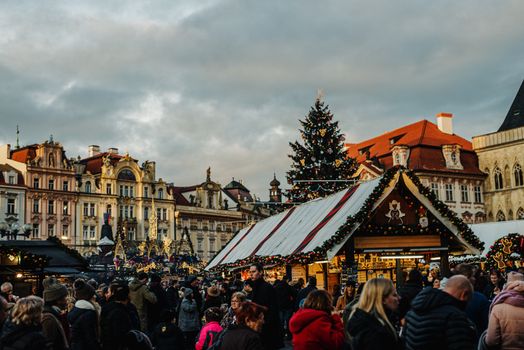
The main markets in Old Town Square and Wenceslas Square are the heart of the festive action. I remember standing in Old Town Square, surrounded by brightly decorated wooden chalets and the towering Christmas tree, feeling like I’d stepped into a medieval dream. The smell of roasted ham and Trdelník (a sweet pastry cooked over an open flame, similar to chimney cake but often served with ice cream or chocolate) was irresistible. Watching the Astronomical Clock chime while sipping a warm medovina (honey wine) is an experience I’ll never forget.
What makes Prague's markets so special is the authentic Czech atmosphere. You’ll find traditional handicrafts like beautifully painted glass baubles, wooden toys, and intricate lace. The carol singers, often dressed in traditional costumes, add to the enchanting ambiance. The smaller market at Havelské tržiště (Havel's Market) is also worth a visit for a slightly more local feel.
Tripsora Tip:
Climb the Old Town Hall Tower for a panoramic view of the Old Town Square market from above – it’s absolutely stunning, especially at night. Be sure to try some traditional Czech sausages (klobása) and warm grog. Mulled wine (svařené víno) typically costs around 80-120 CZK (€3.20-€4.80), and a Trdelník around 100-150 CZK (€4-€6).
5. Tallinn, Estonia: Baltic Brilliance & Medieval Magic
If you're looking for a truly unique and genuinely medieval Christmas market experience, Tallinn is your destination. Estonia's capital, with its perfectly preserved Old Town, offers a charming, intimate, and often snow-dusted festive scene that feels straight out of a fairytale. It's consistently ranked among the best small Christmas markets in Europe and is gaining significant traction for its authentic charm.
My visit to Tallinn's Christmas market in Town Hall Square felt like stepping back in time. The market claims to have hosted the first-ever public Christmas tree in 1441, and that sense of history permeates every corner. The wooden stalls, the crisp Baltic air, and often a dusting of snow create an incredibly picturesque setting. The market is smaller and more focused than some of the larger ones, which only adds to its cozy, intimate appeal.
I spent hours browsing unique Estonian handicrafts – think knitted woolens, intricate wooden carvings, and ceramics – perfect for truly original gifts. The food stalls offered hearty Estonian fare: warming black pudding with lingonberry jam, sauerkraut, and delicious gingerbread cookies. And of course, plenty of glögi (Estonian mulled wine), often spiked with Vana Tallinn liqueur, which quickly became my cold-weather favorite! The market also features a small stage with local choirs and folk dancers, adding to the cultural immersion.
Tripsora Tip:
Climb to Kohtuotsa viewing platform for iconic views of the Old Town and the market below – it's an absolute must for photographers. Dress very warmly, as Baltic winters can be quite cold. Glögi will cost around €4-€6, and a meal like black pudding with sauerkraut around €8-€12.
6. Krakow, Poland: Polish Perfection & Festive Finds
Krakow's Christmas market in its magnificent Main Market Square (Rynek Główny) is a true hidden gem that's rapidly gaining popularity for its beauty, authenticity, and incredible value. It offers all the festive charm you could wish for, without the crowds or price tags of some of its Western European counterparts.
Walking into Krakow's Main Market Square during Christmas is an awe-inspiring experience. The Cloth Hall (Sukiennice) stands proudly in the center, flanked by the majestic St. Mary's Basilica, whose hourly trumpet call adds a unique soundtrack to the festive bustle. My visit here felt incredibly genuine; it wasn't just a tourist attraction but a place where locals gathered, too.
The food is a highlight. I gorged on traditional pierogi (dumplings) with various fillings, steaming hot bowls of bigos (hunter's stew), and the unique oscypek (smoked sheep's cheese), often grilled and served with cranberry jam – an absolute revelation! And for drinks, beyond the standard mulled wine, try the grzane piwo (hot spiced beer) or grzany miód (hot mead) for a truly Polish twist. The crafts here are equally delightful, from intricate amber jewelry (a Baltic specialty) to hand-painted glass ornaments and traditional Polish pottery.
Tripsora Tip:
Visit St. Mary's Basilica to see its stunning altar and hear the trumpeter. For a truly unique experience, take a horse-drawn carriage ride around the square. Krakow is wonderfully walkable, but trams are efficient for longer distances. Expect to pay around 15-20 PLN (€3.50-€4.50) for mulled wine/beer and 20-35 PLN (€4.50-€8) for a generous portion of pierogi or bigos.
7. Montreux, Switzerland: Lakeside Luxury & Alpine Adventures
For a truly magical and somewhat whimsical Christmas market experience, Montreux Noël on the shores of Lake Geneva offers a spectacular Swiss twist. While Switzerland might be known for its chocolate and watches, Montreux transforms into a festive wonderland that's trending for its unique attractions and stunning natural backdrop.
My trip to Montreux for their Christmas market was unforgettable, largely thanks to its unique offerings. The main market stretches along the lakeside promenade, offering breathtaking views across the shimmering Lake Geneva to the snow-capped Alps. It’s incredibly picturesque and surprisingly spacious. I particularly loved the medieval market at the historic Chillon Castle, which transports you straight into a bygone era with blacksmiths, jesters, and traditional crafts.
But the absolute highlight, and what makes Montreux truly unique, is Santa's House on Rochers-de-Naye. A cogwheel train takes you high into the mountains, where you can meet Santa in his cozy chalet, enjoy incredible panoramic views, and even participate in workshops. It’s an enchanting experience for all ages and incredibly Instagrammable! Back at the market, indulge in traditional Swiss fondue or raclette, and warm up with a rich Swiss hot chocolate or a local vin chaud.
Tripsora Tip:
Book your tickets for Santa's House on Rochers-de-Naye well in advance, as they sell out quickly. Switzerland can be pricey, so budget accordingly, but the unique experiences are worth it. Public transport around Montreux is excellent, and often included with hotel stays via the Montreux Riviera Card. Expect to pay around 6-8 CHF (€6-€8) for vin chaud and 20-30 CHF (€20-€30) for a fondue portion.
General Tips for Your Beyond-Germany Christmas Market Adventure:
- Go Mid-Week & Early: Weekends, especially evenings, are packed. Visit on a Tuesday or Wednesday morning for a more relaxed experience and better photos. The markets typically open late November and run until Christmas Eve.
- Dress in Layers: European winters are cold! Think thermal underwear, warm socks, waterproof boots, a good hat, gloves, and a scarf. You'll be spending a lot of time outdoors.
- Cash is King (Sometimes): While many stalls accept cards, having small denominations of local currency is always handy for quick purchases or smaller vendors.
- Embrace the Mug Deposit: Most markets use reusable mugs for drinks. You pay a small deposit (often €2-€4 or local equivalent) which you get back when you return the mug. Or, keep it as a charming souvenir!
- Savor the Local Flavors: Don't just stick to what you know. Each market offers unique culinary delights – be adventurous and try the local specialties!
- Plan Your Transport: Research how to get between cities and within cities. Trains are often the most scenic and efficient way to travel between European destinations. Many cities offer special Christmas market bus tours or discounts on public transport passes.
- Book Accommodation Early: These markets are popular, and hotels fill up fast, especially for prime dates. The earlier you book, the better your options and prices.
- Pack an Extra Bag: For all those unique souvenirs you'll undoubtedly find! From handcrafted ornaments to local delicacies, you'll want to bring a piece of the magic home.
The Magic Continues...
There you have it – seven incredible Christmas markets beyond Germany that are currently trending and absolutely brimming with festive cheer. Each offers a unique tapestry of traditions, flavors, and unforgettable moments that will make your holiday season truly special. From the Alsatian charm of Strasbourg to the medieval allure of Tallinn, and the imperial elegance of Vienna, these destinations prove that the spirit of Christmas knows no bounds.
So, this year, why not step off the well-trodden path and discover a new festive favorite? Trust me, the memories you'll make, the flavors you'll savor, and the magic you'll experience will be worth every single journey. Which market will you visit first?
Now it's your turn!
Have you visited any of these incredible markets? Or do you have another "beyond Germany" favorite that needs to be on our radar? Share your tips and experiences in the comments below! And if this post has sparked your wanderlust, don't forget to share it with your travel buddies and start planning your next unforgettable winter escape!
---