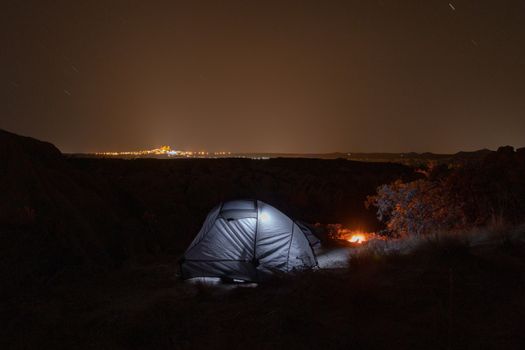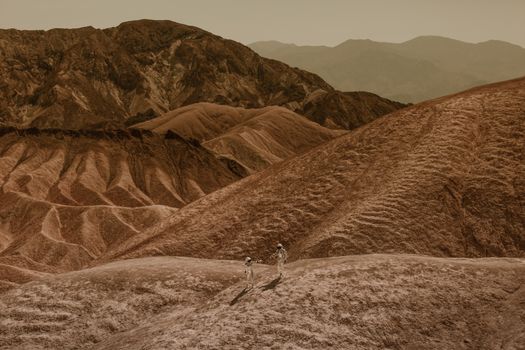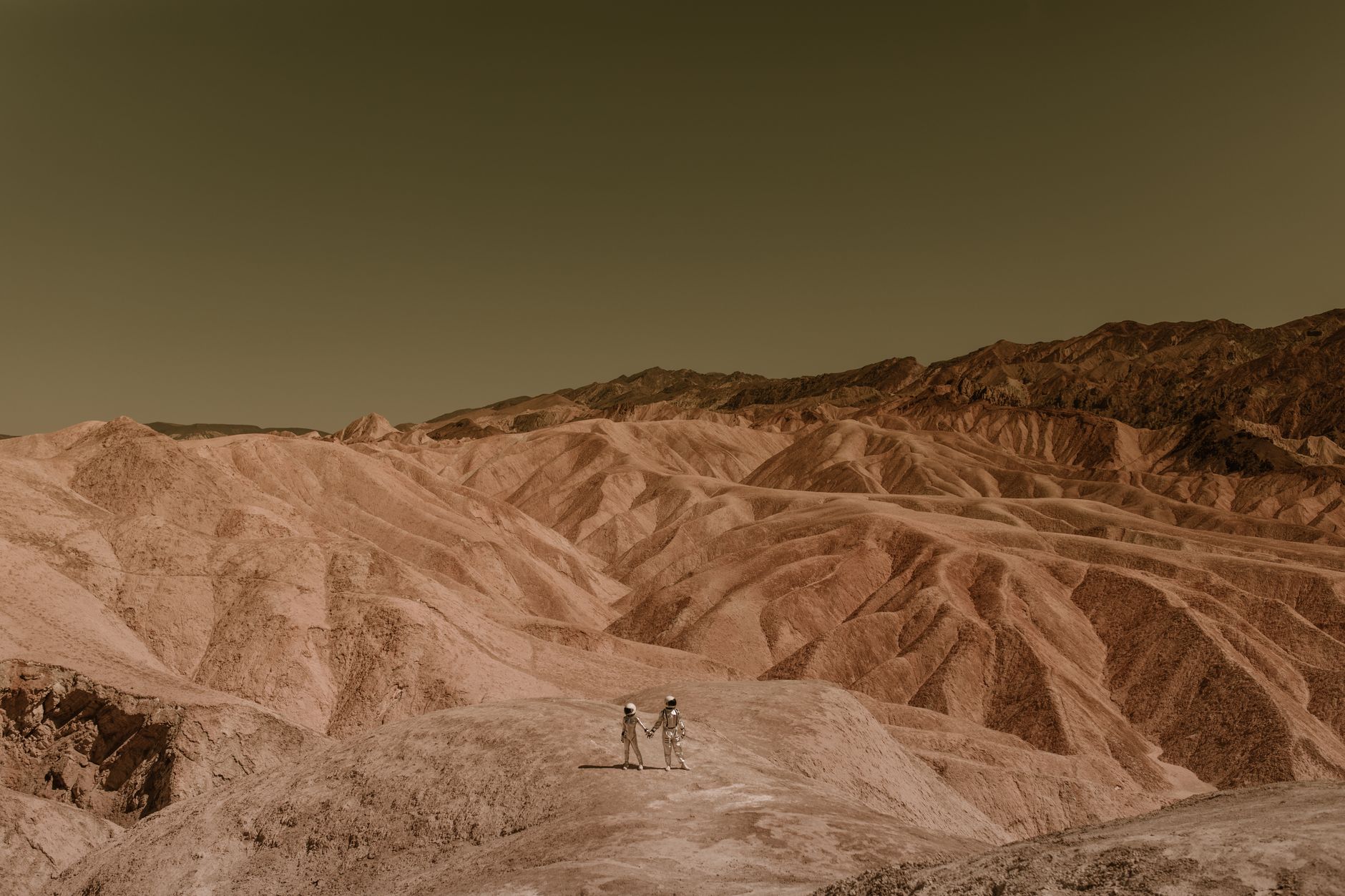
Remember that feeling as a kid, gazing up at the night sky, wondering what it would be like to visit another planet? To walk on Mars, to see Saturn's rings up close, or to explore a landscape shaped by forces entirely alien to Earth? For years, I chased that feeling, exploring every national park, every hidden trail, but something was always missing. Until I stumbled upon a campsite that wasn't just beautiful, it was downright extraterrestrial.
I vividly recall my first night camping in Wadi Rum, Jordan. The sun dipped below the horizon, painting the sky in fiery oranges and deep purples, casting long, dramatic shadows from the towering sandstone mountains. As darkness fully enveloped the desert, an impossible tapestry of stars emerged, stretching from horizon to horizon. The air was still, the silence profound, broken only by the crackle of our small campfire. Lying in my tent, gazing out at the red sand and bizarre rock formations under that impossibly bright sky, I felt it – a profound sense of being utterly disconnected from Earth, as if I’d landed on a distant, vibrant world. It wasn't just camping; it was an interstellar journey.
That trip ignited a new obsession: finding camping spots around the globe that feel less like Earth and more like another planet. Places where the landscape is so unique, so dramatic, so utterly surreal, that it blows your mind and reshapes your understanding of our own home world. If you're ready to trade ordinary for otherworldly, pack your bags (and your camera!), because I've scoured the globe to bring you seven mind-blowing camping spots that promise an adventure beyond your wildest dreams.
---
1. Wadi Rum, Jordan: The Martian Desert Where Ancient Echoes Linger
Why it feels alien:
Welcome to Mars, but with better hospitality! Wadi Rum, also known as the Valley of the Moon, is a UNESCO World Heritage site famous for its dramatic sandstone mountains, towering rock arches, and vast expanses of red and orange sand. It’s so otherworldly that it’s served as the filming location for countless sci-fi movies set on Mars, including "The Martian" and "Dune." The erosion patterns, the deep canyons, and the sheer scale of the landscape truly make you feel like you've landed on a different celestial body.
My personal take:
The first time I saw Wadi Rum, my jaw literally dropped. The scale is immense, and the colors are unlike anything I'd ever witnessed. But it’s not just the scenery; it’s the silence. That profound, ancient silence under a sky ablaze with stars is what truly transports you. One night, after a delicious Bedouin dinner cooked under the sand, I ventured a little way from our camp. Standing alone, bathed in moonlight, with only the vast desert around me, I felt a connection to something primal and timeless. It was humbling, exhilarating, and deeply spiritual.
Camping Specifics & Tips:
* Where to Camp: Most camping in Wadi Rum is done through Bedouin camps, which range from traditional tents to luxurious "bubble" tents that offer panoramic stargazing. You can also wild camp in designated areas with a permit, but going with a local guide is highly recommended for safety and cultural immersion.
* Cost: Bedouin camp stays typically include meals, jeep tours, and sometimes camel rides. Prices can range from $50-$150 USD per person per night, depending on the camp's luxury level and included activities.
* Best Time to Visit: Spring (March-May) and Autumn (September-November) offer pleasant temperatures. Summers are scorching, and winters can be surprisingly cold at night.
* Must-Do: Take a jeep tour to explore hidden canyons and ancient inscriptions, climb a sand dune for sunset, and definitely try the zarb (Bedouin BBQ). For astrophotography enthusiasts, this is paradise.
---
2. Atacama Desert, Chile: Moonscapes, Geysers, and the Driest Place on Earth
Why it feels alien:
The Atacama Desert is the driest non-polar desert in the world, and its extreme conditions have sculpted a landscape that truly resembles the Moon or Mars. Think vast salt flats, active geysers, towering volcanoes, and valleys carved by wind and water that look like lunar craters. Valle de la Luna (Moon Valley) and Valle de Marte (Mars Valley) aren't just clever names; they perfectly describe the surreal, desolate beauty of this region.
My personal take:
I arrived in San Pedro de Atacama feeling a bit skeptical – could it really be that dry? It was. The air was so crisp, and the sky so intensely blue, it felt like a different atmospheric pressure altogether. Hiking through Valle de la Luna, with its jagged salt formations and complete lack of vegetation, I half-expected to see an astronaut planting a flag. But the real magic happened at night. With virtually no light pollution and minimal atmospheric moisture, the Atacama is one of the best places on Earth for stargazing. Lying on a blanket, looking up at the Milky Way, I saw more stars than I ever thought possible. It felt like peering into the very fabric of the universe.
Camping Specifics & Tips:
* Where to Camp: While wild camping is possible in some areas (with proper permits and extreme caution), most visitors base themselves in San Pedro de Atacama and take tours. Some tour operators offer overnight excursions that include camping in more remote, designated areas, often with basic facilities. There are also a few established campsites near San Pedro, like Camping La Casita, offering basic amenities.
* Cost: Campsites near San Pedro are relatively inexpensive ($10-20 USD per night). Guided camping tours into the more remote, otherworldly areas can range from $150-$400+ USD depending on duration and inclusions.
* Best Time to Visit: Year-round, but May to November offers cooler, clearer days and nights.
* Must-Do: Witness the El Tatio geysers at sunrise, float in the Laguna Cejar salt lake, and definitely book an astronomical tour. Bring layers – desert nights are freezing, even after hot days. High altitude means hydration is key!
---
3. Iceland's Highlands (Landmannalaugar): A Technicolor Volcanic Wonderland
Why it feels alien:
Iceland is basically Earth's geological playground, and its Highlands are the ultimate "alien planet" experience. Specifically, the Landmannalaugar region is renowned for its rhyolite mountains, which boast an incredible palette of colors – reds, greens, yellows, and blues – thanks to the mineral composition. Add to that black lava fields, steaming hot springs, and stark, treeless landscapes, and you've got a world that feels like it's still in the process of creation.
My personal take:
My first glimpse of Landmannalaugar was from a 4x4, and I honestly thought I was looking at a painting. The mountains weren't just colorful; they glowed. Hiking through the lava fields, with steam rising from the ground in some areas, I felt like I was traversing a newly formed planet. One evening, after a long day of hiking, soaking in the natural hot spring by the campsite, surrounded by those vibrant, silent mountains, was pure bliss. It felt like a secret, ancient ritual on a world far away.
Camping Specifics & Tips:
* Where to Camp: The main campsite at Landmannalaugar is well-equipped with showers, toilets, and a hut for cooking/shelter. It serves as a base for many hikers tackling the Laugavegur trail. Wild camping in the Highlands is highly restricted to protect the fragile environment; always stick to designated campsites or huts.
* Cost: Camping at Landmannalaugar is approximately $15-20 USD per person per night. Hut stays are significantly more expensive. Access to the Highlands often requires a sturdy 4x4 vehicle or a specialized bus.
* Best Time to Visit: Mid-June to mid-September, when the F-roads (mountain roads) are open and weather is most stable.
* Must-Do: Hike the short trails around the campsite (e.g., to Brennisteinsalda or Bláhnúkur) for incredible views. Soak in the natural hot spring. Be prepared for all types of weather, even in summer.
---
4. Goblin Valley State Park, Utah, USA: A Playground for Otherworldly Goblins
Why it feels alien:
Imagine a valley filled with thousands of mushroom-shaped hoodoos, often called "goblins," ranging from a few feet to several stories tall. This isn't a scene from a fantasy novel; it's Goblin Valley State Park in Utah. The soft sandstone formations have been eroded over millennia into these bizarre, bulbous shapes, creating a landscape that feels like a giant, whimsical alien playground.
My personal take:
Walking into Goblin Valley felt like stepping onto the set of a Dr. Seuss book or an alien cartoon. There are no marked trails; you're encouraged to wander freely among the goblins, exploring every nook and cranny. I spent hours just marveling at the sheer number and variety of these formations, inventing stories about the creatures who might inhabit such a place. At sunset, the low light casts long, dramatic shadows, making the goblins seem to come alive. It was a place that sparked pure, unadulterated childlike wonder.
Camping Specifics & Tips:
* Where to Camp: Goblin Valley State Park has a small, established campground with 25 sites offering picnic tables, fire rings, and flush toilets. Reservations are highly recommended, especially during peak season.
* Cost: Campsites are typically $20-30 USD per night, plus the park entrance fee.
* Best Time to Visit: Spring (April-May) and Fall (September-October) offer pleasant temperatures. Summer can be very hot, but evenings are usually cooler.
* Must-Do: Spend time simply wandering and exploring the "Valley of Goblins." For a different perspective, hike the Curtis Bench Trail or the Carmel Canyon Loop. The night sky here is also incredible, with minimal light pollution.
---
5. Badlands National Park, South Dakota, USA: Eroded Spikes and Ancient Seas
Why it feels alien:
Badlands National Park is a landscape of dramatic, sharply eroded buttes, pinnacles, and spires, interspersed with vast mixed-grass prairies. These colorful geological formations, striped with layers of reds, oranges, and purples, look like a scene from an alien planet that once held ancient seas. The landscape is constantly changing due to erosion, making it a living, breathing geological marvel.
My personal take:
Driving through the Badlands for the first time, I was struck by the sheer artistry of nature. The formations are so intricate, so varied, that it feels like you're driving through an open-air museum of geological time. I remember pulling over at an overlook, and the silence was profound. Then, a prairie dog popped up, then another, and soon I was surrounded by a bustling little alien community. Watching the sunset paint the layers of rock in ever-changing hues, I felt a deep connection to the Earth's ancient past, a past that felt utterly foreign to my modern sensibilities.
Camping Specifics & Tips:
* Where to Camp: The park offers two developed campgrounds: Cedar Pass Campground (reservable, with flush toilets, water, and some electric sites) and Sage Creek Campground (first-come, first-served, primitive, no water, pit toilets). Backcountry camping is also permitted with a free permit, offering a truly immersive experience.
* Cost: Cedar Pass is around $23-38 USD per night. Sage Creek is free. Park entrance fee is $30 per vehicle.
* Best Time to Visit: Late spring (May-June) and early fall (September-October) for mild temperatures and fewer crowds. Summers can be very hot with thunderstorms.
* Must-Do: Drive the Badlands Loop Scenic Byway, hike some of the short trails (e.g., Notch Trail, Door Trail), and definitely keep an eye out for bison, bighorn sheep, and prairie dogs. Stargazing is excellent here.
---
6. The Pinnacles Desert, Nambung National Park, Australia: Limestone Sentinels from Another Galaxy
Why it feels alien:
Located on Australia's Coral Coast, The Pinnacles Desert is a surreal landscape featuring thousands of towering limestone formations rising from a vast expanse of yellow sand. These ancient, weathered pillars, some reaching several meters high, create an eerie, silent cityscape that looks like the ruins of an alien civilization or a forest of petrified extraterrestrial sentinels.
My personal take:
Approaching The Pinnacles, I felt a shiver of anticipation. Nothing quite prepares you for the sight of thousands of these mysterious pillars jutting out of the sand. Walking among them, especially at sunrise or sunset, is an almost spiritual experience. The silence is broken only by the wind whispering through the formations, and the shadows they cast stretch into infinity. I spent hours trying to capture their essence with my camera, but photos barely do justice to the feeling of being utterly dwarfed by these ancient, silent observers. It truly felt like I was exploring an archaeological site on a distant, deserted planet.
Camping Specifics & Tips:
* Where to Camp: There is no camping directly within The Pinnacles Desert itself. The nearest campsite is at the nearby Nambung National Park, or further south at Cervantes or Jurien Bay, which offer a range of caravan parks and campgrounds. Some offer basic facilities; others are more developed.
* Cost: Camping fees vary by location, typically $20-40 AUD per night. Park entrance fee to Nambung National Park is $15 AUD per vehicle.
* Best Time to Visit: Spring (September-November) for wildflowers and mild weather, or Autumn (March-May). Avoid mid-summer (December-February) due to extreme heat.
* Must-Do: Visit at sunrise or sunset for the most dramatic lighting and photographic opportunities. Take the scenic drive and walking trails through the desert. Combine your trip with a visit to the nearby Lancelin sand dunes for some sandboarding fun!
---
7. Sossusvlei & Deadvlei, Namibia: Where Giants Sleep and Trees Defy Time
Why it feels alien:
The Namib Desert is home to some of the world's tallest and most dramatic sand dunes, particularly around Sossusvlei. But it's Deadvlei that truly earns its "alien planet" badge. Here, hundreds of ancient, petrified acacia trees, long dead but perfectly preserved by the arid climate, stand starkly against a cracked white clay pan, surrounded by towering, rust-red dunes and an impossibly blue sky. It's a landscape of impossible contrasts, frozen in time, that feels like a surreal painting from another dimension.
My personal take:
Waking up before dawn to hike Dune 45 in Sossusvlei was an effort, but the reward was indescribable. Watching the sun creep over the horizon, painting the monumental dunes in shades of orange, red, and purple, was a moment of pure awe. But Deadvlei, that's where the alien truly revealed itself. Standing among those skeletal trees, some 900 years old, trapped in a timeless tableau, felt like walking through a dream. The silence was absolute, the air thick with history and a profound sense of isolation. It's a place that forces you to confront the vastness of time and the resilience of nature, even in death.
Camping Specifics & Tips:
* Where to Camp: The main campground is Sesriem Campsite, located inside the park gates. This is crucial because it allows you to enter Sossusvlei an hour before the main gates open and stay an hour after they close, giving you prime access to sunrise/sunset on the dunes. It offers basic facilities including showers, toilets, and some shaded spots. Other lodges outside the park also offer camping.
* Cost: Sesriem Campsite is around $20-30 USD per person per night, plus park entrance fees ($10 USD per person per day + $10 USD per vehicle per day).
* Best Time to Visit: May to October (dry season) offers cooler temperatures and clearer skies.
* Must-Do: Climb Big Daddy or Dune 45 for sunrise. Explore Deadvlei, and don't forget to visit Sesriem Canyon. Bring plenty of water, sunscreen, and a wide-brimmed hat – the sun is intense!
---
Practical Tips for Your Extraterrestrial Camping Adventure
Venturing into these unique landscapes requires a bit more planning than your average weekend camping trip. Here’s what I’ve learned:
- Research, Research, Research: Each of these locations has specific rules, permits, and environmental considerations. Understand the local culture, wildlife, and safety protocols.
- Gear Up Appropriately:
- Tent: A sturdy 3- or 4-season tent is often recommended, especially for desert winds or potential cold nights.
- Sleeping System: A warm sleeping bag rated for below-freezing temperatures is crucial for desert nights and high altitudes. A good sleeping pad is also essential.
- Water: Access to potable water can be extremely limited. Carry more than you think you’ll need, and consider a portable water filter or purification tablets.
- Navigation: A reliable GPS device or offline maps (like Gaia GPS or Maps.me) are vital, as cell service is often non-existent.
- First Aid: A comprehensive first-aid kit is non-negotiable.
- Sun Protection: Wide-brimmed hat, sunglasses, high-SPF sunscreen, and breathable long-sleeved clothing are essential in these exposed environments.
- Leave No Trace: This is paramount, especially in fragile ecosystems. Pack out everything you pack in, stay on marked trails, and respect wildlife.
- Photography Tips:
- Golden Hour: Always aim for sunrise and sunset – the light in these landscapes is magical.
- Astrophotography: These locations are prime for stargazing. Bring a wide-angle lens, a sturdy tripod, and learn basic astrophotography settings (high ISO, wide aperture, long exposure).
- Scale: Include a person or your tent in shots to emphasize the immense scale of these landscapes.
- Embrace the Silence: One of the most profound aspects of these places is the quiet. Put away your phone, listen to the wind, and let the vastness wash over you.
---
Ready for Your Interstellar Journey?
These aren't just camping spots; they're portals to different worlds, right here on Earth. They challenge your perceptions, humble your spirit, and ignite an unshakeable sense of wonder. From the crimson dunes of Wadi Rum to the ancient trees of Deadvlei, each location offers a unique glimpse into the raw, untamed beauty of our planet – a beauty so profound, it feels truly alien.
So, stop dreaming about Mars and start packing your bags. Your next extraterrestrial adventure awaits. Which 'otherworldly' camping spot will you conquer first?
Share your favorite alien-like camping experiences in the comments below! And don't forget to tag #TripsoraAlienCamping on Instagram with your mind-blowing photos!
---