Blow Your Mind! The Ultimate Beginner's Guide to Underwater Photography Gear
The first time I snorkeled in the crystal-clear waters of Maya Bay, Thailand, I was absolutely mesmerized. Schools of iridescent fish darted past, vibrant corals swayed gently, and the sunlight danced through the water in ethereal beams. It was a scene straight out of a dream, a living kaleidoscope of color and motion. And guess what? I didn't have a camera. Not a single shot to show for it, beyond the hazy memories in my mind. The regret was immediate and profound. "Never again," I vowed, surfacing with a renewed sense of purpose.
That moment sparked an obsession. I wanted to capture that magic, to share the hidden world beneath the surface with everyone I knew. But as a complete beginner, the world of underwater photography felt daunting, riddled with expensive equipment, technical jargon, and images that looked impossible to replicate. Sound familiar?
Well, let me tell you, that intimidation factor is a myth we're about to bust wide open. You don't need to be a professional diver with a five-figure camera rig to take truly mind-blowing underwater photos. In fact, with today's incredible technology, getting started is more accessible, affordable, and fun than ever before.
This isn't just a gear list; it's your personal roadmap to transforming your next ocean adventure into an unforgettable photo safari. We're talking about capturing those vibrant reef fish, the graceful glide of a turtle, or even that epic split-shot of you diving into turquoise waters – all with gear that won't break the bank or require an engineering degree to operate. So, grab your fins (and maybe a cup of coffee), because we’re about to dive deep into the underwater photography gear for beginners that will genuinely blow your mind!
Why Dive into Underwater Photography? Beyond the Bragging Rights!
Before we even talk cameras, let's talk why. Why bother with underwater photography? Is it just for the 'gram? Absolutely not, though your feed will certainly thank you!
For me, it's about preserving those fleeting moments of wonder. The way a clownfish peeks out from its anemone, the intricate patterns on a sea turtle's shell, the sheer diversity of life in a healthy coral reef. These are sights that deserve to be remembered, shared, and revisited. Underwater photography isn't just taking pictures; it's about:
- Reliving the Magic: Your photos become a portal back to that incredible dive or snorkel, instantly transporting you to the tranquil blue.
- Sharing the Unseen World: Most people never get to experience the underwater realm. Your photos become ambassadors, showcasing its beauty and fragility, inspiring others to protect it.
- A New Creative Outlet: It challenges you to see the world differently, to master new skills, and to tell stories without words.
- Documenting Your Adventures: From exotic dive spots in the Philippines to local lake adventures, your underwater camera turns every trip into a visual journal.
Ready to make some waves with your camera? Let's explore the gear!
1. The "No-Brainer" Entry Point: Action Cameras (GoPro, DJI Osmo Action)
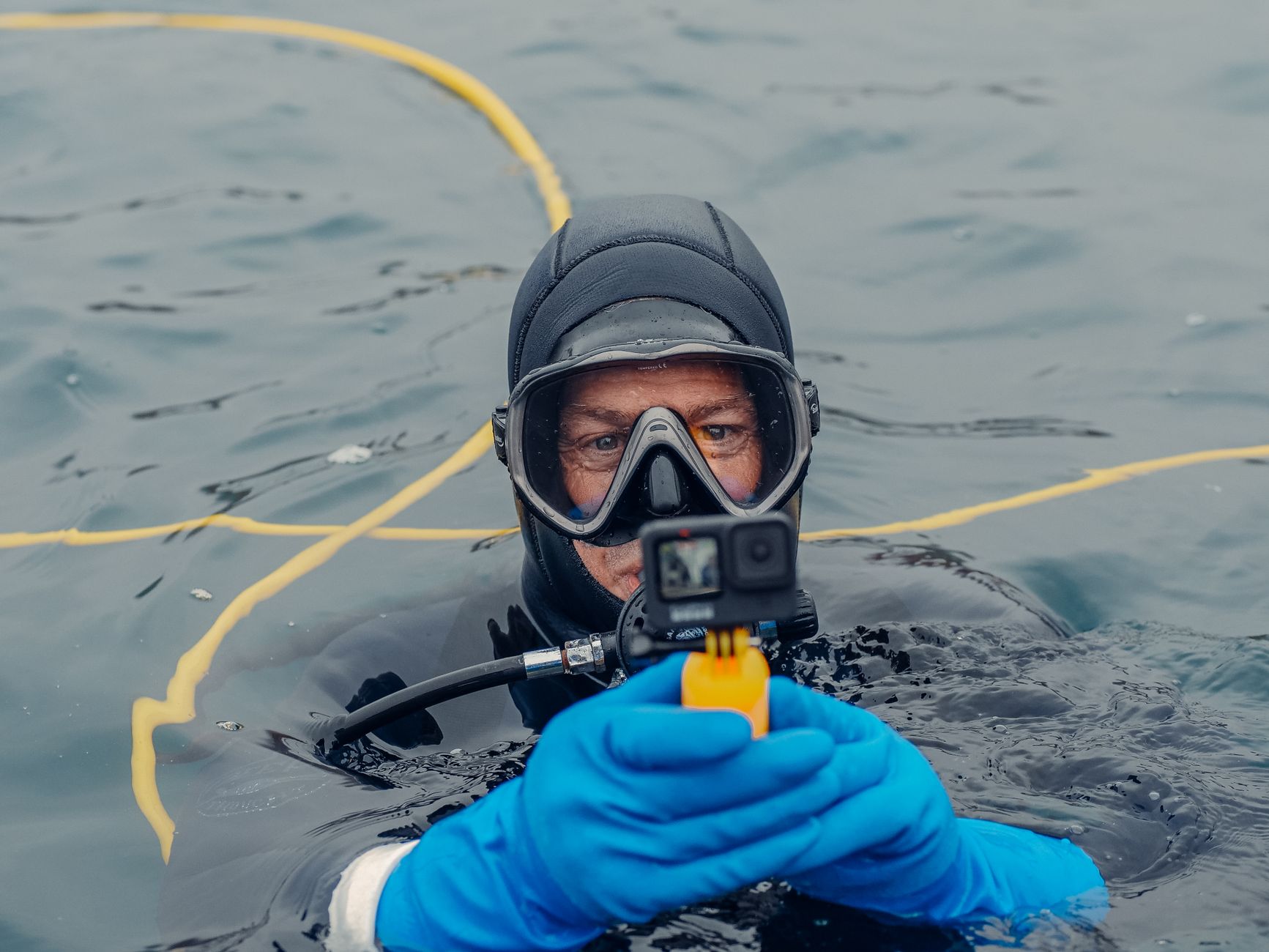
When it comes to getting your feet wet (pun intended!) in underwater photography, action cameras are hands down the easiest and most accessible starting point. Think of them as your rugged, go-anywhere, waterproof companions.
Why They'll Blow Your Mind:
* Built-in Waterproofing: Many models are waterproof straight out of the box to impressive depths (e.g., GoPro Hero 12 is waterproof to 10m/33ft without a housing, but I always recommend an extra dive housing for deeper dives and added protection).
* Compact & Lightweight: They fit in your pocket, making them perfect for travel. No bulky gear to lug around!
* Incredible Video & Decent Stills: While famed for video, modern action cameras deliver surprisingly good still photos, especially in good lighting.
* Wide-Angle Lens: Perfect for capturing expansive reef scenes or getting close to larger marine life.
My Personal Take & Recommendations:
My first foray into underwater photography was with a trusty GoPro, and it completely changed my travel game. I remember snorkeling in Nusa Penida, Bali, and seeing manta rays for the first time. My little GoPro Hero 7 Black (with an external dive housing!) allowed me to capture their majestic glide, a memory I still cherish.
- GoPro Hero 11/12 Black: These are the gold standard. They offer incredible image stabilization (Hypersmooth is a lifesaver underwater!), excellent video capabilities, and increasingly better still photo modes. Expect to pay around $300-$500 USD for the camera alone.
- DJI Osmo Action 4: A formidable competitor, the Osmo Action 4 boasts excellent low-light performance (crucial underwater!) and a fantastic magnetic quick-release system. Price-wise, it's very competitive with GoPro.
Essential Accessories (Don't Skip These!):
- Dive Housing: Even if your camera is waterproof, a dedicated dive housing (usually around $50-$80 USD) extends your depth limit (typically 40-60m) and provides an extra layer of protection against bumps and scratches.
- Red/Magenta Filter: This is a game-changer for color correction! Water absorbs red light, making everything look blue/green. A red filter (for blue water) or magenta filter (for green water) brings back those vibrant reds, oranges, and yellows. They simply snap on to your dive housing and cost around $20-$40 USD. Seriously, don't leave home without one.
- Floating Hand Grip/Pole: Keeps your camera from sinking to the abyss if you drop it and provides a stable grip. Costs around $15-$30 USD.
- Dome Port: Want those epic "half-and-half" or "split" shots (half above water, half below)? A dome port (around $50-$100 USD) is your secret weapon. It pushes the waterline away from the lens, allowing for stunning dual-perspective photos.
Pros:
Cheapest entry, most rugged, great video, super compact.
Cons: Smaller sensor means less detail and dynamic range than larger cameras, limited manual control, struggles in very low light.
2. Stepping Up Your Game: Compact Cameras with Underwater Housings
If you're ready to invest a bit more for noticeably better image quality, more creative control, and still want a relatively portable setup, a high-end compact camera paired with a dedicated underwater housing is your next step.
Why They'll Blow Your Mind:
* Larger Sensors: Compared to action cameras, compacts often have 1-inch sensors, leading to sharper images, better low-light performance, and more dynamic range.
* Optical Zoom & Better Lenses: Offers more versatility in framing your shots.
* Manual Control: You can adjust aperture, shutter speed, and ISO, giving you more creative freedom over your exposure and depth of field.
* RAW Photo Capability: Allows for much more flexibility in post-processing.
My Personal Take & Recommendations:
This is where I truly fell in love with underwater photography. After seeing the limitations of my GoPro in capturing intricate details and true colors, upgrading to a compact with a housing felt like unlocking a new dimension. I remember photographing a school of sardines in Moalboal, Philippines, with my Canon G7X Mark II in an Ikelite housing. The clarity and detail were astounding compared to my previous action camera shots.
- Olympus Tough TG-6 (or newer models): This camera is an absolute legend in the underwater community for beginners. It's waterproof without a housing to 15m (50ft) and incredibly rugged. Its built-in macro mode is fantastic for tiny critters. Paired with an Olympus PT-059 housing (or third-party options), it becomes a powerhouse. Camera: $400-$500 USD. Housing: $300-$500 USD.
- Canon PowerShot G7X Mark III: A fantastic all-rounder with a great 1-inch sensor, fast autofocus, and excellent video capabilities. It performs beautifully in good light. Camera: $700-$800 USD. Housing: $400-$800 USD (brands like Fantasea, Ikelite).
- Sony RX100 Series (e.g., RX100 VII): Often considered the pinnacle of compact cameras, the RX100 series offers superb image quality, advanced features, and fast performance. If budget allows, it's a stellar choice. Camera: $1000-$1300 USD. Housing: $500-$1000 USD (brands like Fantasea, Ikelite, Nauticam).
Essential Accessories (Beyond the Camera & Housing):
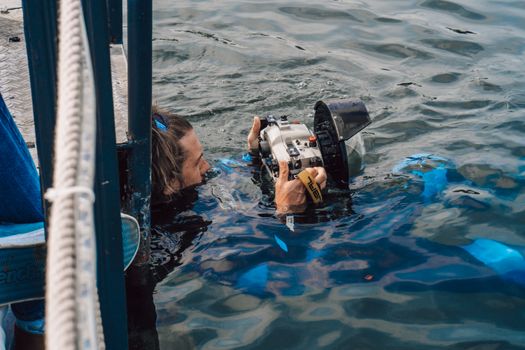
- Tray and Handles: This is crucial for stability and ergonomics. Holding a camera and housing underwater can be awkward. A tray with two handles (around $80-$150 USD) provides a stable platform and makes it easier to attach lights.
- External Strobe or Video Light: This is the biggest game-changer for compact cameras. A strobe (underwater flash) or a powerful video light will restore lost colors, add contrast, and illuminate your subjects beautifully. This is where your photos will truly pop!
- Video Lights: Continuous light, great for video and can help with focus for stills. Look for lights with 2000+ lumens. Prices start around $150-$300 USD.
- Strobes: Provide a burst of powerful light, freezing action and bringing out incredible colors. They're typically more powerful than continuous lights for stills. Entry-level strobes like the Sea&Sea YS-03 or Inon S-2000 start around $350-$600 USD.
- Arms: To position your strobe or light. Flexible arms (Loc-Line) or ball-and-socket arms are common. Prices vary greatly, but expect $50-$150 USD per arm.
Pros:
Significantly better image quality than action cameras, more manual control, greater versatility, still relatively portable.
Cons: More expensive, requires a separate housing, setup is bulkier than an action camera.
3. The Enthusiast's Choice: Mirrorless Cameras with Beginner-Friendly Housings
For those who are serious about their underwater photography, perhaps already own a mirrorless camera, and want DSLR-level image quality in a more compact system, a mirrorless camera with a dedicated housing offers incredible potential. While not strictly "beginner" in price or complexity, there are entry-level mirrorless kits that are surprisingly accessible.
Why They'll Blow Your Mind:
* Large Sensors (APS-C or Micro Four Thirds): Superior image quality, exceptional low-light performance, and incredible dynamic range.
* Interchangeable Lenses: Freedom to choose specialized wide-angle lenses for reefscapes or macro lenses for tiny subjects.
* Advanced Features: Fast autofocus, high burst rates, and professional-grade video capabilities.
My Personal Take & Recommendations:
This is the path I'm currently on, and the results are truly breathtaking. The ability to switch between a wide-angle lens for capturing majestic whale sharks in Oslob, Philippines (ethical encounters, please!) and a macro lens for tiny nudibranchs in the muck diving sites of Lembeh, Indonesia, is unparalleled. The investment is higher, but the creative possibilities are endless.
- Olympus OM-D E-M5 Mark III / E-M10 Mark IV: Olympus Micro Four Thirds cameras are a favorite for underwater photographers due to their excellent image stabilization, compact size, and a fantastic range of dedicated underwater lenses. They offer a great balance of performance and portability. Camera: $700-$1200 USD. Housing: $1000-$2000 USD (Ikelite, Nauticam, Sea&Sea).
- Sony Alpha a6000 Series (e.g., a6100, a6400): Sony's APS-C mirrorless cameras offer superb image quality, fast autofocus, and a wide array of lenses. They're a popular choice for their robust performance. Camera: $600-$900 USD. Housing: $1000-$2500 USD (Ikelite, Fantasea, Nauticam).
Essential Accessories (This is where things get serious!):
- Lenses:
- Wide-Angle Lens: For vast reefscapes, shipwrecks, and large marine animals. Think 8-16mm or 10-18mm equivalents.
- Macro Lens: For tiny critters like nudibranchs, seahorses, and intricate coral details. Think 60mm or 100mm equivalents.
- Dual Strobes: For truly professional-looking images, two external strobes (e.g., Inon Z-330, Sea&Sea YS-D3) are essential. They provide even lighting, eliminate harsh shadows, and bring out incredible colors. Expect $500-$1000+ USD per strobe.
- Focus Light: A small, bright light mounted on your camera rig to help your camera's autofocus lock onto subjects in low light. $100-$250 USD.
- Wet Lenses: These are external lenses that attach to your housing's port, allowing you to switch between macro and wide-angle capabilities underwater without changing ports. Fantastic for versatility. $300-$600 USD.
Pros:
Best image quality, most creative control, interchangeable lenses, professional results.
Cons: Most expensive, bulkiest setup, steepest learning curve, requires significant investment in accessories.
Essential Accessories for Any Setup (Beyond the Camera)
No matter which camera system you choose, a few universal accessories will make your underwater photography journey smoother and more successful.
- Anti-Fog Inserts: These small silica gel packets (around $10 for a pack) absorb moisture and prevent your housing from fogging up, which can ruin your shots. A must-have!
- Spare Batteries: Underwater photography drains batteries quickly, especially with external lights. Always carry at least one fully charged spare.
- Large Capacity SD Cards: You'll be taking a lot of photos and videos. Don't skimp on storage! Look for fast cards (UHS-II) for better performance.
- Lens Cleaning Kit: Microfiber cloths, lens wipes, and an air blower are essential for keeping your ports and lenses spotless. Water spots and dust are your enemies!
- Dry Bag: A waterproof bag (around $20-$50 USD) to protect your gear on the boat or beach.
- Lanyard/Leash: Secure your camera to your wrist or BCD. Losing your precious gear to the deep is a nightmare no one wants.
Pro Tips for Beginners: Beyond the Gear!
Having the right gear is only half the battle. Here are some actionable tips to help you capture those truly mind-blowing shots:
- Practice in a Pool First: Before you hit the open ocean, get familiar with your camera and housing in a controlled environment. Practice buoyancy, button placement, and basic settings.
- Master Your Buoyancy: Good buoyancy control is paramount. It allows you to stay stable, avoid disturbing marine life, and get into the best position for your shot without touching the reef. Enroll in a PADI Peak Performance Buoyancy course if you haven't!
- Get Close, Then Get Closer: Water absorbs light and clarity. The closer you are to your subject, the less water column there is between you, resulting in sharper images and better colors. Don't rely on zoom too much; swim closer!
- Shoot Upwards (Against the Light): Whenever possible, try to shoot subjects with the sun behind them, pointing your camera slightly upwards. This backlighting creates dramatic silhouettes and helps to separate your subject from the background. It also makes colors pop more.
- Know Your Camera Settings: Understand how to change your white balance, ISO, shutter speed, and aperture before you're underwater. Fumbling with buttons while diving is frustrating and can ruin a shot.
- Respect Marine Life: Never chase, touch, or harass marine animals for a photo. Observe from a respectful distance. A good photographer is also a responsible diver/snorkeler.
- Use Your Red Filter (or Strobes/Lights): As mentioned, these are non-negotiable for vibrant colors. Learn to use them effectively.
- Post-Processing is Your Friend: Even the best underwater photos benefit from a little editing. Learn basic adjustments like white balance, contrast, saturation, and sharpening in programs like Adobe Lightroom. This is where you can truly make your colors sing!
- Look for Interesting Compositions: Don't just point and shoot. Think about the rule of thirds, leading lines, and negative space. Frame your subjects well.
- Be Patient: Marine life moves at its own pace. Sometimes the best shots require waiting for the perfect moment.
The Underwater World Awaits!
From that first moment of regret in Maya Bay to capturing the intricate details of a pygmy seahorse, my journey into underwater photography has been one of constant discovery and immense joy. It’s not just about the gear; it’s about the stories you tell, the memories you preserve, and the incredible world you get to share.
Don't let the perceived complexity hold you back. Start small, learn as you go, and watch as your skills (and your photo gallery!) blossom. Whether you choose the rugged simplicity of an action camera, the versatile power of a compact, or the professional finesse of a mirrorless system, the underwater world is waiting for you to capture its magic.
So, what are you waiting for? Take the plunge! Invest in your first piece of underwater photography gear, book that dive trip, and prepare to blow your mind (and everyone else's!) with the stunning images you'll create.
Share your first underwater photos with us! Tag @Tripsora and use #TripsoraUnderwaterMagic – we can't wait to see your incredible shots! What gear are you planning to get? Let us know in the comments below!
---