The Ocean's Secrets, No Swimming Required: Unveiling Underwater Adventures Influencers Don't Want You To Know
My heart pounded, not from excitement, but from pure, unadulterated fear. The crystal-clear turquoise waters of the Maldives beckoned, a kaleidoscope of coral and fish visible just beneath the surface. My partner, a seasoned diver, was already geared up, a grin plastered across his face. Me? I was clinging to the side of the boat, a life vest feeling less like a safety device and more like a cruel reminder of my lifelong inability to swim.
"Just put your face in, babe! It's amazing!" he'd called, his voice muffled by the snorkel. But the thought of submerging myself, of losing control, sent shivers down my spine. I wanted to see it, desperately. I wanted those vibrant photos, that incredible connection with nature, that 'I'm living my best life' moment. But my fear of water, a stubborn companion since childhood, held me captive.
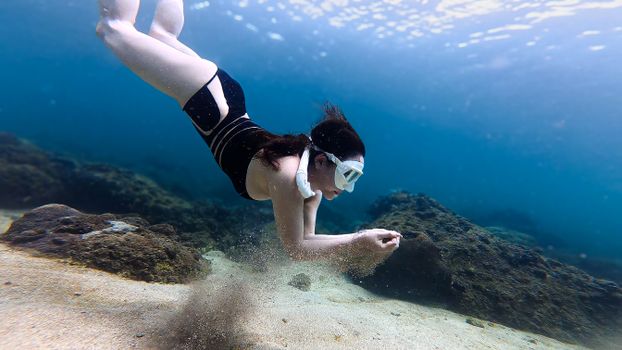
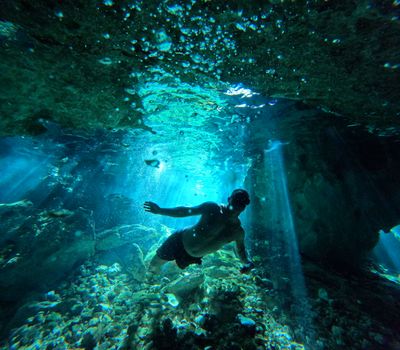
Sound familiar? If you've scrolled through Instagram, you've seen them: the effortlessly graceful influencers gliding through coral gardens, posing with turtles, looking like mermaids reborn. It’s enough to make any non-swimmer feel like they’re missing out on a huge chunk of the planet’s beauty. But what if I told you that those picture-perfect underwater moments aren't exclusive to expert swimmers or certified divers? What if I told you there’s a whole world of underwater adventures for non-swimmers that are just as breathtaking, just as Instagram-worthy, and often, even more unique?
This isn't just about glass-bottom boats (though we'll definitely cover those!). This is about unlocking the ocean's magic in ways you never thought possible, bypassing the need for swimming lessons, and experiencing the marine world up close and personal. These are the secret gateways to the deep that the "dive deep, swim free" crowd often overlooks – and honestly, they're so incredible, you might wonder why everyone isn't doing them!
Ready to dip your toes (or not!) into the wonders beneath the waves? Let's dive in!
1. The Panoramic Portal: Glass-Bottom Boats & Semi-Submarines
Let's start with the classic, but with a modern twist. You might dismiss glass-bottom boats as too simple, but trust me, they've evolved. These aren't just little dinghies with a small window anymore. Many destinations now offer sleek, comfortable vessels with expansive viewing panels, some even featuring multiple levels.
But the real game-changer? Semi-submarines. These incredible creations allow you to sit in a submerged cabin, often with large, panoramic windows on either side, while the upper deck remains above water. It feels like you're truly underwater, without any of the water-contact anxiety. You descend into the ocean's embrace, watching schools of fish dart by, vibrant coral formations unfold, and sometimes, even larger marine life like reef sharks or rays make an appearance. It's a completely dry, comfortable, and utterly mesmerizing experience.
My First Glimpse:
I remember my first semi-submarine trip in Eilat, Israel. The moment we descended, the world outside the window transformed into a living, breathing aquarium. A huge Napoleon wrasse, its eyes seemingly meeting mine, swam right past. I gasped, pressing my face against the glass, feeling an almost childlike wonder. It was like watching a National Geographic documentary, but I was inside it. No fear, just pure awe.
Where to Find Them:
* Red Sea (Eilat, Sharm El Sheikh): Famous for incredible visibility and diverse marine life. Prices typically range from $30-$70 for a 1-2 hour tour.
* Maldives: Many resorts offer private or shared semi-submarine excursions, often included in packages or available for around $50-$100.
* Caribbean (e.g., Grand Cayman, Aruba): Popular for viewing shipwrecks and vibrant reefs. Atlantis Submarines (more on them later!) also offers semi-sub options in some locations.
* Great Barrier Reef (Australia): Many tour operators offer glass-bottom boat or semi-sub experiences from Cairns or Port Douglas.
Tripsora Tip:
Look for tours that offer commentary from marine biologists – it adds an educational layer to the visual feast! These tours are perfect for families with young children or anyone who wants a completely non-intrusive way to connect with the underwater world.
2. Walk on Water (or Under It!): Sea Walking & Helmet Diving
This is where things get truly exciting, and it's perhaps the most underrated underwater adventure for non-swimmers. Imagine walking on the ocean floor, surrounded by tropical fish, feeling completely weightless, with your head dry and your hair perfectly intact. That's exactly what sea walking or helmet diving offers.
You wear a specially designed helmet that rests on your shoulders, connected to an air supply from the surface. The helmet is heavy enough to keep you grounded, and the continuous flow of air keeps the water out, allowing you to breathe normally through your nose and mouth. No swimming skills, no diving experience, no even getting your face wet! You simply descend a ladder, and guides are with you every step of the way, often holding your hand.
My Surreal Stroll:
My first helmet dive was in Mauritius. I was nervous, but the guides were incredibly reassuring. As I slowly descended, the water reached my chest, then my neck, and then, with a gentle push, I was on the sandy bottom. Fish, vibrant blue and yellow, swarmed around me, nibbling at the bread the guide offered. It felt utterly surreal, like I'd stepped onto another planet. I could talk to the guide (through hand signals, mostly!) and even wear my glasses. It was an out-of-body experience, but completely safe and controlled. And yes, my hair was dry!
Where to Find Them:
* Mauritius: A hotspot for sea walking, with several operators around Grand Baie. Prices typically start around $50-$80 for a 30-minute walk.
* Bali, Indonesia: Sanur and Tanjung Benoa beaches offer popular sea walking experiences.
* Great Barrier Reef, Australia: Some pontoon tours offer helmet diving as an add-on.
* Thailand (e.g., Phuket, Pattaya): Increasingly popular, especially around coral islands.
* Hawaii (e.g., Oahu): Some specialized tours cater to non-swimmers with helmet diving.
Tripsora Tip:
Wear comfortable swimwear and avoid heavy makeup. The pressure change can be slightly noticeable in your ears, like on a plane, so gently equalize by swallowing or wiggling your jaw. This is an incredible experience to capture on video – many operators offer professional photo/video packages.
3. The Ultimate Dry Dive: Underwater Observatories & Aquariums
For those who want zero contact with the water but maximum immersion in marine life, underwater observatories and world-class aquariums are your sanctuaries. These aren't just fish tanks; they are architectural marvels designed to bring the ocean's majesty to you, completely dry and comfortable.
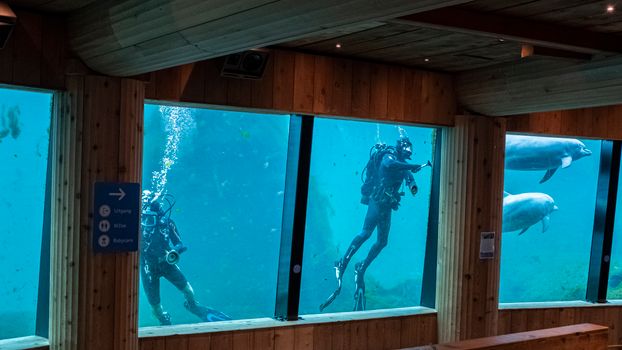
Imagine sitting in a vast, climate-controlled room, gazing out of enormous acrylic windows into the actual ocean, watching sharks glide by, massive schools of fish shimmer, and coral reefs teem with life. Underwater observatories are built directly into the marine environment, offering a truly authentic glimpse without the need for any equipment or swimming skills.
And then there are the aquariums – but not just any aquariums. I'm talking about the giants, the ones with walk-through tunnels, multi-story tanks, and interactive exhibits that make you feel like you're part of the ecosystem. These are perfect for bad weather days or when you simply want a guaranteed, diverse marine encounter.
My Jaw-Drop Moment:
The Underwater Observatory Marine Park in Eilat, Israel, was a revelation. Descending deep into the Red Sea, I found myself in a circular room with windows all around, feeling like I was suspended in the middle of a vibrant reef. I saw barracudas, lionfish, and parrotfish in their natural habitat, completely oblivious to my presence. Later, at the Dubai Aquarium & Underwater Zoo, walking through that massive tunnel with sharks circling overhead was an almost spiritual experience. It felt like they were in my world, not the other way around.
Where to Find Them:
* Underwater Observatory Marine Park, Eilat, Israel: Built right into the coral reef, offering unparalleled natural views. Entry around $25-$35.
* Okinawa Churaumi Aquarium, Japan: Home to whale sharks and manta rays in one of the world's largest tanks.
* Dubai Aquarium & Underwater Zoo, UAE: Located in the Dubai Mall, featuring a spectacular walk-through tunnel.
* SEA LIFE Aquariums (worldwide): Many locations offer immersive experiences and shark tunnels.
* The Seas with Nemo & Friends, Epcot, Walt Disney World, USA: A huge saltwater aquarium with incredible viewing areas.
Tripsora Tip:
Check for feeding times at aquariums – it's often a spectacular sight! For observatories, go during peak daylight hours for the best natural light and visibility.
4. Floating with Confidence: Accessible Snorkeling (with Assistance!)
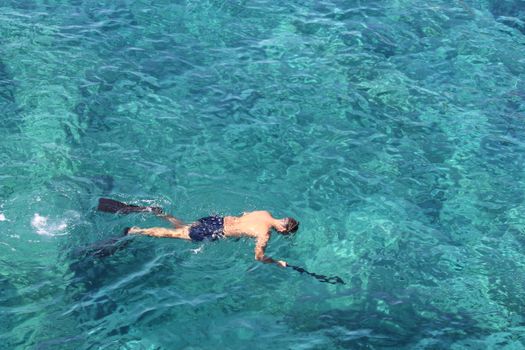
Okay, so maybe you can float, but the idea of proper swimming or snorkeling freestyle still fills you with dread. Good news! Many tour operators cater specifically to those who need a little extra help. This isn't strictly "non-swimming," but it's "non-expert-swimming" and incredibly accessible.
The key here is flotation devices and guided tours. Forget the tiny life vests; think full-body flotation suits, thick buoyancy vests, or even "noodle" floats that you can hold onto. Many tours offer guided snorkeling where you hold onto a rope attached to a boat or a guide, allowing you to simply float and observe without worrying about propulsion or staying afloat. Full-face snorkel masks can also be a game-changer, eliminating the discomfort of a traditional mask and mouthpiece.
My Breakthrough Moment:
In a calm, shallow lagoon in Bora Bora, I finally decided to try snorkeling with a life vest and a full-face mask. The guide reassured me, saying I could hold onto a float. The feeling of seeing the vibrant fish and coral just inches away, while feeling completely secure, was liberating. It wasn't graceful, but it was my underwater moment, and it was incredible. It proved that sometimes, just a little extra support is all you need to conquer a fear.
Where to Find Them:
* Protected Lagoons & Shallow Reefs (e.g., Bora Bora, Fiji, parts of the Caribbean): Look for tours specifically advertised as "beginner-friendly" or "non-swimmer snorkeling."
* Bonaire: Known for its accessible shore diving/snorkeling, many areas are shallow and calm.
* Hawaii: Many catamaran tours offer guided snorkeling with flotation devices in calm bays.
Tripsora Tip:
Always communicate your comfort level to the tour operator. Ask about the specific flotation devices they provide and if a guide can stay close to you. Choose tours in very calm, shallow waters for your first attempt.
5. The Deep Dive (Literally!): Tourist Submarines
If you've ever dreamt of exploring the true depths of the ocean, seeing sunken ships, or encountering marine life far beyond the reach of snorkelers, then a tourist submarine is your ticket. These are not semi-submarines; these are legitimate, fully submersible vessels that take you hundreds of feet below the surface.
You sit in a comfortable, pressurized cabin with large portholes, watching the deep blue transform into an entirely new world. These submarines can venture to areas where light barely penetrates, revealing fascinating deep-sea creatures or historical shipwrecks. It's an engineering marvel and an unparalleled way to experience the ocean's mysterious depths without any physical exertion.
My Journey to the Abyss:
On an Atlantis Submarine tour in Aruba, I felt like a true explorer. As we descended, the light shifted from bright blue to an ethereal twilight. We saw a sunken tugboat, now an artificial reef teeming with fish, and even a large green sea turtle gliding gracefully past our window. It was a completely different perspective than any other underwater experience I'd had – quiet, profound, and utterly captivating.
Where to Find Them:
* Atlantis Submarines (Hawaii, Aruba, Grand Cayman, Barbados, Guam): The most well-known operator, offering tours to depths of 100-150 feet. Prices typically range from $100-$150.
* Other operators in popular tourist destinations: Search for "tourist submarine" in places like Canary Islands, Cozumel, and Red Sea resorts.
Tripsora Tip:
Book well in advance, especially during peak season, and try to secure a window seat for the best views. If you're prone to motion sickness, take precautions beforehand, though the ride is usually smooth.
6. The Ultimate Luxury View: Overwater Bungalows with Glass Floors & Underwater Restaurants
For those who prefer their underwater adventures with a side of luxury and zero effort, these options are pure bliss.
Imagine waking up in an overwater bungalow in the Maldives or Bora Bora, rolling out of bed, and peering through a glass panel in your floor to watch reef sharks, rays, and colorful fish swim directly beneath your feet. Or perhaps you're enjoying a gourmet meal in an underwater restaurant, surrounded by panoramic views of marine life, feeling like you're dining in Neptune's palace. These experiences offer constant, passive immersion in the marine world, perfect for romantic getaways or simply indulging in unparalleled luxury.
My Waking Dream:
Staying in an overwater villa in the Maldives, the glass floor panel became my personal, ever-changing aquarium. I'd lie on the bed, mesmerized by the fish darting below, especially at night when the underwater lights illuminated the scene. Later, dining at Ithaa Undersea Restaurant (also in the Maldives) was a sensory overload – exquisite food paired with a vibrant coral reef just outside the dome. It was truly an 'influencer-level' experience, but one that required absolutely no swimming.
Where to Find Them:
* Overwater Bungalows with Glass Floors: Predominantly in the Maldives, Bora Bora (French Polynesia), Fiji, and parts of the Caribbean. Resorts like Conrad Maldives Rangali Island, Four Seasons Bora Bora, and St. Regis Bora Bora are famous for these. Prices vary wildly but expect luxury rates.
* Underwater Restaurants:
* Ithaa Undersea Restaurant (Conrad Maldives Rangali Island, Maldives): The original and most famous.
* Under (Lindesnes, Norway): Europe's first underwater restaurant, also a marine research center.
* Subsix (Niyama Private Islands, Maldives): A vibrant underwater club and restaurant.
* Ossiano (Atlantis The Palm, Dubai): While not fully submerged, it offers stunning views into a massive aquarium.
Tripsora Tip:
These are often very high-end experiences, so budget accordingly and book far in advance, especially for underwater restaurants, which have limited seating.
No More FOMO: Your Underwater World Awaits!
For years, I let my fear of swimming keep me from experiencing the incredible beauty beneath the ocean's surface. I scrolled through endless Instagram feeds, feeling a pang of jealousy, convinced that these wonders were simply not for me. But as I discovered, the ocean is far more accessible and inclusive than the curated feeds of influencers might suggest.
From walking on the seabed to dining with sharks, from comfortable semi-submarines to luxurious glass-floored bungalows, there are countless ways to connect with marine life without ever needing to perform a single stroke. These underwater adventures for non-swimmers aren't just alternatives; they are unique, immersive, and often profoundly moving experiences in their own right.
So, the next time you dream of vibrant coral and shimmering fish, don't let the thought of "I can't swim" hold you back. The ocean is calling, and it's ready to welcome you, no matter your swimming ability. Go forth, explore, and capture those incredible, authentic, and utterly shareable moments that truly prove the underwater world is for everyone!
Which of these incredible non-swimmer underwater adventures are you adding to your bucket list first? Share your dreams in the comments below, and don't forget to tag a non-swimmer friend who needs to know these secrets!
---