The Hook: Why I Swapped My Beach Towel for a Planting Spade
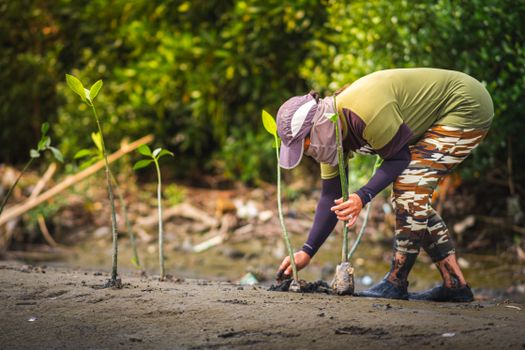
I stepped off the rust-eaten taxi-brousse (bush taxi) in Mahajanga, Madagascar, and was instantly hit by a wall of humid air that smelled of salt, drying fish, and the unmistakable sulfur tang of exposed tidal mud. My boots, fresh out of the box in London, were destined to never look the same again. Within three hours, I was knee-deep in the warm, primordial muck of a denuded estuary, sliding a slender mangrove propagule—a Rhizophora mucronata—into the silt.
As my fingers sank into the mud, a local planter named Jean-François looked at me, wiped sweat from his brow, and laughed. "Now," he said, "you are married to this coast."
That was three years ago. Since then, I’ve tracked the global shift from passive "sustainable" travel to active, data-driven regenerative travel. The verdict is in: travelers no longer want to just "leave no trace." We want to repair the traces left by decades of industrial exploitation.
According to recent data from the World Resources Institute (WRI) and Global Forest Watch, the planet lost over 4.1 million hectares of primary tropical forest in 2023 alone. But the data also shows a silver lining: targeted, community-led reforestation efforts have a 75% higher tree survival rate than top-down, corporate-sponsored monoculture drops.
If you want to spend your next vacation doing something that actually matters, here is the definitive, data-backed guide to the world's premier tree-planting expeditions.
---
1. The Data Shift: Why Your Next Trip Must Be Regenerative
For years, carbon offsetting was a shell game. You checked a box at airline checkout, paid $15, and hoped some vague forest in the sky was being protected. Recent investigative reporting has exposed the fragility of these phantom credits.
Today’s savvy traveler demands transparency. We want to know:
* What species are being planted? (Hint: Monocultures of eucalyptus are out; biodiverse native species are in.)
* What is the sapling survival rate? (If a project doesn't track survival rates for at least 3 to 5 years, walk away.)
* Is the local community being paid fair wages?
The travel industry is responding to this data-driven scrutiny. Reforestation trips are no longer just for gap-year students with dreadlocks; they are the new luxury for high-earning professionals who want to spend their PTO solving the climate crisis with their own two hands.
---
2. Madagascar’s Mangroves: Reclaiming the Lost Red Island
```
Data Point: Mangroves sequester up to 10 times more carbon per acre than terrestrial rainforests, making them the ultimate weapon against climate change.
```
Madagascar has lost roughly 90% of its original forest cover. The coastal mangrove estuaries, which protect the island from devastating cyclones, have been heavily deforested for charcoal production.
The Mission
Working alongside local Sakalava communities and NGOs like Eden Reforestation Projects, volunteers plant mangrove propagules directly into the tidal mud of the Mahajanga and Boeny regions. You’ll be planting four primary species, including Rhizophora mucronata and Avicennia marina, restoring critical habitats for endangered lemurs, flying foxes, and coastal fish species.
The Daily Grind
You rise at 5:00 AM to beat the equatorial heat. Breakfast is a bowl of vary sosoa (rice porridge) washed down with intense, locally grown robusta coffee. By 6:30 AM, you are on a wooden pirogue heading into the estuaries. You’ll spend four hours wading through knee-deep mud, slotting propagules into the sediment at precise intervals. It is physically grueling, sweat-stinging work, but the camaraderie among the local crew is infectious.
- Pro-Tip: Do not wear hiking boots. The tidal mud acts like quicksand and will swallow them whole. Instead, pack tight-fitting neoprene booties with a hardened sole, or go barefoot like the locals once you get your footing.
---
3. Costa Rica’s Biological Corridors: Reconnecting the Canopy
```
Data Point: Fragmented forests prevent gene flow among wildlife. Reconnecting these islands via biological corridors increases biodiversity by up to 15% within three years.
```
Costa Rica is the poster child for ecological recovery, having successfully doubled its forest cover over the last three decades. However, critical gaps remain, particularly on the Osa Peninsula—home to 2.5% of the world’s biodiversity.
The Mission
Volunteers join organizations like Osa Conservation to plant native hardwood trees such as the Copaifera aromatica (Camíbar) and the endangered Caryocar costaricense (Ajo tree). The goal is to build physical forest corridors that allow jaguars, spider monkeys, and scarlet macaws to travel safely between national parks.
The Daily Grind
You’ll stay at an off-grid research station powered by solar energy. Your morning starts with the roar of howler monkeys at 5:15 AM. After a hearty plate of gallo pinto (beans and rice) and fried plantains, you’ll hike into old-growth secondary forests carrying saplings in specialized canvas backpacks. You’ll use a heavy-duty planting mattock to cut through clay soils, secure the sapling, and apply organic mulch.
- Pro-Tip: The humidity on the Osa Peninsula is regularly at 95%. Cotton is your enemy; it never dries and will cause severe chafing. Pack high-quality, lightweight merino wool or synthetic moisture-wicking shirts.
---
4. Iceland’s Volcanic Rebirth: Rewilding the Land of Fire and Ice
```
Data Point: When the Vikings arrived in Iceland, over 40% of the island was forested. Today, after centuries of sheep grazing and volcanic eruptions, that number is barely 2%.
```
Iceland’s soil erosion is a quiet catastrophe. Without tree roots to hold the volcanic soil (tephra) in place, heavy winds strip the land down to barren black deserts.
The Mission
Partnering with the Icelandic Forestry Association (Skógræktin), volunteers head to the southern highlands near Hekla or the dramatic fjords of the east. You’ll be planting Betula pubescens (Downy Birch), the only native canopy-forming tree in Iceland, alongside Siberian Larch to help stabilize the highly volatile volcanic dust.
The Daily Grind
The Icelandic summer offers 24 hours of daylight, meaning planting shifts can be highly flexible. You’ll be working in cool, crisp air (often around 10–12°C) surrounded by jagged basalt formations and distant glaciers. You’ll use a specialized tool called a Pottiputki—a metal tube that allows you to drop saplings into the ground without bending over.
- Pro-Tip: Iceland’s wind is relentless and can cause rapid hypothermia even in summer. Always plant on the leeward (sheltered) side of large basalt rocks. This protects both you and the delicate birch sapling from the drying winds.
---
5. Scotland’s Caledonian Forest: Restoring the Ancient Highlands
```
Data Point: The Caledonian pinewoods once covered over 1.5 million hectares of Scotland. Today, only 84 scattered remnants survive, covering less than 1% of their original area.
```
The iconic Scottish Highlands are beautiful, but they are ecologically devastated—a landscape of "wet deserts" maintained by overgrazing from red deer and sheep.
The Mission
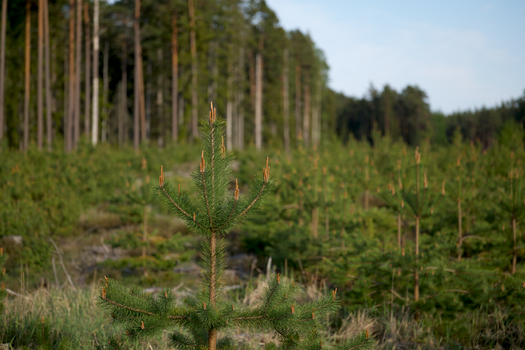
Organizations like Trees for Life are working to restore the ancient Caledonian Forest in Glen Affric and the Dundreggan estate. Volunteers plant native Pinus sylvestris (Scots Pine), rowan, hazel, and downy willow to create a continuous forest canopy capable of supporting red squirrels, pine martens, and golden eagles.
The Daily Grind
You’ll live in a converted stone cottage or a sustainable eco-lodge. Days are spent navigating peat bogs and steep heather slopes. You'll carry bags of bare-root saplings, using a traditional planting spade to make "T-notches" in the wet turf. The weather is notoriously unpredictable—you might experience glorious sunshine, driving rain, and gale-force winds all in the span of a single afternoon.
- Pro-Tip: The Scottish midge (a tiny biting insect) is the stuff of nightmares from June to September. Standard bug spray does nothing. Buy a bottle of Smidge (a local picaridin-based repellent) and a fine-mesh head net before you set foot in the glen.
---
6. How to Vet Your Eco-Trip: Red Flags to Watch Out For
With the rise of "greenwashing," not all tree-planting trips are created equal. Before you hand over your credit card, ask the tour operator or NGO these three hard questions:
- "What is your long-term monitoring plan?" High-quality projects use drone mapping and satellite imagery (like Starling or Global Forest Watch) to track canopy growth over decades. If they just plant and walk away, the project is likely a failure.
- "Where do you source your seeds?" Saplings must be grown in local nurseries from native seeds to ensure genetic diversity and resistance to local pests. Avoid any project that imports non-native species.
- "How does this project support the local economy?" The primary cause of deforestation is economic necessity. If local people are not employed as rangers, planters, and nursery managers, they will eventually be forced to clear the forest again for agriculture or charcoal.
---
7. Budget, Logistics, and Quick Facts
Planning a regenerative travel trip requires different logistics than a standard holiday. Use this quick reference guide to plan your journey.
| Destination | Best Time to Visit | Estimated Cost (Weekly Volunteer Fee) | How to Get There | Focus Species |
| :--- | :--- | :--- | :--- | :--- |
| Madagascar (Mahajanga) | May to October (Dry season) | $800 - $1,500 (includes food/lodging) | Fly to Antananarivo (TNR), then take a domestic flight or private 4x4 to Mahajanga. | Red Mangrove (Rhizophora mucronata) |
| Costa Rica (Osa Peninsula) | December to April (Dry season) | $1,200 - $2,200 (includes scientific guidance) | Fly to San José (SJO), catch a charter flight to Puerto Jiménez, then 4x4 to the station. | Ajo Tree (Caryocar costaricense) |
| Iceland (Southern Highlands) | June to August (Midnight sun) | $600 - $1,200 (often includes basic hostel/cabin stay) | Fly to Reykjavík (KEF), take the daily highland bus or rent a 4x4 camper. | Downy Birch (Betula pubescens) |
| Scotland (Glen Affric) | April to October | £450 - £900 (subsidized by conservation charities) | Fly to Inverness (INV), then take a pre-arranged shuttle or local bus to Beauly. | Scots Pine (Pinus sylvestris) |
---
The Verdict: Leave Your Mark, Not Your Footprint
When you return from a tree-planting trip, you won't have a perfect tan. Your muscles will ache, your gear will be permanently stained with volcanic ash or red clay, and you’ll likely have a few insect bites.
But as you sit in the airport waiting for your flight home, you’ll have something far more valuable: the exact GPS coordinates of a new forest that exists solely because you chose to sweat for it. That is the true power of regenerative travel.
---