The Mud, the Sweat, and the Miracle of Regeneration
I stepped off the local wooden motorized longboat into the knee-deep, warm mud of the Betsiboka River estuary in northwest Madagascar, and the smell hit me instantly: a pungent mix of sulfur, rich river silt, and the sharp, salty tang of the Mozambique Channel. My boots were useless within thirty seconds. I abandoned them on the bow, sinking my bare feet into the cool, squelching clay. Around me, a dozen local members of the Malagasy reforestation team were already moving with practiced agility through the intertidal zone, their arms loaded with slender, green mangrove propagules that looked like long, pointed pencils.
"Watch the crab holes," warned Mamy, our local lead coordinator, his face creased with a wide, sunscreen-smeared grin. "And don't push the propagule too deep. Just past the node, like this."
He demonstrated with a swift, elegant flick of his wrist, plunging a red mangrove (Rhizophora mucronata) seedling into the mud. I copied him, my fingers slick with clay, feeling the cool resistance of the earth. When I stood up, looking back at the long line of green shoots we had just anchored into the mud flats, something shifted in me. I wasn't just observing a landscape; I was actively weaving myself into its survival.
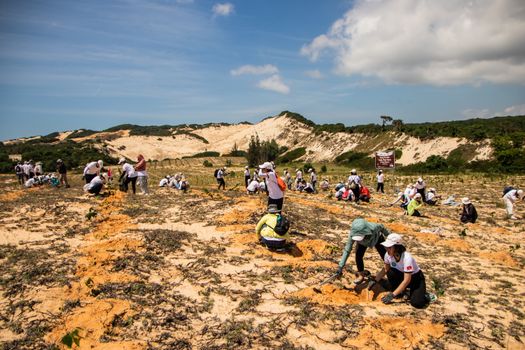
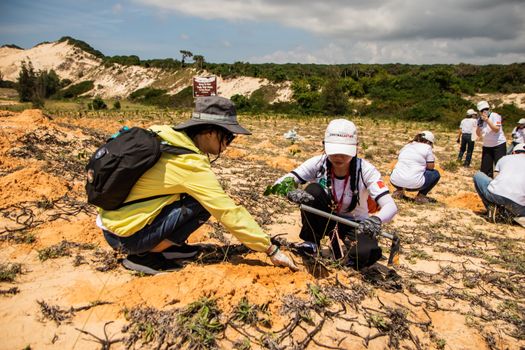
This isn't your standard voluntourism trap where you paint an orphanage for a day and take a selfie. This is regenerative travel: hard, physical, scientifically backed restoration work that pairs adventurous travelers with indigenous-led conservation efforts. If you are ready to swap the infinity pool for a planting iron, here is where you need to go right now.
---
1. The High-Altitude Andes, Peru: Reviving the Sacred Polylepis Forests
```
▲ High-Altitude Andes (4,200m+)
/ \_
/ \_ [Polylepis Reforestation Zone]
/_______\
|| <- Targeted planting of Queñua trees to secure water basins
```
High above the Sacred Valley, where the air is so thin it feels like inhaling glass, lies one of the most endangered forest ecosystems on earth. The Polylepis (locally known as Queñua) forests grow at altitudes up to 5,000 meters. These gnarled, paper-barked trees are ecological miracle workers; they capture glacial meltwater, filter it, and slowly release it into the valleys below, acting as natural water towers for millions of people, including those living in Cusco. Decades of overgrazing and firewood collection have left these ancient forests fragmented.
The Project: Queñua Raymi (The Tree-Planting Festival)
Every year between October and December, the non-profit ECOAN (Asociación Ecosistemas Andinos), in partnership with Global Forest Generation, organizes massive community planting festivals. You will join hundreds of indigenous Quechua community members clad in vibrant, hand-woven red and black ponchos and monteras (traditional hats).
The day begins with a traditional offering to Pachamama (Mother Earth)—coca leaves, local corn beer (chicha), and quiet prayers whispered into the mountain wind. Then, the climb begins. You will carry bundles of Queñua saplings up steep, rocky slopes using traditional foot-plows called chakitakllas to break the stony soil.
- The Vibe: High-energy, deeply spiritual, and physically demanding.
- Pro-Tip: Do not attempt this on your first day in Peru. Spend at least four days acclimatizing in Cusco or Ollantaytambo first. Drink muña (Andean mint) tea rather than coca tea to settle altitude-induced stomach issues; it works twice as fast.
---
2. The Scottish Highlands: Re-wilding the Caledonian Forest
The Scottish Highlands are famous for their dramatic, sweeping vistas of barren, heather-clad hills. But here is the uncomfortable truth: those empty hills are an ecological graveyard. Once, a massive temperate rainforest of Scots pine, birch, rowan, and aspen—the Caledonian Forest—covered over 1.5 million hectares. Today, due to centuries of overgrazing by sheep and artificially high deer populations, less than 2% of that ancient forest remains.
```
[The Caledonian Forest: Past vs. Present]
Past: [🌲🌲🌲🌲🌲🌲🌲🌲🌲🌲🌲🌲] (1.5 Million Hectares)
Present: [🌲] (Less than 2% remaining)
```
The Project: Dundreggan Rewilding Centre
Located near Glenmoriston, Trees for Life is a pioneering charity working to restore this lost wilderness. At their flagship Dundreggan estate, they have built a stunning, low-impact Rewilding Centre. You can book onto their "Conservation Weeks," where you stay in a beautifully designed, sustainable eco-lodge and spend your days working alongside expert ecologists.
Your days will involve trekking into remote glens to plant native Scots pine and dwarf birch, collecting wild seeds from the remnants of the ancient forest, and monitoring natural regeneration. The work is damp, cold, and utterly exhilarating.
- The Vibe: Intellectual, cozy, and deeply satisfying. Evenings are spent sharing hearty, locally sourced vegetarian meals by a roaring wood stove, drinking single-malt whisky from the nearby Glen Urquhart distillery.
- Pro-Tip: Pack high-quality, seamless waterproof socks (like Sealskinz). The Scottish bog will breach even the best Gore-Tex boots, and wet feet are the fastest way to ruin a planting shift.
---
3. Mahajanga Province, Madagascar: Coastal Mangrove Restoration
Madagascar is an evolutionary wonderland; over 90% of its wildlife is found nowhere else on Earth. But poverty and slash-and-burn agriculture have stripped away more than 80% of its original forest cover. Along the coast, the destruction of mangrove forests has left coastal communities vulnerable to cyclones, destroyed fish nurseries, and allowed massive amounts of topsoil to wash into the ocean.
```
[Mangrove Ecological Shield]
Storm Surge ===> [Mangrove Roots] ===> Protected Coastal Village
(Absorbs Wave Energy)
```
The Project: Eden Reforestation Projects
Operating out of the coastal city of Mahajanga, Eden Reforestation Projects runs one of the most successful, community-driven mangrove restoration programs in the world. They employ local villagers to plant millions of trees monthly, providing them with a consistent income that lifts them out of extreme poverty.
As an international volunteer or eco-donor visiting their partner expeditions, you will travel by boat to remote planting sites along the coast. You will work side-by-side with local planting teams, wading through coastal mud to plant mangrove propagules. The sheer scale of the operation is breathtaking; you will see areas that were bare mud flats five years ago now standing as thriving, 15-foot-tall green forests teeming with crabs, birds, and returning fish populations.
- The Vibe: Humid, raw, and incredibly high-impact.
- Pro-Tip: The tropical sun reflecting off the water and mud is brutal. Ditch the baseball cap and wear a wide-brimmed straw hat with a chin strap. Apply a coral-safe, zinc-based sunscreen to your ears and the back of your neck.
---
4. The Leuser Ecosystem, Sumatra: Rebuilding Orangutan Corridors
The Leuser Ecosystem in Sumatra, Indonesia, is the last place on Earth where orangutans, rhinos, elephants, and tigers still coexist in the wild. But illegal palm oil plantations, logging, and road construction are slicing this ancient rainforest into isolated islands, trapping wildlife in unsustainable pockets of forest.
```
[The Corridor Solution]
[Forest Block A] --(Palm Oil Plantation / Fragmented Land)-- [Forest Block B]
||
\/ (Your Work)
[Forest Block A] =======[Planted Wildlife Corridor]======= [Forest Block B]
```
The Project: The Sumatran Orangutan Society (SOS) & Orangutan Haven
Working with local Indonesian partners like OIC (Orangutan Information Centre), SOS runs hands-on habitat restoration projects on reclaimed illegal palm oil plantations. Volunteers and eco-expedition members help chop down oil palms (which drain the soil of nutrients) and replace them with fast-growing native pioneer species, wild jackfruit, and durian trees.
You will base yourself near the Bukit Lawang gateway or deep within the Halaban restoration site. The work is hot, sweaty, and physically intense. You will be digging planting holes in clay soil, carrying heavy saplings through dense jungle, and dealing with leeches. But when you look up and see a wild orangutan feeding on the fruits of a tree planted by volunteers just a few years prior, the physical toll vanishes.
- The Vibe: Gritty, adventurous, and intensely wild.
- Pro-Tip: Buy a pair of "Kampung Addidas" at a local market for less than $3. These are cheap, single-mold rubber soccer cleats used by jungle guides. They offer unmatched grip on wet clay slopes and dry instantly.
---
5. The Atlantic Forest, Brazil: Connecting the Fragments
While the Amazon gets all the press, Brazil's Atlantic Forest (Mata Atlântica) is actually far more threatened. Only about 12% of this hyper-diverse biome remains, scattered in tiny, isolated patches across the eastern coast of Brazil. This fragmentation is catastrophic for species like the golden lion tamarin, which cannot cross open cattle pastures to find mates.
```
[Fragmented Forest] [Restored Canopy Corridor]
🌲 🌲 🌲🌲🌲🌲🌲🌲
🐒 [Pasture] 🐒 🐒 ➔ ➔ ➔ ➔ 🐒
(Isolated/Inbred) (Safe Genetic Exchange)
```
The Project: Iracambi Rainforest Research Center
Located in the stunning, mountainous state of Minas Gerais, Iracambi is a research and restoration center dedicated to saving the Atlantic Forest. They offer highly structured volunteer programs where you can live on their beautiful research ranch, work in their native tree nursery, and help plant forest corridors across local dairy farms.
You will learn how to collect seeds from rare forest giants, prepare organic soil mixes, and plant trees on steep hillsides. Iracambi’s focus is on community forestry; you will work closely with local farmers to show them how restoring forests on their land can protect their water springs and improve soil health.
- The Vibe: Community-focused, educational, and deeply collaborative.
- Pro-Tip: Bring a good pair of leather work gloves. The native brush in Minas Gerais is full of tiny, incredibly sharp thorns that will shred standard gardening gloves in a single afternoon.
---
Quick Facts & Logistics Planner
| Destination | Best Time to Visit | Estimated Cost (USD) | How to Get There | Key Species Planted |
| :--- | :--- | :--- | :--- | :--- |
| High Andes, Peru | Oct – Dec (Planting season) | $1,200 - $2,500 (Week-long expedition) | Fly to Cusco, take private transport to Sacred Valley / Lares. | Polylepis racemosa (Queñua), Escallonia resinosa (Chachacoma) |
| Scottish Highlands | Apr – Oct (Conservation weeks) | $450 - $800 (Includes lodge stay & meals) | Train from Glasgow/Edinburgh to Inverness, then local bus to Glenmoriston. | Pinus sylvestris (Scots Pine), Betula pubescens (Downy Birch) |
| Mahajanga, Madagascar | May – Nov (Dry, cooler season) | $1,500 - $3,000 (Eco-tour operator) | Fly to Antananarivo, take domestic flight to Mahajanga, then boat transfer. | Rhizophora mucronata (Red Mangrove), Avicennia marina (Grey Mangrove) |
| Sumatra, Indonesia | Jun – Sep (Dry season) | $1,000 - $2,200 (Guided conservation trip) | Fly to Medan (Kualanamu), take a private car or local bus to Bukit Lawang. | Durio zibethinus (Durian), Ficus species (Wild Fig) |
| Atlantic Forest, Brazil | Year-round (Planting Nov-Mar) | $350 - $600/week (Includes room & board) | Fly to Rio de Janeiro or Belo Horizonte, take a long-distance bus to Muriaé. | Cecropia (Embaúba), Schinus terebinthifolia (Aroeira) |
---
The Golden Rules of Ethical Tree-Planting Travel
Before you pack your bags and head out to save the world, you must understand that bad reforestation projects can do more harm than good. Planting the wrong trees in the wrong places can destroy native grasslands, deplete local water tables, and waste valuable resources.
To ensure your trip is truly regenerative, run it through this quick checklist:
- Is it community-led? If the local community is not actively involved, paid fair wages, and given ownership of the trees, the project will fail. Trees planted without local support are often cut down within five years.
- Is it a monoculture? If a project is planting only one species of tree (especially non-native species like Eucalyptus or Pine for quick carbon credits), walk away. True forest restoration requires a diverse mix of native species that mimic the natural ecosystem.
- Is there long-term monitoring? Planting a tree is easy; keeping it alive is hard. Ask the organization what their survival rate is and how they protect the saplings from pests, weeds, and grazing animals over the first critical three years.
---
What to Pack: The Regenerative Traveler’s Kit
When you are out in the field, your standard vacation gear won't cut it. Here is the gear that will make or break your trip:
- A Heavy-Duty Reusable Water Bottle (Insulated): You will be working hard in hot climates. A double-walled stainless steel bottle keeps water cold even in the middle of a humid Sumatran clearing.
- Tecnu or Poison Oak/Ivy Cleanser: Essential if you are planting in areas with toxic brush or skin-irritating plants.
- Broad-Spectrum, Biodegradable Bug Repellent: Avoid heavy DEET formulas if you are working near delicate water systems or handling young plants; opt for high-concentration Picaridin or Lemon Eucalyptus instead.
- Quick-Dry, Ripstop Work Pants: Leave the jeans at home. They hold water, take days to dry, and chafe terribly when wet. Look for nylon pants with reinforced knees.
- A Quality Headlamp: Many of these remote conservation camps run on limited solar power. A dependable, USB-rechargeable headlamp is your lifeline after dark.
---
The Lasting Impact
When you return home from a trip like this, your perspective shifts permanently. You don't look at a forest and just see "scenery" anymore. You see the complex network of roots holding the hillside together; you see the pioneer species nursing the slow-growing canopy giants; you see the delicate balance of soil, water, and life.
You will have blisters on your hands, mud embedded deep under your fingernails, and an ache in your lower back. But you will also have left a living, breathing legacy on this planet—a patch of forest that will grow, breathe, and capture carbon long after you are gone. That is the true power of travel.
---