The year was 2017. I was stuck in the infamous Los Angeles traffic, inching along the 405, watching the minutes – and my sanity – tick away. Horns blared, engines idled, and the dream of a quick jaunt across town evaporated into a hazy smog. "There HAS to be a better way," I muttered, slamming my hand on the steering wheel. Little did I know, that frustration would ignite a new obsession: finding and experiencing the transportation methods that existed outside the gridlock, the ones whispered about in tech forums and niche travel blogs, the future-forward solutions already quietly moving people in specific corners of the world.
Fast forward a few years, and I’ve been on a mission, seeking out these hidden gems of mobility. These aren't just sci-fi concepts; they're real, operational systems that offer a glimpse into what travel could (and should) be like. They're efficient, often eco-friendly, and almost always an adventure in themselves. So, buckle up, fellow explorers, because I’m about to pull back the curtain on seven transportation methods you probably never knew existed, long before they become mainstream. Prepare to have your travel horizons – and your expectations for getting around – irrevocably changed!
1. The Podcar Revolution: Personal Rapid Transit (PRT)
Imagine hailing a private, electric pod that whisks you directly to your destination on a dedicated guideway, no stops, no traffic, no shared space unless you choose it. Sounds like something out of a futuristic movie, right? Welcome to Personal Rapid Transit (PRT), or "podcars," and they’re very real.
My first encounter with PRT was in Masdar City, Abu Dhabi. This ambitious eco-city project features an underground PRT system that feels utterly surreal. You step onto a platform, punch in your destination on a touchscreen, and a sleek, driverless pod glides silently to pick you up. The doors open, you step inside, and off you go, watching the world (or in this case, the underground tunnels) glide by. It's like having your own private, automated chauffeur.
What it's like:
The pods are surprisingly spacious, comfortable, and eerily quiet. There's a sense of privacy and efficiency that traditional public transport can't match. In Masdar, it’s a crucial part of the city's car-free vision. Another fantastic example is the Heathrow POD system at London's Heathrow Airport, connecting Terminal 5 to its business car parks. I used this after a long-haul flight, dreading the usual bus shuffle. Instead, I boarded a POD, and within minutes, I was at my car, feeling like I'd just bypassed all the usual airport hassle.
Why it's not mainstream (yet):
High initial infrastructure costs and the need for dedicated guideways make widespread adoption challenging. But for airports, university campuses, or planned eco-cities, it's a game-changer.
Tripsora Tip:
If you're ever in Abu Dhabi, make a point to visit Masdar City and experience the PRT. It's free to ride and offers a fascinating peek into urban planning. At Heathrow, follow signs for the POD system from Terminal 5; it's an efficient (and fun!) way to get to the business car parks. Expect a ride time of around 5-7 minutes.
2. Soaring Above the City: Urban Aerial Ropeways (Cable Cars)
When you hear "cable car," you probably picture ski resorts or perhaps San Francisco's iconic streetcars. But in several forward-thinking cities, aerial ropeways are being embraced as a vital, daily commuter transport system, soaring over traffic-choked streets and connecting underserved communities.
My mind was truly blown when I first rode Medellín's Metrocable in Colombia. This isn't a tourist gimmick; it's an integral part of their public transport network, seamlessly integrated with the metro system. As you ascend, the sprawling city unfolds beneath you, revealing vibrant neighborhoods clinging to hillsides. What once took hours by bus, navigating winding, congested roads, now takes minutes, offering breathtaking views along the way. It’s a literal uplift for communities, connecting them to jobs, education, and opportunities.
What it's like:
Imagine floating effortlessly above the urban chaos, watching tiny cars crawl below. The cabins are usually enclosed, offering 360-degree views, and provide a quiet, smooth ride. It’s not just efficient; it’s an experience. Another incredible example is Mi Teleférico in La Paz, Bolivia, the world's highest and longest urban cable car system. With multiple lines forming a colorful web across the sky, it's a stunning way to see the city and navigate its extreme topography.
Why it's not mainstream (yet):
Overcoming public perception (fear of heights, safety concerns), initial investment, and integration with existing urban grids are hurdles. However, their low environmental impact and ability to traverse difficult terrain make them increasingly attractive.
Tripsora Tip:
Don't just ride these for the view – use them as your primary mode of transport! In Medellín, a single metro ticket (around 3,000 COP / $0.80 USD) usually includes the Metrocable transfer. In La Paz, individual lines cost about 3 BOB ($0.45 USD). Go during rush hour to see how locals truly utilize them. It’s an Instagram goldmine, especially at sunset!
3. The Silent Bullet: High-Speed Maglev (Limited Public Access)
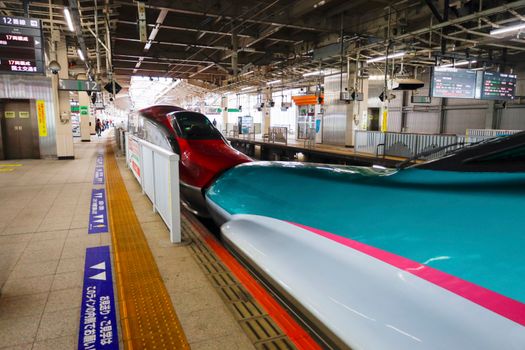
We've all heard of high-speed trains, but what about trains that don't even touch the tracks? Magnetic Levitation (Maglev) technology allows trains to float on a cushion of electromagnetic force, eliminating friction and enabling incredible speeds. While widely researched, only a handful of public lines exist, making them a truly "pre-mainstream" marvel.
My journey on the Shanghai Maglev was nothing short of exhilarating. Connecting Pudong International Airport to the Longyang Road station in the city, it covers 30 kilometers (18.6 miles) in just 7 minutes and 20 seconds, reaching a top speed of 431 km/h (268 mph). Stepping onto the platform, there's a hum, a futuristic glow. As the train accelerates, the speed indicator inside the carriage climbs rapidly, and you feel a gentle push, but remarkably little vibration. It's a silent, smooth blur outside the window.
What it's like:
It feels like flying, but on the ground. The quietness is astonishing, given the speed. You feel a slight sense of detachment from the ground, a true floating sensation. It’s an incredibly efficient way to cover distance, making airport transfers feel like a joyride.
Why it's not mainstream (yet):
The immense cost of building dedicated guideways and the complex infrastructure needed for maglev systems are the biggest barriers. It's a premium technology for specific, high-demand routes.
Tripsora Tip:
If you're flying into Shanghai Pudong, treat yourself to a Maglev ride. A one-way ticket costs 50 RMB (approx. $7 USD), or 40 RMB with a same-day flight ticket. It’s worth it just for the experience and the bragging rights. Try to get a window seat and watch the speed display climb!
4. Navigating the Blue Highways: Integrated Water Bus Networks
While Venice is famous for its gondolas and vaporettos, many other cities are quietly developing sophisticated, integrated water bus networks that offer a refreshing alternative to road-based transport. These aren’t just tourist boats; they’re commuter lifelines, turning rivers, canals, and coastlines into efficient "blue highways."
I discovered the magic of integrated water transport during a trip to Istanbul, Turkey. Beyond the iconic Bosphorus ferries that crisscross between continents, the city has a robust network of public ferries (İDO and Şehir Hatları) that connect various districts along the Bosphorus and Golden Horn. Instead of battling Istanbul's legendary traffic, I found myself hopping on a ferry from Karaköy to Kadıköy, sipping tea, watching seagulls, and enjoying panoramic views of the city skyline.
What it's like:
It's a completely different rhythm of travel. The fresh air, the gentle rocking of the boat, and the unique perspective of the city from the water are incredibly calming. It's often faster than road travel for specific routes and far more scenic. Cities like Amsterdam and Stockholm also boast excellent water bus systems that locals use daily for commuting, offering a tranquil escape from urban bustle.
Why it's not mainstream (yet):
Limited to cities with significant waterways, and susceptible to weather conditions. Infrastructure for docks and terminals also needs to be developed.
Tripsora Tip:
In Istanbul, a single ferry ride costs around 15 TL (approx. $0.50 USD) using an Istanbulkart. Look for routes that connect major hubs. In Stockholm, many SL (Stockholm Public Transport) tickets are valid on ferry lines like Djurgården Ferry (line 82) or the inner-city commuter boats. It's a fantastic way to sightsee and get around simultaneously. Don't forget your camera for those stunning waterfront shots!
5. The Airport Express: Automated People Movers (APMs) & Niche Monorails
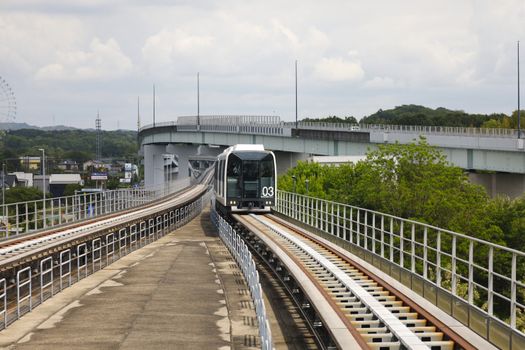
Most people associate monorails with amusement parks like Disneyland or perhaps Las Vegas. But beyond the glitz, advanced Automated People Movers (APMs) and specific monorail systems are silently revolutionizing intra-airport travel and specific urban corridors, proving their efficiency long before they become a universal city solution.
My most memorable APM experience was at Singapore Changi Airport. This place is a wonderland, and its Skytrain system, an APM, seamlessly connects terminals, allowing you to move from check-in to your gate, or even to the Jewel Changi complex, with incredible ease and speed. It’s driverless, quiet, and operates with such precision that you barely notice the transition.
What it's like:
Utterly seamless. You step onto a platform, a futuristic train arrives, and you’re whisked away. These systems are designed for high frequency and reliability, making them perfect for environments where punctuality is paramount. The Las Vegas Monorail, while often used by tourists, is also a highly efficient way for conventioneers and locals to navigate the Strip, bypassing notorious traffic. It’s a glimpse into how dedicated, elevated transport can cut through urban congestion.
Why it's not mainstream (yet):
Like PRT, the cost of elevated guideways and dedicated infrastructure is substantial. They are best suited for high-density, specific routes rather than sprawling city networks.
Tripsora Tip:
At Changi, the Skytrain is free and runs frequently. Don't miss the opportunity to ride it, especially if you're exploring the Jewel. In Las Vegas, a 24-hour pass for the Monorail costs $15, which can be a bargain if you plan on visiting multiple casinos along the Strip without relying on expensive taxis or ride-shares. It's a great way to see the city lights from a unique vantage point.
6. The Vertical City: Paternoster Lifts
This one is a true hidden gem, almost an antique, but it represents a continuous, driverless mode of vertical transport that predates modern elevators. Paternoster lifts are a series of open compartments moving slowly in a continuous loop, allowing passengers to step on and off without the lift ever stopping.
My first (and slightly terrifying) encounter with a Paternoster was in a university building in Hamburg, Germany. I'd heard whispers about these "man-lifts" and sought one out. Approaching the opening, you see an empty compartment slowly rising. You have to time your step, walking into the moving box. There are no doors, no buttons, just the continuous, mesmerizing loop. When you reach your floor, you simply step out. If you miss your floor, you can stay in and go over the top or under the bottom, coming back around – though this is not recommended for the faint of heart!
What it's like:
It's an adrenaline rush combined with a sense of historical novelty. The slow, rhythmic movement is hypnotic. There's a slight moment of apprehension as you step on and off, but once inside, it's surprisingly smooth. It feels like stepping into a piece of living history.
Why it's not mainstream (yet):
Safety concerns (slow speed means no doors, risk of falls), accessibility issues (not suitable for disabled passengers), and modern regulations have led to their decline and often outright ban in new installations. They are mostly found in older buildings in Europe, often in government offices or universities.
Tripsora Tip:
Finding a working Paternoster is like a treasure hunt! Many have been shut down. Your best bet is to ask locals in older European cities like Berlin, Hamburg, Vienna, or Prague. Some universities or government buildings might still operate them. Always be respectful of the building's rules and exercise caution. It's truly a unique, pre-mainstream experience.
7. The Vacuum Tube Dream: Hyperloop (Almost Here!)
Alright, this one isn't publicly operational in the same way as the others, but it's perhaps the most exciting and "pre-mainstream" of them all. Hyperloop technology envisions pods traveling at incredible speeds (up to 1,200 km/h or 750 mph) through near-vacuum tubes, powered by magnetic levitation and electric propulsion. While still in advanced testing phases, the concept has "existed" in development for years, with test tracks already built.
I haven't ridden a public Hyperloop (because it doesn't exist yet!), but I've followed its development closely, even visiting a university team's prototype exhibition. The sheer ambition of it is captivating. Imagine traveling from Los Angeles to San Francisco in 30 minutes, or New York to Washington D.C. in the blink of an eye. The test facilities, like Virgin Hyperloop One's DevLoop in Nevada, show pods accelerating to hundreds of miles per hour within short distances, proving the concept.
What it's like (theoretically):
The promise is a near-silent, vibration-free ride at speeds that dwarf commercial air travel for regional distances. You'd be sealed in a comfortable pod, experiencing minimal G-forces as you accelerate and decelerate, watching the world flash by (or perhaps enjoying integrated entertainment).
Why it's not mainstream (yet):
The technological hurdles, astronomical infrastructure costs, land acquisition, and regulatory complexities are immense. However, the potential for ultra-fast, sustainable inter-city travel is too great to ignore.
Tripsora Tip:
While you can't ride it yet, you can stay informed! Follow companies like Virgin Hyperloop (now Hyperloop One), Hardt Hyperloop, and TransPod. Many universities have student teams competing in Hyperloop pod competitions, offering public demonstrations of their prototypes. Keep an eye on news from places like Saudi Arabia and India, where pilot projects are being explored. This is the future, and it's being built right now.
The Future is Now, If You Know Where to Look
My journey seeking out these pre-mainstream transportation methods has been an eye-opening adventure. It’s shown me that innovation isn’t always about grand, sweeping changes, but often about niche applications, clever engineering, and bold urban planning that quietly pushes the boundaries of what’s possible.
From the silent glide of a podcar in an eco-city to the breathtaking ascent of an urban cable car, these experiences offer more than just a ride; they provide a glimpse into a more efficient, sustainable, and often more enjoyable way to travel. They challenge our assumptions about how we get from A to B and inspire us to demand better from our transportation systems.
So, the next time you're planning a trip, look beyond the usual trains, planes, and automobiles. Dig a little deeper, ask the locals, and you might just uncover a hidden gem of mobility that transforms your journey into an unforgettable adventure.
What unique transportation methods have you discovered on your travels? Share your stories and tips in the comments below! Let's inspire each other to explore the future of travel, one incredible ride at a time!