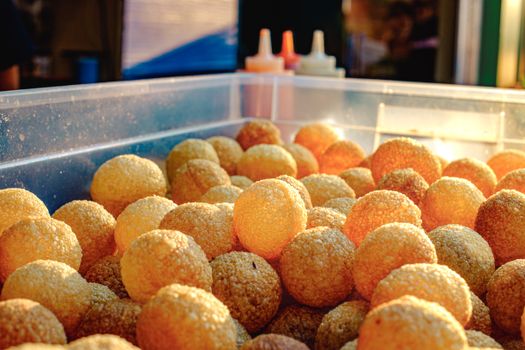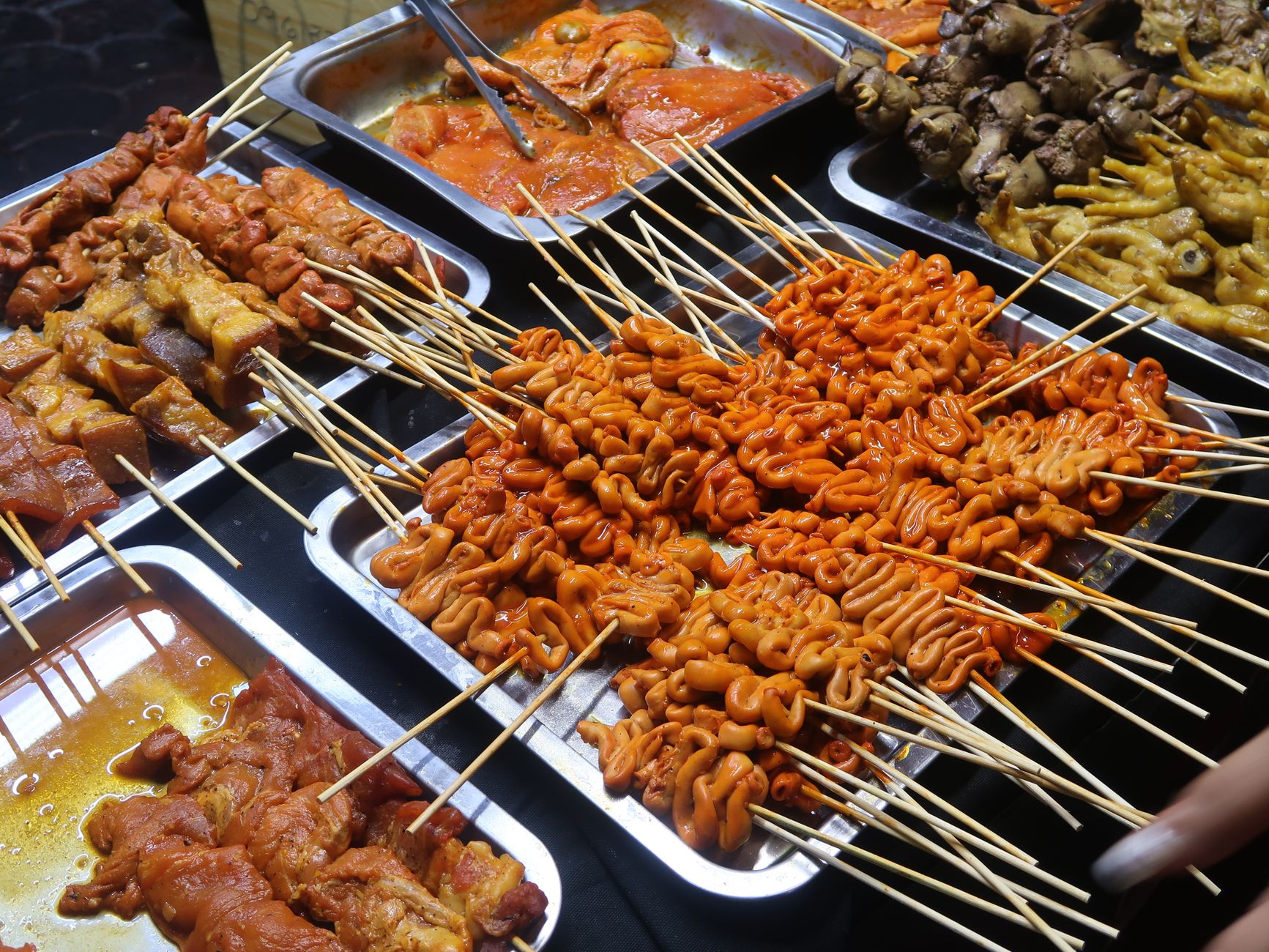
The humid air of Bangkok's Yaowarat Road clung to me, thick with the scent of stir-fries, durian, and something... else. Something vaguely unsettling, yet undeniably intriguing. I’d been eyeing a vendor for the past fifteen minutes, drawn in by the buzz of curious tourists and the vendor’s infectious grin. Laid out before him were trays of what could only be described as a entomologist’s dream – or nightmare. Grasshoppers, silkworms, bamboo worms, even scorpions, all fried to a golden crisp. My stomach did a little flip-flop, a mix of genuine hunger and pure, unadulterated apprehension.
"Just one," I told myself, my travel buddy giving me a look that said, "You're actually going to do this, aren't you?" I picked a handful of grasshoppers, their tiny legs and antennae still disconcertingly intact. They looked like something you'd find stuck to your windshield, not something you'd willingly put in your mouth. My heart hammered. This was it. The moment of truth. I popped one in. A crunch. Then another. And then... a revelation. Salty, savory, with an unexpected nutty depth. It tasted like a highly addictive, crispy chip. My brain, still processing the visual, was arguing with my taste buds, which were already reaching for another.
That moment, standing amidst the chaos and culinary daring of Bangkok, changed my entire perspective on food. It taught me that sometimes, the most extraordinary flavors are hidden behind the most intimidating appearances. It's about pushing boundaries, silencing that initial "eww" reflex, and trusting that the world's street food vendors know a thing or two about making deliciousness out of the unexpected.
For years now, I've made it my mission to seek out these culinary paradoxes – the foods that look scary, smell strange, or simply defy conventional expectations, but deliver an unforgettable taste experience. And let me tell you, these aren't just novelty acts; they're deeply ingrained cultural staples, often packed with nutrition and a history as rich as their flavor. So, buckle up, buttercup! Your ultimate food bucket list is about to get a whole lot more adventurous. Here are six "scary" street foods you absolutely must experience before you die.
1. Balut (Philippines): The Embryonic Surprise
Let’s kick things off with a true icon of adventurous eating: Balut. Hailing from the Philippines, this fertilized duck egg is perhaps the most visually challenging on this list, and arguably the most famous.
The "Scary" Factor:
Crack open a balut, and you’ll find not just a yolk and white, but a developing duck embryo, complete with visible veins, soft bones, and sometimes even tiny feathers. The thought of consuming a half-formed bird can be a major mental hurdle for many. The appearance can range from mildly unsettling to genuinely stomach-churning, depending on the stage of development (usually 16-21 days).
The "Amazing" Taste:
Here's the magic. Once you get past the visuals, balut is an explosion of savory, umami flavor. The broth inside (sipped first!) is rich and intensely savory, like a concentrated chicken soup. The yolk is creamy and decadent, richer than any regular egg yolk. The embryo itself, though texturally complex (some parts soft, some slightly chewy, some crunchy), has a surprisingly mild, gamey flavor, often described as a cross between chicken and liver. It’s usually seasoned with a dash of salt and vinegar (suka) or chili.
My Balut Baptism:
My first balut experience was in Manila, on a bustling street corner in Binondo. The vendor, an elderly woman with a knowing smile, handed me a warm egg. My Filipino friend coached me: "Tap the top, peel a little, sip the broth, then eat the rest." The broth was incredible – a warm, salty hug. Then came the reveal. Yes, the sight made me gulp. But I closed my eyes, took a bite, and was genuinely surprised. The texture was varied, but the flavor was undeniably delicious and comforting. It felt less like eating an embryo and more like a very rich, savory stew in a shell.
Practical Tips:
* Where to find it: Ubiquitous in the Philippines, especially at night markets and street stalls. Look for vendors with steaming pots. You can also find it in Vietnamese cuisine (trứng vịt lộn).
* Price: Very affordable, typically 20-50 PHP (around $0.35-$0.85 USD) per egg.
* How to eat: Tap the wider end to crack the shell, peel a small opening, sip the broth. Then peel the rest and eat the contents, often seasoned with salt and vinegar.
* Instagram-worthy: The reveal shot is classic! Capture the steam, the cracked shell, and your own brave (or bewildered) expression.
2. Fried Insects (Thailand/Cambodia): Crunchy Critters
From Bangkok's Khao San Road to Phnom Penh's night markets, you'll inevitably stumble upon vendors selling skewers or piles of deep-fried insects. Grasshoppers, silkworms, crickets, bamboo worms, even scorpions and tarantulas.
The "Scary" Factor:
Let's be honest, we're hardwired to view insects as pests, not food. Seeing their intact bodies, legs, and antennae, often piled high in a greasy, inviting (to some) heap, can be a major mental block. The thought of their exoskeletons crunching between your teeth is not for the faint of heart.
The "Amazing" Taste:
This is where the surprise comes in! Most fried insects, especially the smaller ones, are incredibly crispy and savory, often seasoned with salt, pepper, and sometimes chili.
* Grasshoppers (Jing Leed): Taste remarkably like crispy, salty potato chips with a slightly earthy, nutty undertone.
* Silkworms (Nom Maew): Have a softer, almost creamy interior with a delicate, mushroom-like flavor.
* Bamboo worms (Rod Duan): Light, airy, and crunchy, often compared to puffed rice crackers.
* Crickets (Jing Reed): Similar to grasshoppers but often larger and with a slightly stronger, more robust flavor.
They are high in protein and a sustainable food source!
My Cricket Conversion:
My initial encounter in Bangkok, as mentioned, started with grasshoppers. But it was the crickets in Chiang Mai that solidified my insect-eating resolve. I bought a small bag from a vendor near the night bazaar. They were perfectly seasoned, salty and a little spicy, and the crunch was incredibly satisfying. I found myself reaching for more, forgetting entirely that I was eating bugs. My travel photos of me gleefully munching on crickets became an instant hit on social media.
Practical Tips:
* Where to find it: Common in Thailand (Bangkok, Chiang Mai, Pattaya), Cambodia (Siem Reap, Phnom Penh), Laos, and Vietnam. Look for street stalls, especially in night markets or tourist areas.
* Price: A small bag or skewer typically costs 20-100 THB (around $0.50-$3 USD) depending on the insect and quantity. Tarantulas/scorpions will be more.
* How to eat: Just pop them in! Best when fresh out of the fryer.
* Instagram-worthy: The visual is pure shock value! A close-up of a skewer, or you holding a handful, will definitely grab attention. Bonus points for trying a scorpion!
3. Stinky Tofu (Taiwan/Hong Kong): Aromatic Alchemy
You'll usually smell Stinky Tofu long before you see it. This fermented tofu dish is a beloved staple in Taiwan, Hong Kong, and parts of mainland China, but its potent aroma is legendary.
The "Scary" Factor:
The smell. Oh, the smell! It's often compared to rotten garbage, dirty socks, or old cheese. It can be incredibly off-putting, especially for first-timers, and might make you question if anything that smells that bad could possibly be edible, let alone delicious.
The "Amazing" Taste:
This is where the magic happens. Despite its pungent aroma, stinky tofu, when done right, is incredibly flavorful and addictive. The fermentation process gives it a unique depth – a savory, umami-rich taste with a slightly tangy kick. When deep-fried, the exterior is wonderfully crispy, while the interior remains soft and custardy, soaking up chili sauce, garlic, and pickled cabbage. It’s savory, spicy, tangy, and incredibly satisfying. Think of it like a very, very strong blue cheese – challenging at first, but incredibly rewarding.
My Aromatic Awakening in Taipei:
My introduction to stinky tofu was at Shilin Night Market in Taipei. The smell hit me like a wall. My friend, a local, swore by it. I watched him devour a plate of deep-fried cubes, dipping them in chili sauce. Hesitantly, I tried a piece. The first bite was a battle between my nose and my mouth. My nose was screaming, but my mouth was intrigued. The crunch, the soft interior, the spicy kick, the salty tang of the pickled cabbage… it was a revelation. By the third piece, my nose had seemingly adjusted, and I was hooked. It became a nightly ritual.
Practical Tips:
* Where to find it: Everywhere in Taiwan (especially night markets like Shilin, Raohe), Hong Kong, and various cities in mainland China.
* Price: A generous plate costs around 50-100 TWD (approx. $1.50-$3.50 USD).
* How to eat: Most commonly deep-fried and served with pickled cabbage, garlic sauce, and chili. It can also be braised, grilled, or steamed. Start with the deep-fried version for an easier entry.
* Instagram-worthy: Capture the steam rising from a fresh plate, the vibrant condiments, and perhaps your friend's (or your own) initial reaction to the smell!
4. Natto (Japan): The Slimy Umami Bomb
From the bustling street corners of Tokyo to traditional breakfast tables across Japan, Natto is a divisive, yet deeply cherished, food. These fermented soybeans are a nutritional powerhouse, but their appearance and texture are... unique.
The "Scary" Factor:
Natto is instantly recognizable by its incredibly sticky, slimy, stringy texture. As you stir it, long, thin strands of mucilage form, stretching and clinging to everything. The smell is also quite distinct – a pungent, earthy, almost ammonia-like aroma that some find off-putting. It looks like it might have been left out a little too long.
The "Amazing" Taste:
Despite the challenging texture and smell, natto offers a profound umami experience. It’s savory, slightly bitter, and deeply fermented, with a rich, nutty flavor that really shines when paired with soy sauce, mustard (karashi), and chopped scallions. The slimy texture, once embraced, actually carries the flavor incredibly well, coating your mouth with its distinctive taste. It's an acquired taste, but once acquired, it's often craved.
My Sticky Situation in Kyoto:
I first encountered natto at a traditional ryokan breakfast in Kyoto. It came in a small styrofoam container, looking innocently like regular cooked soybeans. Then I stirred it. The strings! Oh, the strings! It looked like a science experiment. My hosts watched with amusement as I cautiously brought a spoonful to my mouth. The smell was intense, but the flavor was surprisingly complex. It wasn't love at first bite, but by the end of the small portion, I understood its appeal. It felt incredibly wholesome and satisfying, a truly unique flavor profile I hadn't experienced before. Now, I actually seek it out when I'm in Japan.
Practical Tips:
* Where to find it: Widely available in supermarkets and convenience stores across Japan, often served as part of a traditional Japanese breakfast. Not typically a "street food" in the sense of being sold from a cart, but a ubiquitous, accessible food experience.
* Price: Very inexpensive, a single serving pack is usually 80-150 JPY (around $0.50-$1 USD).
* How to eat: Stir vigorously with the provided sauce and mustard until it’s very stringy. Serve over hot rice. Some people add chopped scallions or a raw egg yolk.
* Instagram-worthy: The stringy pull-apart shot is iconic! Capture the dramatic, sticky strands and the simple, elegant presentation over rice.
5. Durian (Southeast Asia): The King of Contradictions
No list of "scary but amazing" foods would be complete without the legendary Durian. Revered as the "King of Fruits" in Southeast Asia, its reputation precedes it with an odor so potent it's banned from many public places and hotels.
The "Scary" Factor:
The smell. It's often described as a mix of rotten onions, gym socks, turpentine, and raw sewage. It's incredibly pervasive and can cling to clothes and breath for hours. Then there's the appearance: a large, intimidating fruit covered in formidable spikes, making it look like a medieval weapon. Cutting it open reveals large, creamy-yellow pods that resemble something organic but not quite fruit-like.
The "Amazing" Taste:
If you can get past the smell, durian is a sublime experience. Its flavor is incredibly complex and unique: a rich, custard-like creaminess with notes of almond, caramel, and sometimes even a hint of savory garlic. It's sweet, intensely aromatic (in a good way, once you adjust), and incredibly satisfying. The texture is like a super-rich, velvety avocado, melting in your mouth. It truly lives up to its "King" title for those who dare.
My Durian Debut in Malaysia:
My first durian experience was in Penang, Malaysia. I'd heard the horror stories, but also the passionate defenses. We found a roadside stall, the air thick with the infamous aroma. The vendor expertly pried open a spiky fruit, revealing glistening, pale yellow pods. I took a deep breath, braced myself, and took a small bite. The initial smell was still there, but then... the flavor hit. It was incredibly rich, sweet, and custardy, unlike anything I'd ever tasted. It was a revelation. I didn't immediately fall in love, but I understood the obsession. By my third visit to Southeast Asia, I was actively seeking out specific durian varieties.
Practical Tips:
* Where to find it: Abundant in Malaysia, Thailand, Singapore, Indonesia, Vietnam, and the Philippines. Look for roadside stalls, fruit markets, and specialized durian shops, especially during peak season (May-August).
* Price: Varies greatly by size, quality, and season. A whole fruit can range from $5-$50+ USD. Pre-packaged segments are also available.
* How to eat: Best eaten fresh, straight from the fruit. The pulp is usually consumed directly with a spoon or your hands. Be prepared for messy fingers!
* Instagram-worthy: A shot of you holding the spiky fruit, a close-up of the creamy pods, or a video of your first reaction to the smell (and taste!) will be a hit.
6. Chapulines (Mexico): The Grassy Green Gold
In Oaxaca, Mexico, and other southern regions, you’ll find vendors selling vibrant piles of toasted grasshoppers, known as Chapulines. They're a traditional snack and an ancient food source.
The "Scary" Factor:
Similar to other insect snacks, the visual of a pile of whole, recognizable grasshoppers can be off-putting. Their tiny eyes and legs are still visible, and the idea of crunching on them might trigger an initial "ick" response.
The "Amazing" Taste:
Chapulines are incredibly flavorful and addictive. They're typically toasted with garlic, lime, and chili, giving them a tangy, spicy, and smoky kick. The texture is delightfully crunchy, and the flavor is earthy, savory, and surprisingly complex, with notes reminiscent of roasted nuts or even dried shrimp. They're high in protein and a fantastic source of sustainable nutrition.
My Oaxacan Crunch:
I encountered chapulines in a bustling market in Oaxaca City. Piles of them, some bright red from chili, others a more natural brown, were being scooped into bags. The vendor offered me a sample. I took a small handful, the smell of lime and chili wafting up. The crunch was immediate and satisfying. The tangy lime, the smoky chili, and the earthy flavor combined into something truly delicious. I bought a bag and munched on them throughout the day, adding them to tacos and guacamole. They were so good, I almost forgot they were insects. Almost.
Practical Tips:
* Where to find it: Most common in Oaxaca, Mexico, but also available in other parts of southern Mexico. Look for them in markets (Mercado Benito Juárez, Mercado 20 de Noviembre in Oaxaca) and from street vendors.
* Price: A small bag usually costs 20-50 MXN (around $1-$3 USD).
* How to eat: Enjoy them as a snack on their own, or add them to tacos, quesadillas, or guacamole for an extra layer of crunch and flavor.
* Instagram-worthy: A colorful pile of chapulines, a close-up of them on a taco, or a photo of you bravely trying them with a mischievous grin.
Daring to Delight: Your Next Culinary Adventure Awaits
Stepping out of your comfort zone with food is one of the most rewarding aspects of travel. It's not just about trying new flavors; it's about understanding cultures, challenging your own preconceptions, and creating unforgettable stories. These "scary" foods, in their initial apprehension, offer the greatest potential for culinary revelation. They force you to look beyond superficial appearances and trust your senses, especially your taste buds.
So, the next time you find yourself staring at a street food stall, a little voice in your head whispering "no way," remember these incredible dishes. Remember the salty crunch of a grasshopper, the umami depth of balut, the fragrant creaminess of durian, or the spicy tang of chapulines. These are more than just meals; they are experiences that will expand your palate and your perspective.
Ready to embark on your own scary-but-amazing food journey?
Share this post with your most adventurous travel buddies, plan your next trip, and don't forget to tag #TripsoraFoodDare when you conquer your culinary fears! Which "scary" food will you try first? Let us know in the comments below!
---