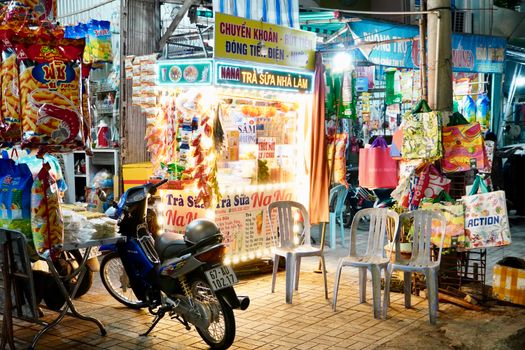
Beyond the First Glance: Unlocking the World's Most Deliciously "Scary" Street Foods
My heart pounded, a familiar mix of excitement and pure, unadulterated fear. Before me sat a small, unassuming bowl, but what it contained was anything but. A grayish, gelatinous mass, speckled with what looked suspiciously like... well, let's just say it wasn't a pretty sight. This was my first encounter with balut in a bustling Manila night market, and frankly, my stomach was doing acrobatics. I’d seen the Instagram posts, heard the whispers, but nothing prepared me for the actual moment of truth.
But here’s the thing about travel, especially for us Tripsora adventurers: the best experiences often lie just beyond our comfort zone. And when it comes to food, that comfort zone can be a surprisingly delicious barrier to break. I took a deep breath, whispered "for the blog," and took that first bite. What followed wasn't revulsion, but a symphony of unexpected flavors – savory, rich, and utterly unique. That moment ignited a passion in me: to seek out the "scary" street foods, the ones that challenge perceptions, and often, reward with an explosion of amazing taste.
Right now, the world is buzzing with travelers eager to push their culinary boundaries. Social media feeds are flooded with brave souls tackling everything from wriggling cephalopods to aromatic fermented delights. These aren't just foods; they're experiences, stories, and badges of honor for the truly adventurous eater. So, pack your open mind and an even more open palate, because Tripsora is taking you on a tour of the street foods that look terrifying but taste absolutely divine – and yes, they're totally trending!
---
The Golden Rule of Scary Street Food: Trust Your Gut (and Your Vendor!)
Before we dive headfirst into the delicious unknown, a few words of wisdom are crucial. Venturing into the world of exotic street food, especially the visually challenging ones, requires a mix of courage and common sense.
Practical Tips for the Adventurous Eater:
- Look for the Locals: The busiest stalls, teeming with locals, are usually the safest bet. High turnover means fresh ingredients.
- Observe Hygiene: Does the vendor seem clean? Are they handling food properly? Is there running water (or at least sanitiser)? Trust your instincts.
- Start Small: Don’t commit to a huge portion if you’re unsure. Most street food is cheap enough to try a small bite first.
- Hydrate & Be Prepared: Carry water, and maybe some digestive aids if you have a sensitive stomach.
- Embrace the Experience: Part of the fun is the atmosphere, the sounds, the smells. Let yourself be immersed!
- Allergies: Always be mindful of your own allergies and communicate them if possible, though this can be challenging with language barriers.
Now, with our adventurous spirit primed and our practical tips in mind, let’s explore some of the most fascinatingly "scary" street foods you absolutely must try!
---
1. Balut: The Filipino Dare That Delivers (Philippines)
The look: A duck egg with a partially developed embryo inside. Visually, it’s... challenging.
The taste: Savory, rich, complex, with varied textures.
My first balut experience, as mentioned, was a true test of my resolve. I’d heard the legends, seen the memes, but nothing truly prepares you for cracking open that unassuming egg to reveal what lies within. It’s not just an egg; it’s a tiny, embryonic duck, complete with visible veins, a small beak, and sometimes even tiny feathers. Gulp.
But then, you take the plunge. You peel a bit of the shell, sip the broth (which is surprisingly delicious and savory, like a rich chicken soup), add a dash of salt and vinegar, and then take the bite. And that’s when the magic happens. The yolk is incredibly creamy and rich, almost like a custard. The white is a bit tougher, but edible. And the "chick" part? It's tender, subtly gamey, and surprisingly easy to chew, adding a unique texture that’s unlike anything else. It's an umami bomb, a protein-packed snack that locals swear by for energy and even as an aphrodisiac.
My initial fear dissolved into genuine enjoyment. I found myself reaching for a second, then a third. It’s a complete meal in a shell, a true taste of Filipino resilience and culinary ingenuity. Don't knock it 'til you've tried it!
Where to Find It:
Almost any night market or street vendor in the Philippines, especially in Manila (e.g., Quiapo Market, various street corners in Makati or BGC).
Estimated Price: ₱20-40 (approx. $0.35-$0.70 USD) per egg.
Tripsora Tip: Ask for "balut sa puti" if you want a younger embryo (less developed, often less visually confronting for beginners).
---
2. Stinky Tofu: The Aromatic Enigma (Taiwan, Hong Kong, China)
The look: Just fried tofu, sometimes with a slightly darker hue. Harmless.
The smell: Imagine old socks, a pungent cheese locker, and maybe a whiff of sewage. This is the real challenge.
The taste: Crispy exterior, tender interior, savory, spicy, and utterly addictive.
The first time I encountered stinky tofu in Taiwan's Shilin Night Market, I didn’t see it first; I smelled it. A powerful, unmistakable aroma hit me like a wall, a smell so potent it could clear a room. My travel buddy looked at me, eyes wide, "What is that?!" I followed my nose, a mixture of repulsion and morbid curiosity pulling me forward, until I saw the stall. Golden-brown cubes of fried tofu, glistening with sauce, being served to eager customers. "This can't be it," I thought, "that smell couldn't possibly come from something people willingly eat."
Oh, how wrong I was. Stinky tofu is made from tofu fermented in a brine containing various ingredients like fermented milk, vegetables, and meat, sometimes for months. The smell is truly formidable. But the taste? It's a revelation. The fried version, served with pickled cabbage and a spicy garlic sauce, has a wonderfully crispy skin and a soft, custard-like interior. The flavor is deeply savory, umami-rich, with a distinct funkiness that, once you get past the smell, becomes incredibly appealing. It’s like the world’s most polarizing cheese – you either love it or... well, you still probably love it after the first bite.
I remember standing there, initially pinching my nose, then slowly, hesitantly, taking a bite. The crunch, the soft interior, the explosion of savory, spicy, slightly tangy flavors. It was nothing like the smell suggested. It was glorious.
Where to Find It:
Ubiquitous in night markets across Taiwan (Shilin, Raohe, Fengjia), Hong Kong (Mong Kok), and mainland China.
Estimated Price: NT$50-100 (approx. $1.60-$3.30 USD) per serving.
Tripsora Tip: Start with the fried version, as the stewed or grilled versions can have an even more intense aroma. Pair it with a cold bubble tea to cleanse your palate!
---
3. Sannakji: The Wriggling Wonder (South Korea)
The look: Freshly chopped octopus tentacles, still actively wriggling on the plate.
The taste: Fresh, slightly sweet, chewy, with a unique texture sensation.
This one is for the true thrill-seekers. Sannakji is live octopus, chopped into bite-sized pieces and served immediately, often with sesame oil and sesame seeds. The "scary" factor here isn't just visual; it's the fact that the nerve endings in the tentacles are still active, causing them to continue wriggling and suctioning even after being separated from the body.
My encounter with sannakji at Seoul's Noryangjin Fish Market was an adrenaline rush. We picked our octopus from a tank, watched it get swiftly prepared, and moments later, a plate of actively moving tentacles was placed before us. My friend dared me to try it first. I picked up a piece with chopsticks, and it immediately suctioned onto the ceramic plate. A battle of wills ensued. Finally, I got it into my mouth.
The first sensation is the suction cups gently adhering to your tongue and the roof of your mouth. It's bizarre, a little ticklish, and utterly unforgettable. The texture is incredibly chewy, almost crunchy, and the flavor is pure, fresh ocean – slightly sweet, clean, and earthy from the sesame oil. It’s not about the taste alone; it's the entire sensory experience, the challenge, the thrill. Just be sure to chew thoroughly to avoid any choking hazards from the suction cups!
Where to Find It:
Major fish markets in South Korea, such as Noryangjin Fish Market in Seoul, or Gwangjang Market where smaller stalls offer it.
Estimated Price: ₩15,000-30,000 (approx. $11-$22 USD) depending on the size of the octopus and the restaurant.
Tripsora Tip: Chew, chew, chew! Seriously, chew thoroughly. And have some soju ready – it pairs perfectly with the fresh seafood and the thrill.
---
4. Fried Insects & Tarantulas: Crunchy Critters (Cambodia, Thailand)
The look: Whole insects – crickets, grasshoppers, silkworms, even tarantulas – fried to a crisp.
The taste: Salty, crunchy, sometimes nutty, surprisingly savory.
Walking through the night markets of Phnom Penh or Bangkok, you can't miss them. Piles of golden-brown, crispy creatures arranged artfully on platters, often alongside more conventional snacks. Fried insects are a staple in many parts of Southeast Asia, a sustainable and protein-rich food source. For Westerners, however, the idea of eating a whole cricket or a hairy tarantula is often met with a shudder.
My first foray into entomophagy (the practice of eating insects) was with a bag of fried crickets in Siem Reap, Cambodia. They looked like oversized potato chips with legs. I bought a small bag for about $1, took a deep breath, and popped one in. The crunch was satisfying, followed by a burst of salty, slightly nutty flavor, not unlike a very savory potato chip or a crispy pork rind. They were surprisingly good!
Later, I moved on to silkworms – plump, juicy, and earthy – and even a small, fried tarantula. The tarantula, a delicacy in Cambodia, particularly in Skuon (often called "Spiderville"), was a bigger mental hurdle. Its legs were crunchy, while the body was softer, almost like a rich, gamey pâté. It wasn't something I'd crave daily, but it was an incredible experience, a testament to the fact that texture and seasoning can transform anything.
Where to Find It:
Night markets and street stalls across Cambodia (especially Phnom Penh, Siem Reap, Skuon) and Thailand (Bangkok's Khao San Road, Chiang Mai night bazaar).
Estimated Price: $1-3 USD for a bag of crickets/worms; $5-10 USD for a tarantula.
Tripsora Tip: Start with crickets or silkworms – they're less intimidating and widely considered delicious. They make fantastic beer snacks!
---
5. Durian: The King of Fruits (Southeast Asia)
The look: Large, spiky, formidable fruit, almost like a medieval weapon.
The smell: Infamous. Described as anything from rotten onions, sweaty socks, to stale vomit. It's divisive.
The taste: Custardy, creamy, sweet, complex, with notes of almond, cheese, and caramel. Heavenly for devotees.
Durian isn't scary because it moves or has a challenging appearance once peeled. It's scary because of its potent, unmistakable aroma. This "King of Fruits" is so pungent that it's banned from many hotels, public transport, and airports across Southeast Asia. Its spiky exterior also makes it look rather aggressive.
I remember my first durian experience in Malaysia. The vendor, seeing my hesitant face, offered me a small, pre-packaged portion. The smell was intense, permeating the air around us, a strange mix of sweet and savory funk. My nose wrinkled, but the vendor's enthusiastic smile encouraged me. I took a spoonful of the pale yellow, custardy flesh.
And then, a revelation. It was incredibly creamy, almost like a rich cheesecake, with a complex sweetness that had hints of almond, a touch of savory onion, and a delicate bitterness at the finish. It was utterly unique. The texture was smooth, melting in my mouth. I understood then why people were so obsessed. It’s an acquired taste, yes, but once acquired, it's a deep, abiding love. It’s an experience that engages all senses, challenging and rewarding in equal measure.
Where to Find It:
Abundantly available from street vendors and fruit stalls throughout Malaysia, Thailand, Singapore, Indonesia, and the Philippines, especially during peak season (May-August).
Estimated Price: Varies wildly by region, season, and variety. Small portions can be $5-10 USD; a whole durian can range from $20-100+ USD.
Tripsora Tip: Start with a small, pre-packaged portion of a popular, milder variety like Musang King or D24. Don't eat it indoors if you're not sure your companions (or hotel) will appreciate the aroma!
---
6. Century Egg: The Ancient Alien (China, Hong Kong)
The look: Dark green to black, translucent jelly-like white, with a dark, creamy yolk. Looks like something from another planet.
The taste: Rich, umami, savory, with a slightly ammonia-like aftertaste that quickly fades into deliciousness.
The century egg, also known as the "thousand-year egg" or "pidan," is a preserved duck, chicken, or quail egg. It’s not actually a century old; the preservation process typically takes a few weeks to several months, involving a mixture of clay, ash, salt, quicklime, and rice hulls. The result is an egg with a dark, gelatinous "white" and a creamy, grey-green yolk. Its appearance is undeniably alien.
My first encounter was in a bustling dim sum restaurant in Hong Kong. A small plate arrived, bearing wedges of this dark, marbled egg, served simply with pickled ginger. My initial thought was, "Is this edible?" The color, the texture, everything about it screamed "don't eat me."
But, as always, curiosity won. I picked up a piece. The texture was firm, yet jelly-like. The taste was an explosion of umami – deeply savory, almost meaty, with a surprisingly smooth and rich mouthfeel. There’s a faint, almost mineral-like or ammonia-like tang initially, but it quickly dissipates, leaving a lingering, satisfying flavor. Paired with the zing of the pickled ginger, it was a delightful contrast of flavors and textures. It’s a sophisticated, acquired taste that speaks to centuries of culinary tradition. It's often found in congee or served as a cold appetizer.
Where to Find It:
Widely available in Chinese restaurants, dim sum eateries, and street food stalls across China, Hong Kong, and Southeast Asia.
Estimated Price: $1-3 USD for a serving, often included in dim sum platters.
Tripsora Tip: Always try it with the accompanying pickled ginger – it cuts through the richness and enhances the flavor beautifully.
---
The Scariest Bite is Often the Best Memory
Venturing into the world of "scary" street foods isn't just about eating; it's about embracing adventure, challenging your perceptions, and connecting with cultures on a deeper level. Each of these dishes tells a story, a history of survival, resourcefulness, and culinary innovation. They are conversation starters, memory makers, and often, the most unforgettable part of any trip.
My journey from a hesitant balut sipper to a sannakji enthusiast has taught me that the most rewarding experiences are often found just beyond the edge of our comfort zone. So, next time you're traveling, don't shy away from the peculiar, the pungent, or the wriggling. Take a deep breath, trust your instincts, and dive in. You might just discover your new favorite food, and a fantastic story to tell!
What's the scariest food you've ever loved? Share your culinary adventures with us in the comments below or tag @Tripsora on Instagram with your #BraveBites stories! We can't wait to see what amazing (and terrifying) dishes you've conquered!
---