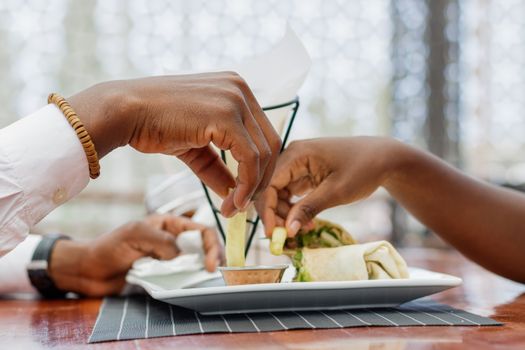
The Ultimate Guide to Mind-Blowing Hand-Eating Restaurants Around the World
There’s a moment, often fleeting, when you’re traveling, that the entire world seems to click into place. For me, it’s usually around a plate of food, surrounded by new sounds, sights, and smells. But there’s a particular type of culinary experience that transcends mere taste: eating with your hands.
I still remember my first time. It was in a bustling market in Addis Ababa, Ethiopia. I sat on a low stool, a massive platter of injera (a spongy, sourdough flatbread) covered with vibrant stews (wot) placed before me. My guide, a warm woman named Genet, simply gestured, "Eat." My Western conditioning screamed, "Where's the fork?!" But then I watched her, gracefully tearing off a piece of injera, scooping up a dollop of spicy lentil stew, and bringing it to her mouth with an almost meditative rhythm. Hesitantly, I mimicked her, and that first bite was a revelation. The texture of the injera, the warmth of the stew directly on my fingertips, the intimate connection to the food – it was primal, authentic, and utterly delicious.
That moment changed how I viewed dining forever. Eating with your hands isn't just a tradition; it's a sensory explosion, a cultural immersion, and an act of pure, unadulterated joy. It strips away the formality, inviting you to connect with your meal, your companions, and the rich history behind every bite. It’s about feeling the warmth, the textures, and the nuances that cutlery often dulls.
So, if you're ready to ditch the silverware and embark on a truly unforgettable gastronomic journey, join me. Here are some of the most incredible hand-eating restaurants and experiences that will blow your mind and ignite your senses.
1. The Ethiopian Feast: A Communal Masterpiece on Injera
Ethiopian cuisine is, for me, the quintessential hand-eating experience. It's built entirely around injera, a unique, slightly sour, spongy flatbread that serves as both your plate and your utensil. Traditionally, meals are served communally on a large platter, with various wot (stews) – made from lentils, chickpeas, beef, chicken, or vegetables – artfully arranged on top of the injera.
The Experience:
Imagine sitting with friends, a giant platter between you, fingers tearing off pieces of injera to scoop up dollops of Doro Wot (spicy chicken stew), Shiro Wot (chickpea stew), or Gomen (collard greens). The tactile sensation of the injera, the blend of spices directly on your palate, and the shared act of eating from one dish fosters an incredible sense of community and warmth. It’s not just a meal; it’s a conversation, a connection.
My Anecdote:
During that first trip to Addis, I learned about gursha, the act of feeding someone else with your hand, a gesture of honor and friendship. Genet, my guide, offered me my first gursha, a tender piece of lamb tibs wrapped in injera. It was incredibly intimate and made me feel instantly welcomed into their culture. I've since shared gursha with friends back home, and it always brings smiles and laughter.
Where to Try It:
* Horn of Africa (Melbourne, Australia): A vibrant spot known for its authentic flavors and generous portions. Expect to pay around AUD 20-30 per person for a large platter.
* Awash Ethiopian Restaurant (Washington D.C., USA): A beloved institution in a city known for its fantastic Ethiopian food. Platters range from $18-$35, easily feeding two or more.
* Any local Ethiopian restaurant: Look for places bustling with Ethiopian families – that's usually a good sign!
Tips for First-Timers:
Always wash your hands thoroughly before and after. Use only your right hand for eating; the left is considered unclean in many cultures. Don't be afraid to get a little messy – it's part of the fun!
2. India's Flavorful Thalis & Street Food: A Symphony of Spices
India is a land of incredible culinary diversity, and much of its traditional eating is done by hand. From elaborate thalis (platters with multiple small dishes) to bustling street food, the connection between hand and food is paramount.
The Experience:
A South Indian thali is a feast for the senses. Served on a large metal plate, or sometimes a banana leaf, you'll find an array of curries, daals, rice, bread (like roti or naan), pickles, and sweets. The art lies in mixing small portions of rice or bread with different curries, creating a new flavor profile with each bite. On the streets, you’ll find vendors dishing out chaat (savory snacks), dosas (crispy crepes), and pakoras (fritters) meant to be devoured quickly with your fingers.
My Anecdote:
I remember a tiny, unassuming dhaba (roadside eatery) in Rajasthan. We were served a Rajasthani thali on a large steel plate. The owner, seeing my initial hesitation, showed me how to break off a piece of bajra roti (millet bread) and scoop up the dal baati churma. The warmth of the bread, the spicy lentils, and the sweet crumbled wheat dessert all blended perfectly on my tongue. It felt like I was truly tasting India, not just eating Indian food. The whole meal, including endless refills, cost me less than $5!
Where to Try It:
* Rajdhani Thali (Across India, e.g., Mumbai, Bangalore): A popular chain offering an authentic Rajasthani and Gujarati thali experience. Expect a vibrant atmosphere and endless refills for around INR 500-800 ($6-$10).
* Kamat Lokaruchi (Bangalore-Mysore Highway, India): Famous for its traditional Karnataka village cuisine served on banana leaves. A full meal costs around INR 200-300 ($2.50-$4).
* Any local street food stall: In cities like Delhi (for chaat) or Mumbai (for vada pav), embrace the bustling energy and follow the locals.
Tips for First-Timers:
Use your fingertips, not your whole palm, to mix and scoop. Don't be afraid to mix different elements on your plate – that's where the magic happens! Again, the right hand is traditionally used.
3. Southeast Asian Seafood Boils & Boodle Fights: A Tropical Bounty
Southeast Asia offers some of the most exhilarating hand-eating experiences, often centered around fresh seafood and communal feasting.
The Experience (Seafood Boils):
In places like Malaysia, Singapore, and parts of the US influenced by Cajun cuisine, "seafood boils" are a joyous, messy affair. Buckets of crab, prawns, mussels, corn, and potatoes are cooked in flavorful sauces, then unceremoniously dumped onto a paper-covered table. Everyone dives in, cracking shells, dipping succulent meat into sauces, and laughing as butter and spice drip down their chins.
The Experience (Boodle Fight):
The Filipino Boodle Fight is an even more spectacular display of communal dining. A long table is covered with fresh banana leaves, which are then piled high with steamed rice, grilled meats (pork belly, chicken skewers), fried fish, seafood, fresh vegetables, and various dipping sauces. It's a military tradition turned celebratory feast, symbolizing unity and equality, as everyone eats together from the same spread.
My Anecdote:
I once participated in a Boodle Fight on a beach in El Nido, Philippines. The sun was setting, the waves gently lapped nearby, and our group of ten friends attacked the banana leaf feast with gusto. The grilled squid, the crispy lechon kawali (fried pork belly), and the garlic rice tasted incredible, amplified by the shared experience and the stunning backdrop. It was pure, unadulterated happiness and one of my most cherished travel memories.
Where to Try It:
* The Crab Factory (Kuala Lumpur, Malaysia): Known for its delicious seafood boils with various sauces (try the Zesty Lemon or Signature Cajun). Prices vary based on seafood choices, but a good meal for two can be around MYR 100-200 ($20-$40).
* Dampa sa Libis (Quezon City, Philippines): A classic "choose your fresh seafood, then have it cooked" experience, perfect for a Boodle Fight setup. Bargain for your seafood, then pay a cooking fee. Expect to spend PHP 500-1000 ($10-$20) per person for a generous spread.
* Any local paluto (cook-to-order) seafood market: In coastal regions, you can often buy fresh catch and have a nearby eatery cook it for you, setting the stage for your own DIY seafood feast.
Tips for First-Timers:
Wear clothes you don't mind getting messy! Bring wet wipes – lots of them. Go with a group; these meals are meant for sharing and bonding.
4. Moroccan Tagine & Mezze: A Taste of North African Hospitality
Moroccan cuisine is rich, aromatic, and deeply hospitable. While forks are available, many traditional dishes, especially tagines and mezze, are best enjoyed the authentic way: with fresh bread.
The Experience:
A tagine is a slow-cooked stew of meat (lamb, chicken, or beef), vegetables, and spices, served in an iconic conical clay pot. The bread, often a rustic khobz (round flatbread), is your primary tool. You tear off pieces of the warm, crusty bread to scoop up the tender meat, aromatic vegetables, and rich sauce directly from the communal pot. Alongside, mezze platters of olives, salads, and dips like zaalouk (eggplant dip) or taktouka (tomato and pepper salad) are also enjoyed with bread.
My Anecdote:
In a small guesthouse in the Atlas Mountains, I shared a chicken tagine with a local family. The warmth of the clay pot, the earthy aroma of preserved lemons and olives, and the soft, fresh bread made for an incredibly comforting meal. There was no pretense, just delicious food, shared stories, and the simple pleasure of breaking bread together. It was a moment of profound cultural connection that a fork would have undoubtedly diminished.
Where to Try It:
* Nomad (Marrakech, Morocco): Offers a modern take on Moroccan cuisine with stunning rooftop views, but still respects traditional eating styles. Tagines around MAD 100-150 ($10-$15).
* Any traditional Riad or local eatery (Fes, Chefchaouen, Essaouira): Look for places with a bustling local crowd. Often, the best tagines are found in unassuming spots. A traditional tagine can be as low as MAD 50-80 ($5-$8).
Tips for First-Timers:
Always accept the offer of mint tea. Learn a few basic Arabic phrases like "Shukran" (thank you) and "Bissmillah" (in the name of God, often said before eating).
5. Beyond the Obvious: Hidden Gems and Local Delights
While the above are some of the most prominent hand-eating cultures, countless other culinary traditions around the world invite you to ditch the utensils.
- West African Fufu & Soup (Ghana, Nigeria): Fufu, a starchy dough made from cassava or plantains, is rolled into a ball and used to scoop up rich, flavorful soups like Egusi or Peanut Soup. It's incredibly satisfying and a staple across the region.
- Korean BBQ Wraps: While you use chopsticks for the meat, the final act of wrapping grilled meats and various banchan (side dishes) into a crisp lettuce leaf with your hands is a delightful, interactive experience.
- Mediterranean Mezze: Hummus, baba ghanoush, tzatziki – these creamy dips are practically begging to be scooped up with warm pita bread or fresh vegetables.
- Mexican Tacos & Burritos: While some might argue, a truly authentic street taco or burrito is best enjoyed with two hands, allowing you to savor every ingredient without the interference of a fork.
My Anecdote:
I once found myself in a small chop bar in Accra, Ghana. I ordered fufu with light soup. The server brought out a bowl of the starchy dough and a separate bowl of spicy, red soup. The initial challenge of tearing off a piece of fufu, making an indentation with my thumb, and scooping the soup was daunting. But once I got the hang of it, the combination of the chewy fufu and the fiery soup was addictive. It felt incredibly authentic and made me appreciate the resourcefulness and communal spirit of the meal.
Tips for First-Timers:
* Be adventurous: Don't stick to what you know. Ask locals for their recommendations.
* Look for busy places: A crowd of locals usually means delicious and authentic food.
* Observe: Watch how others eat before diving in.
* Embrace the unknown: Some of the best discoveries are made when you step out of your comfort zone.
Practical Tips for the Hand-Eating Adventurer
Ready to embark on your own hand-eating odyssey? Here are some essential tips to make your experience as enjoyable and authentic as possible:
- Hygiene is Key: Always, always wash your hands thoroughly with soap and water before and after eating. Carry a small bottle of hand sanitizer for those moments when a sink isn't readily available.
- Mind Your Manners (and Your Hands): In many cultures, especially in the Middle East, Africa, and parts of Asia, only your right hand should be used for eating. The left hand is traditionally considered unclean. Be mindful of this cultural nuance.
- Embrace the Mess: You're going to get food on your fingers, probably your face, and maybe even your clothes. It’s part of the fun! Don't let a little mess deter you from diving in.
- Dress Comfortably: Opt for casual, comfortable clothes that you won't mind getting a smudge on. Maybe avoid your crisp white shirt for a seafood boil!
- Go with an Open Mind: The beauty of hand-eating is in its directness and simplicity. Let go of preconceived notions and allow yourself to be fully present with your food.
- Learn Basic Phrases: A simple "Thank you" (Shukran in Arabic, Dhanyawad in Hindi) and "Delicious!" (Lazeez in Arabic, Swadisht in Hindi) can go a long way in showing appreciation and connecting with locals.
- Share the Experience: Many hand-eating traditions are communal. Go with friends, family, or even strike up a conversation with fellow diners. Food tastes better when shared!
Conclusion: Ditch the Fork, Find Your Flavor
Eating with your hands is more than just a dining style; it's a journey back to basics, a celebration of culture, and a profound way to connect with the food on your plate and the people around you. It forces you to slow down, to engage all your senses – the smell of the spices, the warmth of the bread, the texture of the stew, the communal laughter.
From the vibrant injera platters of Ethiopia to the messy joy of a Filipino boodle fight, these experiences aren't just about satisfying hunger; they're about creating unforgettable memories and truly immersing yourself in the heart of a culture.
So, the next time you travel, challenge yourself. Seek out those hidden gems where cutlery is optional, or even non-existent. You might just find that the most delicious, most authentic, and most mind-blowing meals are the ones you eat with your own two hands.
What's your favorite hand-eating experience? Have you discovered a hidden gem that deserves a spot on this list? Share your stories and recommendations in the comments below! And don't forget to tag #TripsoraEats #HandEatingAdventures on your next culinary quest!
---