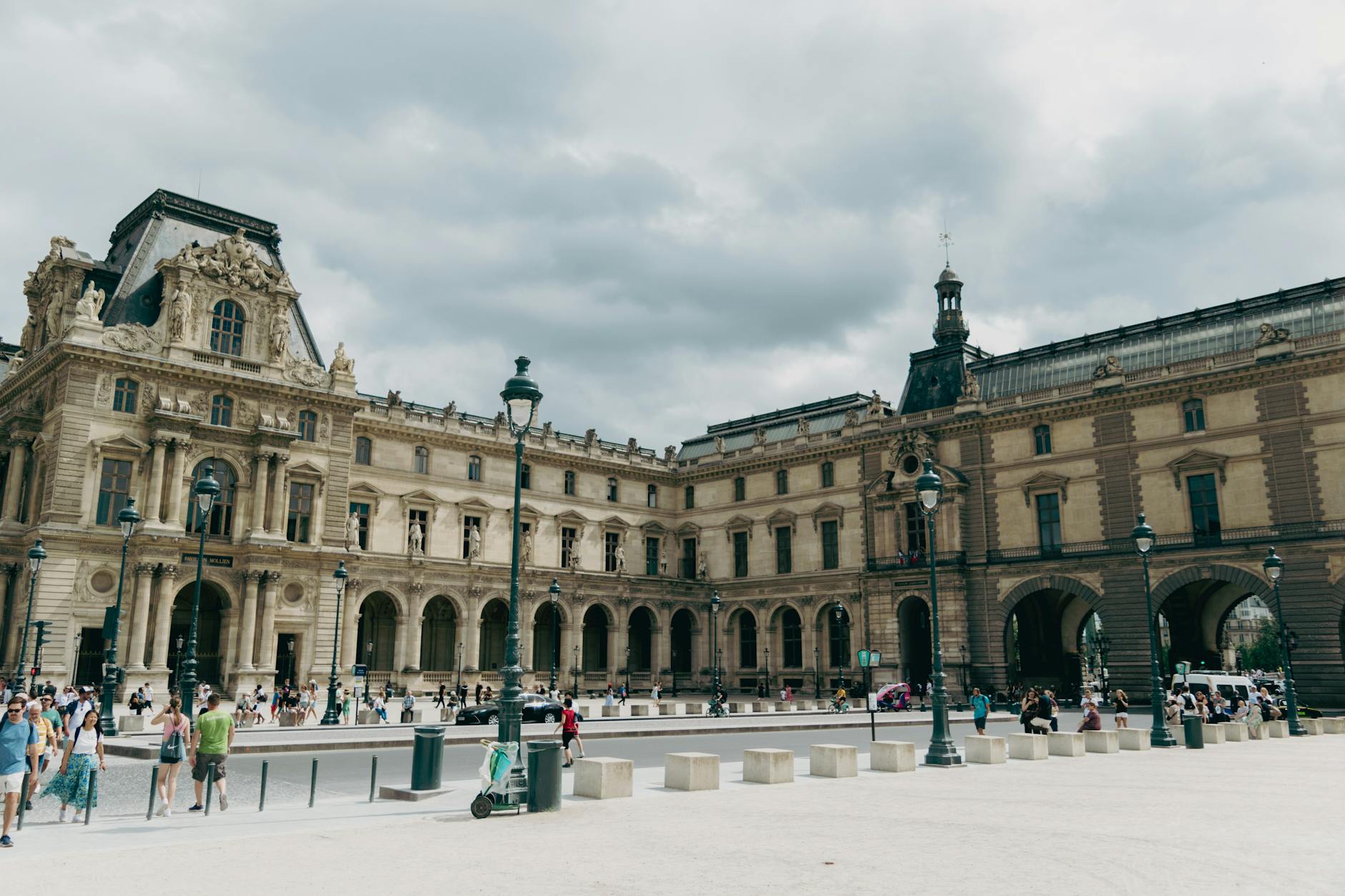
The August Travel Myth: Why the Louvre is Broken in 2026
I stepped off the pavement into the cool, marble foyer of Vienna’s Kunsthistorisches Museum on a sweltering Tuesday afternoon in mid-August. Outside, the midday sun blazed across the Ringstraße, but inside, my footsteps echoed off pristine mosaic floors. No velvet ropes. No security queues wrapping around three city blocks. No sea of upraised smartphones blocking my line of sight.
I walked directly up to Pieter Bruegel the Elder’s The Tower of Babel, pulled a velvet bench up to the frame, and sat alone with a Renaissance masterpiece for forty minutes. The only sound was the faint hum of climate control and the distant clink of porcelain from the dome café down the hall.
For decades, cultural travel guidebooks have conditioned us to believe that Paris is the undisputed epicenter of fine art, and that enduring a three-hour line under the Louvre’s glass pyramid is a mandatory rite of passage.
It isn't. In fact, in August 2026, it's a rookie mistake.
The Louvre houses approximately 35,000 works on display across 73,000 square meters. Yet over 80% of its 30,000 daily summer visitors funnel into the exact same three hallways to catch a fleeting glimpse of the Mona Lisa, the Venus de Milo, and the Winged Victory of Samothrace. You end up paying €22 to view the backs of other people's heads in a room that smells like humidity and thermal sunscreen.
Across Europe, peerless royal collections, private billionaire troves, and modern sanctuaries hold tens of thousands of masterworks by Rembrandt, Vermeer, Michelangelo, Raphael, and Van Gogh. These institutions boast identical—if not superior—curatorial depth, yet they operate at a fraction of the visitor density.
Here are five world-class museums that outshine the Louvre where you can bypass the queues entirely in August 2026.
---
1. Kunsthistorisches Museum (Vienna, Austria)
### The Imperial Habsburg Powerhouse
If you love the Louvre because it was once an imperial palace filled with royal loot, the Kunsthistorisches Museum (KHM) in Vienna is its direct structural rival. Built by Emperor Franz Joseph I to showcase the formidable art accumulation of the Habsburg Dynasty, this octagonal, dome-capped titan rivals the Louvre in scale, atmosphere, and sheer artistic quality.
```
+------------------------+---------------------------------------------------------+
| QUICK FACTS | KUNSTHISTORISCHES MUSEUM VIENNA |
+------------------------+---------------------------------------------------------+
| Estimated Cost | €21 Adult | Free for under 19 |
| Best Time to Visit | August weekdays at 10:00 AM or Thursday evenings (open |
| | late until 9:00 PM) |
| How to Get There | U-Bahn U2/U3 to Volkstheater or U1/U2/U4 to Karlsplatz |
| Peak Wait Time (Aug) | 0–5 minutes |
+------------------------+---------------------------------------------------------+
```
Why It Beats the Louvre
The Louvre’s Italian and Northern Renaissance galleries are notoriously chaotic. The KHM, by contrast, holds the world’s largest collection of paintings by Pieter Bruegel the Elder—roughly one-third of all his surviving works—displayed in an intimate, whisper-quiet gallery room. You can stand inches from The Hunters in the Snow or Peasant Wedding without anyone rushing you.
Downstairs, the Kunstkammer (Chamber of Art and Wonders) houses over 2,200 goldsmith items, ivory carvings, and automaton clocks collected by Holy Roman Emperors. Its crown jewel is Benvenuto Cellini’s Saliera—a breathtaking gold enamel sculpture that makes the Louvre’s decorative arts wing look understated.
Insider Pro-Tip
Skip the general admission queue by booking a digital ticket via the KHM app 10 minutes before arriving. Once inside, bypass the grand staircase immediately and head straight up to Room X (Bruegel) on the primary floor. By 10:15 AM, you will have the world's greatest Northern Renaissance masterpieces entirely to yourself. Afterward, reserve a mid-morning espresso table at the Café in the Cupola Hall—arguably the most opulent museum dining space in the world.
---
2. Kröller-Müller Museum (Otterlo, Netherlands)
### Van Gogh in an Enchanted Sculpture Forest
Located inside the lush, 13,000-acre De Hoge Veluwe National Park, roughly an hour southeast of Amsterdam, the Kröller-Müller Museum represents the absolute antithesis of the overcrowded, urban museum environment.
```
+------------------------+---------------------------------------------------------+
| QUICK FACTS | KRÖLLER-MÜLLER MUSEUM |
+------------------------+---------------------------------------------------------+
| Estimated Cost | €25.70 (Includes National Park entry ticket) |
| Best Time to Visit | August mornings at 10:00 AM |
| How to Get There | Train from Amsterdam Centraal to Ede-Wageningen, then |
| | Bus 108/106 directly to the park gates |
| Peak Wait Time (Aug) | 0 minutes |
+------------------------+---------------------------------------------------------+
```
Why It Beats the Louvre
While tourist crowds in Paris choke the Musée d'Orsay and the Louvre to catch sight of Post-Impressionist works, the Kröller-Müller holds the second-largest Van Gogh collection in the world (nearly 90 paintings and over 180 drawings), assembled by art patron Helene Kröller-Müller.
Here, you can stand undisturbed before Terrace of a Café at Night, Country Road in Provence by Night, and Bridge at Arles. Beyond Van Gogh, the museum features major works by Claude Monet, Georges Seurat, and Pablo Picasso.
The museum’s true superpower, however, is its 75-acre sculpture garden—one of the largest in Europe. Giant modern works by Jean Dubuffet, Auguste Rodin, and Barbara Hepworth are scattered through pine forests, sand dunes, and serene clearing lawns.
Insider Pro-Tip
Do not take a taxi directly to the museum door. Disembark at the National Park's Otterlo Entrance gate, grab one of the park’s famous free "White Bicycles" (thousands are available for visitor use), and ride the 15-minute paved trail through heathland and pine wood straight to the museum's glass pavilion entrance. It completely resets your mind before viewing the art.
---
3. Gemäldegalerie (Berlin, Germany)
### The Scholar’s Goldmine of Old Masters
If you visit the Louvre for its vast holdings of European painting from the 13th to the 18th centuries—such as Titian, Vermeer, Caravaggio, Rembrandt, and Rubens—Berlin’s Gemäldegalerie offers a collection of equal academic and aesthetic weight, with roughly 5% of the crowd size.
```
+------------------------+---------------------------------------------------------+
| QUICK FACTS | GEMÄLDEGALERIE BERLIN |
+------------------------+---------------------------------------------------------+
| Estimated Cost | €14 Adult | Free for under 18 |
| Best Time to Visit | Tuesdays or Wednesdays at 2:00 PM |
| How to Get There | U-Bahn U2 to Potsdamer Platz or Bus M48/M85/200 |
| Peak Wait Time (Aug) | 0 minutes |
+------------------------+---------------------------------------------------------+
```
Why It Beats the Louvre
Purpose-built in the 1990s at the Kulturforum, the Gemäldegalerie was designed with strict mathematical precision for viewing fine art. Natural top-lighting washes through specialized skylights onto neutral-toned fabric walls, illuminating over 1,000 masterpieces spread across 72 light-filled rooms.
The collection features:
* 16 original Rembrandts, including his haunting Self-Portrait with Velvet Beret.
* Two exquisite, pristine works by Johannes Vermeer (The Glass of Wine and Woman with a Pearl Necklace).
* Caravaggio’s shockingly provocative Amor Vincit Omnia.
* Masterpieces by Sandro Botticelli, Raphael, Lucas Cranach the Elder, and Albrecht Dürer.
Because tourists in Berlin cluster around Museum Island, the Kulturforum complex remains quiet even during peak August weekends.
Insider Pro-Tip
Head directly to the Octagonal Rembrandt Room. The spatial acoustics and lighting design in this room allow you to observe Rembrandt's subtle brushwork and glazes without light glares or crowd noise. Look for the hidden entrance door on the south side leading to the study gallery, where lesser-known 17th-century Dutch works are hung floor-to-ceiling.
---
4. Calouste Gulbenkian Museum (Lisbon, Portugal)
### The Billionaire's Secret Sanctuary
Nestled within a private landscaped park in central Lisbon, the Calouste Gulbenkian Museum holds one of the finest private art collections assembled by a single human being in modern history. Oil tycoon Calouste Gulbenkian’s life motto was simple: "Only the best."
```
+------------------------+---------------------------------------------------------+
| QUICK FACTS | CALOUSTE GULBENKIAN MUSEUM |
+------------------------+---------------------------------------------------------+
| Estimated Cost | €10 (Includes both Founder's and Modern Collections) |
| Best Time to Visit | August 4:00 PM – 6:00 PM |
| How to Get There | Metro Blue/Red Line to São Sebastião |
| Peak Wait Time (Aug) | 0–5 minutes |
+------------------------+---------------------------------------------------------+
```
Why It Beats the Louvre
The Louvre is notorious for curatorial fatigue—there is simply too much to digest, leading to visual exhaustion within two hours. The Gulbenkian solves this through radical, intentional curation.
It contains roughly 6,000 pieces, but only ~1,000 of the absolute highest caliber are on display at any given time. You trace a seamless, chronological timeline through human art history without leaving the building:
- Egyptian Antiquities: Including a rare 2,700-year-old silver alabastron.
- Islamic Art: Exceptional 16th-century Iznik ceramics, Persian carpets, and glass lamps.
- European Fine Art: Masterpieces by Rembrandt (Portrait of an Old Man), Peter Paul Rubens, Thomas Gainsborough, and Édouard Manet.
- René Lalique Jewelry: The world’s definitive collection of Art Nouveau glass, enamel, and gold jewelry, displayed in dim, jewel-box lighting.
The Mid-Century Brutalist architecture seamlessly integrates floor-to-ceiling glass walls overlooking wild gardens, bamboo groves, and water-lily ponds, creating a serene, meditative environment impossible to find in Paris.
Insider Pro-Tip
Enter through the south garden path near the cafe rather than the main road gate. After touring the collection, step directly out into the surrounding Gulbenkian Park. Grab an iced galaõ (Portuguese milk coffee) from the garden kiosk, sit beside the lower stream banks, and watch the resident freshwater ducks.
---
5. Museo Nazionale del Bargello (Florence, Italy)
### Renaissance Sculpture Without the Uffizi Lines
While millions of summer travelers sweat through three-hour queues at Florence’s Uffizi Gallery or the Accademia, smart culture lovers bypass both and head straight for the Bargello. Housed inside a medieval fortress and former prison that dates back to 1255, this is Italy’s national sculpture museum.
```
+------------------------+---------------------------------------------------------+
| QUICK FACTS | MUSEO NAZIONALE DEL BARGELLO |
+------------------------+---------------------------------------------------------+
| Estimated Cost | €11 Adult |
| Best Time to Visit | August mornings at 8:15 AM (Opening time) |
| How to Get There | 5-minute walk from Piazza della Signoria, Florence |
| Peak Wait Time (Aug) | 0–10 minutes |
+------------------------+---------------------------------------------------------+
```
Why It Beats the Louvre
The Louvre's Italian sculpture wing (Michelangelo's Slaves, Canova's Psyche) is vast, but the Bargello presents late medieval and Renaissance sculpture in its original context. The open-air courtyard, lined with coat-of-arms stonework and grand outdoor staircases, transports you directly to 15th-century Florence.
Key highlights include:
* Donatello's bronze David: The first freestanding nude sculpture created since antiquity, positioned in a quiet room far superior to the high-volume viewing area of Michelangelo’s David at the Accademia.
* Michelangelo's Bacchus and Tondo Pitti.
* Works by Andrea del Verrocchio, Benvenuto Cellini, and Giambologna (Mercury).
Insider Pro-Tip
The Bargello often operates under adjusted summer hours, occasionally closing early at 1:50 PM. Arrive at 8:15 AM sharp when the heavy iron gates open. You will have the grand Donatello Hall almost entirely to yourself for the first hour of the day. Notice the bronze competition panels for the Florence Baptistery doors made by Lorenzo Ghiberti and Filippo Brunelleschi in 1401—they are positioned side-by-side on the wall for direct comparison.
---
The Strategic Blueprint: How to Master August Art Travel in 2026
To experience elite cultural travel in peak summer without falling into crowd traps, follow the Tripsora Blueprint:
```
THE TRIPSORA CULTURAL BLUEPRINT
+-----------------------------------------------------+
| 1. PIVOT TO SECONDARY/TERTIARY CULTURAL CAPITALS |
| Exchange Paris/Rome for Vienna, Berlin, or Lisbon. |
+-----------------------------------------------------+
|
v
+-----------------------------------------------------+
| 2. TARGET SINGLE-COLLECTOR MUSEUMS |
| Seek out high-density, perfectly curated troves |
| (e.g., Gulbenkian, Kröller-Müller). |
+-----------------------------------------------------+
|
v
+-----------------------------------------------------+
| 3. TIME YOUR ENTRY STRATEGICALLY |
| Book 8:15 AM openings OR late-night Thursday slots. |
+-----------------------------------------------------+
```
1. Pivot to Secondary/Tertiary Cultural Capitals
Instead of over-touristed megacities (Paris, Rome, Barcelona), target cities where infrastructure handles tourist volume gracefully—such as Vienna, Berlin, Lisbon, or Munich.
2. Seek Single-Collector Institutions
Museums created by individual collectors (Gulbenkian, Kröller-Müller, the Frick Collection) consistently deliver higher artwork quality per square meter than mega-state institutions, without the physical exhaustion.
3. Leverage "Counter-Cycle" Timing
* Avoid: 10:30 AM to 1:30 PM (tour group window).
* Target: 8:15 AM opening bells, mid-afternoon heat windows (3:30 PM–5:00 PM when crowds drift toward aperitivo hours), or extended late-night museum Thursdays.
4. Book Digital Tickets on Arrival Day
For non-Louvre museums, you rarely need to reserve three months in advance. Booking digital passes via your phone 15 minutes before stepping up to the gate almost always lets you bypass the main ticket box line.
---
The Final Verdict
The Louvre is undeniably legendary, but modern travel requires adaptability. In August 2026, real luxury isn't spending half your day in line to stare at the back of a crowd's heads; it's stepping into a cool, quiet room, sitting down on a velvet bench, and having a face-to-face encounter with humanity’s greatest masterpieces.
Skip the Paris lines this summer. Head to Vienna, Lisbon, Berlin, or the forests of Otterlo, and experience world-class art the way it was always meant to be enjoyed.
*