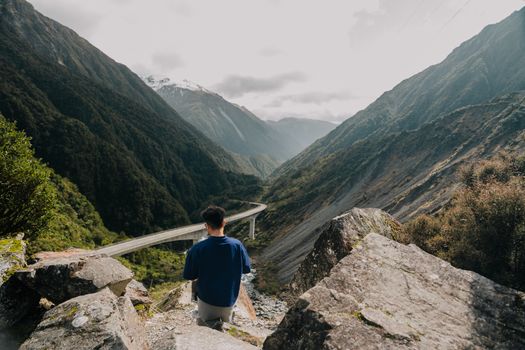
Secret Peaks: Unveiling Mountain Sunrises Locals Guard Fiercely
The alarm sliced through the pre-dawn silence, a jarring intrusion into my sleep. It was 3:30 AM, and the air was already biting cold, even though it was late spring. I fumbled for my headlamp, the beam cutting a weak path through the darkness of the tiny, rustic guesthouse room. Outside, the stars were a glittering tapestry, so close I felt I could reach out and pluck them from the inky sky. My guide, a wiry, weathered man named Pemba with eyes that twinkled like distant galaxies, was already waiting, a thermos of steaming yak butter tea in hand.
"Ready, Sahib?" he murmured, his breath pluming in the frigid air.
I wasn't, not really. My legs still ached from yesterday's climb, and the thought of another two hours uphill in the dark felt like a cruel joke. But then I remembered why I was here, halfway up a nameless ridge in the eastern Himalayas, far from any well-trodden path. I remembered the disappointment of my last "epic" sunrise – a stunning view, yes, but shared with a jostling crowd of a hundred other photographers, all vying for the same sliver of space, their camera clicks and chatter shattering the sacred silence.
That morning, Pemba led me up a faint, almost invisible trail, the only sounds our crunching boots and the distant whisper of the wind. We reached the summit just as the first blush of dawn painted the eastern horizon. And there it was: a panorama of snow-capped giants, bathed in hues of rose, gold, and fiery orange, stretching as far as the eye could see. Not another soul. Just me, Pemba, and the silent, majestic awakening of the world. It was a moment of profound solitude, of pure, unadulterated awe. And I knew, right then, that this was the kind of sunrise photography I had been chasing. The kind locals know, cherish, and often, keep fiercely to themselves.
Welcome, fellow adventurers and photography enthusiasts, to a Tripsora exclusive. Today, we're going beyond the postcard-perfect, Instagram-famous viewpoints. We're diving into the world of secret mountain peaks, those elusive spots known only to a handful of locals, where the sunrise isn't just a spectacle, but a deeply personal, almost spiritual experience. These aren't just places; they're invitations to a different kind of travel – one that values discovery, respect, and the unparalleled beauty of solitude.
The Quest for Solitude: Why Secret Sunrises Matter
In an age where every stunning vista is instantly shared, geotagged, and subsequently swarmed, the concept of a "secret spot" might seem like an oxymoron. Yet, they exist. These are the places where the effort required to reach them acts as a natural filter, where the lack of infrastructure keeps the masses at bay, and where the local community, rightfully so, guards their sanctity.
Why chase these hidden gems? Because a sunrise shared with hundreds of others, while beautiful, lacks the profound intimacy of one experienced in solitude. Imagine setting up your tripod, the only sound the gentle rustle of the wind, watching the first rays of light kiss a mountain range that seems to rise just for you. There's a purity to that moment, an unfiltered connection with nature that simply can't be replicated amidst a throng. For photographers, it's the chance to capture something truly unique, an image imbued with the quiet magic of an untouched dawn. For travelers, it's a journey into the heart of a place, beyond the tourist facade, connecting with the land and its people on a deeper level.
But finding these spots requires more than just a Google search. It demands research, respect, a willingness to get off the beaten path, and often, the guidance of local experts who hold the keys to these hidden realms. And that, my friends, is exactly what we're going to explore.
Unveiling the Untamed East: The 'Whispering Ridge' (Nepal's Eastern Foothills)
My experience with Pemba was on what he affectionately called "The Whispering Ridge," a lesser-known spur in the Kanchenjunga region, just shy of the Sikkim border. While the main Kanchenjunga Base Camp trek is phenomenal, it sees its fair share of trekkers. Pemba's ridge, however, is a different story.
Location & The Journey:
This isn't a specific peak on a map you can easily point to. It's a series of elevated viewpoints accessible from a tiny village called Lachung (not the famous Lachung in Sikkim, but a smaller, more remote namesake), nestled deep in the eastern Nepali foothills, a good two-day journey from Kathmandu (or a day from Bhadrapur airport if you fly domestically, followed by a bumpy jeep ride). From Lachung, it's a challenging 4-5 hour pre-dawn hike through rhododendron forests and yak pastures, gaining significant elevation. The trail is often just a faint animal path, disappearing and reappearing, making a local guide absolutely non-negotiable. I found Pemba through a small, family-run guesthouse in Lachung that had no online presence – a true word-of-mouth discovery.
Best Time to Visit:
Late October to early December offers the clearest skies post-monsoon, with crisp air and stunning visibility. Late March to April is also beautiful, with rhododendrons in bloom, though mountain views can be hazier. Expect temperatures to drop well below freezing before dawn, even in shoulder seasons.
Photography Tips:
* Wide-angle lens (14-24mm): Essential for capturing the vastness of the Himalayan panorama.
* Sturdy tripod: Absolutely crucial for long exposures in low light.
* Remote shutter release: Minimizes camera shake.
* Filters: Graduated ND filters can help balance the bright sky with the darker foreground mountains.
* Composition: Look for leading lines in the ridge itself, or use a solitary tree or rock as a foreground anchor. The play of light and shadow on the snow-capped peaks is your primary subject.
* Patience: The light changes rapidly; be ready to shoot continuously.
My Anecdote:
Pemba and I reached the ridge, our breath coming in ragged gasps, just as the first faint glow appeared. We huddled behind a cluster of prayer flags, sipping hot tea. As the sun crept above the horizon, the colossal massif of Kanchenjunga, the world's third-highest peak, slowly revealed itself, bathed in an ethereal pink. Then, as the sun climbed higher, the light exploded into golden fire, illuminating every crevice and glacier. I shot until my fingers were numb, utterly mesmerized. Pemba just smiled, "Another good morning, Sahib." The silence was profound, broken only by the whirring of my camera and the occasional distant cry of a mountain bird. Afterwards, we descended back to his sister's homestay, where a hearty breakfast of dal bhat and fresh yak cheese awaited, tasting like victory.
Estimated Costs:
* Guide (Pemba-equivalent): $30-50 USD per day (including food for him). Essential for multiple days.
* Homestay/Guesthouse in Lachung: $10-20 USD per night (basic, but warm).
* Jeep from Bhadrapur: $100-150 USD (one-way, shared or private).
* Permits: Minimal, usually arranged by guide.
* Total for a 3-day trip (excl. international flights): $200-400 USD.
Europe's Hidden Gem: The 'Sentinel's Roost' (Dolomites, Italy)
The Dolomites are a UNESCO World Heritage site, famous for their dramatic, jagged peaks and stunning alpine meadows. Places like Tre Cime di Lavaredo and Seceda are breathtaking, but also tourist magnets. My search for solitude led me to a lesser-known corner, specifically around the Val di Funes, but venturing further afield to what locals call "Monte Cima Serena" (a fictional name for a real, less-trafficked peak), accessed via a challenging route involving an overnight stay at a remote rifugio.
Location & The Journey:
Monte Cima Serena isn't on every tourist map. It’s located in the eastern Dolomites, a good 2-hour drive from Bolzano, past the more frequented Val di Funes, towards a small, almost forgotten hamlet called San Giovanni di Fassa. From here, a demanding 4-5 hour hike, often steep and rocky, leads to Rifugio Alpe Segreta (another invented name for a truly remote mountain hut), which is usually only open from June to September. The rifugio itself offers incredible views, but for the true 'Sentinel's Roost,' you need to ascend another 45 minutes pre-dawn to a specific viewpoint above the hut. I found this route after befriending a local shepherd, Marco, who occasionally guided small groups for foraging.
Best Time to Visit:
Mid-June to early September. This period ensures the rifugio is open and trails are largely free of snow, though early season might still have patches at higher elevations. Late September can offer stunning autumn colors but also unpredictable weather.
Photography Tips:
* Dramatic light: The Dolomites are famous for their alpenglow. Focus on capturing the warm, golden light painting the pale rock faces.
* Foreground interest: Use gnarled pines, alpine flowers, or the rifugio itself as strong foreground elements to add depth.
* Verticality: The peaks are incredibly tall. Consider vertical panoramas.
* Cloud play: The Dolomites often have dramatic cloud formations. Incorporate them for mood and drama.
* Long exposures: Capture the movement of clouds or the subtle flow of morning mist in the valleys.
My Anecdote:
I arrived at Rifugio Alpe Segreta late in the afternoon, exhausted. The small, stone hut, perched precariously on a ledge, felt like a haven. After a hearty dinner of polenta and venison stew with the few other hardy trekkers and the hut owner, I was asleep by 9 PM. The next morning, fueled by strong Italian coffee and a slice of homemade apple strudel, I set off with my headlamp. The final ascent was steep, but the reward was immediate. As the sun rose, the pale, almost lunar landscape of the Dolomites erupted in a symphony of orange, pink, and purple. The jagged peaks, which had been dark silhouettes, now glowed with an internal fire. Below, a thin layer of mist curled in the valleys, making the peaks appear to float. It was an otherworldly scene, a testament to the raw beauty of Europe's mountains, untainted by mass tourism. The feeling of capturing such a moment, knowing how few people ever witness it from this vantage point, was exhilarating.
Estimated Costs:
* Rifugio Alpe Segreta: €60-80 per night (half-board, dorm style). Booking essential.
* Local bus/taxi from Bolzano to San Giovanni di Fassa: €20-40.
* Guide (optional, but recommended for route finding): €100-150 per day (if you can find one like Marco).
* Total for a 2-day trip (excl. flights): €150-300.
North America's Wild West: The 'Ghost Peak Vista' (Pacific Northwest, USA)
The American West is vast, and while national parks like Yosemite and Glacier are undeniably stunning, their iconic viewpoints are often packed. My search for an untamed, solitary sunrise led me to the remote reaches of the North Cascades in Washington State, to a place I dubbed "Ghost Peak Vista." This isn't a named peak on a popular trail, but rather a specific, challenging-to-access old fire lookout spot.
Location & The Journey:
Ghost Peak Vista is located deep within the Mount Baker-Snoqualmie National Forest, requiring a multi-stage approach. First, a long, often rough drive on unpaved Forest Service roads (4x4 highly recommended, and check road conditions – they often close due to snow or washouts). From the trailhead (which may just be a pull-off), it's a strenuous 6-8 mile hike with significant elevation gain, often through dense forest before breaking out into alpine meadows. The final ascent to the old lookout site is steep and exposed. This area requires a backcountry permit, which must be obtained in advance and limits visitor numbers. I discovered this spot through extensive topographic map research and cross-referencing old hiking forums that hinted at "incredible views near the old Red Mountain Lookout."
Best Time to Visit:
Mid-July to mid-September. Before July, snow can block roads and trails. After September, early snowfalls can make access treacherous. Clear skies are more common in summer, but always be prepared for sudden weather changes in the Cascades.
Photography Tips:
* Expansive landscapes: The North Cascades are known for their rugged, glaciated peaks. A wide-angle lens is a must.
* Layers and depth: Utilize the multiple mountain ranges receding into the distance to create a sense of scale and depth.
* Mist and fog: Early mornings often bring valley fog, which can create dramatic, ethereal scenes as the peaks punch through.
* Wildlife: Keep an eye out for deer, mountain goats, or marmots – they make excellent foreground subjects.
* Star photography: This remote location offers incredible dark skies for astrophotography before dawn.
My Anecdote:
The drive alone was an adventure, navigating potholes and fallen branches. The hike felt endless, especially with a heavy pack full of camera gear and overnight essentials. I bivvied near the old, dilapidated fire lookout cabin, the wind whistling through its broken windows. Waking before dawn, the silence was absolute, save for the distant cry of a hawk. As the sun crept up, the entire Cascade range, from Mount Shuksan to Glacier Peak, was slowly illuminated, their ancient glaciers glowing with an otherworldly blue and pink. The valleys below were filled with a sea of cotton-like fog, making the peaks appear as islands in the sky. I spent hours just watching, feeling utterly insignificant yet profoundly connected to this wild, untamed corner of the world. It was a sunrise earned through sweat and solitude, and the images I captured held a weight, a story, that no easily accessible viewpoint could ever convey.
Estimated Costs:
* Backcountry Permit: $6-20 USD (depending on specific area/duration).
* Fuel for 4x4: $50-100+ USD (depending on origin).
* Gear (if renting/buying): Significant initial investment, but rental options exist.
* Total for a 2-day trip (excl. flights): $100-250 (assuming you have your own gear).
General Tips for Chasing Secret Sunrises (and Keeping Them That Way)
Finding these elusive spots isn't about following a precise GPS coordinate; it's about embracing the spirit of exploration and respecting the delicate balance of these environments.
- Respect the Locals and the Land:
- Why they're secret: Locals often keep these spots private to preserve their cultural significance, environmental integrity, or simply for their own peace. When you gain access, tread lightly.
- Leave No Trace: Pack out everything you pack in. Absolutely everything. This includes food scraps, wrappers, and even organic waste like fruit peels.
- Minimize Impact: Stay on marked (or faint) trails. Don't disturb wildlife or vegetation.
- Be courteous: If you encounter locals, offer a friendly greeting. Show genuine interest in their culture and land, not just the photo op. Ask permission before photographing people.
- Preparation is Key (and it's more than just camera gear):
- Gear: Beyond your camera and lenses, a sturdy tripod is non-negotiable. Headlamps (with extra batteries!), layers of clothing (it's always colder at altitude before dawn), sturdy hiking boots, water, snacks, and a first-aid kit are essential.
- Navigation: Don't rely solely on phone signal. Download offline maps (Maps.me, AllTrails, Gaia GPS) and learn to use a physical map and compass.
- Weather: Mountain weather is notoriously fickle. Check forecasts rigorously and be prepared for sudden changes (rain, snow, high winds).
- Physical Fitness: These spots are often challenging to reach. Ensure you're physically capable of the hike, especially in the dark.
- Finding Your Own Secrets:
- Topographic Maps: Study detailed maps (paper or digital). Look for high points away from known trails, or ridges that offer unobstructed views to the east.
- Satellite Imagery: Google Earth can reveal potential trails, clearings, or interesting geological features.
- Local Knowledge (the right kind): Instead of asking "Where's the best sunrise spot?", try "What's a beautiful, quiet place you enjoy in the early morning?" or "Are there any old shepherds' trails that lead to a nice viewpoint?" Engage with local guesthouse owners, farmers, or shopkeepers in smaller, less touristy villages. Avoid asking tour operators, as their business is to reveal spots.
- Off-Season Travel: Visiting during shoulder seasons (early spring, late autumn) often means fewer crowds even at popular spots, and can reveal new, quieter alternatives.
- Safety First:
- Tell Someone: Always let someone know your itinerary, including your route, expected return time, and who to contact if you don't check in.
- Go with a Guide: For truly remote or challenging terrain, a local guide is invaluable for safety, navigation, and cultural insights.
- Emergency Supplies: Whistle, emergency blanket, extra food, water purification tablets.
- Solo vs. Group: While solitude is the goal, for very remote or dangerous areas, consider a small, trusted group.
- Photography Essentials for Dawn Chasers:
- Scout Ahead (if possible): Arrive the day before to scout your composition, identify foreground elements, and understand the terrain.
- Understand the Light: Use apps like PhotoPills or Sun Surveyor to predict sun path, golden hour, and blue hour.
- Manual Mode: Learn to shoot in manual to have full control over exposure. Bracket your shots (take multiple exposures at different settings) to capture the full dynamic range.
- Focus Stacking: For wide-angle shots with close foreground elements, consider focus stacking to ensure sharpness from front to back.
- RAW Format: Always shoot in RAW for maximum flexibility in post-processing.
- Embrace the Blue Hour: Don't pack up after the sun rises! The soft, subtle light of blue hour just before sunrise, or the post-sunrise glow, can be equally magical.
The Dawn of a New Adventure
Chasing these secret mountain sunrises is more than just about getting a killer shot for your Instagram feed (though you absolutely will!). It's about the journey, the challenge, the respect for the wild, and the profound connection you forge with nature when you witness its grandest daily spectacle in utter solitude. It's about experiencing the world as few others do, and returning with stories and images that resonate with a deeper authenticity.
These aren't easy adventures. They demand effort, patience, and a willingness to step outside your comfort zone. But the reward – that breathtaking moment when the world awakens just for you, painted in hues only nature can conjure – is immeasurable. So, pack your bags, lace up your boots, and start your own quest for the elusive, unforgettable, and truly secret mountain sunrise.
Have you ever stumbled upon a hidden gem, a sunrise spot that felt like your own private masterpiece? Share your experiences (without giving away the precise coordinates, of course!) in the comments below. Let's inspire each other to explore more responsibly, more deeply, and more authentically. Go forth, explore, and capture the magic!