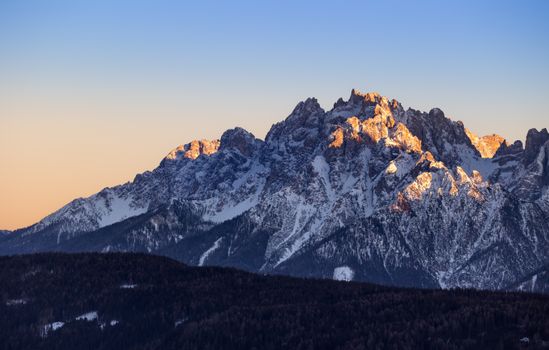
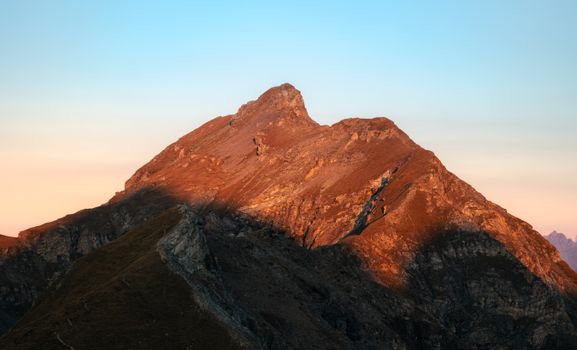
The pre-dawn chill bites at your exposed skin, the only sound the crunch of gravel underfoot and the rhythmic thud of your own heart. Above, a canvas of inky black, dotted with a million pinprick stars, promises the spectacle to come. Then, a whisper of orange on the horizon, a tentative blush that quickly explodes into a symphony of fiery reds, soft pinks, and molten golds, painting the sky and the majestic peaks before you. This isn't just a sunrise; it's a profound, spiritual awakening, and for the landscape photographer, it’s the ultimate prize.
I remember my first truly epic mountain sunrise. It was high in the Himalayas, after a grueling trek. Exhausted, cold, and questioning my sanity, I stumbled out of my tent before dawn. As the first rays kissed the snow-capped giants, turning them from granite grey to incandescent gold, I felt an overwhelming surge of emotion. My fingers, numb with cold, fumbled with my camera, desperate to capture the fleeting magic. What I came away with wasn't just a photograph; it was a memory etched deep into my soul, a testament to nature's power and my own perseverance. That moment ignited a passion within me – a relentless pursuit of the perfect mountain sunrise shot.
But it’s more than just the shot, isn't it? It’s the journey, the anticipation, the shared silence with fellow adventurers, and the sheer awe of witnessing something truly magnificent. It's about finding those places where the earth reaches for the heavens, and the sun paints its masterpiece daily.
If you’re ready to trade your cozy bed for an unforgettable pre-dawn adventure, and your smartphone camera for a truly mind-blowing photographic experience, then pack your bags (and your tripod!). Here are six mountain peaks that promise sunrises so spectacular, they will not only blow your mind but also fill your memory card with images you'll treasure forever.
Why Mountain Sunrises? The Magic Hour Elevated.
There's something inherently different about a mountain sunrise. The elevation offers an unobstructed view of the horizon, often above cloud inversions, creating dramatic layers. The rugged topography means peaks catch the first light, creating stunning contrasts and long, dramatic shadows. The air is often clearer, leading to more vibrant colors and sharper details.
This "magic hour" light (the hour around sunrise and sunset) is a photographer's dream. The low angle of the sun produces soft, warm light that enhances textures and colors, avoiding the harsh glare of midday. On mountains, you also get the added benefit of "alpenglow," a reddish glow seen on mountain peaks just before sunrise or just after sunset, caused by the sun's rays reflecting off atmospheric particles. It’s a fleeting phenomenon, but absolutely breathtaking. Capturing this requires preparation, patience, and a dash of luck.
The Gear You Can't Live Without (and a Few You Might Want)
Before we dive into the destinations, let's talk essentials. Chasing mountain sunrises means being prepared for cold, dark, and potentially challenging conditions.
- Camera Body: A good DSLR or mirrorless camera with manual controls is a must.
- Lenses:
- Wide-angle lens (14-24mm or 16-35mm): Essential for sweeping landscapes, capturing the vastness of the scene.
- Mid-range zoom (24-70mm or 24-105mm): Versatile for different compositions.
- Telephoto lens (70-200mm or longer): Great for compressing distant peaks, isolating details, or capturing the sun itself as a larger element.
- Sturdy Tripod: Non-negotiable! For sharp images in low light, a tripod is paramount. Look for one that's lightweight but stable in windy conditions. I swear by my Manfrotto Befree Advanced – it’s a perfect balance.
- Remote Shutter Release: Prevents camera shake when pressing the shutter button, ensuring crisp images, especially during long exposures.
- Extra Batteries: Cold drains batteries faster. Always carry at least two spares, kept warm in an inner pocket.
- Headlamp: Crucial for navigating in the dark. A red light option is great for not disturbing others or your night vision.
- Filters:
- Graduated Neutral Density (GND) filters: Balances bright skies with darker foregrounds.
- Circular Polarizer (CPL): Reduces glare and enhances colors.
- Neutral Density (ND) filters: For longer exposures, especially if you want silky water or cloud movement.
- Warm Layers: Dress in layers! Base, mid, and outer layers are essential. Think wool, fleece, and a wind/waterproof shell. Gloves, a warm hat, and sturdy hiking boots are also critical.
- Navigation: A reliable GPS app (like AllTrails or Gaia GPS) or a physical map and compass, especially if you're hiking in unfamiliar terrain.
- Snacks & Hot Drink: A thermos of coffee or tea and some high-energy snacks make the wait much more enjoyable.
Peak Perfection: My Top Mountain Sunrise Spots for Epic Shots
Get ready to mark your maps! These six locations have delivered some of the most mind-blowing sunrises I've ever witnessed and photographed.
1. Mount Bromo, Indonesia: A Volcanic Symphony
- Location: East Java, Indonesia
- Why it's amazing: Imagine the sun rising over a vast caldera, illuminating smoking volcanoes (Bromo and Semeru) against a backdrop of surreal, alien landscapes. The "Sea of Sand" below, often shrouded in mist, adds to the otherworldly feel.
- Specific Viewpoint: The most iconic shots are from Penanjakan Viewpoint 1 (or alternatives like King Kong Hill or Seruni Point for fewer crowds). From here, you get a panoramic view of Mount Bromo, Mount Batok, and the distant Mount Semeru puffing smoke.
- Best Time of Year: Dry season (April to October) offers clearer skies and less chance of rain.
- Difficulty/Accessibility: Relatively easy. You'll typically take a jeep tour from Cemoro Lawang (the nearest village) to the viewpoint. The jeep journey itself, bumping along in the dark, is part of the adventure! After sunrise, you can descend into the caldera and hike to the rim of Bromo's active crater.
- Details: Jeep tours from Cemoro Lawang cost around IDR 500,000-600,000 (approx. $35-40 USD) for a full sunrise and crater visit. Entrance to Bromo Tengger Semeru National Park is around IDR 220,000-320,000 (approx. $15-22 USD) depending on the day. Book your accommodation in Cemoro Lawang a few days in advance.
- My Anecdote: I remember huddling with dozens of others at Penanjakan, the air thick with anticipation. As the first light hit Semeru, painting its plume of smoke in fiery hues, a collective gasp went through the crowd. It felt like watching the birth of a new world. The descent into the "Sea of Sand" afterwards, navigating the misty plains on horseback (or foot), felt like stepping onto Mars.
2. The Dolomites, Italy: Alpine Grandeur Unveiled
- Location: South Tyrol, Italy
- Why it's amazing: The jagged, pale limestone peaks of the Dolomites catch the alpenglow like nowhere else. The dramatic spires and verdant valleys create compositions that are pure photographic poetry.
- Specific Viewpoint: For an unforgettable sunrise, target Seceda. Take the cable car from Ortisei (check operating times for early access, sometimes special sunrise tickets are available, or plan to hike up from the Rifugio Seceda). The iconic "knife-edge" ridgeline with the Odle group in the background is simply breathtaking. Another stunning option is Tre Cime di Lavaredo, especially from the Rifugio Auronzo area, capturing the famous three peaks as they glow.
- Best Time of Year: Late spring (June) to early autumn (September) for hiking and accessible trails. September often brings beautiful autumn colors and fewer crowds.
- Difficulty/Accessibility: Cable car access to Seceda makes it relatively easy once you're on the mountain. Tre Cime involves a scenic drive (toll road, approx. €30-40) to the Rifugio Auronzo parking, followed by an easy walk to viewpoints.
- Details: Cable car return ticket to Seceda is approx. €30-40. Consider staying overnight at a rifugio (mountain hut) like Rifugio Seceda or Rifugio Auronzo for ultimate early access. Book rifugio stays months in advance.
- My Anecdote: I hiked up to Seceda in the dark, guided only by my headlamp and the promise of dawn. When the sun finally kissed the Odle peaks, turning them from grey to a vibrant rose gold, it was so stunning I actually forgot to take a picture for a full minute, just standing there, utterly mesmerized. The sheer scale and drama of those peaks are humbling.
3. Haleakalā, Maui, USA: Above the Clouds
- Location: Maui, Hawaii, USA
- Why it's amazing: Witnessing the sunrise from the summit of Haleakalā, a dormant volcano, is like being on another planet. You're literally above the clouds, watching the sun paint the vast, multi-colored volcanic crater floor and the surrounding cloud sea.
- Specific Viewpoint: The Haleakalā Visitor Center (9,740 ft / 2,969 m) or the true summit at Puʻuʻulaʻula (Red Hill) (10,023 ft / 3,055 m). Both offer incredible views.
- Best Time of Year: Any time of year! The weather can be unpredictable, but the magic of being above the clouds is consistent.
- Difficulty/Accessibility: Very easy access by car. However, you MUST make a reservation to enter the summit district for sunrise (3:00 AM - 7:00 AM) through recreation.gov. Reservations are released 60 days in advance and are highly sought after (cost is $1 per vehicle, plus the park entry fee of $30 per vehicle, valid for 3 days).
- Details: Dress warmly! Temperatures can be near freezing, even in Hawaii. Bring your own snacks and water as facilities are limited. Allow at least 1.5-2 hours drive from most accommodations on Maui to reach the summit.
- My Anecdote: The drive up Haleakalā in the pitch black felt endless, but the moment we emerged above the cloud layer, I understood why it's so revered. The horizon was a fiery line, and below us, the clouds stretched like an endless, fluffy ocean. As the sun finally broke through, the crater floor erupted in a palette of reds, oranges, and purples. It felt like standing on the edge of the world, watching creation unfold.
4. Fitz Roy (Laguna de los Tres), Patagonia, Argentina: A Hiker's Dream
- Location: El Chaltén, Patagonia, Argentina
- Why it's amazing: The iconic jagged peaks of the Fitz Roy massif, particularly Cerro Fitz Roy and Cerro Poincenot, glow with an intense alpenglow as the sun rises, reflected perfectly in the glacial Laguna de los Tres below. This is the quintessential Patagonian sunrise.
- Specific Viewpoint: Laguna de los Tres, after a challenging pre-dawn hike from El Chaltén. The viewpoint offers a direct, stunning view of Fitz Roy.
- Best Time of Year: Austral summer (November to March) for the best hiking conditions. Expect strong winds at any time.
- Difficulty/Accessibility: Challenging. This is a strenuous 8-10 hour round trip hike (approx. 20-25 km / 12-15 miles) with a steep final ascent. For sunrise, you'll need to start hiking around 3-4 AM from El Chaltén, or camp at the free Poincenot or Río Blanco campsites (which I highly recommend) to shorten the pre-dawn hike significantly.
- Details: No permits or fees required for the hike itself. Camping is free but requires packing out everything. El Chaltén has plenty of accommodation and food options.
- My Anecdote: I decided to camp at Poincenot to avoid the grueling pre-dawn trek from town. Waking up to the sound of the wind whipping around my tent, I emerged into the darkness, joining a small procession of headlamps making their way up the final, steep ascent to Laguna de los Tres. When Fitz Roy ignited in a brilliant orange, reflecting perfectly in the still water of the lagoon, the exhaustion vanished. It was a moment of pure, raw triumph and unparalleled beauty. My camera worked overtime, but I made sure to put it down and just soak it in.
5. Kirkjufell, Iceland: The Iconic Mountain & Waterfall
- Location: Snæfellsnes Peninsula, Iceland
- Why it's amazing: Kirkjufell, Iceland's "Church Mountain," with its distinctive conical shape, is already incredibly photogenic. Add the cascading Kirkjufellsfoss waterfalls in the foreground, and a vibrant sunrise sky, and you have a composition that is instantly recognizable and utterly captivating.
- Specific Viewpoint: The small hill directly across from Kirkjufell, overlooking the Kirkjufellsfoss waterfalls.
- Best Time of Year: Shoulder seasons (April-May, September-October) offer a good balance of daylight for sunrise and potentially less harsh weather than winter. In winter (November-March), you might even capture the Northern Lights dancing above the mountain after sunset, and then catch the sunrise.
- Difficulty/Accessibility: Very easy. The viewpoint is right off the main road (Route 54) with a small parking lot. A short walk to the photography spot.
- Details: No fees or permits. Be mindful of the wind, which can be intense, and slippery rocks around the waterfalls.
- My Anecdote: I arrived at Kirkjufell well before dawn, the sky still a deep, inky blue. The wind was relentless, threatening to blow my tripod (and me!) over. But as the sun slowly crept above the horizon, painting the clouds in soft pastels, and Kirkjufell itself began to glow, I understood why this spot is so famous. The way the waterfalls framed the mountain, and the changing light on its slopes, was a masterclass in natural composition. I spent hours there, long after the sun was up, just exploring different angles.
6. Mount Fuji (Chureito Pagoda/Lake Kawaguchiko), Japan: The Sacred Peak
- Location: Yamanashi Prefecture, Japan
- Why it's amazing: Capturing the iconic, perfectly symmetrical cone of Mount Fuji bathed in the soft morning light, often with a "diamond Fuji" effect (when the sun aligns with its peak), is a dream for many. The traditional elements like the Chureito Pagoda or the reflective waters of Lake Kawaguchiko add cultural depth to the landscape.
- Specific Viewpoint:
- Chureito Pagoda (Arakurayama Sengen Park): Offers the classic postcard view of Fuji, the pagoda, and cherry blossoms (in spring) or autumn leaves. Be prepared for a steep climb up many stairs to the viewpoint.
- Lake Kawaguchiko: Many spots along the northern shore offer stunning reflections of Fuji. Oishi Park is popular.
- Best Time of Year:
- Spring (late March - early April): For cherry blossoms with Fuji.
- Autumn (late October - early November): For vibrant fall foliage.
- Winter (December - February): Often the clearest skies for viewing Fuji, and snow-capped.
- Difficulty/Accessibility:
- Chureito Pagoda: Accessible by train to Shimoyoshida Station, then a 10-15 minute walk and a steep climb up stairs.
- Lake Kawaguchiko: Accessible by train/bus to Kawaguchiko Station, then local buses or walking to viewpoints.
- Details: No fees for the pagoda or lake viewpoints. Book accommodations in Kawaguchiko or near Shimoyoshida well in advance, especially during peak seasons.
- My Anecdote: I made the ascent to Chureito Pagoda in the dark, the wooden steps creaking underfoot. The air was crisp, and the anticipation palpable. As the sky began to lighten, revealing Fuji's majestic silhouette, a hush fell over the small crowd of photographers. Then, the first rays hit the pagoda, and slowly, gently, Fuji itself began to glow. It wasn't a dramatic explosion of color like Bromo, but a serene, almost spiritual unveiling. It truly felt like a sacred moment.
Mastering the Shot: Photography Tips & Tricks
Getting to these incredible locations is half the battle; capturing them beautifully is the other.
- Arrive Early: Earlier than you think! This gives you time to scout your composition, set up your gear, and account for any unexpected challenges. "Blue hour" (the hour before sunrise) offers stunning, ethereal light.
- Scout Your Composition: Look for leading lines, foreground interest, and rule of thirds opportunities. Don't just point and shoot at the mountain; think about how to frame it.
- Shoot in RAW: Always! This gives you maximum flexibility in post-processing to recover highlights and shadows and fine-tune colors.
- Bracket Your Exposures: Sunrise light changes rapidly and has extreme dynamic range. Take multiple shots at different exposures (e.g., -2, 0, +2 EV) to combine later into an HDR image, ensuring details in both the bright sky and dark foreground.
- Use a Low ISO: Keep your ISO as low as possible (e.g., ISO 100-400) to minimize noise, especially with long exposures.
- Aperture for Sharpness: Start with an aperture around f/8 to f/11 for good depth of field, keeping both foreground and background sharp. Adjust as needed.
- Manual Focus: In low light, autofocus can struggle. Manually focus on a distant point (or use live view to zoom in and focus) to ensure sharp peaks. You can also use hyperfocal distance for maximum depth of field.
- White Balance: Experiment with "daylight," "cloudy," or even custom white balance settings. Or shoot in RAW and adjust later.
- Patience is Key: The best light often lasts only minutes. Be ready, but also be patient. And don't forget to put the camera down for a moment and just experience it.
Beyond the Lens: Embracing the Experience
While the goal is often that perfect shot, remember that the experience itself is priceless.
- Safety First: Mountains can be unpredictable. Check weather forecasts, inform someone of your plans, carry enough water and food, and know your limits.
- Leave No Trace: Pack out everything you pack in. Respect the environment and local communities.
- Connect: Share a smile with fellow photographers, chat with locals, and absorb the culture. These interactions often create the most lasting memories.
- Put the Camera Down: Seriously. There will be moments so beautiful, so overwhelming, that no camera can truly capture them. Allow yourself to be fully present, to feel the cold air, hear the silence, and simply witness the magic with your own eyes.
Your Next Adventure Awaits!
Chasing mountain sunrises is more than just a photographic pursuit; it’s an adventure for the soul. It's about pushing your limits, embracing the quiet beauty of the pre-dawn world, and being rewarded with a spectacle that few ever witness. The peaks listed here are just a starting point, a collection of places that have personally blown my mind and filled my memory cards with images I still marvel at.
So, what are you waiting for? Start planning your next great adventure. Research your dream peak, pack your gear, and set that alarm clock for an ungodly hour. Because trust me, the view from the top, bathed in the first light of dawn, is worth every single second.
Which mountain sunrise are you dreaming of? Have you captured an epic dawn shot that blew your mind? Share your stories and tips in the comments below! And don't forget to share this post with your fellow adventurers and photographers – let's inspire more people to chase that golden light!
---