The Shift from Spectator to Scientist
I stepped off the weathered wooden skiff onto the solar-powered jetty at Cabo Pulmo, the sharp smell of sun-baked salt, ozone, and engine diesel clinging to my damp neoprene suit. My hair was stiff with brine, my dive computer was still chirping its surface-interval warning, and my pencil was hovering over a submerged dive slate smeared with graphite notations.
Ten minutes earlier, 40 feet below the surface of the Sea of Cortez, I wasn't just watching a school of bigeye trevally spiral like a silvery tornado. I was actively recording their estimated length, counting juvenile bull sharks cruising the sand channel, and noting sea temperature shifts at two-meter increments.
When I submitted those slates to the local community marine station, my casual morning dive turned into permanent datapoints used to adjust local fishing boundaries.
This summer, marine travel has hit an unprecedented tipping point. Vacationers are skipping passive beach resorts in favor of hands-on ocean stewardship. Marine Protected Areas (MPAs) are facing underfunding and climate-induced shifts, and they need field hands. By joining certified citizen science projects within these protected waters, your summer holiday provides the labor, funding, and real-time field observations marine biologists desperately need.
Here are seven trending Marine Protected Areas where you can roll up your sleeves, grab a underwater slate, and make a real impact this summer.
---
1. Cabo Pulmo National Park, Mexico: Reef Recovery & Biomass Audits
Once devastated by overfishing, Cabo Pulmo is the poster child for marine conservation success, boasting a 463% increase in total fish biomass since its establishment in 1995. But as ocean temperatures spike in the Sea of Cortez, keeping tabs on predator-prey dynamics requires constant monitoring.
The Citizen Science Work
Travelers dive alongside local ejido conservationists to perform underwater visual censuses. Using standardized transect lines, you will count apex predators (bull sharks, groupers, snappers) and log benthic coral health via mobile reporting apps linked to the Universidad Autónoma de Baja California Sur.
- Tool of the Trade: Submerged waterproof slates and the iNaturalist platform.
- Target Species: Bull sharks, manta rays, and endemic reef fish.
- Pro-Tip: Daily dive permits inside the park are capped to prevent diver congestion. Reserve your spot with a registered community dive shop at least three months in advance, and demand a guide certified by the Comisión Nacional de Áreas Naturales Protegidas (CONANP).
---
2. Ningaloo Marine Park, Australia: Whale Shark & Turtle Tracking
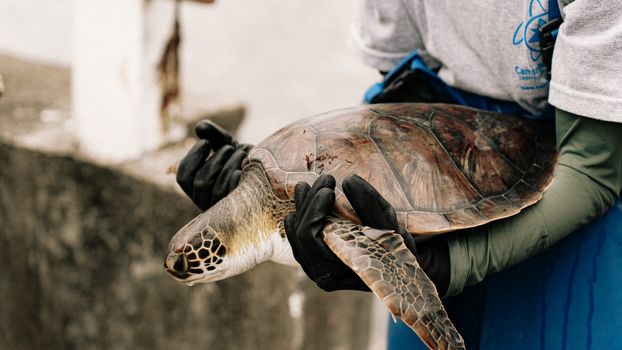
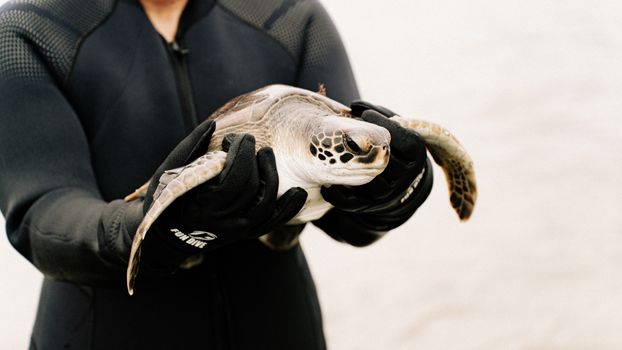
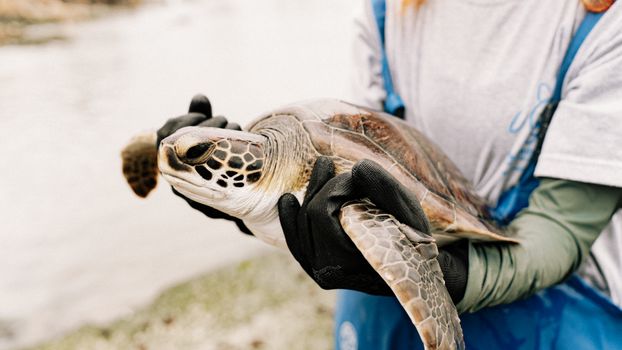
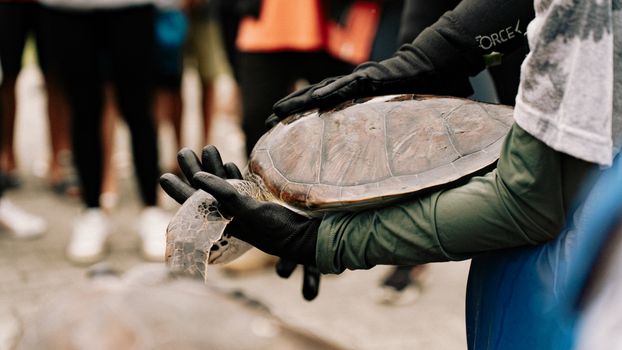
Stretching 300 kilometers along Western Australia's remote coast, Ningaloo Reef is one of the world's largest fringing reefs. Summer into late autumn brings megafauna migrations, making it a critical research zone for migratory pelagics and nesting sea turtles.
The Citizen Science Work
Snorkelers participate in the Wildbook for Whale Sharks program. When swimming near these gentle giants, travelers take specific photos of the spot pattern right behind the animal's gill slits—a signature as unique as a human fingerprint. Uploaded photos pass through an AI algorithm originally designed by NASA to map star constellations, identifying individual sharks, tracking their migration routes, and checking for injury patterns.
- Tool of the Trade: Underwater camera with high-speed shutter; GPS tag logging.
- Target Species: Whale sharks (Rhincodon typus), loggerhead, and green sea turtles.
- Pro-Tip: Skip the crowded boats departing from Exmouth’s main drag. Head down to Coral Bay for smaller vessel ratios and quicker access to inner-reef turtle nursery monitoring sites.
---
3. Florida Keys National Marine Sanctuary, USA: Coral Outplanting & BleachWatch
Spanning 3,800 square miles of subtropical waters, the Florida Keys sanctuary protects the only barrier coral reef in the continental United States. Recent marine heatwaves have devastated staghorn and elkhorn corals, kicking restoration efforts into overdrive.
The Citizen Science Work
Through non-profit partnerships like the Coral Restoration Foundation (CRF) and Mote Marine Laboratory, recreational divers spend days working in underwater coral nurseries. You will scrub algae off coral trees, fragment healthy specimens, and use non-toxic epoxy to cement micro-fragmented, climate-resilient corals directly onto degraded reef tracts.
- Tool of the Trade: Wire brushes, underwater hammers, two-part marine epoxy.
- Target Species: Acropora cervicornis (Staghorn Coral) and Acropora palmata (Elkhorn Coral).
- Pro-Tip: Complete your PADI or SSI Peak Performance Buoyancy certification before arriving. Coral restoration work demands absolute control underwater so you don't accidentally knock fragile nursery stock with your fins.
---
4. Monterey Bay National Marine Sanctuary, USA: Cold-Water Kelp Forest Surveys
Known as the "Galápagos of North America," Monterey Bay features a massive underwater canyon that brings nutrient-rich upwellings close to shore. The star of this ecosystem—the giant kelp forest—has faced intense pressure from exploding purple sea urchin populations, which devour kelp beds down to bare rock.
The Citizen Science Work
Through programs like Reef Check California and local sanctuary beach monitoring (BeachCOMBERS), volunteers collect vital metrics on urchin density, kelp canopy coverage, and sea otter foraging behaviors. Shore-based visitors can log stranded marine mammals and coastal debris to help researchers evaluate ecosystem stress.
- Tool of the Trade: 1-meter quadrat squares, Secchi disks for turbidity, clipboard slates.
- Target Species: Giant Kelp (Macrocystis pyrifera), Purple Sea Urchins, and Southern Sea Otters.
- Pro-Tip: Water temperatures here hover around 50–55°F (10–13°C). Swap your standard 5mm suit for a 7mm wetsuit with a hood and gloves—or better yet, get certified on a drysuit to maximize your bottom time during field surveys.
---
5. Great Barrier Reef Marine Park, Australia: Eye on the Reef
The world’s largest coral reef ecosystem spans over 2,300 kilometers. Managing a space visible from orbit requires more eyes than official park rangers can supply, creating one of the most effective citizen science setups on Earth.
The Citizen Science Work
The Eye on the Reef program operated by the Great Barrier Reef Marine Park Authority (GBRMPA) lets every traveler contribute. Using the "Rapid Monitoring Survey" protocol, divers and snorkelers record benthic composition, crown-of-thorns starfish (COTS) sightings, macro-faunal diversity, and coral bleaching severity across 5-meter radius search grids.
- Tool of the Trade: GBRMPA waterproof survey slates and the "Eye on the Reef" mobile app.
- Target Species: Crown-of-thorns starfish, giant clams, coral trout, and sea cucumbers.
- Pro-Tip: Book liveaboard trips out of Cairns or Port Douglas that feature on-board marine biologists running dedicated citizen science departures (such as OceanQuest or Coral Sea Oceans).
---
6. Koh Tao Marine Sanctuary Zones, Thailand: Artificial Reef Construction & Microplastics
While Thailand’s Gulf is famous for backpacker diver training, Koh Tao has quietly transformed into a hub for practical reef restoration. Community-managed Marine Protected Zones around the island actively battle storm damage and high tourist impact through man-made reef structures.
The Citizen Science Work
Volunteers join programs run by organizations like New Heaven Reef Conservation Program. Days are spent surveying water quality, deploying artificial reef structures (such as welded steel domes that give coral polyps a stable substrate), and analyzing water samples for microplastic concentrations using fine-mesh plankton nets towed behind longtail boats.
- Tool of the Trade: Plankton tow nets, dissecting microscopes, cement casting molds.
- Target Species: Acropora fragments, benthic invertebrates, micro-pelagic organisms.
- Pro-Tip: Visit during the summer dry season (June to August) when visibility in the Gulf of Thailand hits up to 30 meters, offering ideal conditions for benthic survey mapping.
---
7. Galápagos Marine Reserve, Ecuador: Shark & Pelagic Census
The Galápagos Marine Reserve is one of the most biologically unique ocean habitats on Earth, where cold Humboldt currents meet warm tropical waters. It serves as a vital highway for migratory sharks, rays, and marine mammals.
The Citizen Science Work
Working alongside the Charles Darwin Foundation, divers on specialized liveaboards log pelagic numbers using the Galapagos Whale Shark Project protocol and the iNaturalist Galapagos node. Travelers take stereo-video footage of hammerhead schools to establish length-frequency data, record sightings of endemic marine iguanas feeding underwater, and tag floating ocean plastic.
- Tool of the Trade: Stereo-DOV (Diver Operated Video) rigs and laser-scaling cameras.
- Target Species: Scalloped Hammerheads, Whale Sharks, Marine Iguanas, and Galápagos Penguins.
- Pro-Tip: Thermoclines here can drop rapidly at depth. Bring a hood and hooded vest even in warmer surface months, and carry a surface marker buoy (SMB) with a reel on every single dive due to dynamic, washing-machine currents.
---
Logistics & Planning Matrix
| Marine Protected Area | Est. Weekly Cost ($ USD)* | Best Summer Months | Entry Hub | Minimum Skill Level Required |
| :--- | :--- | :--- | :--- | :--- |
| Cabo Pulmo (Mexico) | $1,200 – $1,800 | July – September | San José del Cabo (SJD) | Open Water Scuba |
| Ningaloo Reef (Australia) | $1,800 – $2,600 | June – August | Learmonth / Exmouth (LEA) | Advanced Snorkeler / Open Water |
| Florida Keys (USA) | $1,500 – $2,400 | June – August | Miami (MIA) or Key West (EYW) | Open Water Scuba (10+ logged dives) |
| Monterey Bay (USA) | $900 – $1,500 | July – September | San Jose (SJC) or San Francisco (SFO) | Advanced Open Water + Cold Water Experience |
| Great Barrier Reef (Aus) | $2,200 – $3,500 | June – September | Cairns (CNS) | Beginner Snorkeler to Advanced Scuba |
| Koh Tao (Thailand) | $600 – $1,100 | June – August | Koh Samui (USM) + Ferry | Beginner Open Water |
| Galápagos Reserve (Ecuador)| $4,500 – $7,500 | July – September | Baltra (GPS) or San Cristóbal (SCY) | Advanced Open Water (50+ logged dives) |
\*Note: Estimated costs include localized field research fees, dive boat charter passes, basic lodging, and gear rentals; excludes international long-haul flights.
---
How to Prepare for a Citizen Science Dive Expedition
- Invest in Reef-Safe Gear: Standard sunscreens contain oxybenzone and octinoxate, chemical compounds that bleach coral larvae. Switch exclusively to non-nano zinc oxide formulas. Skip bright neon-yellow fins or split-fins, which can kick up sediment or disrupt marine fauna during low-velocity research sweeps.
- Brush Up on Identification: Download field guides (like Reef Fish Identification - Florida Caribbean Bahamas or regional Indo-Pacific Fish ID books) onto your tablet before departing. Learning family characteristics (e.g., how to tell a parrotfish from a wrasse by swim movement) saves valuable time underwater.
- Master Neutral Buoyancy: Science slates and cameras take your hands off your controls. Practice hovering suspended in water without sculling your fins. If you touch the bottom in protected habitats, you risk damaging decades of slow coral growth or kicking up silt that smothers survey lines.
- Data Integrity Matters: Avoid inflating numbers on your survey slates out of excitement. If you aren't 100% sure you spotted a juvenile blacktip reef shark versus a whitetip reef shark, record it as Unidentified Carcharhinid. Accurate empty data is far more valuable to a research lab than false positive reports.
Joining a citizen science project inside a Marine Protected Area bridges the gap between adventure travel and meaningful conservation. You’ll leave the water with salt in your hair, mud on your booties, and the undeniable satisfaction of knowing your summer getaway helped safeguard our oceans for generations to come.
---