The Frontlines of Living Heritage: Why Language Travel Matters
I stepped off the local ferry at Lochboisdale, the damp Atlantic breeze carrying the unmistakable smoke of burning peat fires and salt spray. My boots clicked against the wet granite pier as I walked toward a modest, stone-walled hall in South Uist. Inside, there were no textbooks or digital flashcards. Instead, an elder named Mairi was pouring black tea while singing a 300-year-old waulking song in Gàidhlig (Scottish Gaelic), her voice resonating with deep, guttural rhythms that felt tethered to the very bedrock of the Hebrides. Within twenty minutes, I wasn’t just listening; I was holding a piece of unspun wool, beating time against a long pine table, and singing back chorus lines I didn't even know I was capable of pronouncing.
Every fortnight, a language dies, taking with it irreplaceable ecological knowledge, oral histories, and unique ways of interpreting human existence. But a quiet revolution is happening across the travel industry. Leading travel advisors are moving beyond passive sightseeing, pairing curious travelers with community-run language preservation projects welcoming learners.
These programs do not treat local dialects as museum artifacts. They are active, living spaces where your tuition fees directly support indigenous educators, local infrastructure, and language revitalisation programs for younger generations. Here are five exceptional, advisor-vetted initiatives across the globe where you can become part of the solution.
---
1. Sabhal Mòr Ostaig & Ceòlas: Reviving Scottish Gaelic in the Hebrides
Located on the Sleat Peninsula on the Isle of Skye and expanding into the Outer Hebrides of South Uist, Scotland's National Centre for Gaelic Language and Culture (Sabhal Mòr Ostaig) stands as a global gold standard for linguistic survival.
When you sign up for their short-course immersion programs, you enter a monolingual atmosphere designed to rewire your linguistic ear. Morning classes focus on idiom structure and phonetics, while afternoons are spent hiking along coastal cliffs, learning the Gaelic names for native flora, sea birds, and topography.
```
[ Gaelic Classroom ] ──► [ Coastal Fieldwork ] ──► [ Ceilidh Evening ]
│ │ │
Phonetics & Grammar Field Names & Botany Music, Story & Song
```
Pro-Tips for Visiting
* The Hidden Spot: Visit the campus library's archival room at 4:00 PM on Tuesdays when local bards share unrecorded oral histories over herbal tea.
* Timing: Book the July summer school six months in advance; courses fill up rapidly due to high demand from overseas diaspora.
* Insider Secret: Head to the nearby Talla an Eilean community center on Thursday nights for unadvertised Gaelic music sessions where beginners are warmly encouraged to sing along.
---
2. Awamaki & The Sacred Valley Quechua Exchange (Ollantaytambo, Peru)
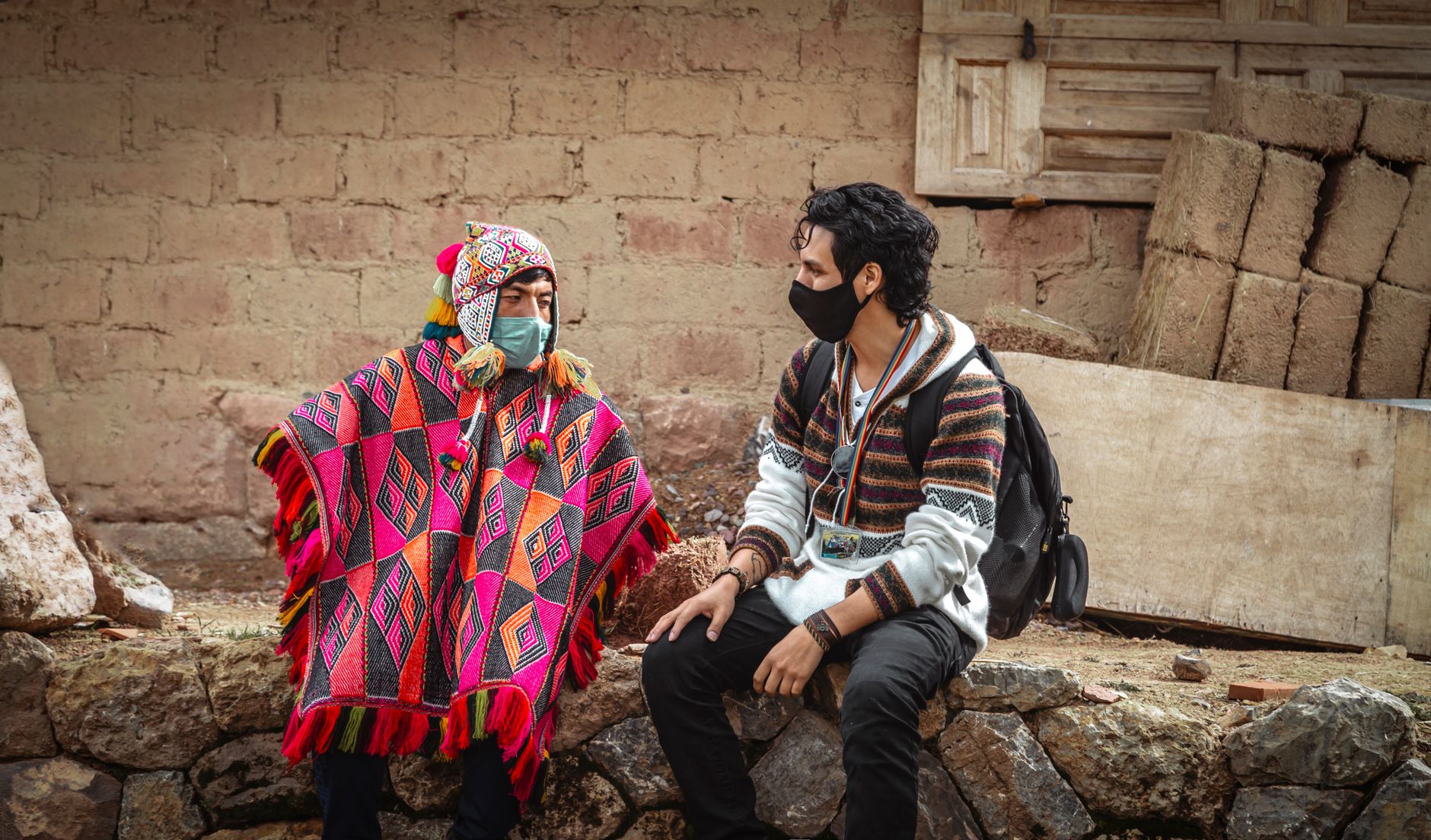
High in the Andes along the Patacancha River, the Runasimi (Quechua) language carries terms for mountain spirits (Apus), soil quality, and textile weaving that simply do not translate into Spanish or English. The social enterprise Awamaki, based in Ollantaytambo, partners with high-Andean indigenous communities to offer structured linguistic and cultural immersion trips.
Learners spend their days divided between community-hosted homestays in Kelkanka and interactive language workshops. You will learn how to navigate basic transactional and social Quechua while assisting local weavers with plant-based dye preparation using cochineal bugs and native ch'illca shrubs.
```
+-----------------------------------------------------------------------+
| QUECHUA IMMERSION PROFILE |
+-----------------------------------------------------------------------+
| Dialect Focus: | Cusqueño Quechua (Runasimi) |
| Primary Context: | Agro-pastoral & Textile Arts |
| Accommodation: | Rural Homestays (Earth-brick adobes) |
| Impact Trajectory| Direct income to high-altitude women's collectives |
+-----------------------------------------------------------------------+
```
Pro-Tips for Visiting
* Arrival Strategy: Arrive in Ollantaytambo at least 48 hours before your program starts to acclimatize to the 9,200-foot (2,790 m) altitude.
* Local etiquette: Always greet elders with "Allianllachu" (How are you?) while holding your right hand over your heart.
* Avoid the Crowds: Skip the midday tourist train to Machu Picchu; instead, take the early morning 6:00 AM collectivo up to the Patacancha valley where quiet morning greetings are exchanged in pure Quechua.
---
3. Te Puia & Marae Immersion: Living Te Reo Māori (Rotorua & Northland, New Zealand)
Te Reo Māori has undergone a massive nationwide renaissance, but the deep cultural nuances are best learned within the traditional marae (tribal communal grounds) of the North Island. Vetted travel advisors frequently connect visitors with educational stays coordinated through regional iwi (tribal entities) and cultural centers like Te Puia in Rotorua.
Rather than rote memorization, learning Te Reo centers around whanaungatanga (relationship building). Students learn whakapapa (genealogy) structures, protocol for pōwhiri (welcome ceremonies), and traditional chants (waiata).
> "Learning Te Reo Māori is not about memorizing nouns; it is about shifting your relationship with land, ancestors, and time itself." — Māori Cultural Educator
Pro-Tips for Visiting
* Timing: Visit during the Matariki (Māori New Year) celebrations in June/July for deep storytelling workshops and public language circles.
* Protocol Tip: Always remove your shoes before stepping onto the Aotearoa (meeting house) porch floorboards—no exceptions.
* Local Flavor: Sample hāngī food prepared in geothermal earth ovens at the community dinners, where language practice continues long into the evening.
---
4. AEK Barnetgi Summer Camps: Decoding Euskara in Basque Country (Spain & France)
Euskara, spoken in the Basque region straddling northern Spain and southwestern France, is Europe's oldest language isolate. It shares zero linguistic roots with Latin, Germanic, or Slavic tongues. For adventurous language travelers, the organization AEK runs specialized Barnetgi (immersion boarding houses) throughout rural towns like Durango and coastal Zarautz.
These programs offer intensive learner environments where students live, cook, and study entirely in Euskara alongside locals dedicated to preserving their ancient language.
```
┌─────────────────────────────────────────────────────────────────┐
| DAILY BARNETGI SCHEDULE |
├─────────────────┬───────────────────────────────────────────────┤
| 08:30 - 10:30 | Intensive Phonetics & Verb Construction |
| 11:00 - 13:30 | Guided Field Trips (Fish Markets & Bakeries) |
| 14:00 - 16:00 | Communal Lunch & Conversational Table |
| 17:00 - 19:00 | Basque Rural Sports (Herri Kirolak) Practice |
└─────────────────┴───────────────────────────────────────────────┘
```
Pro-Tips for Visiting
* The Hidden Entrance: In Durango, the historic AEK center is tucked behind a unmarked wooden door on Artekalea Street; press the brass buzzer labeled Kultura.
* Pintxos Etiquette: Order your tapas (pintxos) using basic Basque phrases ("Egun on, bat mesedez") at neighborhood cider houses (sagardotegi) to instantly earn the warm respect of local bartenders.
* Best Time: Late August coincides with local town festivals (Fiestas), providing endless real-world speaking practice.
---
5. Hui Mālama i ke Ala ʻŪlili: Reclaiming ʻŌlelo Hawaiʻi (Big Island & Molokaʻi)
While Hawaii is a top vacation destination, few tourists experience its true native language ecosystem. Specialized travel planners guide eco-conscious travelers to non-profit stewardship initiatives like Hui Mālama i ke Ala ʻŪlili (Hāmākua Coast, Big Island) and community efforts on Molokaʻi.
Here, ʻŌlelo Hawaiʻi language learning is intrinsically linked to ʻāina momona (land abundance). Participants spend mornings restoring native taro patches (loʻi kalo) while learning traditional chants, agricultural terms, and oral histories directly tied to the soil under their feet.
```
[ Land Stewardship (Loʻi) ] ──► [ Olelo Language Circle ]
│ │
Hands in the Taro Soil Oral Chants & Genealogies
└──────────────┬──────────────┘
▼
[ Cultural Sustainability ]
```
Pro-Tips for Visiting
* Preparation: Complete basic online pronunciation modules prior to arrival so you understand glottal stops (ʻokina) and macron vowels (kahakō).
* Gear Requirement: Pack split-toe muddy work boots and quick-drying attire—you will be knee-deep in sacred wetland agricultural fields.
* Insider Recommendation: Purchase your reference books at Native Books / Nā Mea Hawaiʻi rather than big-box retail stores to keep funding inside community initiatives.
---
Logistics, Costs & Planning Guide
Planning an ethical language preservation trip requires careful preparation and budget transparency. Below is a detailed breakdown of what to expect across these premier destinations:
| Destination | Project / Provider | Est. Cost (Per Week) | Best Time to Visit | Primary Transport |
| :--- | :--- | :--- | :--- | :--- |
| Isle of Skye, Scotland | Sabhal Mòr Ostaig | $650 – $950 USD | May to September | Citylink Bus or Kyle Line Train |
| Sacred Valley, Peru | Awamaki Immersion | $500 – $800 USD | April to October | Collectivo from Cusco |
| Rotorua, New Zealand | Te Puia / Iwi Partnerships| $800 – $1,200 USD | November to April | InterCity Bus / Rental Car |
| Basque Country, Spain| AEK Barnetgi Intensive | $450 – $750 USD | June to August | Euskotren Regional Rail |
| Big Island, Hawaii | Community Land Initiatives| $300 – $600 USD (Volunteer/Donation)| Year-round | 4WD Rental Vehicle |
---
How Travel Advisors Curate Ethical Language Experiences
Not all language programs operate ethically. Top travel advisors use a strict vetting process before recommending a language preservation project to clients:
- Community Ownership: Is the initiative founded, run, and governed by indigenous or local native speakers?
- Financial Transparency: Does the tuition directly fund local schools, elders' care, or native-language publishing?
- Cultural Safety: Does the program establish clear boundaries regarding sacred sites, ceremonies, and private community spaces?
- Long-Term Impact: Does the project welcome short-term learners without disrupting ongoing community revitalization goals?
```
[ Ethical Vetting Framework ]
│
┌─────────────────────┼─────────────────────┐
▼ ▼ ▼
[ Community Led? ] [ Transparent Fees? ] [ Cultural Safety? ]
```
By prioritizing these questions, travel advisors ensure your journey fosters true mutual respect and lasting preservation.
---
Final Thoughts for the Conscious Traveler
Traveling to learn an endangered language is not about achieving fluent verb conjugation in a fortnight. It is an act of deep listening, humble participation, and cultural solidarity. When you replace standard resort itineraries with language preservation retreats, your travel dollars help preserve the irreplaceable stories, ecological wisdom, and human perspectives that enrich our world.
Ready to swap standard sightseeing for deep cultural immersion? Reach out to a certified Tripsora travel advisor today to start designing your custom, ethically vetted language immersion journey.
---