The Secret Ingredient: How to Eat Like a Local for Pennies Before They Go Mainstream
The steam rose in fragrant clouds, carrying the aroma of garlic, chili, and something wonderfully unidentifiable. I sat on a tiny plastic stool, barely a foot off the ground, amidst a cacophony of chatter and clanging woks. Before me was a bowl of what looked like the most unassuming noodles I’d ever seen, topped with slivers of succulent pork and a scattering of fresh herbs. It cost me roughly 75 cents.
This wasn't a Michelin-starred restaurant. It wasn't even listed on TripAdvisor. This was a nameless, bustling street stall in the heart of Chiang Mai, Thailand, a place I’d stumbled upon purely by following my nose and the undeniable pull of a queue overflowing with locals. That bowl of Khao Soi, rich and spicy, was one of the most memorable meals of my life – not just for its incredible flavor, but for the profound sense of discovery and connection it offered.
Fast forward a few years, and I’ve recreated that feeling countless times, from a €5 menu del día in a sleepy Spanish village to a vibrant, dollar-a-taco stand in Mexico City. The secret? It's not about being fearless, or even a super-savvy planner. It's about developing a specific mindset and a few actionable strategies to peel back the tourist veneer and plunge headfirst into the authentic culinary soul of a destination. It’s about eating like a local for pennies, and experiencing flavors before they become Instagram-famous and priced for the masses.
Ready to ditch the overpriced, mediocre tourist traps and embark on a true gastronomic adventure? Let’s dive in.
The Philosophy of the Penny-Pincher Palate: Why Local Matters
Before we get to the "how," let's talk about the "why." Why bother seeking out these hidden culinary gems when there's a perfectly good, English-menu-wielding restaurant just around the corner?
- Authenticity, Unfiltered: Tourist restaurants often dilute flavors, adapt dishes to perceived Western palates, and prioritize presentation over soul. Local spots, however, serve food that has been perfected over generations, cooked with passion, and designed to satisfy the community. You taste the true culture, the history, the heart of a place.
- Unbeatable Value: This is where the "pennies" come in. When you eat where locals eat, you pay local prices. This isn't just about saving money; it's about getting incredible value for your culinary dollar. That €15 "authentic" paella near the Sagrada Familia? It's likely a pale imitation of the €5 version you'd find in a local market or a small, family-run eatery further afield.
- Cultural Immersion: Food is a universal language, a gateway to understanding a culture. Sitting elbow-to-elbow with locals, navigating a menu in a foreign language, watching the rhythm of a local kitchen – these are moments of genuine connection that transcend language barriers and enrich your travel experience exponentially.
- Supporting the Community: By dining at these small, independent establishments, you're directly contributing to the local economy, often supporting families and preserving traditional culinary practices, rather than feeding the coffers of large, international chains or tourist-focused conglomerates.
- The Thrill of Discovery: Let's be honest, there's an undeniable thrill in finding that hidden gem, that unlisted spot that serves up pure magic. It's a badge of honor, a story to tell, and a memory far more vivid than any guidebook recommendation.
I remember once in Rome, I'd spent a small fortune on a "traditional Roman meal" near the Colosseum. It was fine, but nothing special. The next day, guided by a local friend, I went to a tiny, unassuming trattoria tucked away in Trastevere. No fancy tablecloths, just robust, flavorful pasta, house wine in a carafe, and the owner’s grandmother yelling instructions from the kitchen. The bill? Less than half, and the experience? Ten times richer. That’s the difference.
Decoding the Culinary Landscape: How to Spot the Real Deal
Finding these local haunts isn't rocket science, but it does require a bit of observation and a willingness to step outside your comfort zone.
1. Follow the Locals (Literally!)
This is my number one rule. If a place is packed with locals, especially during peak meal times, you've hit the jackpot.
* Look for queues: A line out the door, even for a humble stall, is a golden sign. Locals don't wait for mediocre food.
* Observe dining habits: Are people eating quickly, grabbing a bite on the go? Or are they lingering, chatting, clearly enjoying the experience? Both can indicate good food, just different styles.
* The "No English Menu" Rule: While not always foolproof, a lack of an English menu (or a very basic one) often suggests the place caters primarily to locals. Don't be intimidated; it's an adventure!
2. The Google Maps & Social Media Deep Dive (Pre-Trip Prep)
Before you even land, you can start your reconnaissance.
* Specific Search Terms: Instead of just "restaurants in [city]," try "best street food [city]," "local market food [city]," "cheap eats [city]," "traditional [cuisine type] [city]."
* Google Maps Street View: "Walk" around potential areas. Look for the signs of local life – small cafes, bustling markets, people sitting at outdoor tables.
* Geo-Tagged Photos: On Instagram, search hashtags like #[city]food, #[city]streeteats, #eatlikealocal[city]. Look for photos that don't look like they were taken by tourists, or better yet, by local food bloggers. Pay attention to the background – are there other locals? Is the setting authentic?
* Local Blogs & Forums: Search for food blogs written by locals or expat communities in your destination. They often reveal the true hidden gems.
3. Language is Your Friend (Even a Little Bit)
You don't need to be fluent, but a few key phrases can unlock a world of flavor.
* "Hello," "Please," "Thank you," "Delicious!"
* "What do you recommend?" (¿Qué me recomienda? / Qu'est-ce que vous recommandez?)
* "One of these, please." (pointing)
* "The bill, please."
* Learning the names of common local dishes will also help you navigate menus and order confidently. A quick Google search of "popular [country] dishes" before you go can be a lifesaver.
4. Embrace the Unassuming
Some of the most incredible food comes from the most humble settings. Don't judge a book by its cover, or a meal by its plastic chairs.
* Hole-in-the-Wall Eateries: These tiny spots, often with minimal décor, are frequently family-run and serve food that has been perfected over generations.
* Food Carts & Stalls: Often the freshest ingredients, cooked right in front of you. Observe hygiene (is the area clean? Are they handling food properly?). If it's busy, it's usually a good sign.
* Don't Fear the Plastic Stool: Seriously, some of the best meals of my life have been eaten on furniture that felt like it came from a kindergarten classroom. Embrace the authenticity!
Market Magic and Street Food Sanctuaries: Your Budget-Friendly Battlefield
If you want to eat like a local for pennies, these are your battlegrounds.
1. The Enchantment of Food Markets
Food markets are sensory overload in the best possible way. The sights, sounds, and smells are an intoxicating introduction to a culture's culinary heart.
* Go Early: For the freshest produce and to see the market in its true, bustling glory before the midday rush (and before some vendors sell out).
* Graze and Explore: Don't commit to one meal. Try small portions from multiple vendors. This is your chance to sample a wide array of local delicacies.
* Observe & Ask: Watch what others are ordering. Don't be afraid to point at something that looks delicious. Many vendors are happy to offer a taste.
* Haggle (Respectfully): In some markets, particularly in Asia or Africa, a little friendly haggling is expected, especially for produce or non-food items. For prepared food, prices are usually fixed.
* Examples:
* Chatuchak Weekend Market, Bangkok: A labyrinth of stalls offering everything from grilled skewers to exotic fruit, all for a song.
* Mercado de San Miguel, Madrid (use with caution!): While increasingly touristy, some stalls still offer authentic tapas at reasonable prices, especially if you venture deeper or visit on weekdays. Better yet, find a local mercado like Mercado de la Cebada for a more local feel.
* Borough Market, London (again, with caution): While popular, it has some fantastic artisan food vendors. However, for a truly "pennies" experience, you'd need to seek out smaller, local food halls like those found in diverse neighborhoods.
* Grand Bazaar, Istanbul: Beyond the carpets and lamps, seek out the hidden cafes and pide (Turkish pizza) stalls tucked away in its alleys for incredibly fresh and cheap bites.
2. The Unrivaled Kingdom of Street Food
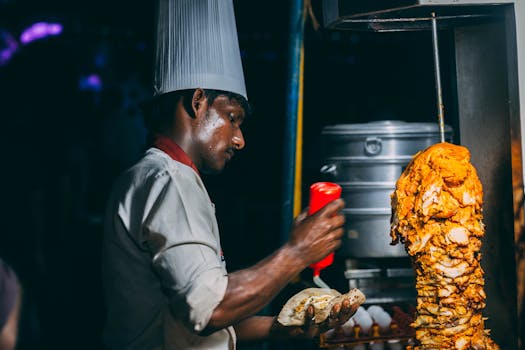
Street food is the ultimate expression of local, budget-friendly eating. It's fast, fresh, and often features recipes passed down through generations.
* Safety First (But Don't Be Paranoid): Look for stalls with high turnover (fresh ingredients), hot food (cooked to order), and busy locals. Avoid food that looks like it's been sitting out for hours. Trust your gut.
* Embrace the Unexpected: Some of my favorite street food discoveries have been things I couldn't identify but tasted incredible. Be adventurous!
* Carry Small Bills/Coins: Many street food vendors prefer cash and small denominations.
* Specific Street Food Havens:
* Penang, Malaysia: A legendary hub for incredible, diverse street food at ridiculously low prices. Think Char Kway Teow, Laksa, Hokkien Mee.
* Mexico City, Mexico: Tacos, quesadillas, elotes, tamales – the street food scene is vibrant and delicious, with many items costing less than a dollar.
* Hanoi, Vietnam: Pho, Banh Mi, Bun Cha – the streets are an open-air restaurant. A bowl of Pho for $2-3? Yes, please.
* Marrakech, Morocco (Djemaa el-Fna after dark): The main square transforms into a giant open-air restaurant with dozens of food stalls serving tagines, harira soup, grilled meats, and more. It's an experience!
I'll never forget the time I was wandering through a night market in Luang Prabang, Laos. I pointed at a stall where a woman was expertly grilling fresh fish, stuffed with lemongrass and herbs. For about $3, I got an entire fish, sticky rice, and a dipping sauce. It was simple, perfect, and eaten on a tiny plastic table, illuminated by a single bare bulb. Pure magic.
Beyond the Street: Uncovering Hidden Gems (Cafeterias, Dailies, and Set Menus)
Local eating isn't just about street food. Many countries have fantastic, budget-friendly options that aren't on the main tourist radar.
1. The Magic of the "Menu del Día" / "Plat du Jour"
In many European and Latin American countries, a "menu del día" (Spain), "plat du jour" (France), "pranzo di lavoro" (Italy), or similar "daily special" is your best friend for a cheap, hearty, and authentic lunch.
* What it is: A fixed-price, multi-course meal (often 2-3 courses plus a drink and sometimes dessert) offered primarily at lunchtime, targeting local workers.
* How to Find It: Look for chalkboards outside restaurants advertising "Menú del Día," "Pranzo," or "Plat du Jour." They're usually only available on weekdays.
* The Price Tag: Expect to pay anywhere from €8-€15 for a full meal, often including a glass of wine or beer. This is incredible value.
* Personal Story: In Seville, Spain, I once found a tiny, unassuming restaurant tucked away on a side street. Their menu del día was €10. It included a starter of gazpacho, a main of slow-cooked pork cheek with potatoes, a glass of local wine, and a small flan for dessert. It was home-cooked perfection and kept me full for the rest of the day.
2. Local Cafeterias & Canteens
These are often overlooked by tourists but are goldmines for cheap, traditional food.
* Where to Look: Near universities, government buildings, industrial areas, or bustling local neighborhoods.
* What to Expect: Simple, hearty, no-frills food. Often self-service or counter service. The menu might be limited but focuses on well-loved local staples.
* Example: In Portugal, I stumbled upon a "tasca" (a traditional, no-frills eatery) near a local market. They had three dishes written on a whiteboard. I pointed at one – a rich, comforting seafood stew with rice – and for €7, got a huge portion that tasted like it came straight from a Portuguese grandmother's kitchen.
3. Family-Run Eateries and "Mom-and-Pop" Shops
These are the backbone of local cuisine. They're often small, have a very specific menu, and a personal touch.
* Identify Them: Look for places that don't look like chains, have a unique, perhaps slightly worn, exterior, and often an older couple or family working there. The menu might be handwritten or very short.
* Specifics: In Italy, look for a trattoria or osteria rather than a ristorante for a more casual, local, and often cheaper experience. In Japan, seek out small izakayas or ramen shops tucked into side alleys.
Mindset & Maneuvers: Advanced Local Eating Tactics
You've got the basics, now let's refine your local-eating game.
1. Befriend Locals
This is perhaps the most powerful tool in your arsenal.
* Ask for Recommendations: Hotel staff, hostel workers, shopkeepers, local artisans, or even your taxi driver can point you to their personal favorites. Phrase your question carefully: "Where do you eat?" or "Where's a good place for [specific local dish] that locals go to?"
* Engage: A simple compliment about their city or a genuine interest in their culture can open doors to amazing advice.
2. Go Off-Peak
Sometimes, visiting a popular local spot slightly before or after the main lunch/dinner rush can give you a better chance at a table and more relaxed service. Plus, you might get to chat with the owners or staff more easily.
3. Don't Be Afraid to Point (or Use Google Translate)
Language barriers are real, but they shouldn't stop you.
* Visual Cues: Point at what other people are eating if it looks good.
* Picture Menus: Some local spots might have picture menus.
* Google Translate: Use the camera function on the Google Translate app to scan menus – it's not perfect, but it's a lifesaver for getting the gist.
4. Embrace the Unknown
The best discoveries often come from letting go of expectations. Be open to trying new things, even if you don't know exactly what they are. This is where the real adventure lies. That mysterious jelly-like dessert? That strange-smelling fermented dish? Give it a go!
5. Carry Cash
Many small, local eateries, especially street food stalls, are cash-only. Always have small bills and coins on hand to make transactions easy.
The "Before They Become Mainstream" Imperative
The world is getting smaller, and social media is a powerful force. Those hidden gems you discover today might be swamped with tourists tomorrow. This isn't a plea to keep secrets, but a call for mindful travel.
- Savor the Moment: Appreciate the unique, unpolished charm of these places.
- Share Responsibly: When you share your discoveries on social media, consider focusing on the type of experience and the methodology of finding it, rather than giving away exact addresses of truly tiny, local spots that could be overwhelmed. Encourage others to embark on their own quest for discovery.
- Be a Respectful Guest: Remember you're in someone's local hangout. Be polite, patient, and grateful for the experience. Support them by buying their delicious food.
The joy of finding a truly local, authentic, and incredibly affordable meal is unparalleled. It's a taste of the real world, a moment of connection, and a story far more compelling than any five-star restaurant review.
So, next time you travel, put away the guidebooks for a moment. Trust your instincts, follow the scent of something delicious, and let the locals lead you to a culinary adventure that will nourish your body, your soul, and your wallet. The best meals are out there, waiting to be discovered, for pennies, before the rest of the world catches on.
What's your most memorable local meal discovery? Share your stories (and maybe a hint!) in the comments below – let's inspire each other to eat like true adventurers!
---